

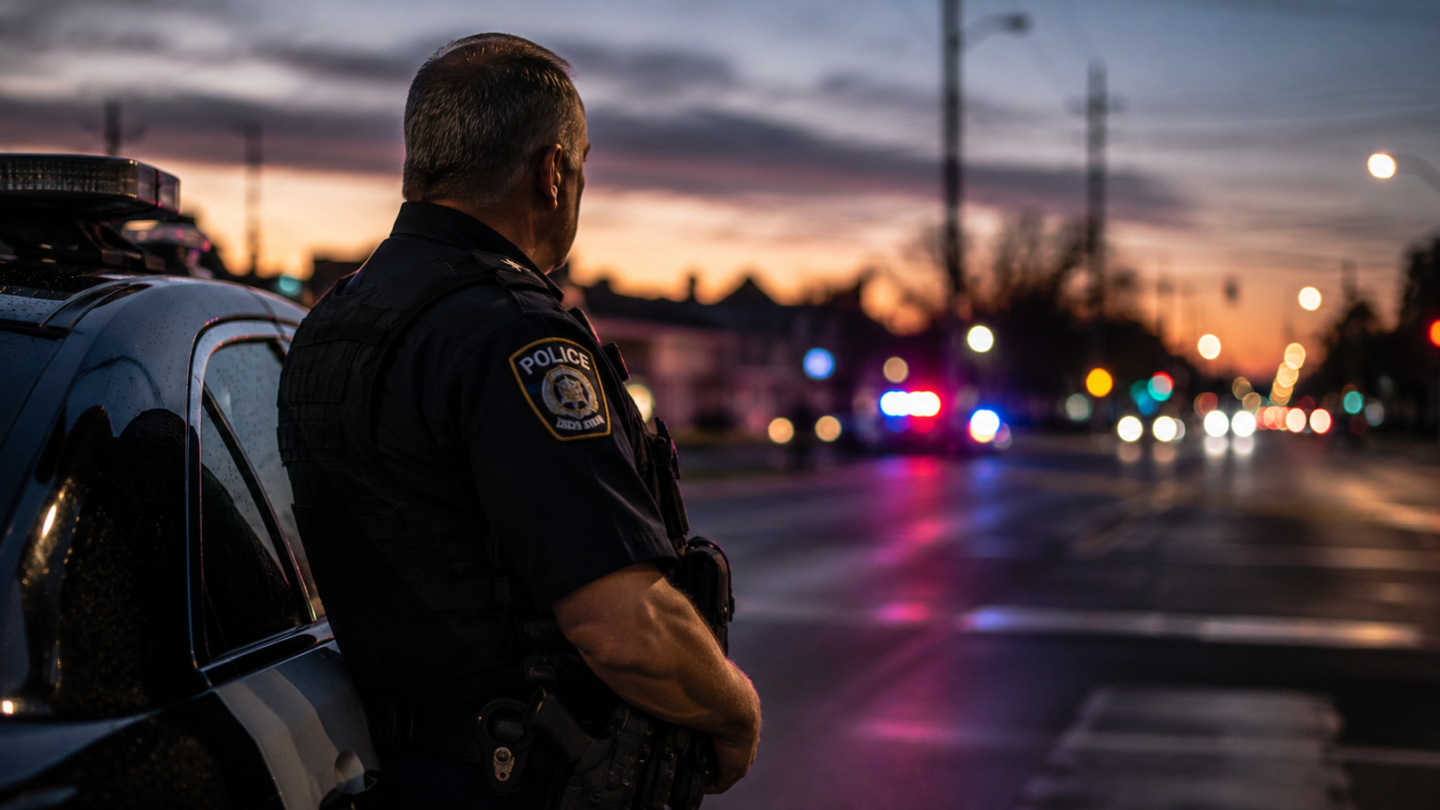
When I attended the police academy in 1969, there was nothing in the curriculum about officer safety. In many police departments, once you graduated, you were paired with a senior officer to learn the ropes. If he — and in those days, it was always he — knew something about surviving on the street, you picked up some tips on staying alive. If he didn’t know or didn’t care, you were pretty much on your own.
Thank you for reading this post, don't forget to follow and signup for notifications!
Like many new officers of that era, once I was on my own, I did things that were incredibly stupid. I cringe now thinking back on those days, realizing I survived mostly by luck — a terrible substitute for knowledge.
Unfortunately, I can recall too many examples of my safety stupidity. I remember not being concerned when I witnessed an entire family holding back a large adult son who was promising to kick my butt on a disturbance call. I had responded alone, of course. Or the time I was menaced by a drunk woman who brandished a sharp metal nail file as I drove her to the police station without handcuffs. We didn’t have prisoner cages in those days. Or the time I stood without cover in the front yard of a barricaded subject and heard the unmistakable sound of a rifle bolt being worked. Apparently unclear on the difference between cover and concealment, I hid behind a bush.
Oh, yeah. I was safety stupid, alright.
| RELATED: What 54 years in policing taught me about leadership
How officer safety training evolved
Things changed in the 1970s thanks to a retired Los Angeles Police Department officer named Pierce Brooks. As an LAPD homicide detective, he observed that the police officer killings he investigated frequently occurred because of one or more safety errors made by the victim officers. Brooks authored a book called “Officer Down, Code Three,” which listed fatal mistakes. The short list included complacency, failure to respond to danger signs, relaxing too soon, Tombstone Courage and poor or no use of cover. That list has been expanded today through a virtual cottage industry of officer safety books, videos and classes. We have also learned how to fix the errors.
Today, we are doing a better job of keeping cops alive. But when we still lose dozens of officers a year, we have a way to go. As a patrol sergeant and then watch commander, I had the opportunity to observe firsthand our continuing safety lapses. Brooks stated that complacency was the umbrella under which many other officer safety errors gathered, and I found that still true.
I saw that some officers mistakenly believe bad things are destined to happen and nothing can be done about it. Others are just plain careless. Those same cops often see officer safety training as a waste of time. They are wrong on both counts. Unless an observant and involved supervisor can steer that officer out of his or her apathy, that officer is endangering themselves and their colleagues.
I also noted that the problem was frequently not the rookies, who were striving to do everything just right. Too often, the offender was the old salt who thought he had seen it all and done it all. The example he set for the impressionable new troops was not a good one.
In this episode of the Policing Matters podcast, host Jim Dudley sits down with Chief Garner to explore what it truly takes to elevate leadership in law enforcement. Drawing on more than five decades of experience, Garner shares practical insights on leading by example, building trust with line personnel and equipping officers with the confidence and autonomy they need to succeed. This conversation offers a candid look at the gap between command staff and frontline officers — and how great chiefs work to close it.
The value of strong field training officers
At the same time, I have seen the great value of the veteran officer who serves as an exceptional safety role model. Many of these good people are experienced officers who have been through a lot and are willing to share what they have learned about staying alive. I always tried to enlist their aid in tutoring their new colleagues.
Field training officers are, of course, of the greatest value in both teaching and, even more important, demonstrating officer safety to their charges. As a sergeant, I found it advisable to sit down with each FTO and stress that the training officer’s job is first of all to teach, not mark down numbers on a daily report. I reminded them of their own time as green-as-grass rookies and how hard it was to learn when they were focused on what the FTO in the right front seat was writing down.
| RELATED: The four pillars every FTO must master
My message: Teach safety first; worry about 1-5 later.
Positive role models are vital when it comes to teaching officer safety. Nowhere is that more important than at the leadership level. Over the years, I observed first-line supervisors who were very good at it and others who were not. As a watch commander, I stressed to my sergeants not only the need to do it the right way, but also the mandate to ’fess up to their people when they failed to do so.
As a sergeant, I made it a point to call over any involved officers after we had worked a situation that I had handled poorly. I apologized and let them know what I should have done instead. It was hard on the ego, but I felt it was necessary if I was to retain credibility with my people.
I believe “doing safety right” is especially important for the agency’s top leadership. If the chief decides to make a traffic stop, the officers who inevitably show up need to see that the Big Boss still knows how to do it the safe way. He or she can be certain that the chief’s actions, for better or worse, will be dissected by the troops.
| BOOK EXCERPT FROM CHIEF GARNER: Communication is the name of the game
Every officer is a risk manager
I think the top leaders of the department have an additional responsibility for officer safety. They must publicly support their officers when they do it the right way for safety but are questioned or criticized, either from inside or outside the department. If the chief expects his or her people to display personal courage, the chief must demonstrate it, too, regardless of the politics of the moment.
As a police chief, I observed that some of my peers did an excellent job with this, while a few did not possess the backbone needed. I formed the opinion that the chief or sheriff who was more concerned with his or her political future than backing officers who did the right thing for safety was unlikely to ever enjoy the trust and respect of those in the trenches.
There’s another component of officer survival that I learned must be supported by every member of the law enforcement organization. It is the mandate that each employee serve as a risk manager to prevent accidental deaths and injuries. Most years, as many officers die in accidents as are killed by criminals. Many of these officers die in vehicle accidents.
It’s no secret that a lot of cops have a lead foot. It’s worth recalling what your very first sergeant probably told you: “You help nobody and only make things worse if you never get there.” It’s absolutely true.
We don’t like talking about our mistakes. But if we are smart, we learn from each of them. We can and must do a better job of staying safe on streets that can turn suddenly deadly. We owe it to those who care about us. Over half a century, I have figured that out.
| READ NEXT FROM CHIEF GARNER: Politics or poor choices? How police officers derail their own careers

