


The forest is full of some of nature’s most dangerous creatures. While snakes, bears, and wolves may come to mind, ticks can be dangerous in their own right. Imagine these creepy crawlies making their way onto your skin, cutting through your flesh, and drinking your blood. So, before traversing the backwoods, you should have a good defense plan against the tiny tick.
Thank you for reading this post, don't forget to follow and signup for notifications!
- What’s the Danger?
- A Tick’s Territory
- Their Modus Operandi
- Repelling the Bloodsuckers
- Physical Barriers and Body Checking
- Assume They’re Out There
Aside from the creep factor, ticks carry diseases that can easily pass to you. However, these parasitic pests are not invulnerable. Once you know their methods and means to destroy them, you can have peace of mind when traversing nature’s vast backyard.
A tick bite is virtually painless, so the question may arise: What’s the big deal? Well, basically put, ticks are carriers of bacteria, viruses, and other parasites that can be transmitted to your body.
Advertisement — Continue Reading Below
One of the most common diseases associated with ticks is Lyme disease. This can produce flu-like symptoms and long-term joint pain. Alpha-gal Syndrome causes the infected person to develop an allergy to red meat and other mammal-derived products. Additionally, Rocky Mountain spotted fever can cause death if left untreated.
The dangers are great coming from such a small organism. So, deep woods travelers need to be prepared.

Advertisement — Continue Reading Below
Naturally, forests are prime territory for ticks to thrive. They can be found on the forest floor, meandering through dead leaves, fallen logs, or low-lying brush. Ticks can also be found throughout grassy fields or thick bushy trails. Although woodlands are the most common environments for ticks, around-the-house conditions such as leaf piles and patches of thick grass or bushes are also viable tick habitats.
The Northeast United States is the most concentrated location for tick activity, followed by the Deep South and Pacific Northwest. Never assume you’re in a “safe” zone. Ticks have been found in all fifty states, so tick defense is a must just about anywhere.
Advertisement — Continue Reading Below

Ticks are patient parasites. They cannot fly, and they don’t jump. Instead, they wait for a viable host to essentially brush up against them so they can latch on. Ticks are able to detect multiple signals from a possible host, such as their carbon dioxide output, body heat, and vibrations caused by their motion.
Advertisement — Continue Reading Below
Once sensed, the tick will climb up tall grass or a fallen log and wait. When a host, either a human or other animal, brushes against it, it transfers itself to their body. Many people believe the tick bites the host and then sucks their blood, like a mosquito. This is only partially true.
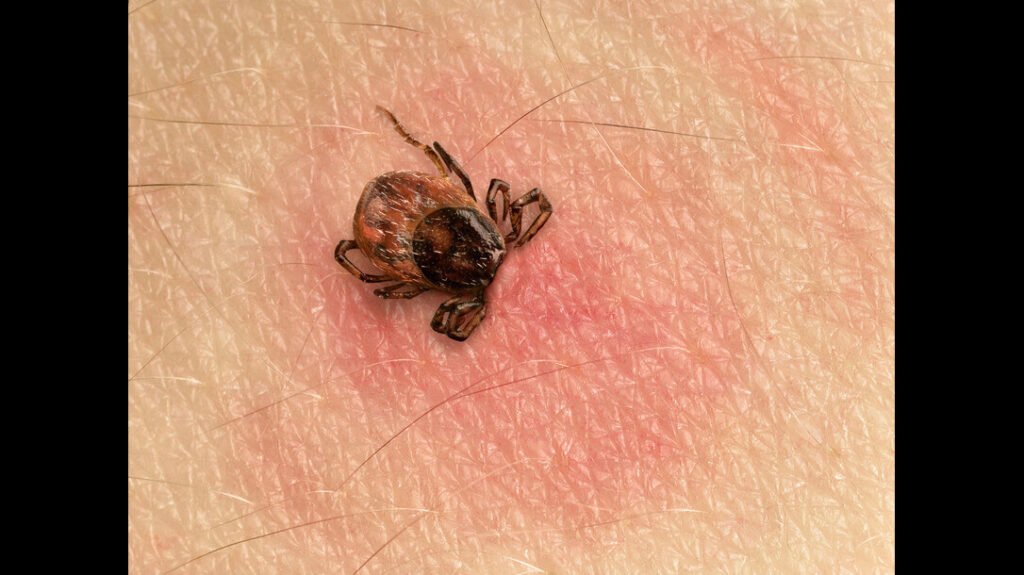
The tick actually slices the host’s flesh with its chelicerae (scissor-like structures) and then inserts its feeding tube under the skin. Tiny hooks attached to the tube keep it secured in place and make it very difficult to pull out when detected.
Advertisement — Continue Reading Below
There are multiple ways to keep ticks from feasting on your tender skin. First, use a reliable repellent. These typically contain DEET (look for 20% to 30% in the ingredients), which is a chemical known for excellent insect defense. Ben’s Tick repellent is one such option.
Additionally, tick defense repellents containing Picaridin are also quite effective. Unlike DEET, which can cause skin irritations and ruin plastic-made materials, Picaridin is safer to use and is scentless, which is preferred by some people. Try Sawyer’s Picaridin spray.
Advertisement — Continue Reading Below
Natural essential oils are the safest to use. Some varieties include cedarwood, peppermint, eucalyptus, and citronella oils, to name a few. Always be sure to read the labels of all repellents you plan to use. All have their own precautions and directions for use.

Advertisement — Continue Reading Below
Physical Barriers and Body Checking
Aside from chemical or natural oil repellents, physical barriers can help with tick defense. Netting for your head, neck, arms, and hands is relatively inexpensive and easy to use. Furthermore, employ elastic bands or tape to secure your shirt and pants cuffs tightly to your skin. The key is to seal off any and all ways a tick can reach your skin.
Remember, these arachnids (yes, they are related to spiders) can be very small, so don’t leave any crevice that can be used to access your skin. Finally, perform a full body check when you’re back home for the day. Check all areas, especially around your neck and hairline. Also, don’t forget your clothing. Immediately wash and dry them (in a dryer so the heat can kill any stragglers).

Advertisement — Continue Reading Below
It’s better to err on the side of caution and assume that when you go into the woods, you’ll be exposed to ticks. Just knowing this will allow you to prepare against these tiny parasites. As mentioned, these minuscule creatures can cause short- and long-term medical issues, and in some cases, death.
But now that you’ve got the knowledge, it’s time to fight back against nature’s tiny terrors.