

[[{“value”:”
Thank you for reading this post, don't forget to follow and signup for notifications!
It’s one of the most memorable monikers for a fighting force around, and its legend stems from a brutal battle fought more than a century ago. The term was reportedly adapted from the German Teufel Hunden, and applied to American Marines following the Battle of Belleau Wood during World War I.
While various scholars have argued that point — and we’ll look into that shortly — an understanding of how such a familiar and persistent term came into American parlance requires some historical context.
In German General Erich Ludendorf’s grand scheme, any fighting done in or around Belleau Wood should have been a secondary concern. He had bigger and broader problems with the Aisne-Marne Offensive in the spring and summer of 1918. To deal with a deteriorating battlefield situation, Ludendorff launched Operation Blucher, involving more than half a million of his troops, across a broad front aimed directly at positions held by French, British and newly arrived American formations. Although no one in Berlin would admit to it, these offensives were in many ways acts of desperation.
It was becoming clear to the German high command by the middle of 1918 that they could not win a war of attrition now that the American Expeditionary Force (AEF) had arrived to reinforce the Allies. While the Germans had enjoyed some early successes in repeated drives across a broad front, they were faltering, often outrunning their supply lines.
By late May, this forced them to slow their advances and often engage in piecemeal battles rather than overpowering and blowing through Allied defenses as they had done earlier in the war. One of these fights morphed into the infamous Battle of Belleau Wood.
While that battle was not significant in the geography of fighting on the Western Front during World War I, it was pivotal for other reasons. It was the U.S. Military’s first major engagement in World War I and served to halt Germany’s last gasp move on Paris in the waning months of the war.
Reports of the vicious — but victorious — fighting at Belleau Wood boosted Allied morale and solidly forged the reputation of the American Marines as a capable and reliable force in major land battles. It’s not an overreach to say that the Battle of Belleau Wood bought the U.S. Marine Corps a solid and long-lasting position in the U.S. military arsenal.
In early June 1918, Belleau Wood was simply a tangled, rocky patch of timber flanking the Paris-Metz road in northeastern France. The forest, dense with old oak, sycamore and hawthorn, covered just one square mile of a roughly 60-mile battle front running roughly parallel to the Marne River.
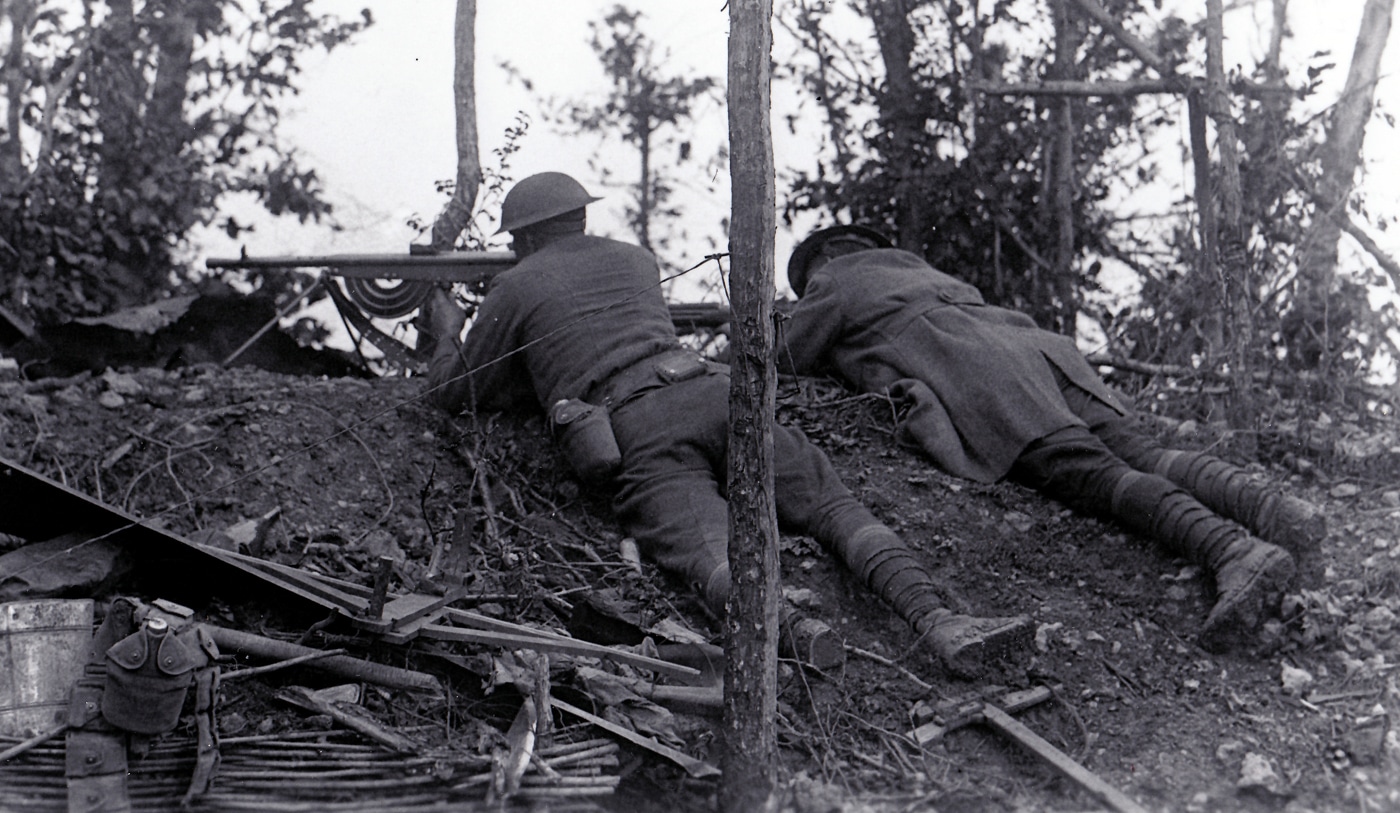
A German advance in the Aisne sector of France was progressing suitably if slowly until they hit a serious snag and an unexpected counterattack at a site marked on maps as Bois de Belleau. To backstop their play elsewhere on the line, the German command had emplaced a ground-holding, defense-oriented unit in and around the woods. It was up against this outfit that the American 4th Marine Brigade launched a legendary attack in June that became one of the most famous chapters in a storied history.
It helps to know a little about the players and their positions in the legend surrounding the Belleau Wood battle. The German outfit holding the area was a veteran trench division, organized, trained and equipped for defensive fighting. The 237th Infantry Division had about 10,000 troops on the roster, emplaced at various strategic points with the 197th Regiment at Mares Farm west of Belleau Wood and the 461st Regiment dug in throughout the forest proper.
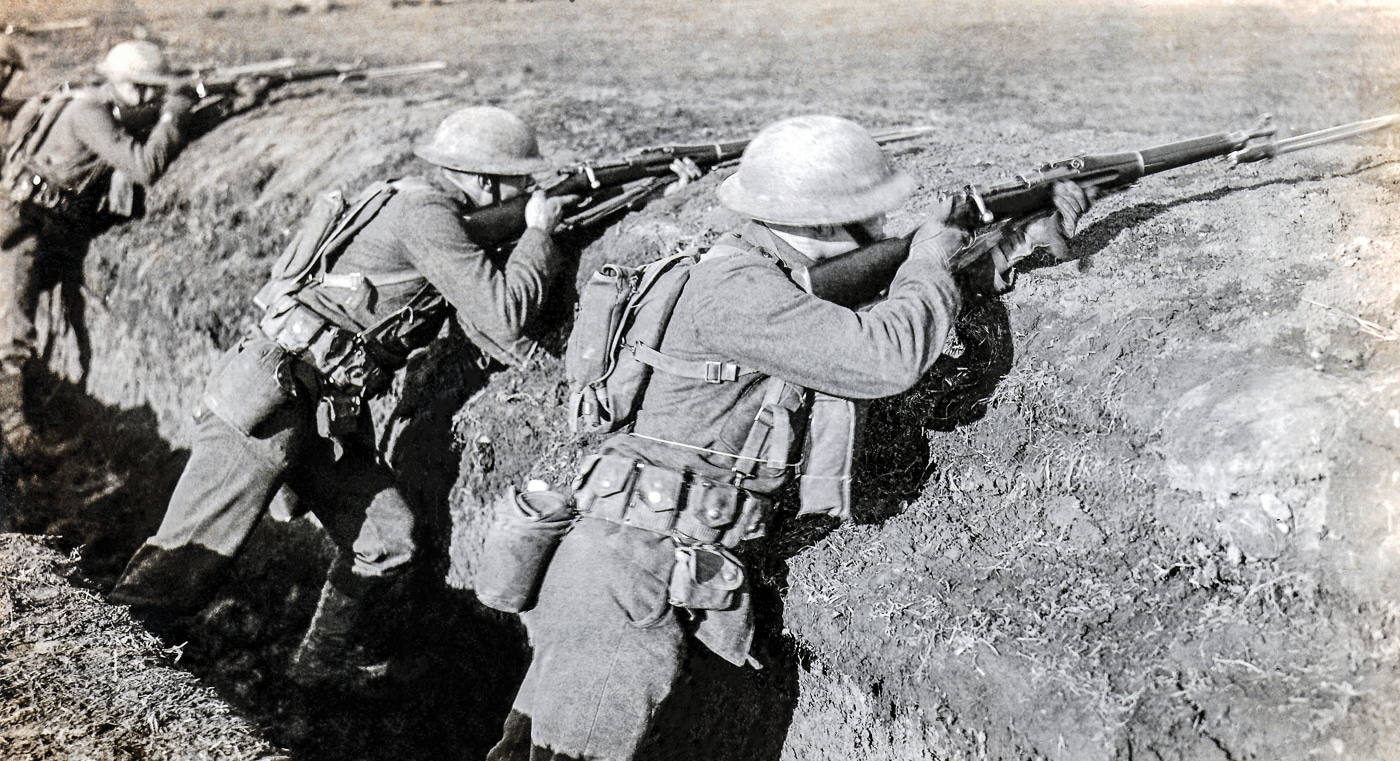
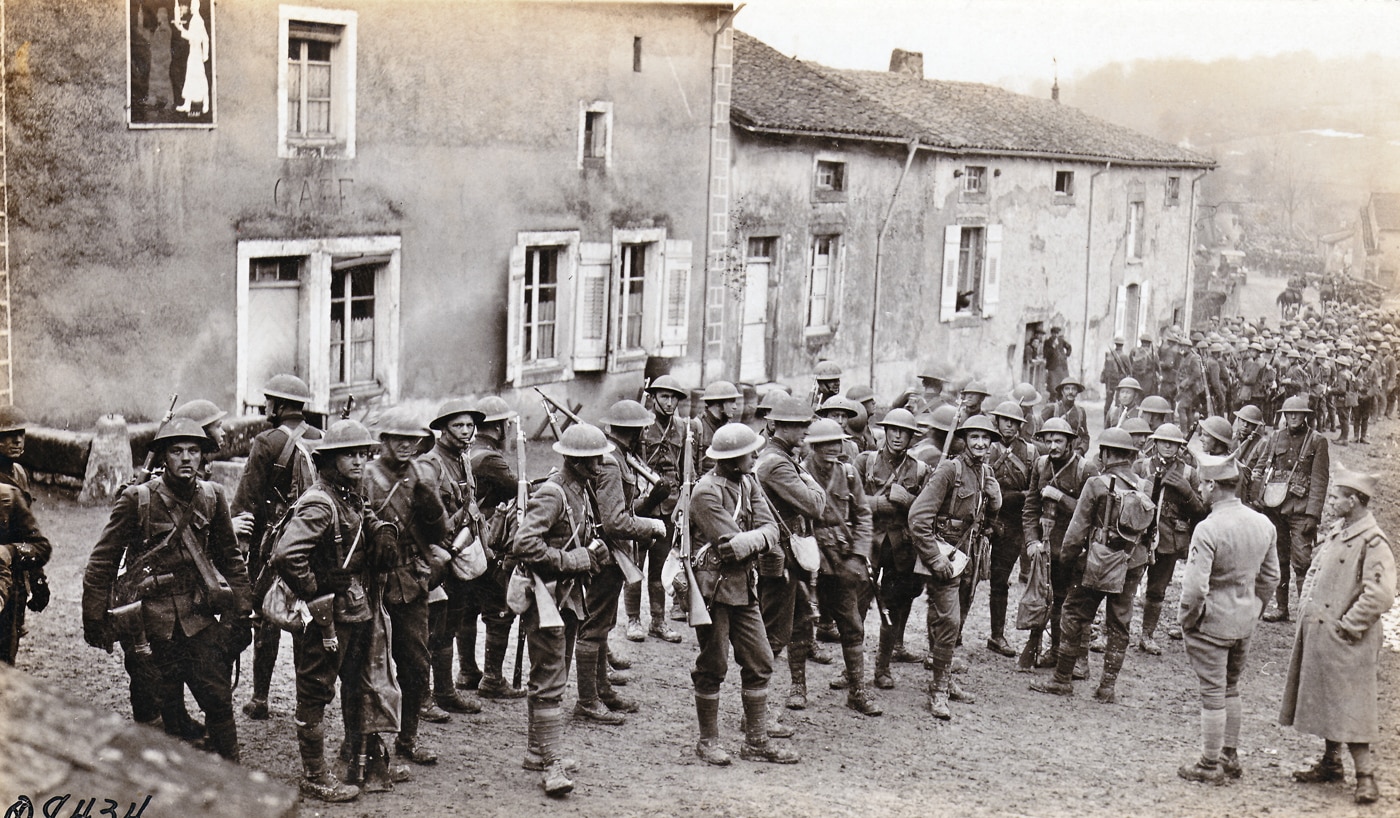
Allied forces involved in counterattacking included the 4th Marine Brigade, composed of the 5th and 6th Marine Regiments and the 6th Machine Gun Battalion, totaling short of 10,000 troops. These were deployed as part of the U.S. Army’s 2nd Infantry Division.
The American Marines were fairly new to the fighting, with limited combat experience in March of that year near Verdun. They were notably short on direct support artillery and had to rely mostly on French or British batteries for what little indirect fire support they could expect.
Individual Marines went into the fight primarily carrying M1903 .30-06 bolt-action rifles backed by M1911 semi-auto pistols or M1917 revolvers chambered for .45 ACP rounds. For squad-level fire support, the Marines had been issued the French Chauchat M1915 automatic rifles re-chambered to fire .30-06 ammo. The guns were notoriously unreliable but employed handily in the fighting at Belleau Wood. Most would rather have had the American Browning Automatic Rifles just coming into standard issue, but there were not enough to go around in the AEF, and as usual, the Marines were on the short end of the supply pipeline.
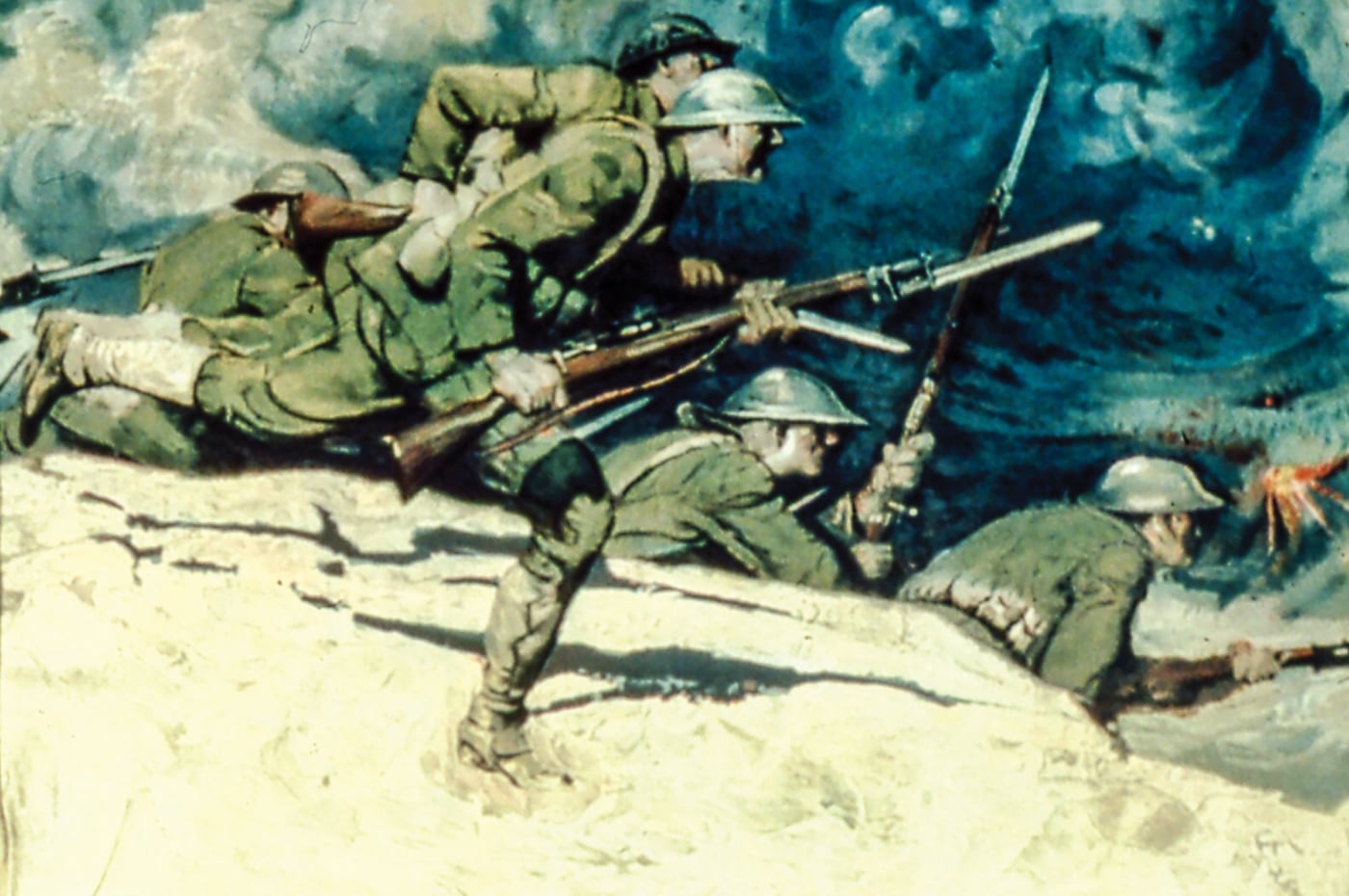
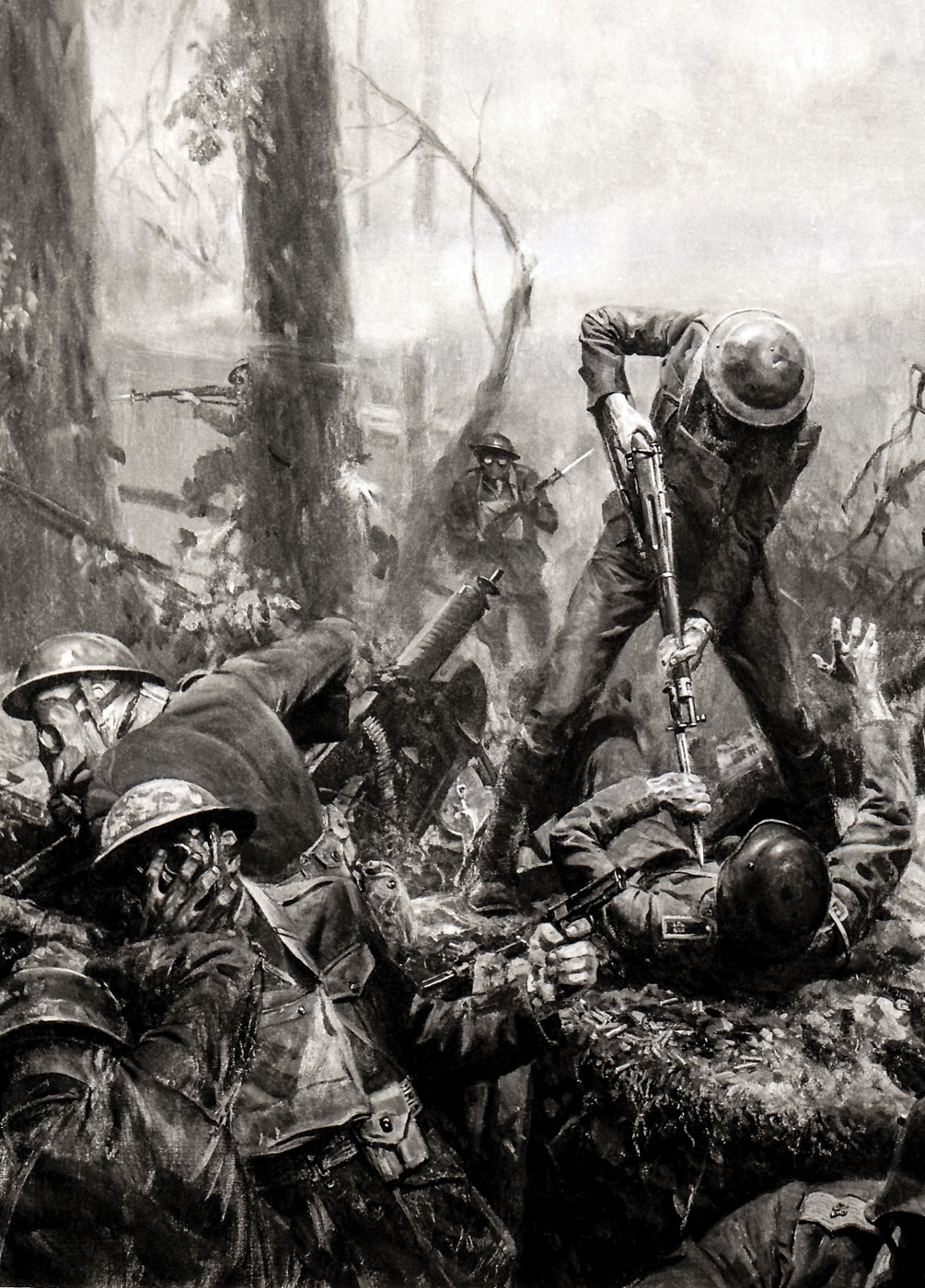
For maneuver support and fire suppression, Marines of the 4th Brigade could call on the Hotchkiss M1914 heavy machinegun or a few British Lewis guns firing .303 rounds that had not been confiscated for use as aircraft armament. The guns were on call for support from the Marine Brigade’s 6th Machine Gun Battalion. When close-quarter push came to bloody shove in Belleau forest, it was grenades, bayonets, clubs and bare knuckles that carried the fight.
In general, common opinion among Allied and enemy commanders was dubious concerning the relatively unbloodied Americans. The Marines in particular were thought to be too underpowered due to their basic organization. The two regiments of the brigade (5th and 6th Marines) had three battalions composed of four rifle companies, each with around 250 Marines, plus the 6th Machine Gun Battalion. The full Brigade strength was just short of 8,500 officers and enlisted men at Belleau Wood. Given the high attrition rate on the Western Front due to deprivation and disease on top of combat losses, those numbers were considered much less than optimal.
One thing the Marine Brigade did not lack was effective leaders. Several Marine Corps luminaries were involved in the Belleau Wood fighting. There was, of course, Gunnery Sergeant Dan Daly who allegedly prodded his men through a wide open and fire-swept wheat field by shouting “C’mon, you sons of bitches, do you want to live forever?” That’s a matter of continuing scholarly dispute … except among Marines.
Familiar Marine leaders emerged from the fight to lead the post-war Corps, including future commandants such as John Lejeune, Clifton Cates, Lemuel Shepherd Jr., Wendell Neville and Thomas Holcomb. Other famous Marine leaders who fought at Belleau Wood included Roy Geiger, Holland M. Smith and Keller Rockey, all of whom went on to lead large units in the Pacific during World War II.
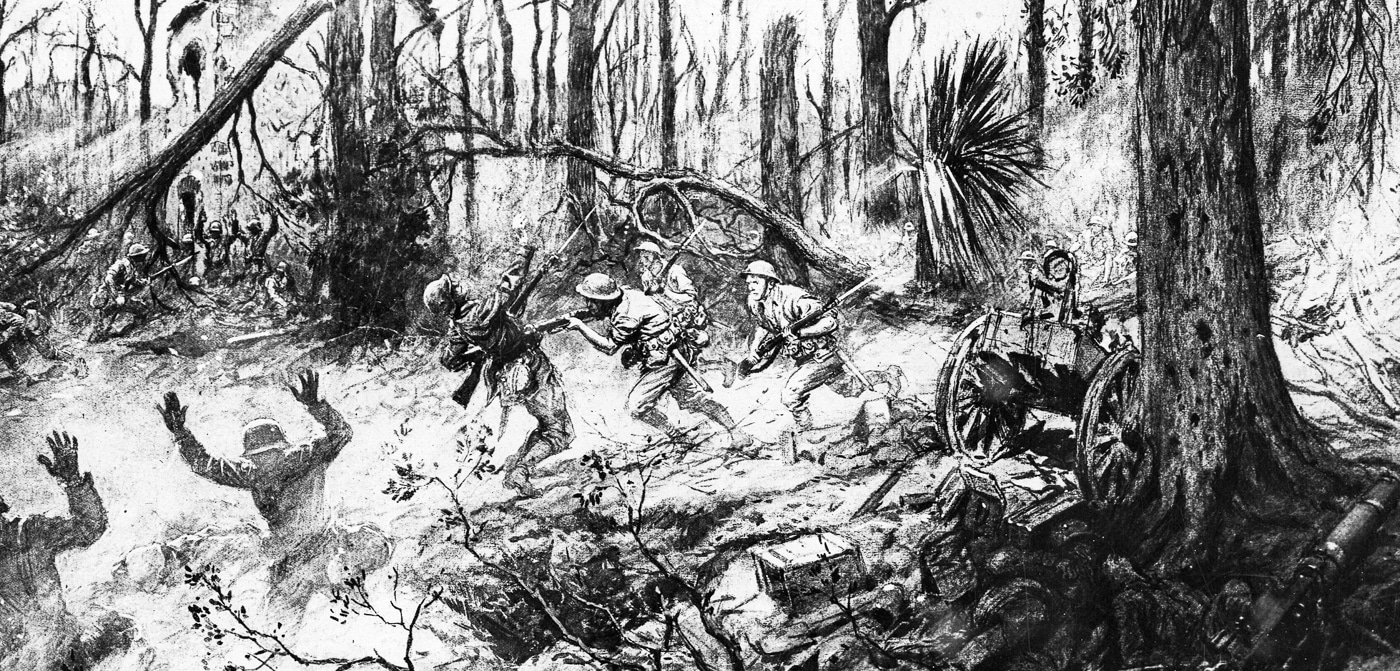
Disregarding the accepted wisdom that an attacking force needed a three to one advantage in manpower to best a defender, the Marines forged ahead on the offensive. On 4 June 1918, the 5th Marines pushed German defenders out of Mares Farm, holding there for the 6th Marines and machine guns to join for the assault on Belleau Wood. That monumental attack rolled in immediately after troops were in place facing the woods and its tenacious German defenders. It immediately turned into a close-quarters bloodbath.
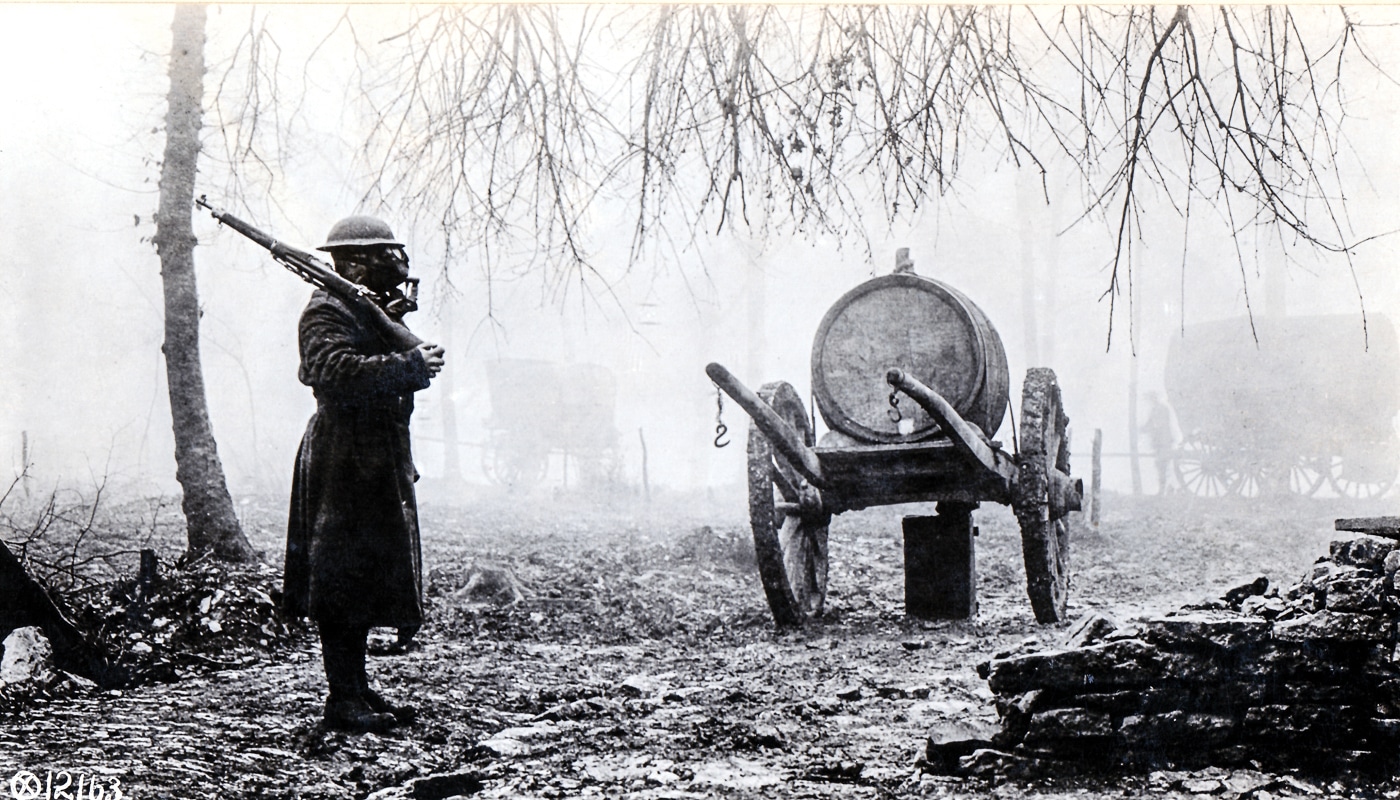
The German outfit holding Belleau Wood was full of veteran soldiers. As mentioned, they were a trench division organized and equipped for defense. They were supported by heavy mortars capable of firing both high explosive (HE) and chemical rounds. The dense woods at Belleau provided plenty of material for building bunkers, machine gun positions and various hardpoints. Attached pioneer units helped dig deep trenches and string complex barbed wire tangles throughout the area. Regular reconnaissance efforts gave the Marines some idea of what they were facing. There would be no problems with finding the enemy. Defenders were literally everywhere inside the one square mile of Belleau Wood. Everyone went into the fight knowing the enemy was dug in deep and determined to hold.
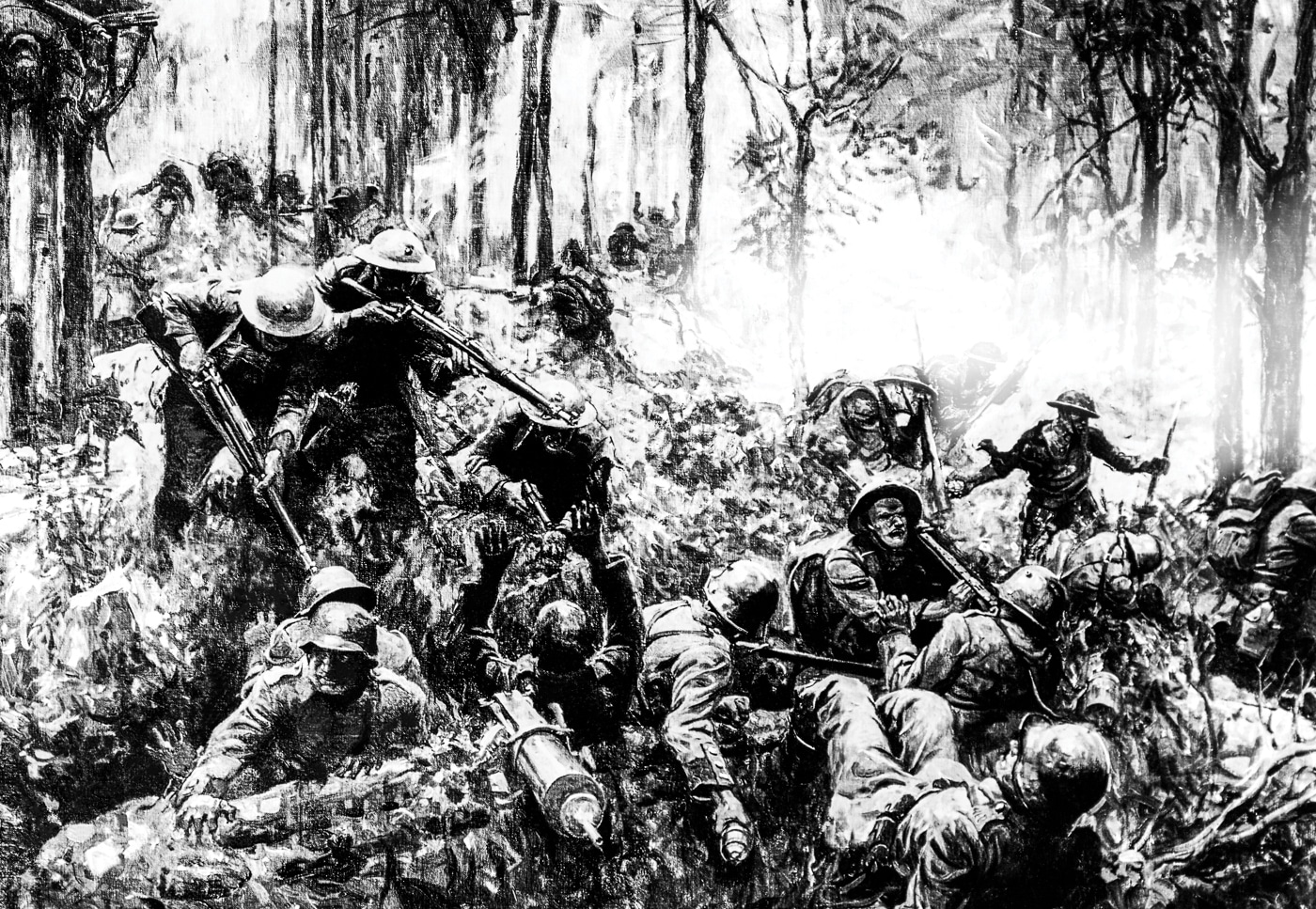
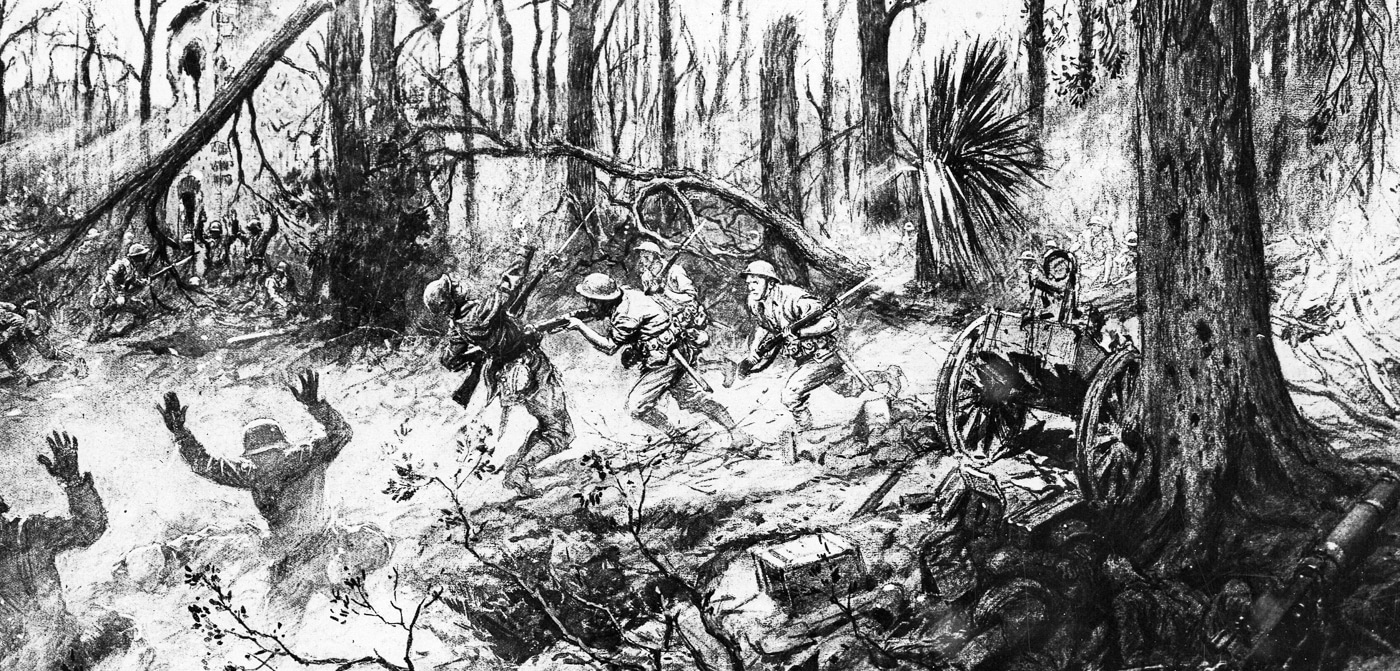
When the assault began on 6 June, Marines immediately suffered horrendous losses as they maneuvered to cross the wide open wheatfields flanking Belleau Wood. They were savaged by concentrated German small arms, machine gun and artillery fire, but continued advancing through the waist-high wheat heading directly for the edge of the forest. When senior Marine leaders fell under fire, junior men jumped up to take their places. Leaping over fallen men, the Marines pressed into the forest where encounters were often at point-blank range.
Exploding shells from enemy and Allied guns splintered the trees, showering the ground with wood splinters along with other deadly shrapnel. Still, the Marines continued the attack, driving deeper into the woods. It appeared nothing could slow their momentum for very long. Even a last-ditch German effort using mustard gas that swirled like ground fog among the shattered trees and shrubbery of Belleau Wood failed. Donning gas masks, the Marines — wielding knives, rifle butts and clubs — continued to close with and kill the German defenders.
It was a brutal slugfest that quickly became a matter of small unit melees and inch-by-inch advances through defending crossfires. A series of bloody small unit attacks and counterattacks went on for two weeks as Army units were moved into positions on the flanks of the woods, allowing the Marines to regroup and reinforce.
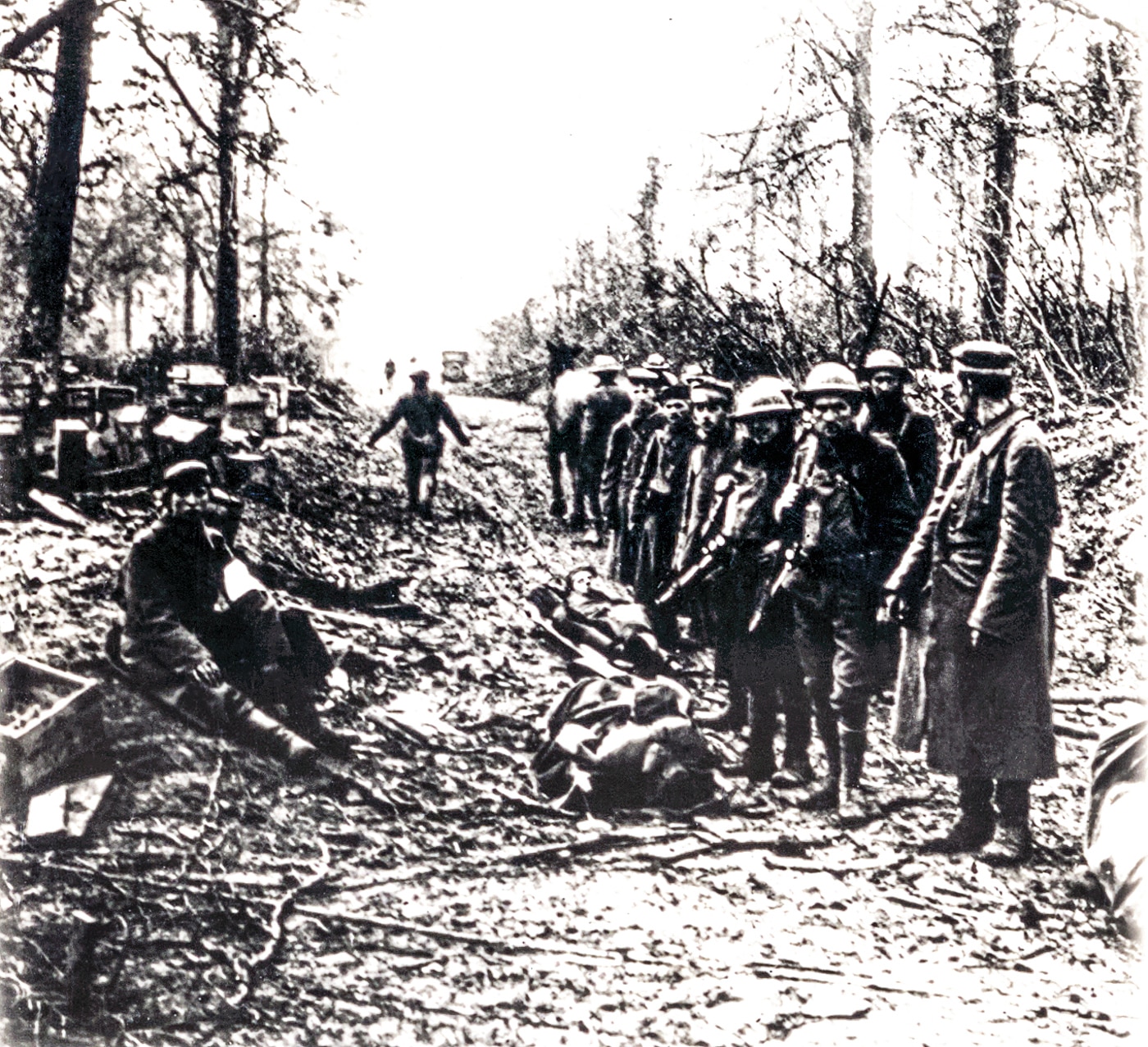
Belleau Wood was attacked at least six times until Marine grit and tenacity finally paid full dividends. The final reckoning showed the Marines had defeated elements of five German divisions in desperate fighting in and around Belleau Wood.
At last, on 26 June, Major Maurice Shearer, commanding the 3rd Battalion, 5th Marines and attachments, led an attack that cleared the final German defenders from Belleau Woods. His after-action report was quickly picked up and trumpeted by the press. “Woods now U.S. Marine Corps entirely.” And that ended one of the most ferocious battles American forces would face throughout the entire war.
At Belleau Wood and surrounding fights, the Marines lost some 4,000 casualties, including more than 1,000 killed in action. By every popular estimate of the time, the Marines should have been soundly defeated. But they were not.
Modern estimates indicate the Germans lost around 9,500 wounded, killed or captured, so the butcher’s bill for Belleau Wood clearly ran in American favor. Perhaps more importantly in the overview, the Marines had proven their combat prowess to both Allied and German commanders.
The value of the Marines to the AEF ratcheted up significantly along with their reputation as fearless fighting men. The French were so impressed that they officially changed the name of the battle site. Belleau Wood became Bois de la Brigade Marine. To this day, Marines serving with the 5th or 6th Marines wear a distinguishing red and green fourragere on their dress uniforms representing the Croix de Guerre, a recognition from the French government of their prowess and performance at the Battle of Belleau Wood.
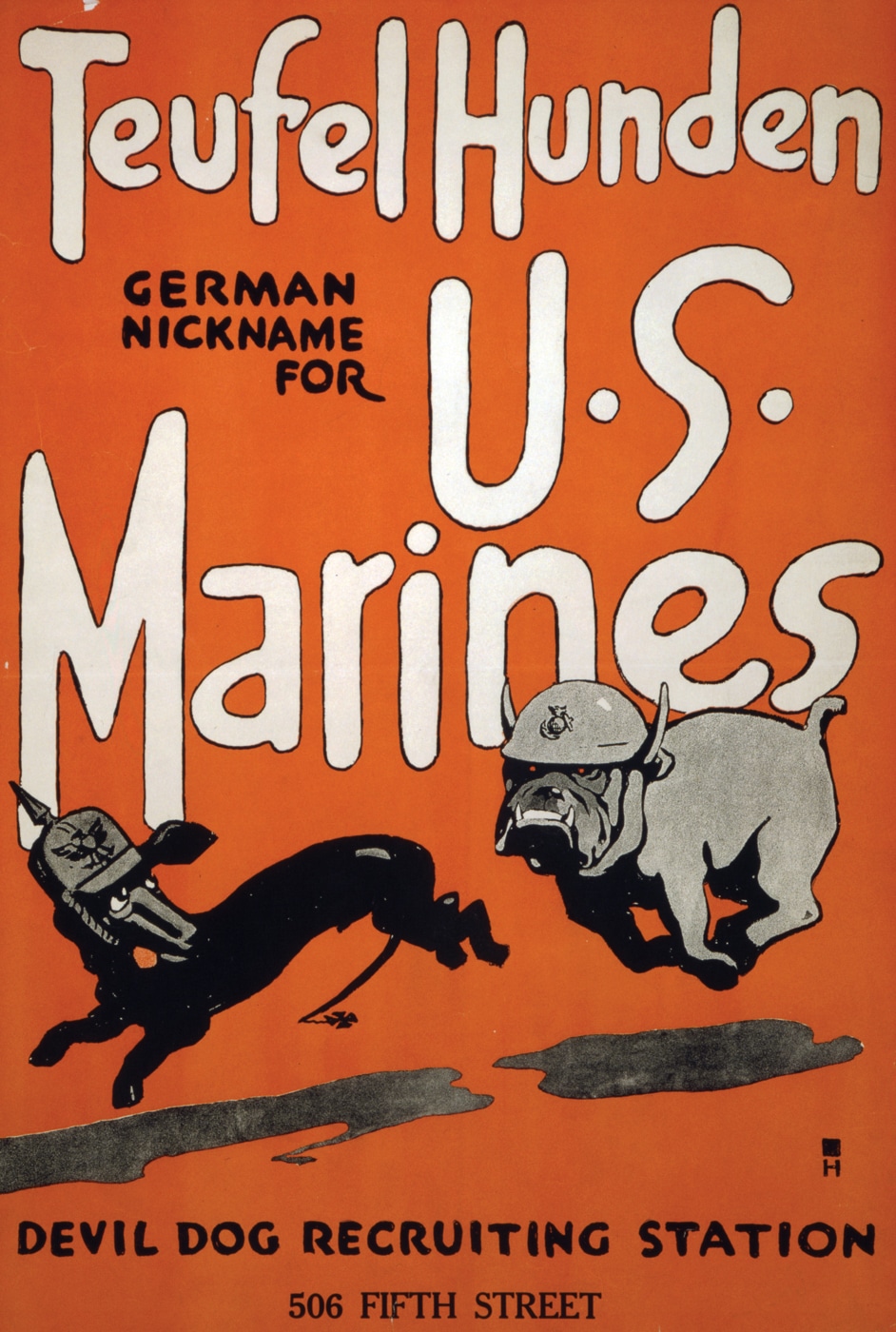
Veteran German defenders were so awed by the violence and tenacity of the American assault and individual aggressiveness in combat that they were left grasping for ways to describe the Marines. There were early reports in German newspapers that the Marines in combat were like Teufel Hunden, or “Devil Dogs.”
The American press and the U.S. Marine Corps were all over that as both headline material and a cocky epithet for use in recruiting literature, along with a pugnacious bulldog mascot that was promptly adopted as a Marine Corps symbol in perpetuity.
But post-war scholars started sniping as official histories were being written. Some questioned the attribution to the German defenders at Belleau Wood. While the term certainly reflected the Marines’ aggressive, relentless fighting prowess and was of powerful value in recruiting and press coverage, some doubted its origin. Red flags began to appear among students of the war on both sides of the Atlantic.
German scholars argued that Teufel Hunden in two words as it appeared in English language press reports and recruiting posters of the period was inaccurate. Proper German grammatical use called for Teufelshunde — one word, including an “s”, which seemed to indicate someone on the Allied slide was indulging in creative license.
Does it matter? Like other tales that compose the rich tapestry of American military history, what really matters is the result. And “Devil Dogs” resulted in a touchstone for modern Marines to recall a distinguished legacy of selfless service to Corps and country.
Battle sites such as Belleau Wood are uttered and revered throughout Marine Corps history along with places like Fallujah, Hue City, Khe Sanh, Chosin Reservoir and Iwo Jima. Those events are ingrained in the Marine Corps collective memory from the first day of boot camp.
Who actually coined the term “Devil Dogs”? Was it shocked and defeated German soldiers at Belleau Wood? Was it a civilian wordsmith looking for a catchy headline? Was it a savvy PR officer looking for a new recruiting hook? If you ask me, it doesn’t really matter. I think the Marines have earned it.
Editor’s Note: Be sure to check out The Armory Life Forum, where you can comment about our daily articles, as well as just talk guns and gear. Click the “Go To Forum Thread” link below to jump in!
“}]]

