

Major events are creating new operational challenges for public safety agencies. Large crowds, drone incursions, protests, cybersecurity concerns and multi-agency coordination requirements are forcing departments to rethink how they manage information in real time.
Thank you for reading this post, don't forget to follow and signup for notifications!
At Motorola Solutions Summit 2026, leaders from Glendale Police Department in Arizona and Vancouver Police Department in Canada described how their agencies are using CommandCentral Aware to bring together cameras, officer locations, drones, alerts and dispatch information into a unified operational view during large-scale events.
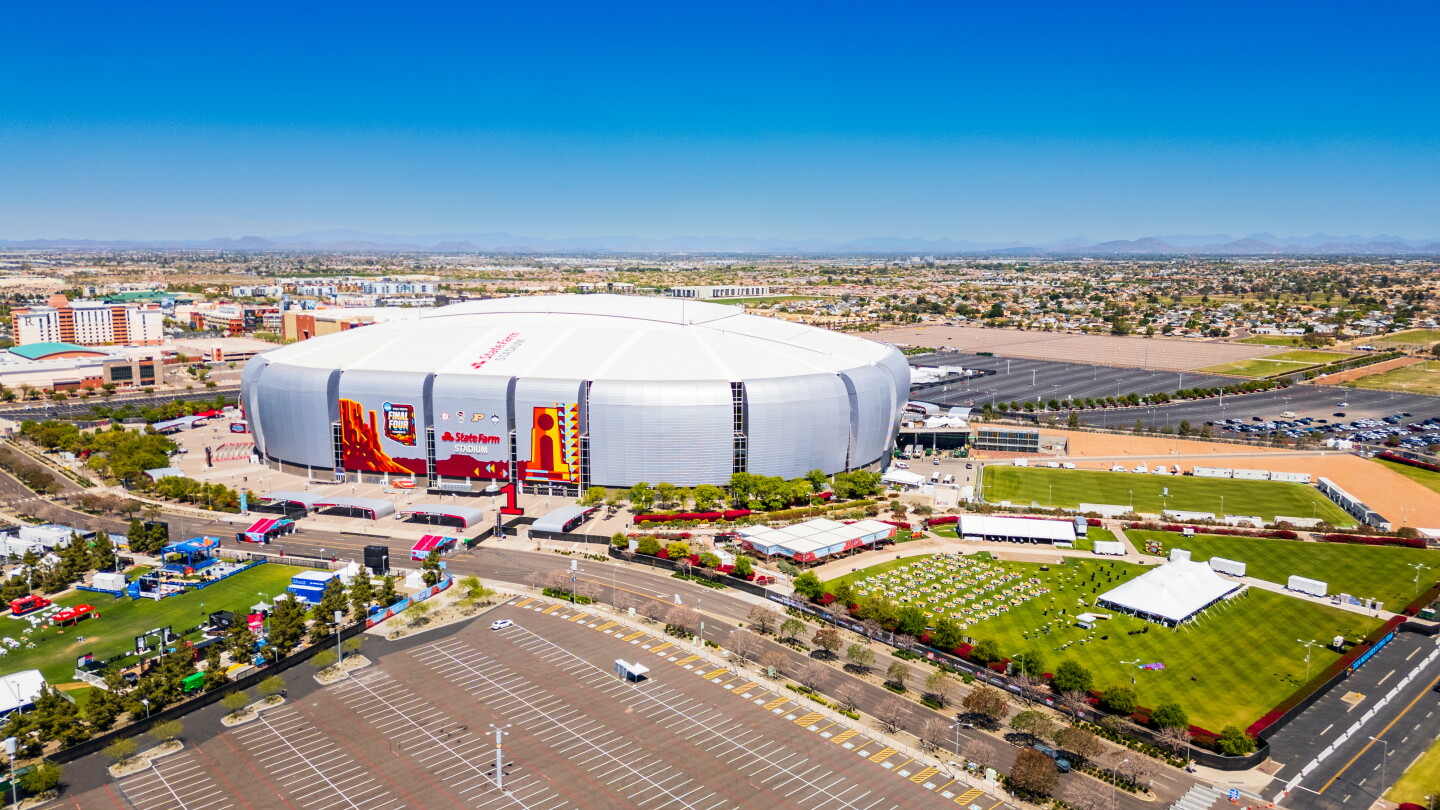
For Glendale PD, the platform has become central to managing events at State Farm Stadium, including NFL games, concerts and high-profile national security events. Sergeant Jonathan Clubb, supervisor of the department’s RTCC, said GIS-based mapping tools allow operators to visualize complex event environments in real time. Glendale worked with the city’s GIS team to create custom map layers for stadium parking lots, helping officers quickly identify incidents or resources in areas where traditional addresses are not practical.
The department also uses the platform as a coordination hub during major events by integrating cameras, CAD information, officer locations and drone data into a single operating picture. Glendale staffs a backup version of its RTCC inside the city’s emergency operations center during large-scale events, where police leaders, federal agencies and partner organizations can access the same operational view.
“Everybody involved at the command level planning of those events, including other agencies, federal partners, anything like that, are all in that room — front and center with our crime center operational,” Clubb said.
Managing emerging threats in real time
Drone detection and mitigation have become an increasingly important part of Glendale’s event security strategy. The department integrates drone telemetry and detection data into the platform, allowing RTCC personnel to identify the location of a drone, its pilot and its launch point during major events.
Clubb said Glendale has worked alongside the FBI during the Super Bowl and with the Secret Service during other high-security events to manage restricted airspace and respond to unauthorized drone activity in real time.
The department also uses GPS-enabled radios integrated into the platform to maintain situational awareness across large event footprints. RTCC operators can monitor officer locations, replay movement history and distinguish patrol officers, undercover personnel and canine units through customized map icons.
According to Clubb, the system helps reduce cognitive overload during fast-moving incidents by surfacing the most important information first. Automated alerts, keyword detection and map-centered notifications direct operators to priority incidents and nearby resources.
“The automation rules help us determine what’s most important,” Clubb said. “We’re telling the operator which calls to pay attention to. We’re showing them where all the closest resources are to that incident.”
Preparing for the operational demands of FIFA
Vancouver Police Department is applying many of the same concepts as it prepares for the 2026 FIFA World Cup, where the city will host seven matches along with fan festivals, team activities and international delegations.
Deputy Chief Don Chapman described the event as a massive citywide operation involving transportation management, protective escorts, crowd control, cybersecurity and tactical coordination. Vancouver’s operations center will use CommandCentral Aware to integrate officer locations, CCTV feeds, alerts and communications during the tournament.
One of the department’s biggest concerns is the volume of movement throughout the city. Teams, referees and FIFA officials all require escorts between airports, hotels, training facilities and stadiums. Vancouver PD is using GPS-enabled Motorola radios integrated into the platform to coordinate those movements and monitor deployments in real time.
The city is also preparing for geopolitical tensions and large-scale demonstrations that often accompany international sporting events. Chapman noted that Vancouver already manages roughly 4,000 protests each year, making crowd management and intelligence gathering a key focus ahead of FIFA.
The department is participating in FIFA’s international “spotter” program, in which police officers from participating countries travel with their national teams to help identify known hooligans or high-risk supporters.
Keeping officers and the public informed
Public communication is another major component of Vancouver’s event planning strategy. The city expects large crowds at fan festivals that will operate daily in a 25,000-seat venue
with concerts, match broadcasts and heavy pedestrian traffic.
To support both public safety and public communication, Vancouver PD is pairing CommandCentral Aware with Motorola’s Rave alerting and community engagement tools. The department plans to distribute multilingual alerts through text, email, mobile apps and social media while also using geofencing to target notifications to specific areas.
Officials said the goal is not simply to push information out, but to ensure the public receives timely, relevant information during rapidly changing situations such as road closures, protests or emergencies.
Department leaders said the technology investments being made for FIFA are intended to outlast the tournament itself. Vancouver PD views the event as an opportunity to accelerate modernization efforts and build a long-term operational ecosystem connecting radios, cameras, alerts and community engagement tools.
“This has now become our new norm,” Chapman said. “We see the leverage here. We see the possibilities.”
Watch a special episode of Policing Matters at Motorola Solutions Summit 2025 where host Jim Dudley and guests explore how agencies are using technology to expedite the response to community and enterprise-reported 9-1-1 incidents.

