

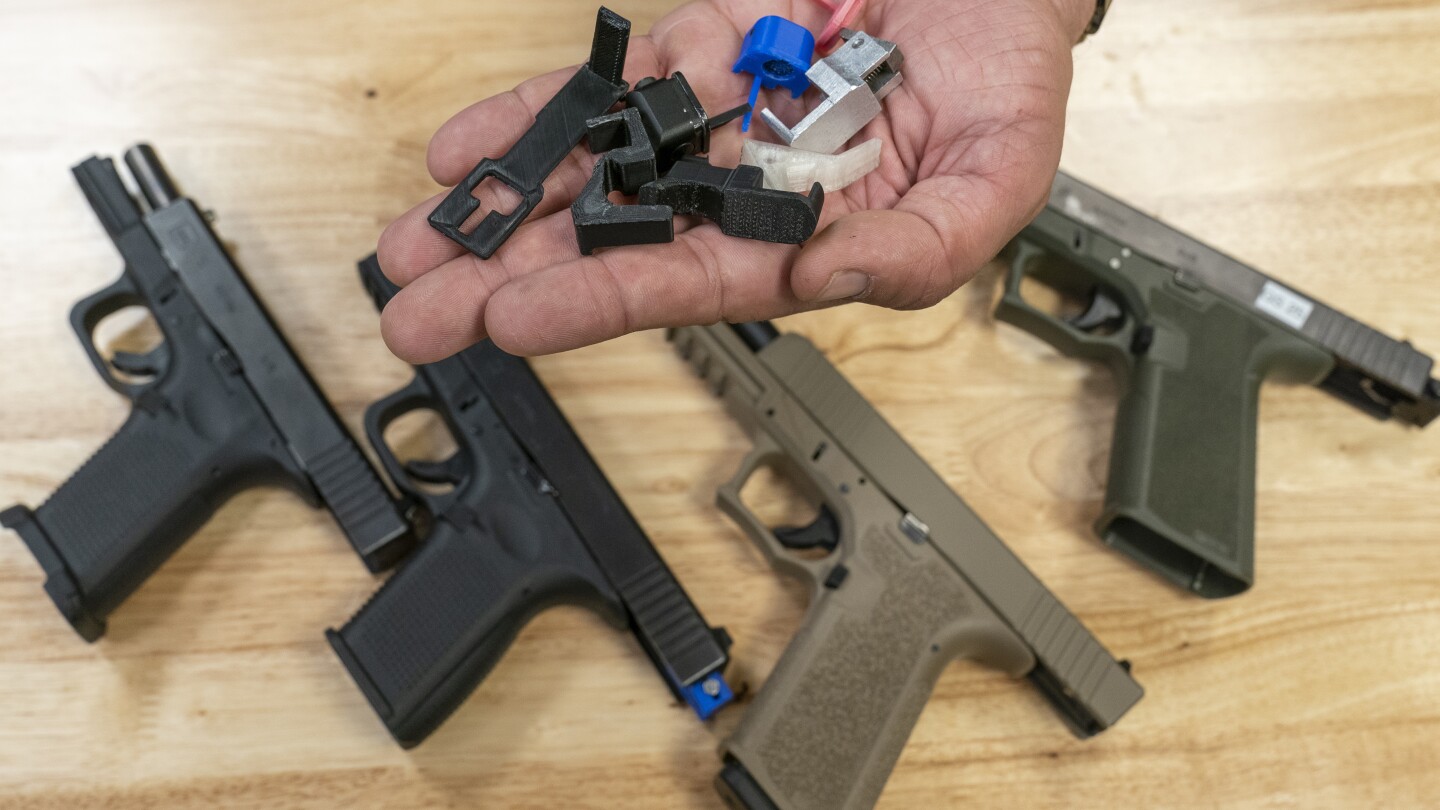
Connecticut lawmakers recently passed legislation that Governor Ned Lamont has indicated he will sign that targets trigger conversion systems, a move critics say could restrict future sales and transfers of certain Glock pistols in the state.
Thank you for reading this post, don't forget to follow and signup for notifications!
Connecticut House Bill 5043 makes it a crime to possess firearms capable of automatic fire, including pistols equipped with illegal conversion devices commonly known as “switches.” The bill defines prohibited weapons as firearms that can fire automatically “more than one projectile … by a single function of the trigger,” including:
- Convertible pistols equipped with conversion devices
- Parts designed to convert firearms into machine guns
- Combinations of parts from which a machine gun can be assembled
Illegal conversion devices drive the debate
The legislation appears to be driven, at least in part, by growing concerns over illegal machine gun conversion devices. According to the ATF, law enforcement agencies have reported a 570% increase in recovered conversion devices over the past five years. These devices — commonly referred to as “switches” — can convert legal semiautomatic pistols into fully automatic weapons prohibited under the National Firearms Act.
The conversion devices at the center of the debate are not manufactured by Glock. Federal authorities have linked many of the illegal “switches” recovered in criminal investigations to overseas sellers, including China, as well as domestically produced 3D-printed devices. According to ATF officials, some of the devices can convert a semiautomatic Glock pistol into a fully automatic weapon in seconds.
Supporters of the bill, which passed largely along party lines in the Connecticut House, say the legislation is intended to restrict the sale of pistols that can be readily converted into machine guns using simple tools. Critics note the measure disproportionately affects Glock pistols, which are among the most widely owned handguns in the United States and are commonly used by law enforcement agencies nationwide.
How the bill affects Glock owners and dealers
For Glock, the legislation appears to primarily affect older-generation pistols manufactured on or after October 1, 2026, rather than the company’s newer redesigned models. The bill does not appear to prohibit possession of previously owned Glocks and may effectively grandfather in firearms already in circulation.
Private ownership and transfers would still be allowed in many circumstances, although licensed dealers could face new restrictions on future sales and resale of affected models. Notably, Glock has not yet publicly commented on the Connecticut legislation.
Glock’s redesign and legal pressure
The company’s silence comes as Glock faces increasing legal and political pressure over illegally modified firearms. Several states and municipalities have pursued lawsuits alleging the company failed to adequately address the rise of conversion-device-equipped pistols used in crimes. Against that backdrop, Glock announced in October 2025 that it would introduce a redesigned “V” series of pistols, which began reaching the commercial market in January 2026.
The Glock “V” Series incorporates anti-conversion features designed to make illegal conversion more difficult. The slide cover plate has been recontoured to make it harder to convert these pistols to full-auto. The redesign could help address some of the concerns driving both the Connecticut legislation and ongoing litigation surrounding conversion devices.
A review of Glock’s website shows the company is already emphasizing its newer models. The commercial product lineup prominently features the GEN6 “V” series, while the law enforcement section shows only the GEN4 and current models.
What it means for LEOSA carriers
For current Glock owners, especially law enforcement officers and retirees carrying under the Law Enforcement Officers Safety Act (LEOSA), the bill appears to have no direct impact on LEOSA carry rights or lawful ownership of a Glock. However, it would affect attempts to convert the weapon to fully automatic or sell it to a licensed gun dealer who, after October 1, 2026, could be prohibited from reselling it, effectively limiting the future resale market for that Glock.
As the “V” series dominates the market, Glock may eventually phase out parts for older generations. That could leave owners of legacy duty weapons scrambling for aftermarket parts just to keep their sidearms operational — a concern for those who depend on them for protection.
The broader challenge lawmakers still face
Lawmakers must also eventually address the role that China and overseas manufacturers play in the influx of these devices, rather than focusing solely on the platform used by law-abiding citizens.
For Glock, the redesign appears to be a strategic move aimed at protecting the company’s long-term viability and distancing the brand from the growing association with illegally converted firearms, even if it ultimately accelerates the phaseout of legacy models.

