

[[{“value”:”
Thank you for reading this post, don't forget to follow and signup for notifications!
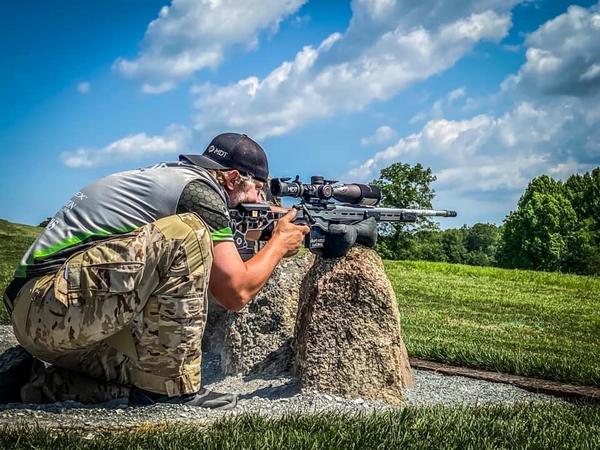
The Centerfire Director of Precision Rifle Series opened up to us about the PRS.
Take a look at this insider’s view of what you need to succeed in the Precision Rifle Series.

The Precision Rifle Series, often just called PRS, has grown into the premier long range rifle competition in the world, attracting thousands of shooters from every walk of life. It’s a blend of marksmanship, strategy, adaptability, and mental grit that has transformed traditional long-range shooting into a competitive sport that’s as intellectually demanding as it is physically precise.
Also, the Precision Rifle Series (PRS) allows training to become and even greater force in your rifle shooting ability. Instead of paper targets on a backstop, the training allows more of an understanding of what your gear can actually do and how your mind can also add to that equation. This will allow a happy partnership of rifle and shooter, which will add to your marksmanship skills and ultimately your competition scores. Sounds like a great idea right? Train harder and smarter and be all you can be with your rifle shooting abilities for all distances. Put the time in and you will certainly see the fruits of your rifle training labor. Mr. Stiner was certainly are go to guy to answer a few questions that we are sure our readers would want to know more about.
Mr. Stiner, thank you for answering a few questions for us about the Precision Rifle Series. To begin with, how did the tactical division begin at the Precision Rifle Series?
I do not have the exact reason or way in which the tac division began. I can speculate that several of original creators of the PRS had military backgrounds and this was a way to pay homage to the rifles they used while in service. I’m sure I am way off with that one. Shannon Kay at KM would be best resource for historical information.

We feel the following is are great purchases for the precision rifle shooter:
- Invest in a quality optic with reliable turrets and clear reticles.
- Use a stable rifle platform with a decent trigger and match grade barrel.
- Employ a reliable bipod and shooting bag system.
- Track your data with a ballistic app or dope book.
Mr. Stiner, what gear do you feel is absolutely vital for success in the Precision Rifle Series?
As much as I would like to say that the PRS is not a gear race, I would be lying. A custom rifle built by one of the many fantastic gunsmiths that service the community is essential. Custom rifles and quality components have tighter tolerances and generally less chance of irregularities in the manufacturing process. In addition, god for bid you have an issue one of the gunsmiths will get you taken care of a lot quicker than an OEM manufacturer.
Optics are the number 1 item you don’t want to cheat on regardless of the division you shoot in. The PRS is all about making down range corrections on the fly and a good optic is essential to achieving this.
The rest of the rifle build is based on shooter preferences. Choosing a stock, chassis, or a line of accessories to outfit their rifle. Regardless what a shooter chooses there is one fundamental idea that must be achieved with accessories and weight, a balanced rifle. A balanced rifle is the best way to start mitigating recoil and seeing down range impacts.
Other items that are essential are:
– shooting bags (Armageddon Gear / Weibad)
– ballistic calculators such as the Vortex Ace or Kestrel 5700. There are also many affordable apps out there to choose from.
– a good backpack (Eberlestock) for transporting and organizing gear.
The best place to start the journey down the tactical road is the same as in any division of the PRS. Grab your rifle and jump in both feet first. I am a huge proponent of learning through doing. The fact that both the 223 and the 308 have excellent barrel life it is a great starting point for any shooter because they aren’t replacing barrels multiple times a year.

We believe that frequent training is a huge part to being a successful rifle shooter. With controlled breathing techniques, and visualizing your successful shots, and the ability to recover quickly from a “bad shot” will keep your mind in the game. Have a good goal for your practice time and also take notes. Be methodical and calm above all else to achieve your maximum accuracy possible. Mr. Stiner, what are your thoughts on training?
When I started I focused a great deal on shooting positionally. Ammo was more affordable and I utilized a 223 as a trainer. 600+ rounds a week for almost 2 years allowed me to really hone some skills. Now, shooters can utilize the Inside dry Fire training system.
-Now, I spend all of my time on data collection and ensuring my rounds impact where my ballistic calculator tells me they will hit.
New shooters should be focusing on target acquisition. That is the area I see most shooters struggle. In addition, learning how to utilize 1 bag to shoot positionally to prone will help in reducing the gear need to take and make them more versatile. It is also imperative to note that the PRS communities are one of the most helpful I have ever been a part of. Just showing up to a match and asking guys to see and try their gear is not outside the realm of possibilities. This allows them to see items that are generally not available at the local outdoor store. It is reminiscent of an elementary school show and tell.
Real world application for anything PRS, not just the tactical division is limited to either law enforcement or hunting. Aside from that the tactical division does help build perseverance. Due to the higher recoil and lack of BC compared to the more popular 6mm rifles it definitely makes it harder to achieve impacts in challenging conditions.
In summary, your friends here at American Shooting Journal must also stress three fundamentals that every shooter should use, regardless of whether you are a competition shooter or a hunter, or well both!
Trigger control and sight alignment are critical for success.
At first glance, trigger discipline feels obvious. But in precision shooting, it’s everything. Your stance, grip, sight picture, and trigger pull must all work in harmony. Training drills focusing solely on a “surprise break” where you let the shot surprise you to help reduce flinching and inconsistent shots. Make slow, deliberate shots at known distances to reinforce smooth trigger pulls. This is the core skill that all other performance builds on. Practice makes perfect so practice this one a lot!

Ammo cost got you down? Remember that while a lower caliber, such as a .22 long rifle, will not duplicate the ballistics of a larger competition caliber, it can and will help you with proper breathing and trigger pull. Don’t discount the small bore caliber for major help for practicing on your overall shooting scores when it really counts. Even air guns have a place and that might allow backyard practice too. Now that is a major win for training and of course fun!
Know your rifle’s zero and all the ballistic data available for your specific load.
Before you can trust your rifle in competition, you must build a ballistics profile. That means:
- Sitting down with a ballistic calculator.
- Identifying your exact ammunition’s velocity and ballistic coefficient.
- Building a dope chart that includes drops and wind holds at 100, 200, 300, … up to 1,200+ yards.
But theory alone won’t cut it. You must confirm your data on the range. Shoot groups at incremental distances and track how your bullet actually behaves in your rifle. Fine-tune your optics and your dope sheet until your theoretical and real world numbers align. Courses offered by training outfits or clubs often incorporate this essential phase.
Be a pro at spotting, calling changes in wind and overall environmental awareness of anything that can affect your shooting ability and ballistics.
Target engagement in PRS isn’t “set up, shoot, repeat.” You’re reading wind flags, mirage, humidity, temperature, and even barometric pressure, all of which shape bullet flight. Great shooters spend enormous time mastering these invisible factors because a 10 mph crosswind can push a .308 projectile dozens of inches at 800 yards. That can mean a complete miss if you are not careful!
Practice wind drills frequently:
- Identify the direction and strength.
- Practice adjusting your aim point based on wind estimates.
- Use mirage through your optics to judge wind shifts.
Advanced training often includes simulated environmental conditions and dramatic wind changes to build confidence. Use all tools and seasoned shooter’s experiences to ultimately hone your shooting ability to the max.
Remember to also stop on over to the Precision Rifle Series website to learn more on how their competitions will ultimately make you a better long gun shooter.
“}]]

