


[[“value”:”
Thank you for reading this post, don't forget to follow and signup for notifications!

William Lawson
If you’re into firearms at all, you’ve likely heard of the Bureau of Alcohol, Tobacco, Firearms, and Explosives, more commonly known as the ATF. Strong opinions abound on this agency, but politics aside, what exactly is the ATF and what role do they play in federal law enforcement?
Given the ATF’s central role in the firearms and accessories industries, as well as private ownership of those items, that’s good information to have. So, let’s take a look at the ATF, who they are, what they do, and a few current topics of interest in which they are involved.
What is the ATF?
The ATF’s website states that the “ATF is a law enforcement agency in the United States Department of Justice that protects our communities from violent criminals, criminal organizations, the illegal use and trafficking of firearms, the illegal use and storage of explosives, acts of arson and bombings, acts of terrorism, and the illegal diversion of alcohol and tobacco products.”
The ATF was established as an independent agency, operating under the Treasury Department, on July 1, 1972. But the ATF traces its lineage all the way back to July 31, 1789, when the First Congress imposed a tax on imported spirits to help pay for the Revolutionary War. Those taxes were enforced by government agents who set the stage for such actions throughout American history.
Enforcement organizations’ names changed over the next 183 years, but their primary focus was illicit alcohol sales aimed at circumventing taxes. This mission ramped up considerably during the Prohibition Era, in which all alcohol production, importation, sales, and consumption was illegal in the United States. Prohibition created a lucrative black market, and powerful organized crime gangs stepped up to provide the spirits Americans desired.
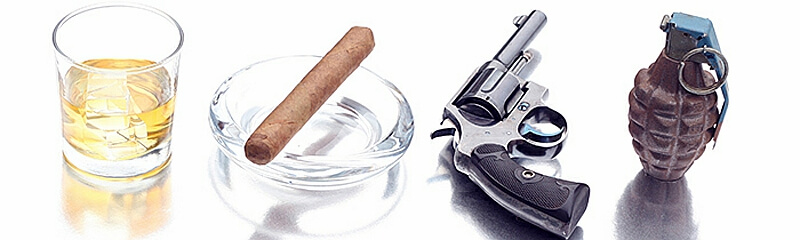
The vicious Prohibition gang wars led directly to the National Firearms Act of 1934 (NFA), the first major gun control law in American history. Being a federal law, federal agencies were tasked with its enforcement. And since NFA restricted items were controlled through a special tax program, the “tax stamp,” much of that enforcement fell to the Treasury Department.
The 1968 Gun Control Act (GCA) updated the NFA in response to the assassinations of John F. Kennedy, Robert F. Kennedy, and Martin Luther King, Jr. The Treasury’s Alcohol Tax Unit was reorganized into the Alcohol and Tobacco Tax Unit (ATTU) and tasked with enforcing the GCA. Explosives investigations were added to the ATTU’s responsibilities in 1970. The ATF was created from the ATTU in 1972, assuming the latter agency’s responsibilities and reporting directly to the Treasury Department’s Office of Enforcement, Tariff and Trade Affairs, and Operations.
The Modern ATF
The modern ATF still deals with issues regarding alcohol and tobacco, primarily how terrorist and criminal organizations use those products to fund their operations. But its highest profile area of responsibility is firearm and explosives regulation, along with arson investigation. We will focus primarily on firearms from this point.
The 2002 Homeland Security Act transferred the ATF from the Treasury Department to the US Department of Justice. As such, the ATF operates under the purview of the US Attorney General. A separate agency, the Alcohol, Tobacco Tax and Trade Bureau, remained in the Treasury Department and deals with tax and revenue issues.

The Justice Department is part of the Federal Government’s Executive Branch, but Congress has certain oversight privileges as part of the Constitutional checks and balances system. ATF operations fall under the House Oversight and Judiciary Committees and the Senate Judiciary Committee, which can hold hearings and subpoena officials and documents. The committees do not set agency policy. That power is reserved for the ATF Director, the Attorney General, and, ultimately, the President.
ATF agents operate from field offices across the country and the agency has Rapid Response Teams operating within the US and overseas. The National Response Teams work with state and local law enforcement to investigate large fires, explosions, and bombings. The International Response Teams respond to international requests for aid investigating major fire and explosive incidents.
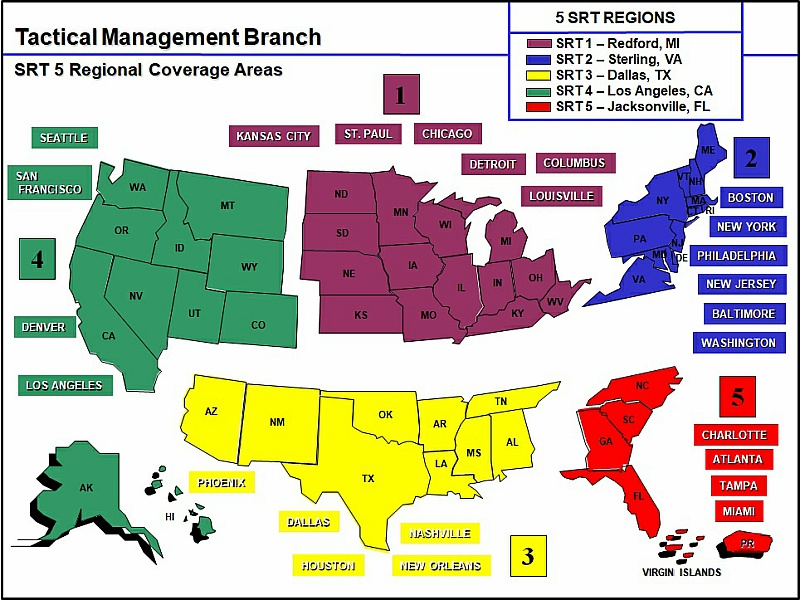
The Special Response Teams are described as “elite tactical groups that rapidly respond to high-risk law enforcement operations and conduct criminal investigations.” There are five Special Response Teams located within the United States, based in Redford, Michigan; Sterling, Virginia; Dallas, Texas; Los Angeles, California; and Jacksonville, Florida. Each team covers a certain area of the country.
The ATF is responsible for inspecting Federal Firearms Licensees (FFL), to ensure compliance with federal law regarding the sale and distribution of lawful firearms. Each FFL is subject to a yearly inspection of their premises and records. Failure to comply can result in the forfeiture of the license, meaning they can no longer engage in firearms sales.
ATF Leadership
Acting Director Daniel P. Driscoll currently leads the ATF after the previous Director, Steven M. Dettelbach, resigned when the Biden Administration left office. President Trump appointed Driscoll as Acting Director until a formal Director could be confirmed. Driscoll also serves as the Secretary of the Army.
Trump recently nominated ATF Deputy Director Robert Cekada to serve as the agency’s full-time Director. Cekada has been with the ATF since 2005, working as a Special Agent in the Baltimore and Tampa Field Offices; a project officer in the Firearms Division; Assistant Special Agent in Charge of the Philadelphia Field Division; and Special Agent in Charge of the Miami and Baltimore Field Divisions before his promotion to Deputy Director in April of 2025.
Cekada came to the ATF from the City of Plantation, Florida Police Department, and the New York Police Department’s Anti-Gang and Street Crime Units, where he was promoted to detective.

ATF Processes
The ATF oversees firearms sales, not only for dealers, but also for purchasers. The processes differ based on the nature of each individual transfer and are perhaps best explained through the relevant ATF application forms.
ATF Form 4473
Non-NFA sales are controlled by means of the ATF Form 4473, which is required for all FFL purchases and for private sales in some states. Form 4473 asks various questions, the answers to which can disqualify a prospective purchaser and serve as the basis for the mandatory FBI background check.
The form has undergone several changes over the years, but still records the same basic information.
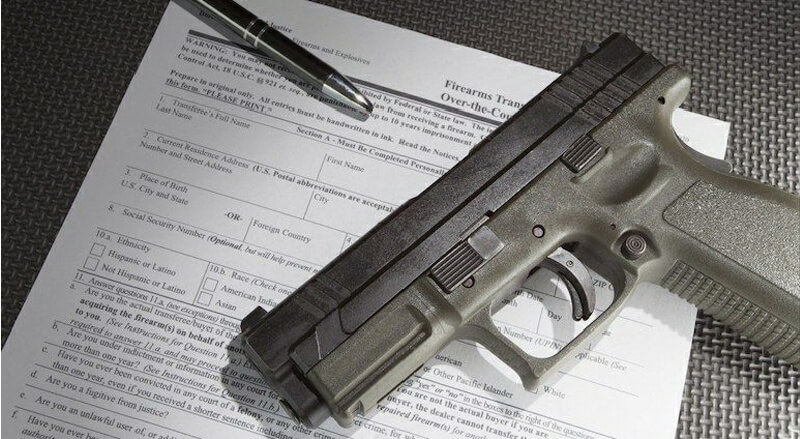
FFLs are required to keep all Form 4473s for 20 years and provide them to the ATF on request. After the mandatory 20 years, the forms are supposedly destroyed, though there is some dispute over whether that actually happens.
The ATF is technically not permitted to enter 4473 information into a searchable database, since that would constitute an illegal federal firearms registry.
NFA Forms
The ATF also administers the NFA, and all applications to purchase NFA items, such as suppressors, short-barreled rifles (SBR), and short-barreled shotguns are made through the agency.
Since the National Firearms Act (NFA) remains a regulatory law, citizens wishing to purchase or possess an NFA-restricted item such as a sound suppressor or short-barreled rifle (SBR) must still apply through the ATF and pass an enhanced background check. However, as of January 1, 2026, the mandatory $200 tax stamp fee is eliminated for these items, though the tax remains in effect for machine guns and destructive devices.
The enhanced background check includes fingerprinting and passport-style photos. Let’s look briefly at each of these forms.
ATF Form 1
The ATF website says that the Form 1 “is to request approval to make a NFA firearm.”
Technically, a skilled machinist could build a firearm from scratch. That has been legal until very recently, and still is, as long as new rules are followed. The ATF’s recent Final Rule on Frames and Receivers mandates that all such firearms be serialized, where before, that was only necessary if the firearm was manufactured for sale.
But Form 1 only applies if the firearm in question falls under the NFA’s restrictions, meaning it’s a short-barreled rifle (SBR) or shotgun (SBS), or is a homemade suppressor. If so, the maker is required to complete a Form 1 and await ATF approval BEFORE completing the item.
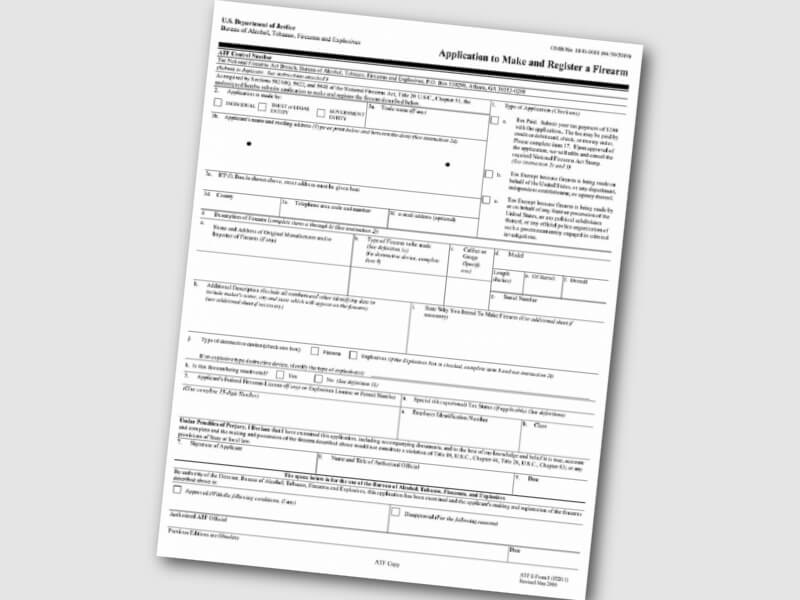
Most people don’t make their own firearms or suppressors. But Form 1 is also required if an individual wants to add a stabilizing brace or stock to a pistol, which would make it an SBR, or perhaps shorten a shotgun barrel to less than 18 inches, making it an SBS.
Again, an approved Form 1 and accompanying tax stamp is necessary before the item reaches its final configuration. It should also be noted that items not specifically classified as suppressors, but function as such, are also illegal under the NFA, unless authorized through a Form 1. State laws may also apply.
ATF Form 3
Most individuals will never fill out a Form 3, which governs NFA transfers between licensed dealers. If an individual purchases a suppressor from an online dealer and has it shipped to their local FFL, a Form 3 controls that process.
ATF Form 4
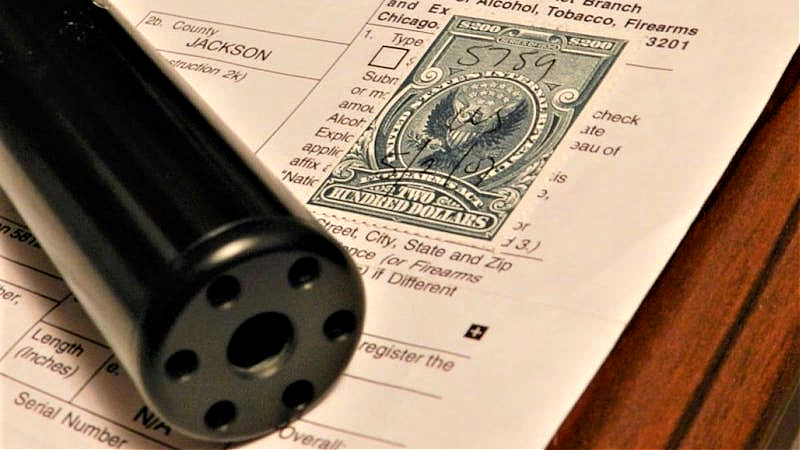
The Form 4 is used when purchasing an NFA item like a suppressor. Like the Form 1 process, Form 4 requires the relevant personal information for the background check and registering the purchased item. Since it governs a retail sale, dealers will often help the purchaser with the Form 4 process.
One interesting aspect of the Form 1 and Form 4 processes is the ability to establish an NFA Gun Trust. This is a legal entity that can hold items such as suppressors and firearms in lieu of an individual.
Trusts are useful if you anticipate transferring an NFA item to your children upon your passing. Naming your prospective heir as a trustee, along with yourself, means the transfer can proceed without the recipient being subject to the entire approval process again.
ATF eForms
The ATF rolled out an Form 4 electronic form option a couple years ago, aimed at simplifying and speeding up the NFA process. After initial growing pains and inconsistent results, the system has been significantly optimized.
Currently, eForm 4 is the dominant and dramatically faster method for NFA transfers, with many approvals for individual applicants processing in under two weeks, and some even in a matter of days.
In contrast, paper Form 4 submissions are now significantly slower, often taking months due to the focus on electronic processing. While glitches can still occur, and multi-party trusts may take longer, the efficiency gains have made fast NFA approvals the new standard for clean, electronic submissions
Current ATF Activity
The ATF has mostly backed off from its Biden-era harassment of FFLs and gun owners in general. The so-called “zero-tolerance” policy toward FFL clerical errors has been rescinded, and the controversial “Engaged in the Business” Rule regarding private firearms sales is under review. The ATF has also reportedly stopped defending the equally controversial Pistol Brace Rule.
The 2025 enactment of the so-called “Big Beautiful Bill” eliminated the $200 tax stamp requirement from the NFA, prompting further efforts to abolish the accompanying NFA firearms registry.
The ATF, however, is pushing back, saying the registry is a necessary implement of the NFA, which they are charged to enforce. The agency has not clarified its reasons for that claim, though it may view the registry as a necessary tool by which to administer NFA items purchased before January 1, 2026 which do require the tax stamp.
Gun rights organizations are also pushing to eliminate the NFA entirely, which the Justice Department, of which the ATF is a part, is resisting. Some speculate that the Justice Department is not so pro-Second Amendment as advertised, but the real reason likely lies with the fact that the NFA was established by Congress and can only be repealed by that same body.
Lawsuits challenging the NFA’s questionable Constitutionality have been filed and are working their way through the court system. If successful, the NFA could be eliminated that way.
The Justice Department is required by law to enforce statutes passed by Congress and signed by the President. Like it or not, only Congress or the Courts can change the ATF’s NFA responsibilities.
Final Thoughts
Despite the controversy, however, the ATF does play a particular role in federal law enforcement. Law-abiding firearms owners and manufacturers are bound by certain laws and regulations, and it falls to the ATF to enforce them, even if the NFA is repealed or overturned.
Understanding what the ATF is, and what it does, helps us to avoid inadvertently running afoul of the agency as it performs its job.
Knowing how the ATF works also helps the public navigate the intricacies of federal law to get the most out of being a gun owner, as well as dealing with companies like SilencerCo, who work closely with the agency to provide their customers the best products and services.
William Lawson
The post What Is the ATF and What Do They Do? appeared first on SilencerCo.
“]]

