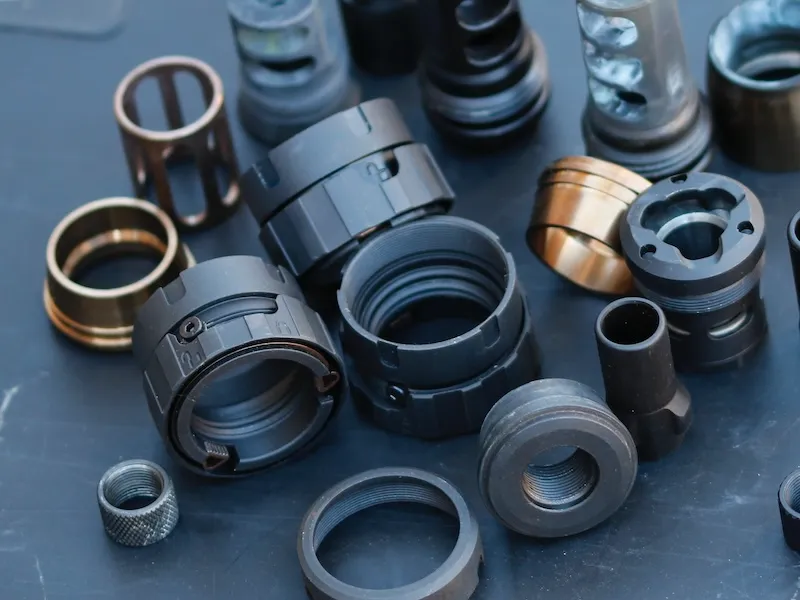

Got a Suppressor for XMAS? Here’s How To Mount It

0
39

[[ 5″ length. This means the barrel is for a GLOCK 17, chambered in 9mm, and the barrel measures .5” across and has 28 threads per inch. Note that there won’t be a full inch of barrel threaded. But if there were, there would be 28 threads. Almost all of these notations will have the Nominal Major Diameter (1/2”) and then the Threads Per Inch (28). 

Thank you for reading this post, don't forget to follow and signup for notifications!

Some measurements are downright unamerican, like this one: GLOCK® 19 — 9MM M 13.5 x1 LH. In this case, the barrel is measured in metric units. The M denotes Metric. The diameter of the threaded portion of the barrel is 13.5MM, and the 1, here, means there’s 1MM between the threads. LH notes that the suppressor threads on to the left. 

Most barrels sold in the US are threaded to standard pitches, as our republic’s founding fathers intended. GLOCKs, though, and Walthers, FNs, HKs, and many others that have ties to foreign manufacturers, will use metric, or both. 
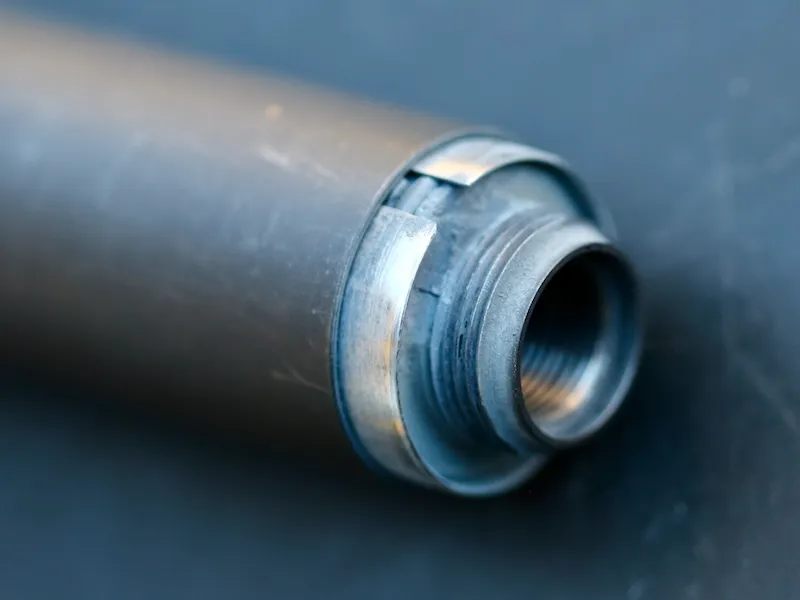
Choose the Right Mount

Once you know your thread pitch, it’s time to pick the mount. Here’s the run-down on the different types.

Direct Thread Suppressor Mounts

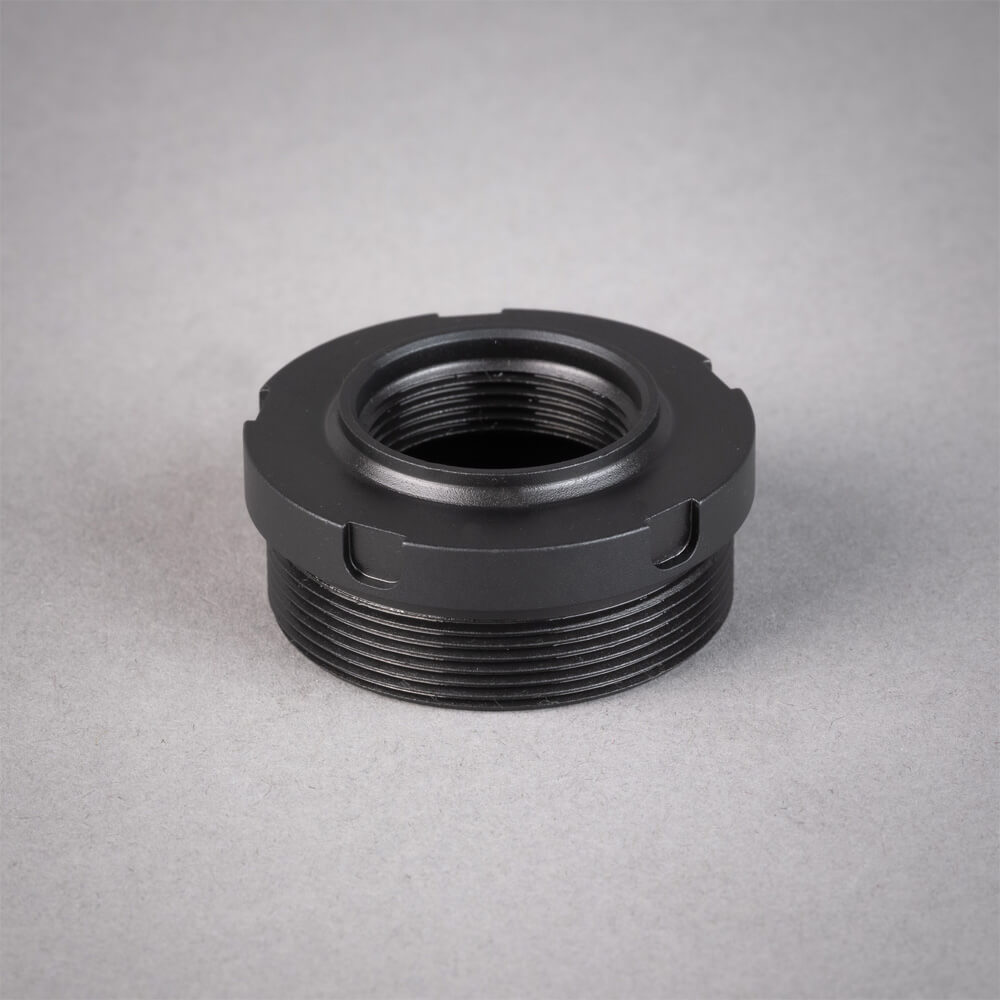
Direct thread mounts act as a bridge between the muzzle and the body of the suppressor. The reason why this connector is a separate, interchangeable part is simple: rifles and handguns—even those chambered for the same round—may have different diameter barrels or be threaded to different pitches.

These are the most intuitive attachment method and serve as the primary choice for rimfire firearms and most bolt-action rifles.

I’m a big fan of direct thread mounts as they’re simple and very straight forward. I began shooting suppressed with a Sparrow, which has direct thread mounts. I tend to go direct thread on bolt-actions for hunting. Direct thread is ideal for any scenario that doesn’t require speed.

silencerco sparrow rimfire suppressor endcap removed
Even a direct thread suppressor, like the SilencerCo Sparrow, may have a removable end cap that allows the suppressor to be disassembled and cleaned.

Understanding Thread Density

You will have to do a fair bit of twisting to get a suppressor seated, and this isn’t fast, but it is hardly complicated.

The strength of this connection depends on surface area; a narrow bore with a short stack of threads provides less metal-on-metal contact for a secure physical bond. To visualize this, imagine unwinding a long thread from its groove and measuring it; a longer total length provides a more secure mount.

Where the direct thread cap attaches to the body of the suppressor, the stack of threads won’t be nearly so tall. But the diameter of this connection is much wider. If you took the thread from my example before, it would be just as long in this short stack because the course of the thread winds around a wider diameter.

Where mounts connect to the body of a suppressor, there may be a tall stack of rather fine threads, or a shorter course of deeper threads. It is all about surface area.

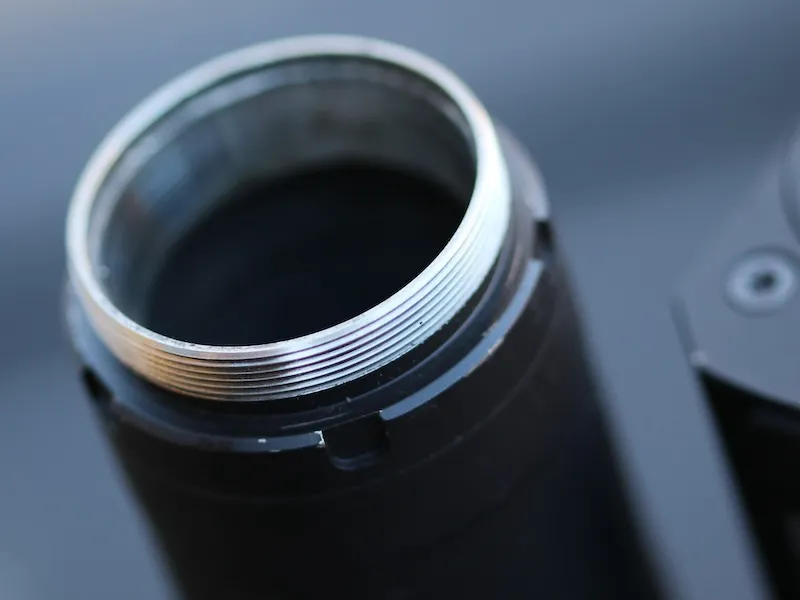
Using a direct-thread mount on a suppressor like the 46M involves an endcap that screws onto the suppressor body, with a female thread pattern that attaches directly to the barrel. If you want to change guns, and the new host gun has a different thread pitch, you will need another end cap to match.

Shotguns are the outlier here. Rather than threading the outside of a shotgun’s barrel, most manufacturers thread the inside for the instalation of choke tubes. This is where SilencerCo’s Salvo 12 attaches, so knowing which type of choke tube your gun uses will point you in the right direction. Then you just need to decide on which choke pattern you may want to hunt with. 

SilencerCo Salvo shotgun suppressor
The SilencerCo Salvo attaches using Echo Choke Mounts sold in several different spread patterns.

Thread Over Mounts

Direct-thread mounts attach directly to the muzzle, meaning that when you remove the suppressor, the bare barrel threads are exposed. However, some firearms benefit from having a permanent muzzle device, such as a muzzle brake or compensator, even when you aren’t shooting suppressed.

Thread Over Mounts (TOM) provide this versatility by allowing you to install a dedicated muzzle device that the suppressor then threads over.

Bravo Thread Over Mount
TOM brakes thread onto the muzzle and can function with or without a suppressor. There is a thread section on the outside of the brake that threads into the suppressor.

ASR for a Faster Lock-Down Connection

SilencerCo’s Active Spring Retention (ASR) Mount is a quick attach/detach system that is almost as easy to understand as the TOM option.

It uses a compatible muzzle device (many of which are actual muzzle brakes) which threads into the ASR locking collar mounted on the suppressor itself. Simply thread it on, then tighten the collar down. The collar prevents the mount from loosening during live fire. 

Removing the suppressor is just as easy, as you simply unlock the collar and twist off the suppressor. 

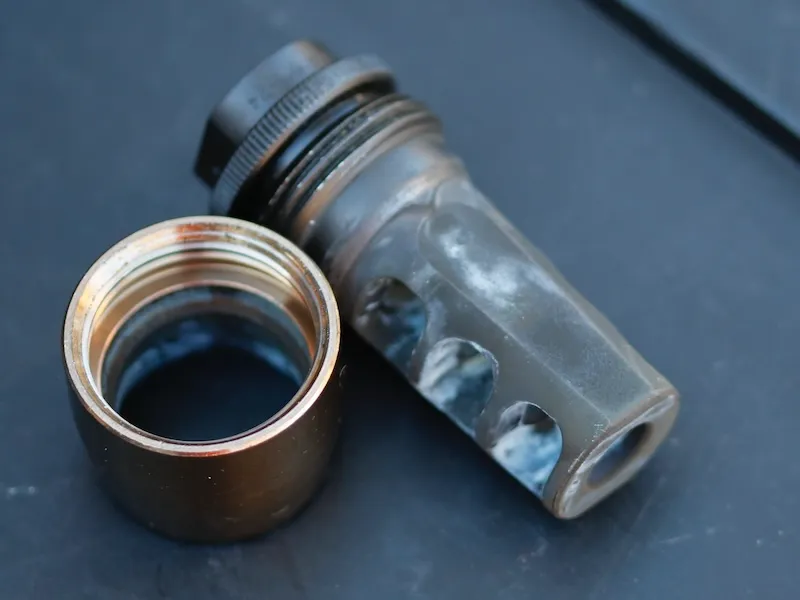
ASR muzzle brake
ASR mounts are faster to connect and provide for the use of a muzzle brake inside the suppressor. The brake stays on the gun, allowing the suppressor to attach on top.

3-Lug Mounts for Speed

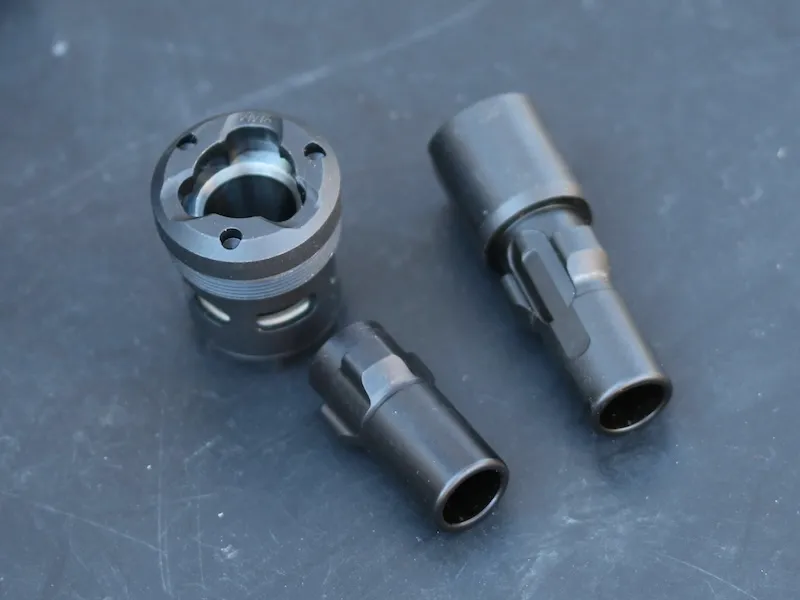
3-Lug mounts add another element to this connection. The same suppressor, in many cases, can accept a 3-lug mount. But, instead of a single piece that connects the barrel to the body of a suppressor, there is now a muzzle device on the firearm and an adapter on the suppressor that this device indexes into. Keep in mind that 3-Lug mounts are meant for PCCs, and are not recommended on larger rifle calibers.

3 lug muzzle device
The 3-Lug muzzle device threads onto the end of the barrel. The receiving end rides inside the backend of the suppressor. To connect, push the suppressor on and give it a twist. This is the fastest of the mounts.

The system works because there’s a robust spring inside the housing that screws into the bottom of the suppressor body. With three lug mounts, I hardly ever take the muzzle device off. The gun will run perfectly well with one, with or without a suppressor. To attach the suppressor, slide it onto the mount, pull it in and twist.

This action is easier to do than to describe. Three lug mounts are fast. If you want to attach a suppressor quickly, as you might in tactical scenarios, this is an excellent choice. 

Three lug attachments for SilencerCo suppressors are available in both Charlie and Bravo pattern mounts. 

Understanding SilencerCo Mount Patterns

When researching these mounts, you will quickly encounter terms like “Alpha,” “Bravo,” and “Charlie.” These names refer to the specific thread patterns and diameters used on the back end of the suppressor.

Understanding which category your silencer falls into is essential for selecting the correct Three Lug adapter or direct-thread mount.

Mount Pattern Thread Specs & Design Primary Use & Compatible Suppressors Key Differences/Notes
Alpha
1.125-28 threads; smallest diameter; supports ASR, direct thread, piston, and 3-lug options.
Pistols and sub-compact setups (e.g., Spectre 9, Omega K Series).
Ideal for pistol calibers; piston-compatible for semi-auto pistols.
Bravo
1.375-24 threads (also called HUB or “Omega” pattern); medium diameter; supports ASR and direct thread.
Lighter-duty rifles and multi-caliber (e.g., Omega 300, Hybrid 46, Scythe-Ti).

Balances size and weight; follows industry-standard HUB pattern for adapter compatibility; excellent choice for ARs or hunting rifles.
Charlie
1.375-32 threads with tapered interface and retaining ring/flange; largest diameter for centerfire; supports ASR, direct thread, piston, and 3-lug.
Heavy-duty/full-auto rifles (e.g., Chimera 300, Omega 36M, Hybrid 46M, Saker series, Velos LBP).
Built for high-volume or severe use (e.g., belt-feds); taper enhances gas sealing and alignment under vibration/heat; more robust but slightly heavier than Bravo. Often paired with multi-caliber cans.
Delta
Rimfire direct-thread adapters (various barrel thread pitches).
Rimfire firearms (Sparrow 22, Switchback 22).
Specialized for low-pressure .22 calibers. Simple, lightweight, and direct thread. Not for centerfire.
Echo
Tapered choke interface (choke-threaded adapters).
Shotguns (e.g., Salvo 12, Salvo 12K).
Designed for 12-gauge; uses choke-style mounting shotgun barrels; tapered for easy attachment/detachment.

Mounting a Suppressor to a Handgun

If you have a rimfire handgun, you will use a direct thread mount. Lower powered rounds are easy to accommodate with direct thread, and many rimfire guns have fixed barrels like rifles.

Centerfire handguns, though, are different. The short recoil action in use in most designs requires that the slide moves rearward as the barrel tips up. This motion directs the energy of recoil back into the system that ejects the spent case and loads a new round. Easy enough, when unsuppressed. 

Attach a suppressor, though, and the balance in this system can be thrown off. Any added weight might prevent the gun from cycling correctly. But there’s a fix.

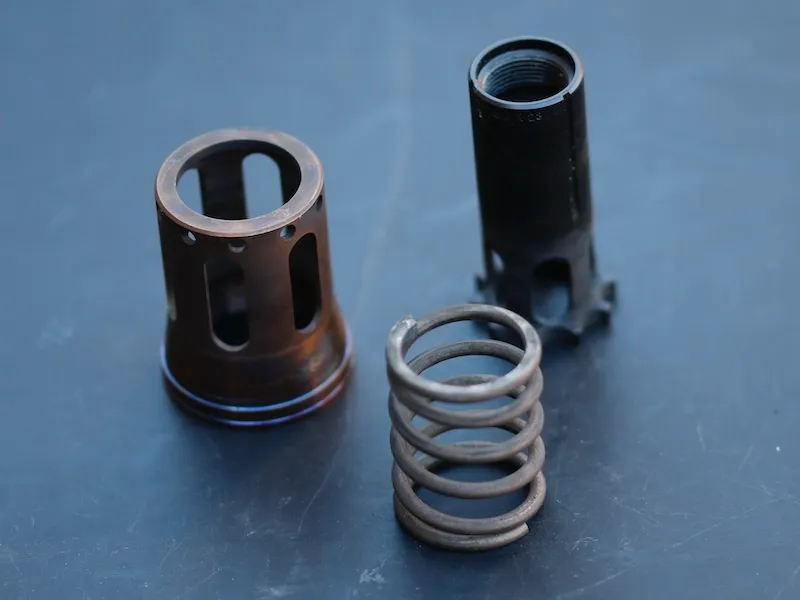
Piston mounts (also called Nielsen Devices or boosters) use a spring that rides between a muzzle device and the suppressor body. When the round fires and recoil energy hits, the suppressor will stay in place for a fraction of a second while the barrel moves to the rear like normal. 

Nielsen device components: piston, spring, and housing
To connect a suppressor to a handgun, you may need a Nielsen Device. This consists of a piston, a spring, and a housing that captures the two.

While it is almost impossible to see without a slow-motion camera, this compression of the spring is the magic that keeps semiautomatic centerfire handguns performing reliably. 

fixed barrel spacer
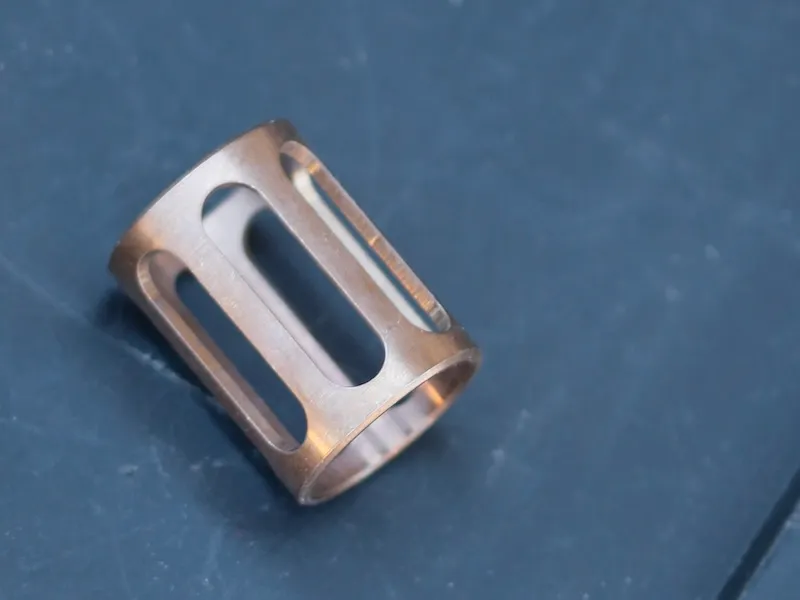
Nielsen devices are for barrels that move during recoil. Fixed barrels, like on some PCCs and sub guns use a fixed barrel spacer in place of the spring. This extra allows one mount to be used on two different types of recoil systems.

Suppressing a Shotgun

Scatterguns present a conundrum for suppressor companies. The first (of many) challenges is mounting. Many shotgun barrels are thin at the muzzle end. Thin barrels preserve balance, and swing easily. But this leaves very little material to cut into for threads.

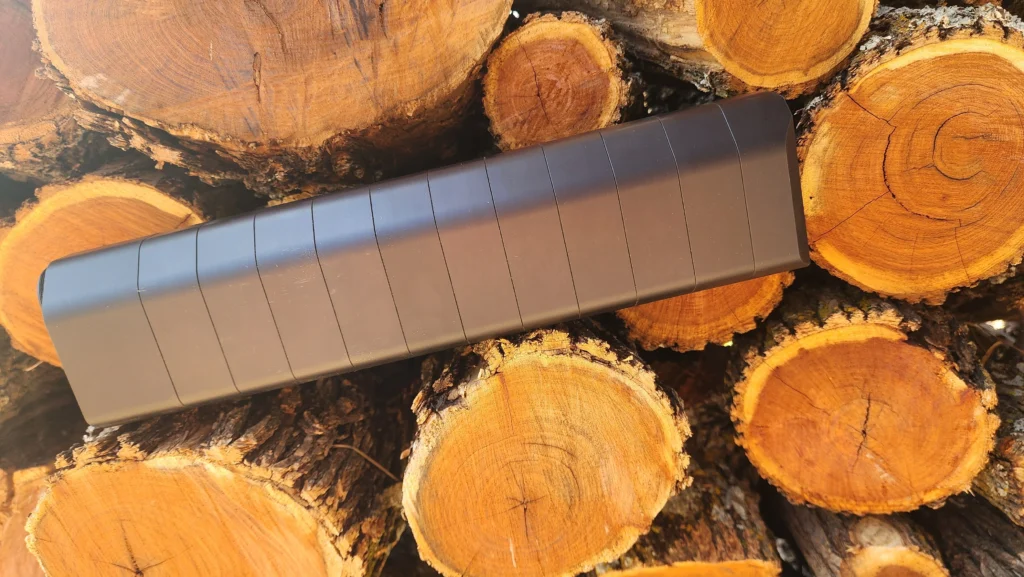
shotgun suppressor

Instead, barrels are threaded with a wide, flat pattern internally. This is how choke tubes attach and makes for a convenient way to thread in an Echo mount for a Salvo 12. All you need to know is what pattern choke tubes you need and Bob’s your uncle.

Get Shooting

With a modest amount of technical information, and a clear understanding of what you want the mount to accomplish, the decision should be clear. 

The accessory learning curve is steep. Thankfully, SilencerCo has gone to great lengths to keep things simple. Each suppressor page has the information about the appropriate mounting options.

The last thing to consider is the ease of installation. SilencerCo makes tools dedicated to specific suppressor types, and (even better) tools that are designed to tackle any job.