

[[{“value”:”
Thank you for reading this post, don't forget to follow and signup for notifications!
When someone wants to buy something, they usually check online first. If the item is available, they simply add it to their cart, pay, and that’s it, done.
Unless, of course, what you are looking for is not the groceries of the week but a firearm.
Firearms follow a completely different legal process.
And yes, you must be fully aware of it.
Auction Armory has gathered all the intel you need.
You’ll know exactly what happens when someone buys a firearm online and why the process is more structured and regulated than most people realize.
The short answer is yes, you can definitely buy firearms online in the United States
But it comes with certain caveats, like…
- You can’t have the firearm shipped to your home.
- You must go through a licensed dealer (called an FFL).
- You must complete an in-person background check.
- You must meet all federal, state, and local requirements.
So the experience is nothing like adding something to your cart and waiting for it to show up at your door. It’s more like the online part is step one, and the real process happens in person.
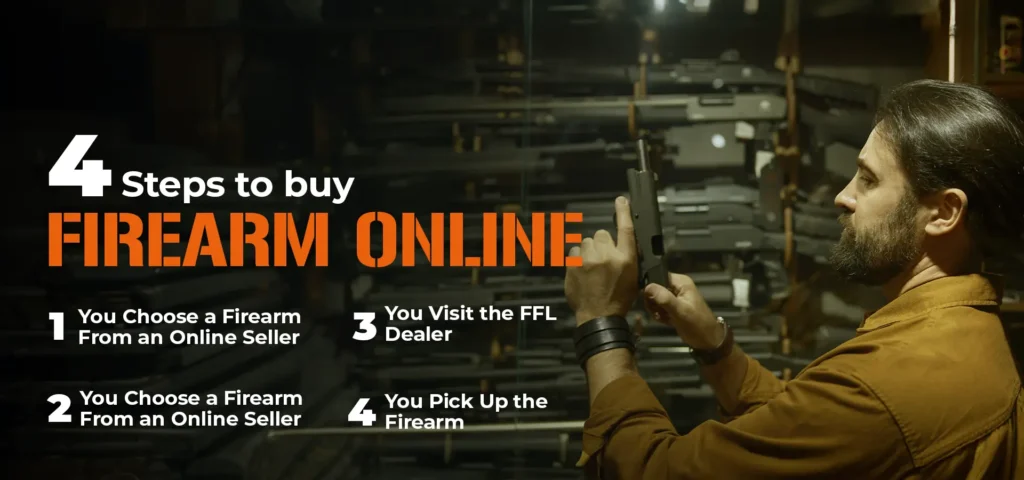
If you’ve never done it before, you might imagine something complicated. To be honest, for all its reputation, the process is pretty straightforward, as long as you make sure you follow all the right steps.
Most online sellers are FFL holders, Federal Firearms Licensees. This means they are legally allowed to sell firearms.
You browse, compare models, read specs, and make a purchase.
So far, it’s similar to normal e-commerce.
But after you select your choice, the seller can’t send anything directly to you. Legally, they aren’t allowed to.
This is where things start to get a bit different
Instead of going to your address, the firearm gets shipped to a local FFL transfer dealer, usually a gun store, pawn shop, or shooting range that holds the appropriate license.
You’ll give the seller the information for that dealer, or sometimes the dealer will send their license directly to the seller.
This step guarantees the firearm is always in the hands of licensed professionals until it is legally transferred to you.
Once the firearm arrives, the FFL dealer contacts you.
Now you have to show up in person.
You’ll fill out ATF Form 4473, the official form used for firearm transfers. This includes basic identity information and questions the federal government requires for eligibility.
The dealer submits your info to NICS, the background check system maintained by the FBI.
This check verifies whether you’re legally allowed to own a firearm.
Most results come back within minutes. Some take longer. Occasionally, extra information is needed.
If the background check clears, you can take possession of the firearm, but this still depends on your state’s rules.
Some states add extra requirements:
- Waiting periods
- Permits to purchase
- Firearm safety certificates
- Age restrictions might differ from federal guidelines
- Magazine restrictions
- Approved handgun rosters
So yes, the federal system is one layer, but the state adds another requirement, and sometimes even the city or county does too.
If everything checks out, the seller completes the transfer, and you are legally allowed to take the firearm home.
At last.
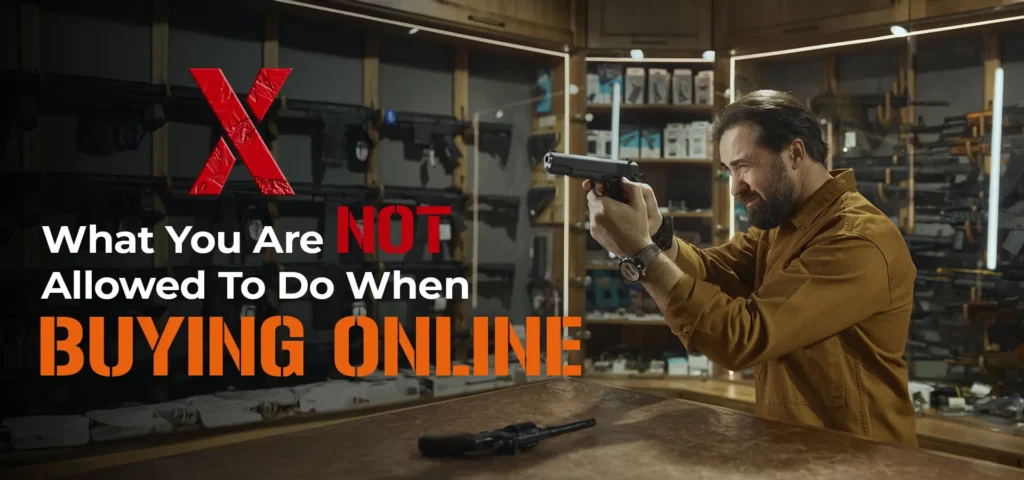
When it comes to online purchases, there’s a lot of misinformation, so if you ever feel in doubt, follow the rules below:
- Having a firearm shipped to your home goes against the law.
- Skip the background check; no official and thus legal transfer can be done without a background check.
- Receive a firearm across state lines without an FFL.
- Purchase a firearm on behalf of someone else (straw purchase).
- Order something that your state prohibits.
- Use the internet to bypass age restrictions.
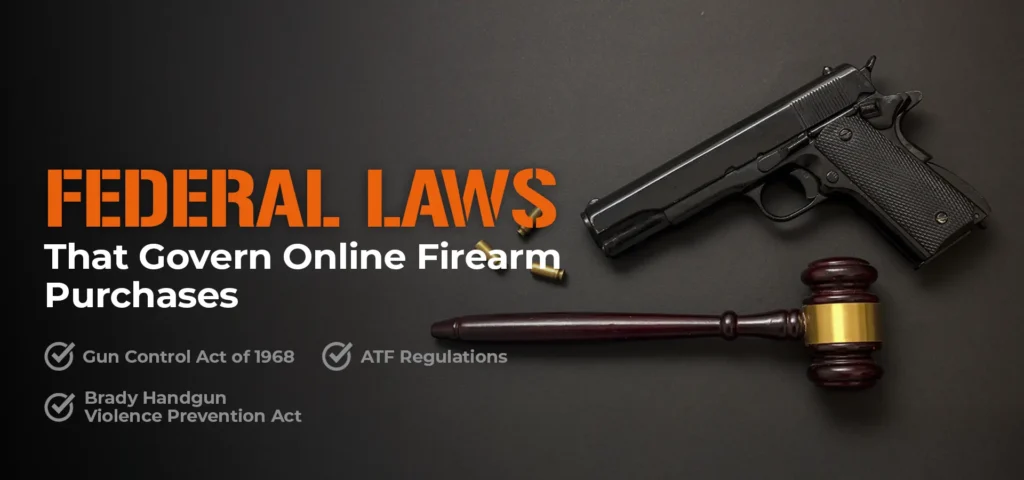
Buying a firearm online follows a well-established legal structure.
You don’t need to be a lawyer, but it would definitely not hurt to be familiar with the most important regulations.
This is the backbone of U.S. firearm law. It requires:
- FFL involvement in interstate transfers
- Background checks
- Age restrictions
- Recordkeeping
Established the background check system (NICS).
The Bureau of Alcohol, Tobacco, Firearms, and Explosives enforces all licensing, transfer rules, and recordkeeping.
And remember, online firearm purchases follow the exact same laws as in-store purchases.
This part varies a lot, and honestly, it’s where most people start to feel confused, and for good reason.
Federal law applies to everyone, everywhere, no matter what state you live in.
But states don’t just sit back and let federal rules do all the work. They add their own requirements on top.
For example, some states require mandatory waiting periods, meaning even after you pass your background check, you might need to wait a certain number of days before you can pick up your firearm. Others ask you to get additional permits, like a purchase permit or a firearm owner ID card. Some states require you to complete a safety course before you’re eligible to buy anything. Then there are states that set magazine capacity limits or place restrictions on certain models or features that they don’t allow within their borders. And a few states go a step further with registration requirements, where you need to officially register your firearm after purchasing it.
So even though the federal process is the foundation, your actual experience can feel very different depending on where you live.
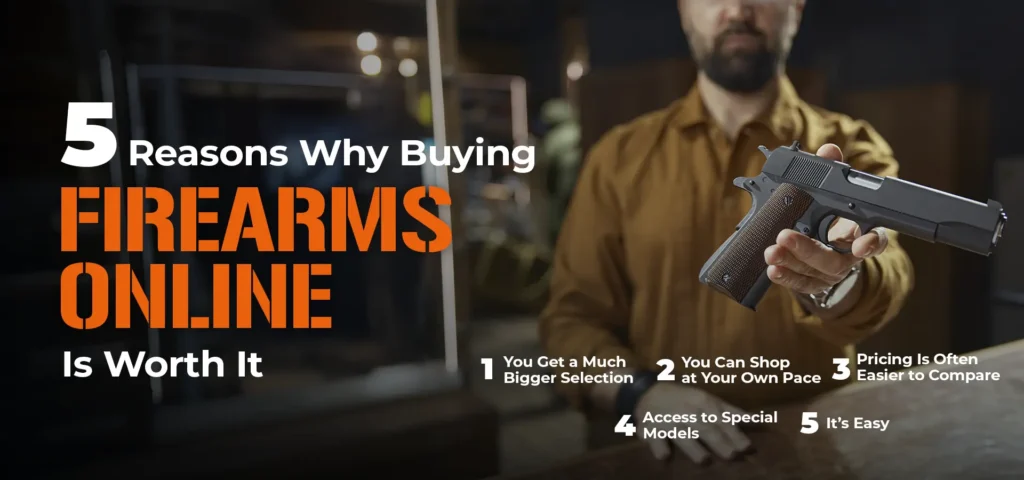
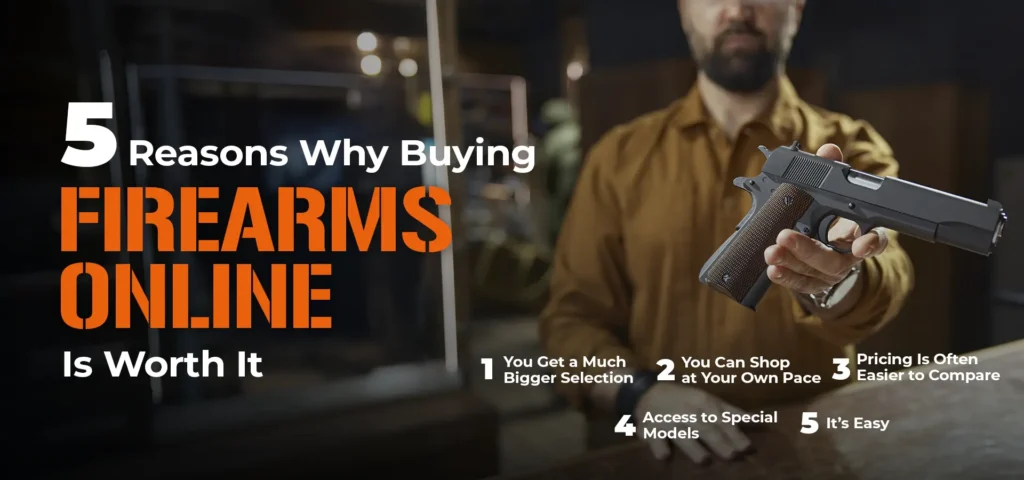
If you’ve ever walked into a gun store and left a bit unsatisfied, you can relate to this one.
Local shops can only carry so much inventory.
Online? Entire catalogs are available at once.
You can compare brands, calibers, models, finishes, and features, all without driving to three different stores hoping someone has the thing you’re looking for.
It takes a lot of pressure off the hunt.
One of the biggest unspoken benefits is simply being able to take your time. Because buying a firearm isn’t something that should be decided in minutes.
Online, you can read reviews, watch videos, compare specs, and really understand what you’re buying before you start the legal process.
No need to sugarcoat it, firearms aren’t cheap.
So being able to compare prices across multiple licensed sellers is a big advantage.
Online, you can:
- See different price ranges
- Find deals or promotions
- Compare packages or bundles
- Filter options by budget
Do you fancy yourself a collector?
Some firearms, special editions, uncommon calibers, and niche brands are almost impossible to find locally.
Online sellers often have:
- Wider distribution networks
- More inventory
- Access to specialty manufacturers
- Models that don’t show up in small shops
If you’re looking for something specific rather than whatever happens to be on the shelf, online shopping is usually the way people find it.
This is probably one of the greatest benefits.
You can browse from home, place your order in minutes, and choose the FFL that works best for you. But the legal process stays exactly the same.
Convenience and compliance all in a single package.
It’s a surprisingly balanced experience.
So now that you’ve walked through the whole journey, you can see there’s nothing mysterious or risky about buying a firearm online.
The online part is really just the browsing and purchasing convenience, the same way you might shop for anything else. But everything that matters legally, everything that ensures the process is responsible and safe, happens offline and face-to-face.
When you think about it, buying online is only the beginning. After that, you’re dealing with licensed professionals, background checks, legal paperwork, and in-person verification.
The online front just makes the first steps more accessible for everyone.
“}]]

