

By Beau Cisco, MS
Thank you for reading this post, don't forget to follow and signup for notifications!
One of the most valuable tools a law enforcement supervisor has is the ability to set expectations. A well-trained squad operates efficiently, safely and consistently not because its members were handed a list of rules, but because expectations were reinforced over time.
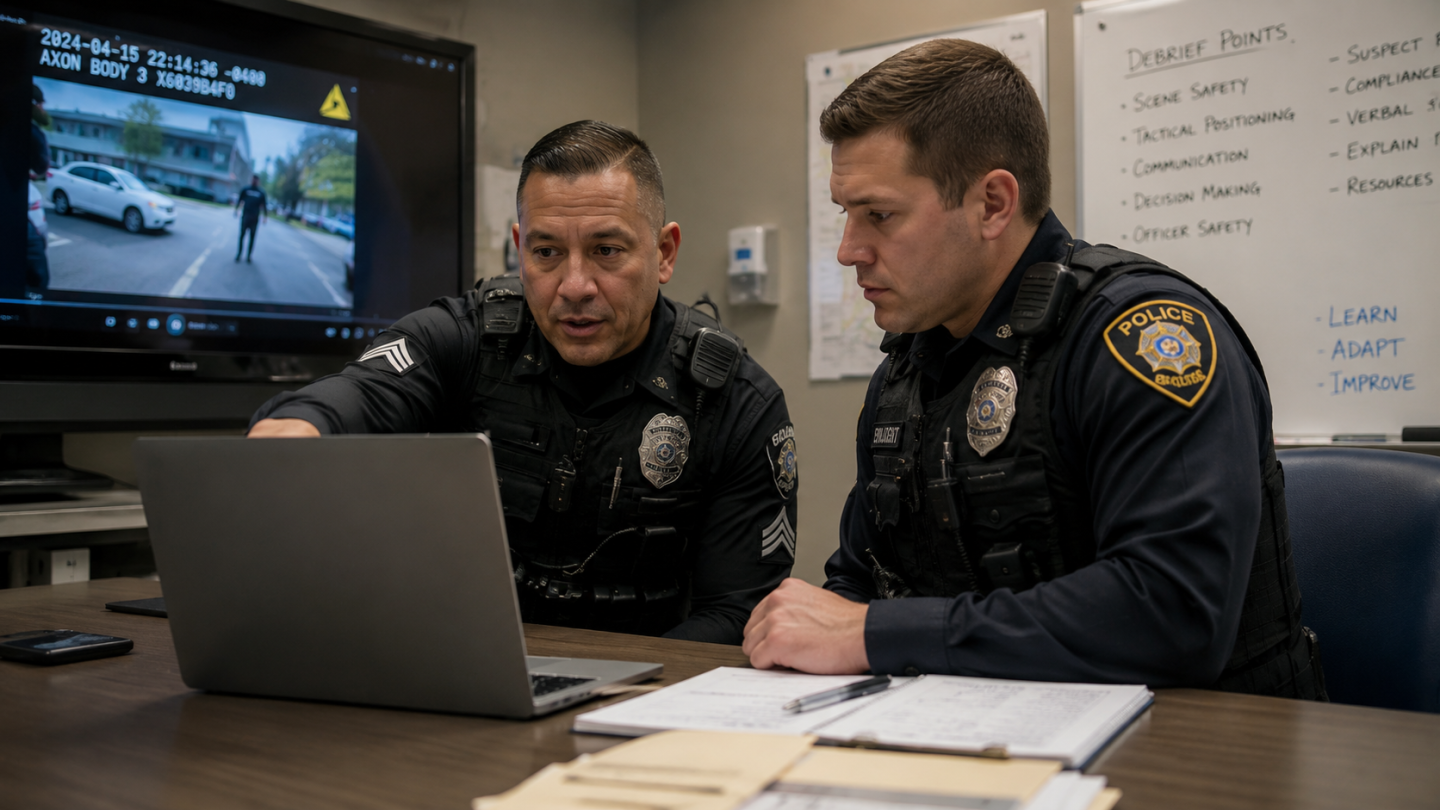
When I was a patrol sergeant, I quickly learned that simply telling my deputies what I expected from them wasn’t enough. Reading off a list of do’s and don’ts at roll call would go in one ear and out the other. Instead, I found a method that truly changed behavior over time: a structured approach using daily debriefs, real-world examples and strategic reinforcement.
A formula for setting expectations
My approach follows a simple but effective formula:
- Set the expectation: Clearly define what you want from your squad.
- Explain why it’s important: Provide context so they understand the impact of their actions.
- Utilize an outcome: Reinforce the lesson with real-world consequences, either positive or negative.
By using this method consistently over time, expectations don’t feel like arbitrary rules — they become ingrained in the squad’s decision-making process.
How it works in action
Let’s take a robbery-person call as an example. During lineup training after the incident, I would highlight a specific decision:
- I praise the deputy for confirming that a crime had actually occurred upon arrival. This is my expectation.
- I then explain why this is critical. If the crime is confirmed immediately, dispatch can quickly broadcast suspect information, helping other units determine whether they have probable cause for an arrest and what level of force may be justified.
- I then illustrate the potential outcome of failing to do this properly. If an officer assumes a robbery occurred without confirmation, it could lead to an unnecessary use of force, a false arrest or even a K-9 deployment on an individual who wasn’t involved.
Through this consistent, real-time reinforcement, I shape my squad’s behavior without making it feel like a lecture or a rigid set of rules. Instead, deputies naturally internalize the expectations, applying them in their daily work until they become second nature.
Building supervisory awareness through scenario-based training
As a training sergeant responsible for developing new supervisors, I have designed several leadership scenarios that highlight supervisory decision-making, resource management and articulation. These scenarios test and strengthen a supervisor’s ability to manage incidents effectively, ensuring their squads remain tactically sound.
One of the most effective scenarios I use is derived from a real call I responded to.
Scenario: Deadly shooting in the street
This decision-making scenario is divided into three key areas of learning:
- Cultivating a safe response: Developing an initial response strategy when limited information is available.
- Making decisions from a distance: Determining the next course of action based on secondhand information when you are not yet on scene.
- Articulating your decisions: Ensuring supervisors can effectively explain their choices when questioned later.
These three components are among the most critical — and most difficult — for new supervisors to learn. Many default to mimicking what they have seen former supervisors do. Additionally, the nature of our profession means new supervisors, who are often inexperienced or still on probation, may hesitate to make critical decisions out of fear of making a mistake. This can lead to tactical paralysis.
I run both new supervisors and experienced officers through this scenario, which allows me to observe two key things:
- What decisions they make.
- How willing they are to make them.
Breaking down the decision-making process
The scenario begins with a shooting call: a victim lying dead in the street, multiple reports of gunfire and limited initial details.
First component: Managing the initial response with limited information
The first challenge is responding safely. When officers receive fragmented reports from citizens or unknown sources, they often react instead of assess.
To address this in real time, I immediately got on the radio and asked the first arriving unit to get eyes on the situation from a safe distance and report back. Within seconds, a deputy positioned half a block away advised that he saw a person lying in the street and several people standing around waving him in.
Second component: Interpreting secondhand information
Now comes the next decision: What will you do with this information?
Based on what I heard, I deduced that this was likely no longer an active-shooter situation. If there had still been an ongoing threat, people would not be casually standing near the body waving for help. While we can never assume safety, we must use the information available to guide our response.
Third component: Executing and articulating a tactical plan
Once I determined that an immediate threat was unlikely, I instructed the first officer to wait for one additional deputy, then approach the scene using the contact-cover principle to render aid and assess for further threats.
This is a simple scenario in theory, but it tests multiple levels of critical thinking:
- How do you assess risk when information is incomplete?
- How do you take control of the response when you’re not physically on scene?
- How do you justify and articulate your decisions when questioned later?
Even when officers make mistakes during this scenario, the true value comes in the debrief. I take the time to explain my thought process and expectations.
More importantly, everyone involved — whether the supervisor, the first responding deputy or the secondary unit — leaves the scenario understanding their role.
With repetition, officers internalize these decision-making frameworks so that when a real incident unfolds, they instinctively execute a structured response rather than act on impulse.
The long-term impact
Over time, this method transformed the way my squad operated. Deputies no longer needed constant reminders or direct orders to handle situations effectively — they had absorbed my expectations organically. What started as simple debrief discussions became their standard operating procedure.
As supervisors, our job isn’t just to enforce policies — it’s to develop officers who make sound tactical and ethical decisions on their own. The best way to do that isn’t by dictating from the top down, but by reinforcing expectations through meaningful discussions, real-world examples and consistent leadership.
Final thoughts
If you’re a supervisor looking to build a high-performing squad, focus on how you set expectations. Use daily debriefs, lineup training and scenario-based exercises to reinforce behavior in a natural, tactical way.
By doing so, you’re not just improving officer performance — you’re creating a culture of accountability, safety and professionalism that lasts far beyond a single shift.
About the author
Beau Cisco, MS, is the founder and lead instructor of the Behavioral Analysis Training Group. With over two decades of experience in law enforcement and a Master’s degree in Forensic Psychology, Beau brings a unique perspective to the field. He has played an integral role in various law enforcement operations, including Narcotics Investigations, DEA Federal Task Force, Undercover Operations, and currently serves as a patrol supervisor. Moreover, Beau is deeply committed to training, not only within his own agency but also as a consultant for numerous others.

