


[[“value”:”
Thank you for reading this post, don't forget to follow and signup for notifications!

David Higginbotham
Flying with guns and suppressors is legal and common — but the TSA has specific rules you must follow. Whether you are flying, driving, shipping your gear, or crossing state lines, understanding these regulations keeps your trip hassle-free. As someone who frequently flies with suppressors and firearms for trade shows, media events, and training sessions, I have navigated these rules at check-in counters across the country, and the process is straightforward if you prepare properly
Last Updated: June 2026
Legal Disclaimer: Firearms and National Firearms Act (NFA) regulations are subject to frequent changes at local, state, and federal levels. The information provided in this article is for educational purposes only and does not constitute legal advice. Always verify current laws, TSA regulations, and individual airline policies in your destination and transit states before you travel.
Do You Need ATF Approval to Travel with a Suppressor?
No. Unlike other National Firearms Act (NFA) items such as short-barreled rifles (SBRs), short-barreled shotguns, or machine guns, you do not need to file ATF Form 5320.20 (Application to Transport) when traveling with a suppressor.
You can move a suppressor across state lines without notifying the ATF, as long as your destination and route are in states where they are legal. While there is nothing on the official form that prohibits you from voluntarily notifying the ATF of your intentions to travel with a suppressor, it certainly is not required. With that concern out of the way, you still need to carefully consider your destination, your route, and how you will get there.
Which States Allow Suppressors?
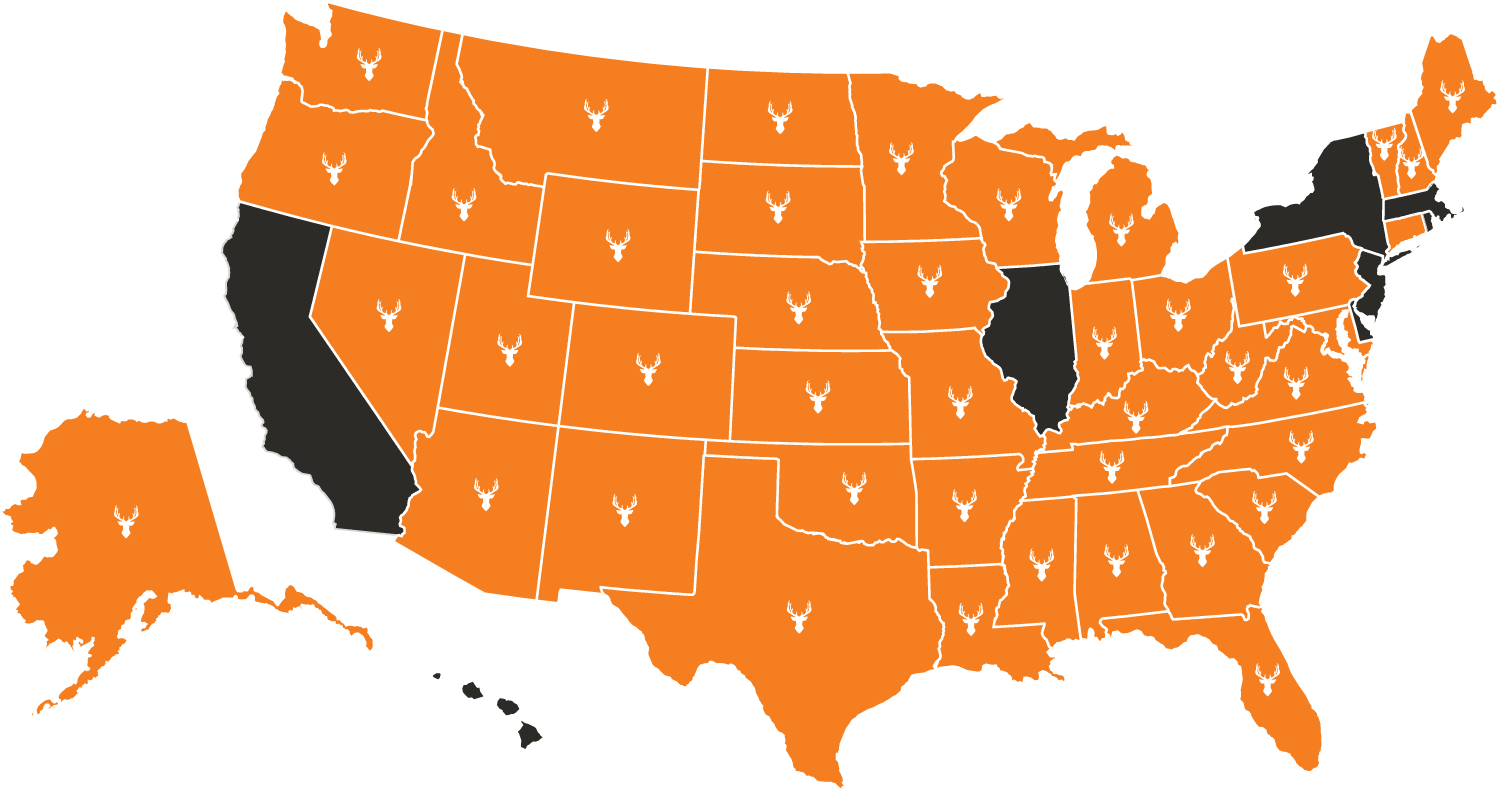
Suppressors are legal in 42 states. Do not transport a suppressor through any state where they are prohibited under local law.
If your destination is one of the 42 states where silencers are legal, your trip is relatively simple. For example, I live in Arkansas and frequently drive over the border to Oklahoma to hunt hogs with no problem at all — I can cross state lines with a silencer under the same guidelines I follow for the firearm it attaches to.
If, however, your route passes through a state where silencers are not legal, you place yourself in severe legal jeopardy. I wouldn’t drive through New York or Illinois with a suppressor, or even with a box of ammo. While I have nothing against those states, I try to limit my time on the ground there as a strict rule.
Duty to Inform: Do You Have to Tell Police About Your Suppressor?
In 12 states, you are legally required to inform a law enforcement officer if you have a firearm or suppressor in your vehicle. In the remaining 38 states, disclosure is optional.
I’ll share my thoughts. My livelihood requires that I stay on the right side of the law. I work in the firearms industry. As such, I’m going tend to overshare and make myself as unthreatening as I can be in these situations. I present the officer with my driver’s license and carry permit at the same time, which is enough to open the conversation.
Others, though, privilege their privacy. This, too, is a position I understand and respect. If this is one of those points that you feel strongly about, know the rules where you intend to travel. To avoid complications, it’s generally a good idea to be transparent and carry all necessary permits.
TSA Rules for Flying with Firearms and Suppressors
All firearms and suppressors must be unloaded, stored in a locked hard-sided case, and declared at check-in — TSA does not allow them in carry-on bags under any circumstances. Flying with this gear is incredibly common, but it requires careful, deliberate planning.
1. Check Airline Regulations
Although core safety rules are set by federal agencies, different airlines have varying policies regarding firearms. For instance, United Airlines limits gun cases to a maximum of five firearms. Always verify your specific carrier’s policies well in advance.
When you check in, the folks at the counter might look at you sideways if you open a massive case with multiple firearms inside, but it is all above board. Each firearm must be completely unloaded, and some desk agents will ask for visual verification.
2. Secure Your Gear
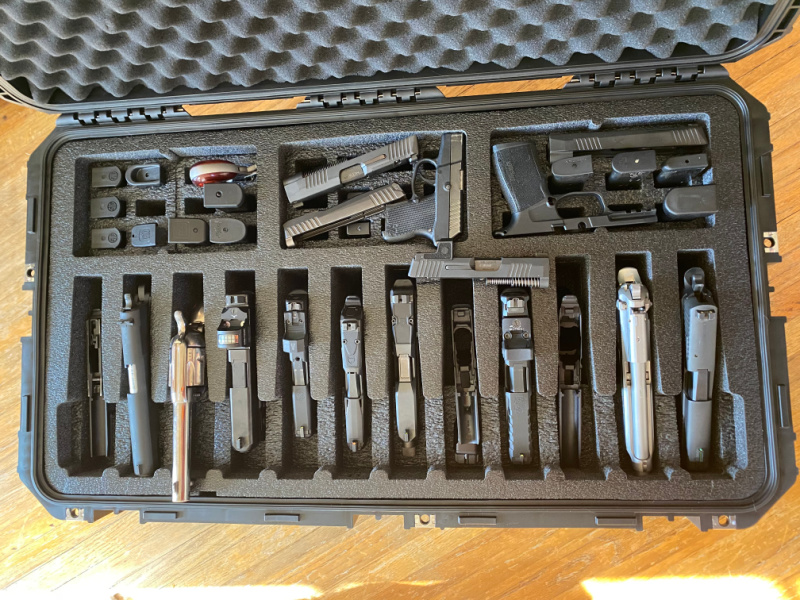
Not all gun cases are TSA-approved — the case must be a hard-sided container that can be locked, with no TSA master key access. This means you must use standard padlocks or combination locks where you are the sole keyholder; do not use standard “TSA-approved” luggage locks that airport security can open with a master key.
Some of the plastic boxes that manufacturers supply with their firearms will work, so long as they can be securely locked at both ends. These locked containers can then be placed inside a normal suitcase that you check.
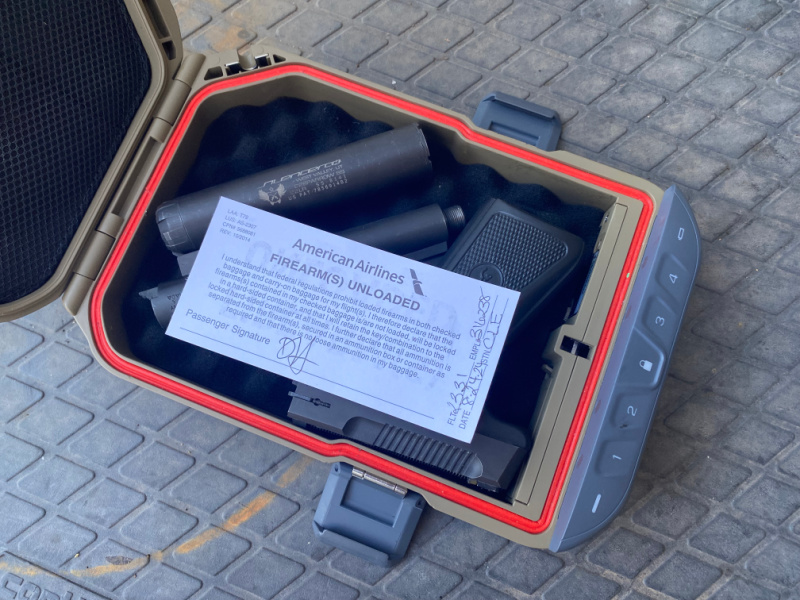
Your locked case will receive a special “Firearms Unloaded” declaration tag at the ticket counter, which goes inside the case before it is locked. The bag is then routed back to the baggage claim office or the check-in desk at smaller airports rather than rolling off onto the public baggage carousel. TSA regulations also strictly stipulate the allowed weight of ammunition you can include in your checked bag (usually around 11 pounds, packed in its original commercial packaging).
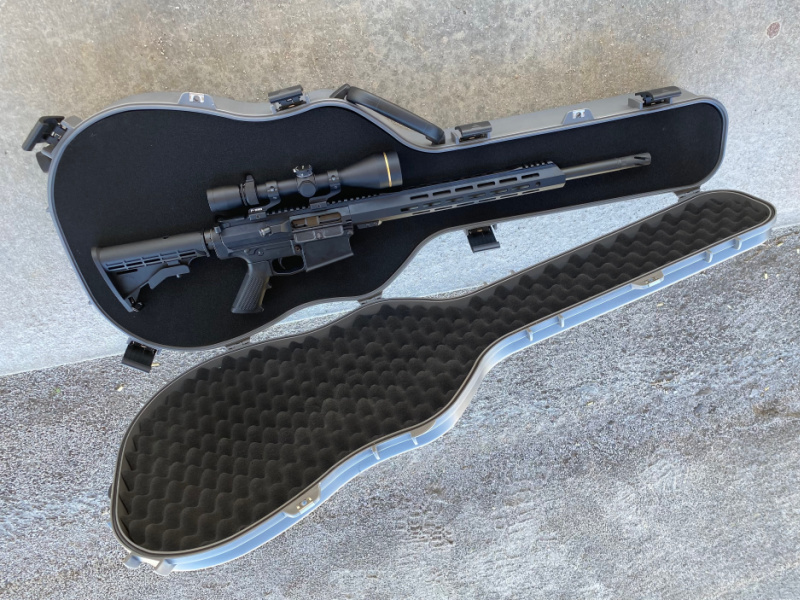
Also, consider the outward appearance of your case and the security concerns where you are traveling. Some gun cases advertise their contents. When you leave the airport to grab an Uber, or show up in a crowded hotel lobby, you may be attracting unwanted attention to the contents of your cases.
3. Allow Extra Time
Arrive early at the airport and stay nearby to handle any TSA issues during screening. Some bags may be swabbed or visually inspected, and unexpected delays can happen.
I always arrive early to avoid long lines, and after checking my suppressor, I will sit down and wait near the check-in desk for at least 15 minutes, just to make sure there are no TSA concerns during their screening process.
Some TSA screenings are simple — they run the bag through the X-ray machine and call it good. Other times, they’ll swab the bag for explosives or open the case to visually inspect the contents.
At larger airports, the screening happens out of sight and simply waiting a bit is enough. At smaller airports, like mine with just one gate, I can see the recheck and get a polite nod when all’s clear.
Still, I’ve been on the wrong side of security, at the gate, when I heard my name called on the speakers. Usually, when this happens, it means that TSA can’t get into the locked case, and you have to go back out through security, and then back in.
4. Track Your Gear
A few extra steps to keep tabs on your luggage can save you headaches later.
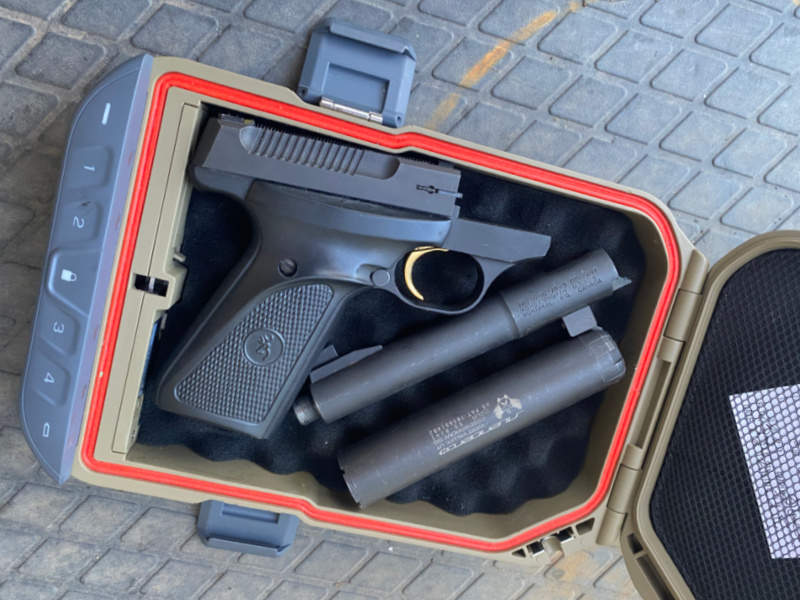
At the check-in desk, right before you close and lock the case, snap a picture of all contents. If, like me, you have many things in the case, you can use this as a visual reference to ensure that you arrive with what you originally packed.
Also, use electronic tracking tags like Apple AirTags. These are amazing little devices, and I bury one in a slit in the foam liner of every case I have. Then, when I land, I check its location and can see the bag physically move through the process. They’re accurate trackers.
5. Handle Delays Wisely
If you’re stuck in a state where suppressors are illegal, inquire about rechecking your firearms or ask the baggage office to hold the case. Always get written confirmation of any advice.
If a delay leaves you stuck for an extended period, you might be tempted to retrieve your luggage. However, before taking physical possession of a case containing a suppressor in a restrictive state, ask if you will be permitted to recheck it. If they will not let you recheck them, request that the airline baggage office hold the locked case. As long as you haven’t taken possession of the bag on the ground, it remains the airline’s legal responsibility. Always make note of the names of the airline and TSA agents providing you with information.
Shipping a Suppressor to Your Destination
Shipping your firearms to yourself is another viable option for transporting them from one state to another. As suppressors are legally classified as firearms, this works.
You can ship a package to yourself, care of an outfitter or trusted individual, but you must be the one to open it at the destination. Use a locked case, insure the contents, and take a photo for documentation.
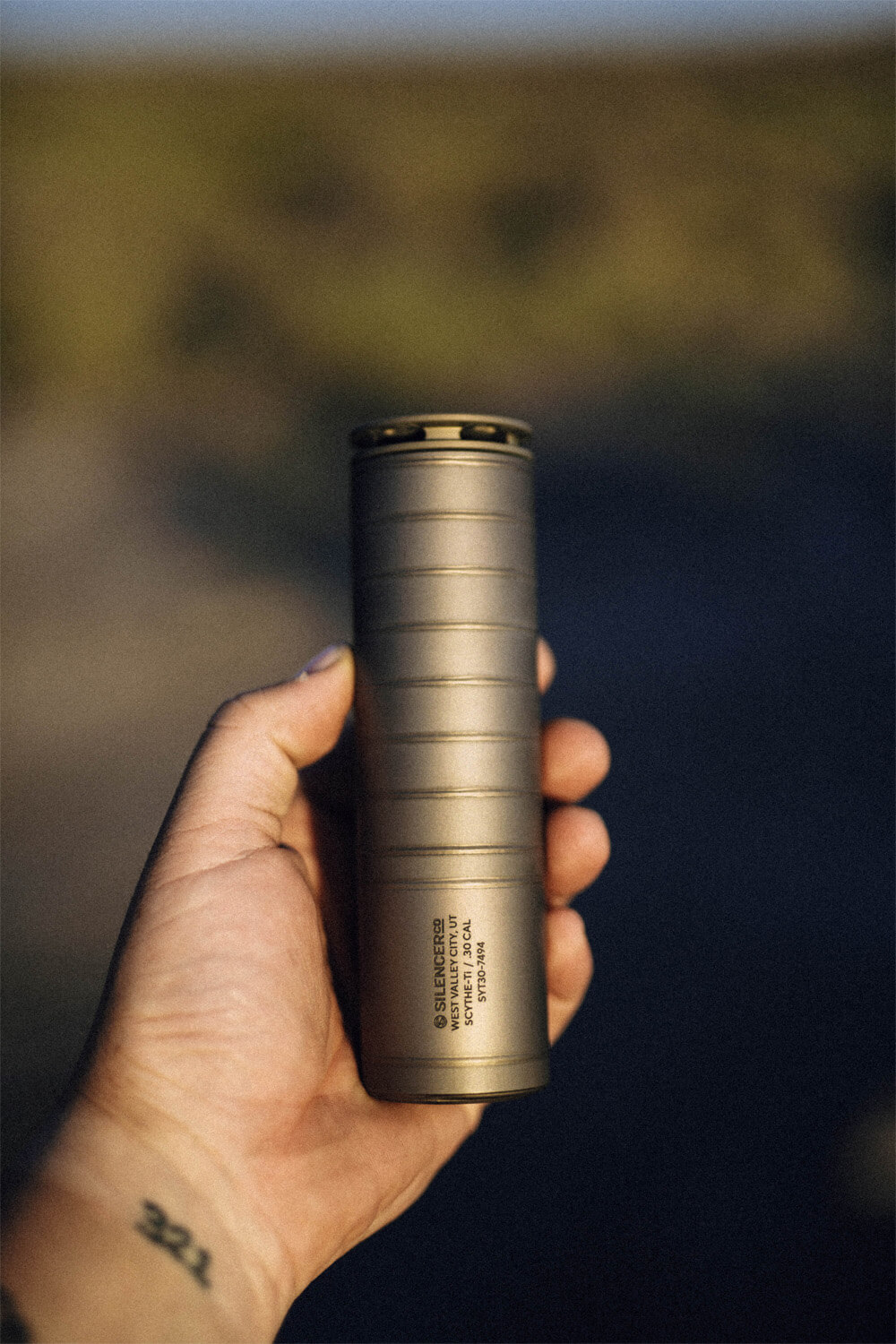
Reviewing individual carrier regulations is crucial, as policies change frequently and counter employees are not always familiar with NFA rules.
UPS Policy: UPS does not accept firearms or suppressors from the general public. Because they restrict these shipments exclusively to licensed FFL holders, UPS is not a recommended option for individual travelers.
FedEx Policy: FedEx accepts suppressor shipments from the general public, provided the destination is an FFL. An FFL can then hold the item or ship it to another location in compliance with ATF regulations. This process is more straightforward, which is why FedEx is the recommended carrier.
USPS Policy: USPS policy is inconsistent and unreliable for suppressor shipments — FedEx is the better choice. The public cannot mail handguns or any firearm that can be easily concealed on a person. While a suppressor is technically not a handgun, USPS’s strict rules and unpredictable interpretations at the counter can make them highly unreliable.
The ATF defines a concealable firearm as a device capable of being hidden on a person and discharged through an explosive, which does not apply to a standalone suppressor. However, postal workers often confuse these rules, and local offices may outright refuse NFA items.
Quick Checklist Before You Travel
Before you head out on your next hunting trip or range day across state lines, use this scannable checklist to ensure all your bases are covered:
- [ ] Tax stamp copy: Keep both a digital copy on your phone and a physical printed copy inside your travel gear.
- [ ] Trust documents: Bring copies of your NFA trust paperwork if applicable.
- [ ] Hard-sided lockable case: Ensure it can be padlocked securely at both ends with no TSA master key access.
- [ ] Airline firearms policy: Print or save a PDF of your carrier’s specific rules to show gate agents if necessary.
- [ ] Suppressor serial number: Keep this documented safely in a separate location.
- [ ] Photo of case contents: Take a quick photo of everything inside the case right before locking it at the airport.
- [ ] State law confirmation: Double-check the suppressor laws of your destination state and any potential layover or drive-through states.
- [ ] Confirm EDC status: Explicitly check that your everyday carry gun, extra ammunition, and pocket knives are packed away in checked luggage and are not accidentally left on your person before walking into airport security.
Frequently Asked Questions
Q: Can you fly with a suppressor?
A: Yes. Suppressors must be stored unloaded in a locked, hard-sided case and declared at the airline check-in counter. They cannot be in carry-on bags. Follow your airline’s specific firearms policy, as rules vary by carrier.
Q: Do you need to notify the ATF before traveling with a suppressor?
A: No. Unlike short-barreled rifles or machine guns, suppressors do not require ATF Form 5320.20 (Application to Transport) to cross state lines. You can travel across state lines without notifying the ATF, as long as your destination and route are in states where suppressors are legal.
Q: Can you drive through a state where suppressors are illegal?
A: No. If your route passes through a state where suppressors are prohibited — such as Illinois or New York — you are at legal risk even if your origin and destination states allow them.
Q: What is a TSA-approved gun case?
A: TSA requires a hard-sided, lockable container with no master key access (i.e., not a TSA-approved lock). The case can be a dedicated gun case or any hard-sided container that can be locked with a padlock. Some manufacturer-supplied cases qualify if they can be locked at both ends.
Q: Can you ship a suppressor to yourself?
A: Yes. Since suppressors are legally classified as firearms, you can ship one to yourself care of an FFL or trusted individual at your destination. FedEx is the recommended carrier. UPS does not accept firearms from the general public. You must be the one to open the package at the destination.
Q: What documents should you carry when traveling with a suppressor?
A: Carry a digital and printed copy of your NFA tax stamp, any trust documents, and the suppressor’s serial number. Having this documentation readily available reduces complications with law enforcement or TSA.
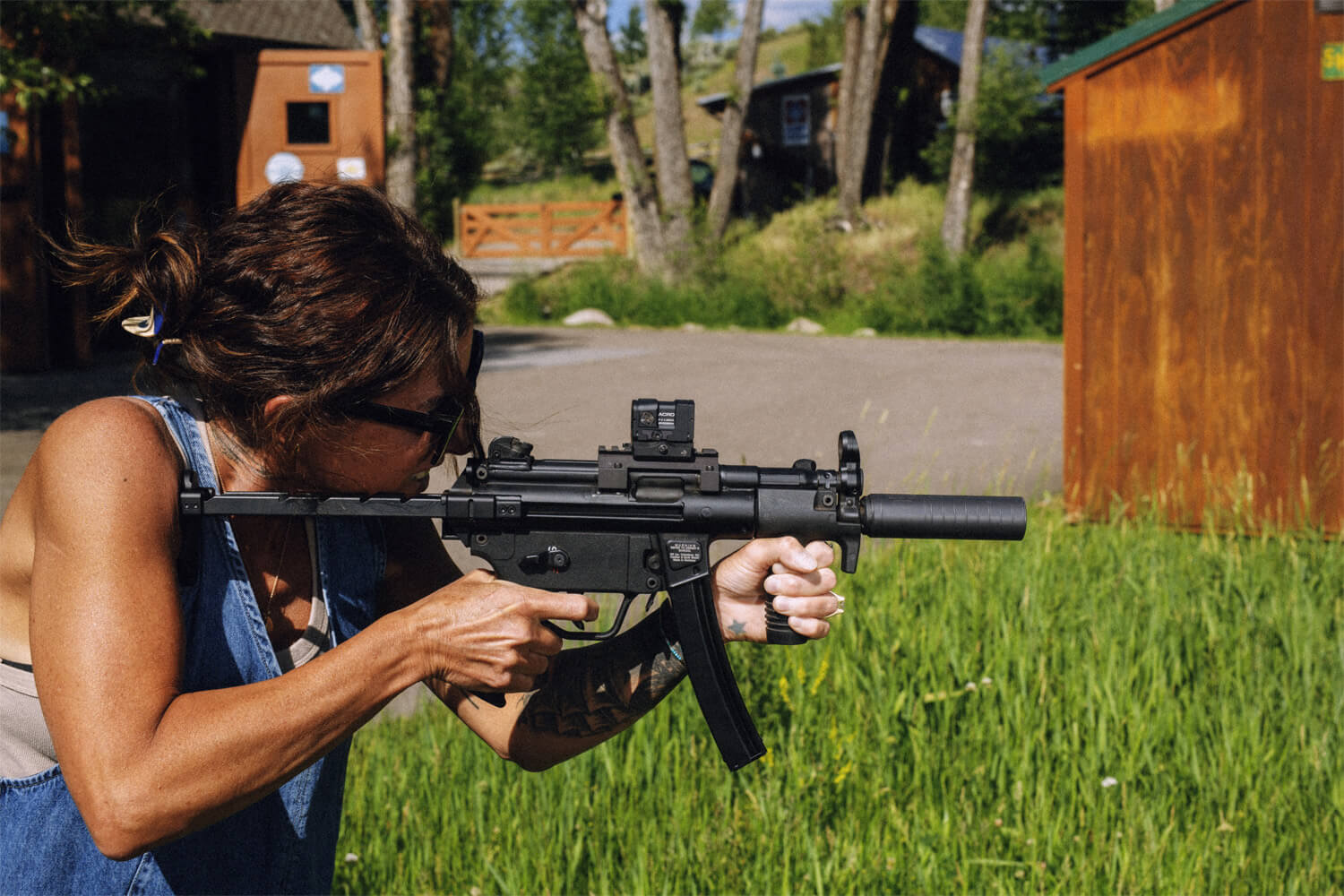
By staying informed and prepared, you can navigate the complexities of traveling with firearms and suppressors smoothly. Safe travels!
David Higginbotham
The post TSA Firearm Rules 2026: How to Fly with Guns and Suppressors appeared first on SilencerCo.
“]]

