


[[{“value”:”
Thank you for reading this post, don't forget to follow and signup for notifications!
Editor’s note: This essay is part of “Stories from the Street,” a Police1 series featuring first-person reflections from officers across the country. These essays are about the lived experiences and moments that changed how officers think, lead and serve. If you have a story to share, we’d love to hear from you. Submit your story here.
By Christopher A. Holmes
The first time it hit me wasn’t on a big call. It was over a report.
An officer I had worked beside for a while turned in something that wasn’t even close to where it needed to be. Nothing major, just rushed and incomplete, the kind of report we’ve all seen a hundred times.
A week earlier, I probably would’ve joked with him about it and told him to fix it. But now I was the sergeant, and I remember standing there looking at it, knowing I had to address it and knowing that how I handled that moment was going to matter more than the report itself.
That’s when it really sets in.
| REGISTER:The hidden cost of the modern patrol shift
They’ll train you on policy and walk you through paperwork. Someone might even give you a quick rundown of expectations if you’re lucky. For a lot of us, it’s more like, “You’ll be fine. You’ll figure it out,” and you’re expected to make it work from there.
Nobody really prepares you for what happens after you pin on stripes.
The first 90 days will shape how your team sees you, and once that perception is set, it’s hard to change. You don’t need to be perfect, but you do need to get a few things right early.
You’re not “another officer” anymore
You might still feel like it. Your team might even treat you like it at first. But the shift happens immediately. The same officers you joked with yesterday are now watching how you make decisions. They’re paying attention to who you correct, who you don’t and how you carry yourself when things get uncomfortable.
If you try to hold onto your old role, you’ll get stuck in the middle, too close to lead but still responsible when things go sideways.
You don’t have to become someone different overnight. But you do have to accept that your role has changed, even if your personality hasn’t.
The first time you hold someone accountable matters
It’s coming, and you’ll know it when it happens. Maybe it’s a report. Maybe it’s performance. Maybe it’s something bigger. Whatever it is, that moment will define you more than anything you say in briefing.
If you hesitate because it’s someone you’re close with, your team sees it. If you come down too hard trying to prove a point, your team feels it. The goal isn’t to be liked or feared. The goal is to be consistent. Officers don’t expect perfection, but they do expect fairness. If they don’t trust that, everything else gets harder.
You’re going to second-guess yourself
Every new sergeant does. You’ll leave calls wondering if you made the right decision. You’ll replay conversations in your head and think about how something could’ve gone differently. That’s part of the job. What matters is that you don’t freeze because of it.
Make the best decision you can with the information you have. Communicate it clearly and own it if it needs to be adjusted. Indecision frustrates officers. They’d rather work for someone who makes a call and stands on it than someone who avoids making one to begin with.
Nobody talks about the isolation
This one catches people off guard. You’re not venting the same way with your team anymore, and you’re not fully in the command-level circle either. You’re somewhere in between. There will be moments where you feel like you don’t really fit on either side. That’s normal. But if you don’t find a way to deal with it, whether that’s another supervisor, a mentor or someone outside your department, it will build up on you. Trying to carry everything alone is a fast way to burn out early in the role.
Your team will test you, whether they mean to or not
It won’t always be intentional, but it will happen. Small things at first. Cutting corners. Pushing limits. Seeing what you’ll address and what you’ll let slide. They’re not trying to undermine you. They’re trying to figure you out. How you respond early sets the standard.
If you ignore things because you don’t want conflict, you’re setting a tone. If you overreact to everything, you’re setting a tone. If you handle things consistently and calmly, you’re setting a tone. That tone becomes your team’s culture.
Culture isn’t what you say. It’s what you allow
You can talk about professionalism, accountability and teamwork all you want. But your team will pay attention to what you tolerate. If negativity runs unchecked, it spreads. If effort goes unnoticed, it drops. If standards change depending on the person, trust disappears. You don’t build culture with speeches. You build it with consistency.
What actually matters in the first 90 days
Forget trying to overhaul everything and focus on what actually moves the needle.
- Be present: Get out of the office. Be on scenes. Don’t lead from behind a computer or phone.
- Be consistent: Hold the same standards for everyone. No exceptions based on who someone is.
- Have the conversations: If someone or something needs to be addressed, address it. Waiting doesn’t make it easier.
- Learn your people: Who can you trust under pressure? Who needs guidance? Who’s quietly carrying more than they should?
- Don’t try to prove yourself: You don’t need to show everyone you belong. You need to show up the same way every day.
Final thought
The first 90 days aren’t about having all the answers. They’re about showing your team what kind of supervisor you’re going to be.
You don’t earn credibility through rank. You earn it in small moments, how you handle pressure, how you treat people and how consistent you are when it matters. Your team is paying attention from day one. Make those early days count.
Additional reading
- FBI Law Enforcement Bulletin – Articles on first-line leadership and supervision in policing
- International Association of Chiefs of Police (IACP) – Leadership in Police Organizations (LPO) Program
- Police1 Police Leader Playbook – Resources for new police leaders
- Police Executive Research Forum (PERF) – Publications on leadership, supervision and organizational culture
- U.S. Department of Justice COPS Office – First-line supervision resources and officer wellness guides
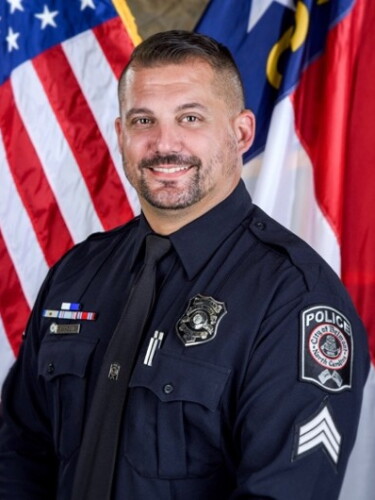
About the author
Christopher A. Holmes is a patrol sergeant with more than 10 years of law enforcement experience. He serves as an instructor in communication and de-escalation and is involved in peer support and officer wellness initiatives. He is a BLET Instructor, Axon TASER Instructor, SABRE AIP Instructor and an instructor with the Verbal Judo Institute. He has completed CIT International Officer and Coordinator Training. His work focuses on practical approaches to leadership, resilience and sustainable performance in policing.
| WATCH: 20 principles every great sergeant lives by
“}]]

