

[[{“value”:”
Thank you for reading this post, don't forget to follow and signup for notifications!
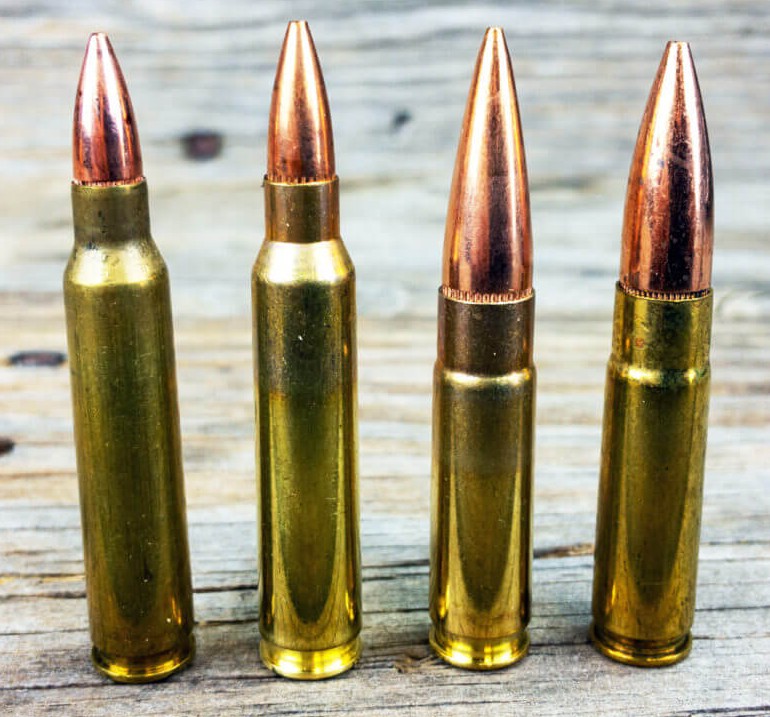
In the world of intermediate combat cartridges only one will survive.
Let’s look at what are the best attributes to each of these great cartridges.
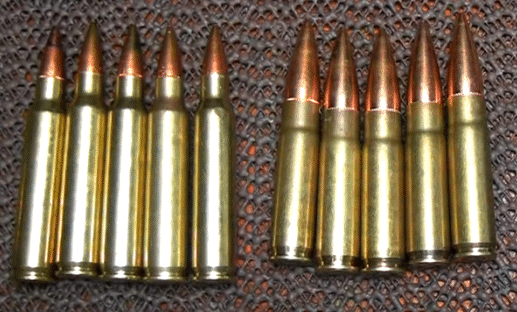
If you’ve spent any time around modern style rifles, especially anything in the AR platform systems, you’ve probably heard the caliber debate: .300 Blackout vs .223 (and the somewhat similar and sometimes interchangeable 5.56 NATO).
At first glance, they look similar but they are certainly quite different to say the least. These cartridges may function in similar rifles and even handguns, share accessories, and actually fill overlapping roles. But once you dig into ballistics, recoil, and real-world use, they’re actually built for very different jobs. So where do you start your research to see what cartridge is right for your intended uses? This article will help you in your journey for the right choice.
Now whether you’re thinking about target shooting, hunting, or just want to understand the difference between the .223 and the .300 Blackout, here is help that breaks down what you need to know in a practical, easy to understand way.
The biggest difference comes down to bullet size and design.
- .223 / 5.56 fires a small, lightweight .224-inch bullet
- .300 Blackout fires a much larger .308-inch bullet
So what really changes everything when talking about ballistics in general? Think about speed, recoil, trajectory, and how each performs at different distances and ultimately how it affects the shooter too. A lot to think about right? We will make it easier for you to examine. Let’s take a look at the question of .223 versus .300 Blackout in the simplest ways possible.
A real easy thought on these cartridges are the following statements that ring true as an overall thought of these two very useful cartridges:
- .223 = fast, light, flat-shooting
- .300 BLK = heavy, slower, hard-hitting

- .223 / 5.56: ~2,900–3,200 fps
- .300 Blackout (supersonic): ~2,100–2,400 fps
- .300 Blackout (subsonic): ~1,000 fps
Looking at those numbers is quite fascinating. The .223 is much faster than the 300 Blackout, which leads to a flatter trajectory and better long-range performance for accuracy and the least amount of bullet drop over the two. So the .223 wins right? Not so fast, quick draw! Better check all of the facts before you make a correct decision. What about energy on target, otherwise known as “knock down power”?
- .223 relies on speed and fragmentation
- .300 Blackout relies on mass and momentum
Because of its heavier bullet, .300 Blackout delivers more energy at close range, making it more effective for larger targets within shorter distances. Larger game at close distances make the bigger .300 Blackout with a much heavier projectile is the better choice (though personally I would rather have a .45/70 for big game hunting unless you need to be suppressed).
- .223: flatter trajectory, less bullet drop
- .300 Blackout: steeper drop, especially past 200–300 yards
At 400 yards, the .300 Blackout can drop more than twice as much as 5.56 cartridge. It certainly is no long range pick to say the least. If you are shooting longer distances at game or even targets for that matter, the .300 Blackout cartridge certainly comes in second place.
Real world language on this?
- .223 is easier to aim at distance
- .300 Blackout requires more holdover and adjustment
What distances will you be shooting at overall? The distances that each perform best at are clearest differences between these two. Choose wisely!
- Effective well beyond 400–500 yards
- Accurate and consistent at longer distances

- Best inside 300 yards (supersonic)
- Best inside 150 yards (subsonic)
- If you’re shooting across a field, pasture, or range the .223 wins
- If you’re working closer distances (woods, brush, short setups) the .300 Blackout rocks.
Recoil matters more than people think, especially for newer shooters or long range sessions. Flinching is just a waste of ammo! Here is how they both rate:
- .223 / 5.56: very light recoil
- .300 Blackout: noticeably more recoil
The .300 Blackout can produce up to 3 times the recoil energy of 5.56, depending on the load.
That said, both are still manageable. We’re not talking about heavy traditional magnum hunting rifle recoil but there is a difference you’ll feel over time with larger shot count fired.
Overall thoughts on recoil of both:
- .223 = easier for beginners, faster follow-up shots.
- .300 Blackout = still quite comfortable, just a bit more push than the .223 has. It is certainly still easier on the shoulder than most deer cartridges can offer.
This is where .300 Blackout really separates itself. Silence! Suppress it and save you ears!
- Designed specifically for short barrels and suppressors.
- Can run subsonic ammo, which is dramatically quieter.
Meanwhile:
- .223 stays supersonic, even suppressed.
- You’ll still hear that sharp “crack” of the projectile flying downrange.
- Remember, in quiet platform setups the .300 Blackout cartridge dominates in suppressed weapons.
- General shooting all around the .223 is always good.

Now let’s talk real-life practicality, because ammo cost adds up fast. This is especially true if you have a quick trigger finger.
- Around $0.50 to $0.60 per round (bulk)
- Extremely common and widely available
- Often close to $1 per round or more
- Roughly double the cost of 5.56
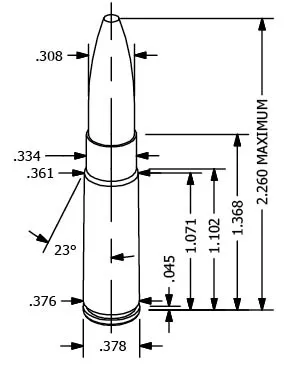
It’s also not as widely available, and you won’t find surplus options like you do with 5.56. For me, that is a deal breaker.
- If you shoot often, the .223 saves a lot of money
- .300 Blackout is more of a specialized and not a cheap round, not a “burn through 300 rounds on any given day” kind of ammo. Your pockets might as well be on fire!
Let’s bring this down to real-world scenarios.
- Winner: .223
- Cheaper, less recoil, better at distance.
Cheaper ammo for the win! Yes, your wallet will thank you if you pick the .223 cartridge. Those bargain priced .223 cartridges at your local ammo shop are the win!
- Small game / varmints: .223. Remember a squirrel or rabbit are way too small for really anything but a .22 rimfire cartridge. Think prairie dogs and groundhogs as small game in this instance.
- Deer / hogs (closer range): .300 Blackout is a short to medium range hammer. Larger game can’t argue with a .30 caliber projectile at supersonic or subsonic speeds.
The .223 cartridge is a fine fit for critters up to coyote size. If you need to go after bigger at closer ranges, a .30 caliber projectile will get the job done even better. Hogs and deer are much better served with the ballistic authority of a wider projectile. Suppression with subsonic loads in the .300 Blackout allows sharp shooters opportunities to take care of urban and suburban wildlife problems such as culling deer and hugs in populated areas. This is where a loud crack of a rifle would send up red flags and angry emails to the mayor. Quiet, powerful and gets the job done well at the closer ranges these areas would offer the wildlife problem solver.
- .300 Blackout offers more stopping power
- .223 may reduce overpenetration risk
Both of those thoughts have merit. Either pick may be a little too much for a standard home construction unless special frangible style bullets are used. Even .223 varmint hunting bullets help such as the old school quick expanding loads.
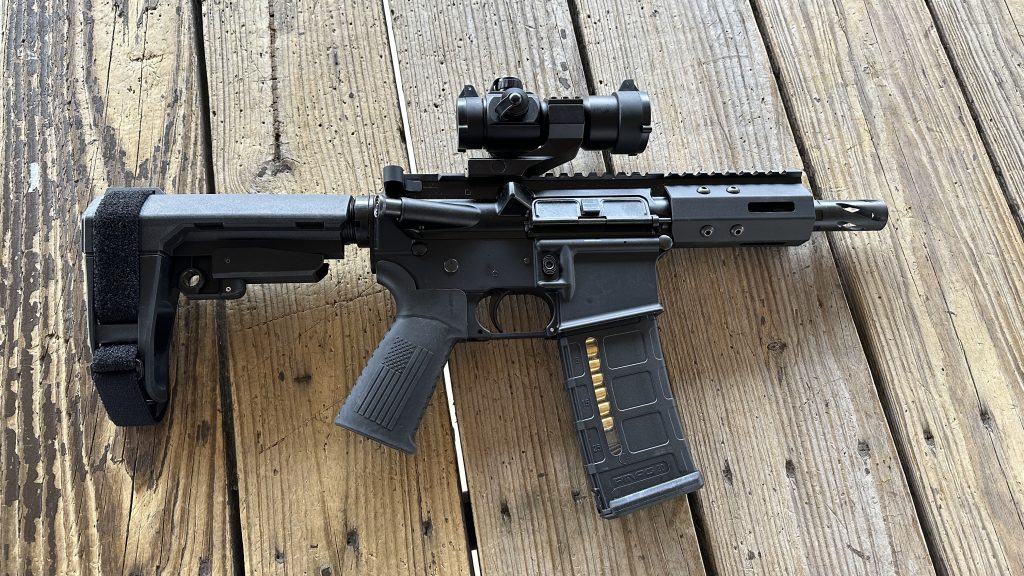
- .300 Blackout is purpose-built for this.
- .223 loses performance in short barrels (a valid concern!)
While short barrel AR style platforms are fun, a true rifle cartridge loses a lot of velocity from a short barrel. This is especially true with the .223/5.56 cartridges. Here is where the .300 Blackout has another win.
So what is the .223/5.56 cartridge really good for? Here is a quick list to ponder:
- Cheaper ammo
- Low recoil
- Longer effective range
- Flatter trajectory
- Widely available
Where does it have serious lacking? Well…
- Less stopping power at close range
- Not ideal for suppressed setups
The .300 Blackout has a lot going for it. Here ‘ya go!
- Excellent close-range power
- Performs well in short barrels
- Ideal for suppressed shooting
- Better for medium game hunting

Even the .300 Blackout has some serious drawbacks…
- Expensive ammo
- Limited range
- More recoil
- More bullet drop
Are you confused yet? Well pick the caliber that suits your needs the best as described above.
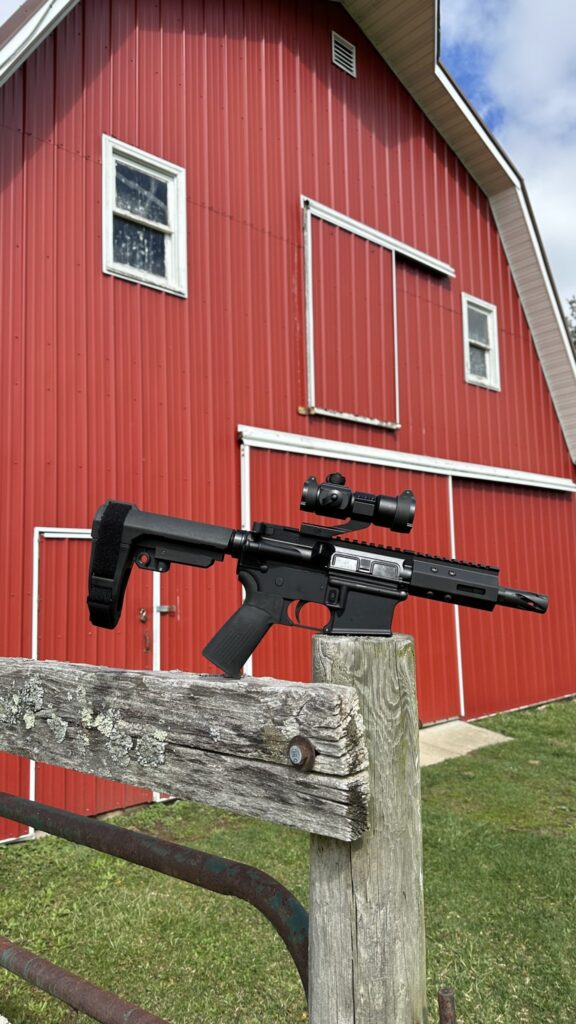
Here’s the simplest way to think about it:
- Go with .223 / 5.56 if you want:
- Affordable shooting
- Longer-range accuracy
- A do-it-all rifle
- Go with .300 Blackout if you want:
- Close-range power
- Suppressed shooting
- Short-barrel performance
Neither is “better”, they’re just built for different jobs.
If you’re running one rifle for everything, most shooters (including myself) lean toward .223 because it’s cheaper, versatile, and effective at distance.
But if your focus is closer-range work, hunting, or a quiet setup, .300 Blackout fills that role beautifully. Choose wisely, and always shoot straight!
“}]]

