

[[{“value”:”
Thank you for reading this post, don't forget to follow and signup for notifications!
Buried deep in Governor Kathy Hochul’s proposed 2026-2027 New York budget — the place where bad ideas go to hide from sunlight — is a pair of provisions that should alarm anyone who still believes the First Amendment means something.
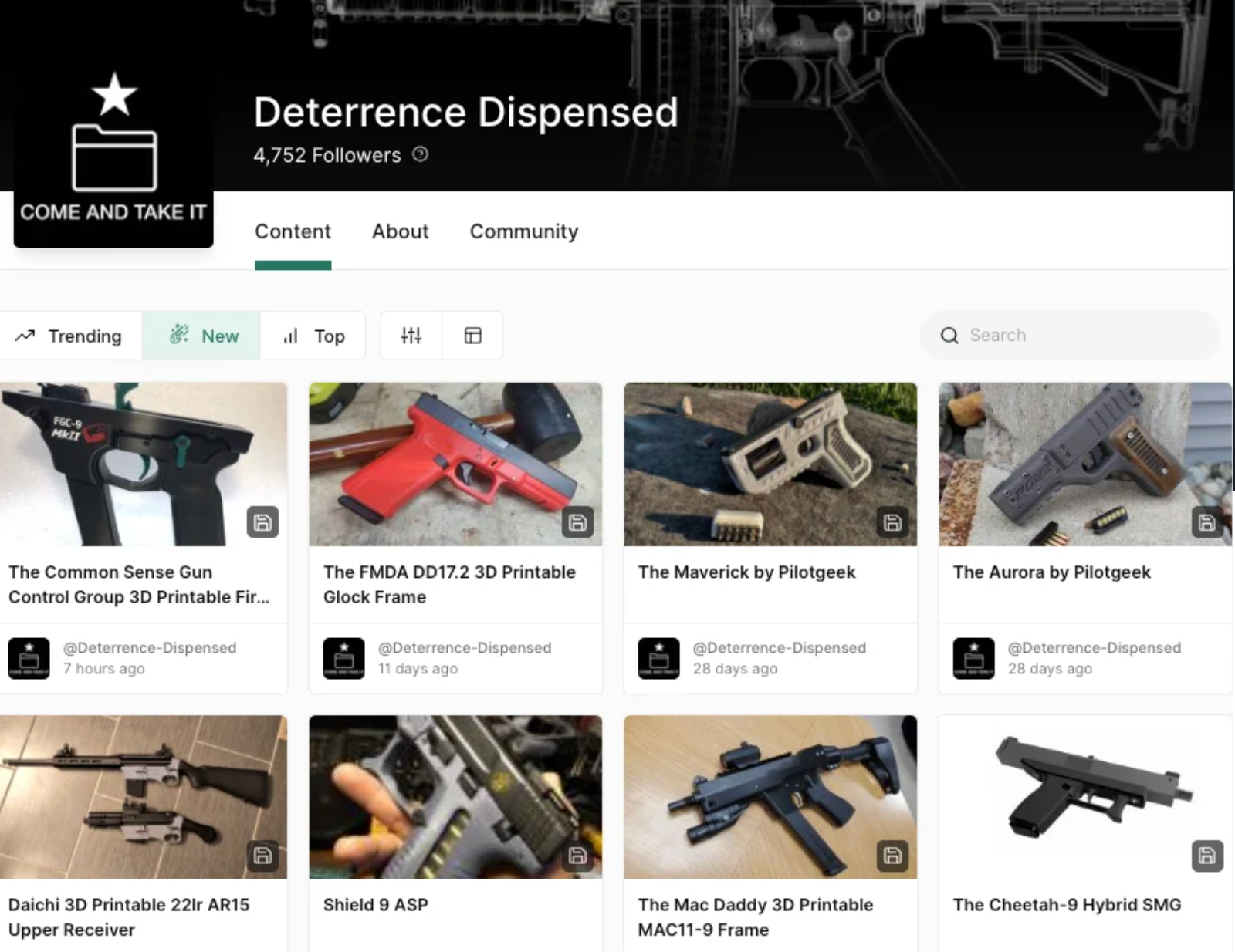
Part C, Subpart A of the budget bill (S.9005 / A.10005) tucks in §2.10 and §2.11, which between them would slap Class E felony charges on New Yorkers for distributing or possessing 3D-printer files capable of producing firearm components. Provision 2.10 makes it a felony to sell or share files for major firearm parts with anyone who isn’t a federally and state-licensed gunsmith. Provision 2.11 criminalizes mere possession of those files if you intend to print a firearm or pass them along to someone you “believe” isn’t permitted to own or smith one.
Read that again. Possession of a file. Believing something about the recipient. That’s the standard Albany wants to use to put New Yorkers in prison.
This isn’t a new idea — it’s a recycled one. Earlier in this same legislative session, Senator Brad Hoylman-Sigal and Assemblymember Linda Rosenthal pushed a standalone bill (S227A/A1777A) that would have criminalized sharing CAD files for 3D-printed gun parts as a Class A misdemeanor. When that effort stalled, the substance got upgraded to a felony and quietly slipped into the budget instead.
And the censorware mandate is arguably worse. Hochul’s proposal would require every 3D printer sold at retail in New York to ship with built-in surveillance software that scans every print job against a “firearms blueprint detection algorithm” and refuses to make anything the state has decided is forbidden. The Electronic Frontier Foundation, which is not exactly a Second Amendment outfit, has been sounding the alarm for months that this kind of algorithmic print-blocking is technically unworkable and constitutionally toxic — design files for innocuous brackets, tool jigs, and hobbyist parts routinely look enough like firearm components to trigger false positives, and any blocklist will be trivially circumvented by anyone who actually intends to break the law.
So who actually gets caught in this net?
Not the criminal printing a Glock switch in his basement. He’s already committing a federal felony and doesn’t care about a state misdemeanor stacked on top. The people who get caught are the journalist reporting on the proliferation of printed firearms, the academic researcher studying additive manufacturing, the hobbyist who downloaded a CAD file out of curiosity five years ago, and the artist whose installation references gun culture. All of them potentially looking at a Class E felony for handling information.
This is the part Hochul’s office really doesn’t want anyone to dwell on: she’s not regulating guns. She’s regulating files. Code. Speech. The state is asserting the authority to decide which arrangements of ones and zeros New Yorkers are allowed to possess.
And Manhattan DA Alvin Bragg has been laying the groundwork for exactly this regime for over a year — sending letters to 3D printer manufacturers, threatening legal action, and petitioning YouTube to scrub videos that reference the perfectly legal 3D printing of firearm parts. Hochul’s budget provisions are the legislative cover for what Bragg has been trying to extract through prosecutorial pressure.
The NRA-ILA flagged this back in January when Hochul previewed the package in her State of the State, calling it exactly what it is — a prior restraint on protected speech dressed up as a public safety measure. Information about how firearms are designed and built has been openly published in the United States since before the Second Amendment was ratified. The Albany position now appears to be that books, videos, blueprints, and lectures on firearms manufacture are all fair game for state suppression, so long as someone calls it a “ghost gun” first.
Colorado already saw this movie. A similar bill was floated in Denver this spring and had to be scaled back dramatically after First Amendment objections — and Colorado isn’t exactly a sanctuary state for gun rights. New York is poised to charge ahead anyway, because budget bills don’t get the same scrutiny that standalone legislation does. That appears to be the entire point. Substantive criminal law that probably couldn’t survive open debate gets shoveled into an omnibus spending package and voted up or down with the rest of the state’s fiscal year.
Hochul’s pitch leans heavily on Everytown’s claim of a “1,000 percent increase” in 3D-printed gun recoveries across 20 cities over five years — a number that sounds terrifying until you remember that 3D-printed firearms started from a baseline of roughly nothing. The actual share of crime guns that are 3D-printed remains a small fraction of recoveries, and the people printing them at scale for criminal purposes are not going to be deterred by a state law requiring HP and Bambu Lab to install snitchware in their consumer printers.
There’s also the small matter of Bruen. The Supreme Court’s 2022 decision requires gun regulations to be consistent with the historical tradition of firearms regulation in this country, and as several legal analyses of Hochul’s package have already pointed out, Americans built their own arms throughout the founding era without anyone in 1791 arguing that the government could pre-screen the blueprints. Pair the Second Amendment problem with the First Amendment problem with the Commerce Clause problem with the federal preemption problem, and you have a piece of legislation that looks engineered for litigation rather than enforcement.
Which may be the real strategy. Pass it, let it operate as a chilling effect on lawful conduct for two or three years, and dare the courts to strike it down. By the time they do, the precedent that the state can mandate surveillance software in general-purpose computing equipment is already set in the public mind.
The vote could come within days. New York gun owners — and frankly, anyone in the state who owns a 3D printer for any reason — should be calling their Assemblymembers and Senators and demanding that Part C, Subpart A be stripped out of the budget before it becomes law.
Because once the principle is established that the government gets to decide which files you’re allowed to have on your computer, the question of which files comes next is just a matter of who’s holding the pen.
“}]]

