


[[“value”:”
Thank you for reading this post, don't forget to follow and signup for notifications!
How To Clean a Suppressor
Home

Kat Ainsworth Stevens
Suppressors, like any tool in the firearms world, are exposed to carbon, lead, and fouling. When it comes to firearms, we know that cleanliness can ensure reliability, but what about suppressors?
Your suppressor should be kept clean for a couple of reasons. Most obviously, you clean your can to ensure it performs at its optimal level. After all, you enjoy all of the noise reduction it provides, so it’s wise to ensure it’s well-maintained. The other reason to clean your suppressor is to make sure all parts and pieces interface correctly with your gun. A clean suppressor outperforms a filthy one any day of the week.
How to Clean a Suppressor
First, identify whether your suppressor needs to be cleaned. For example, rifle suppressors chambered in high pressure rounds are less likely to need to be cleaned. The high pressure created by live fire burns out the worst of the debris and carbon.
In fact, many high-pressure rifle cans are fully welded rather than being user serviceable. Usually, a rifle suppressor can be maintained with nothing more than an occasional solvent soak and the thin end of a solvent brush.
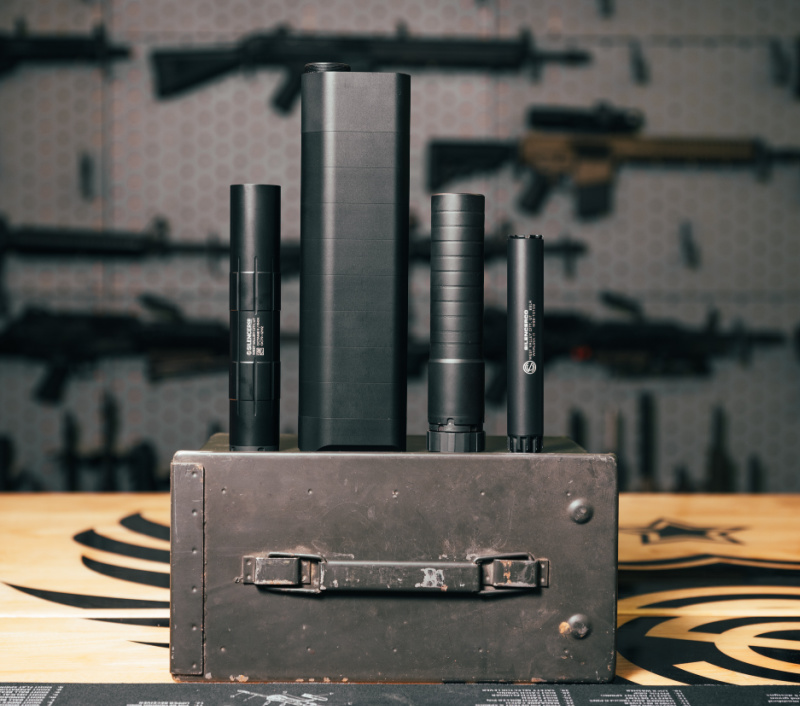
How about handgun, shotgun, and rimfire suppressors? These models will require regular cleaning. Of these three platforms, pistol suppressors tend to need the least amount of cleaning, unless you’re using a lot of lead ammunition. Like it or not, lead ammo makes both guns and suppressors filthy in record time.
It’s also worth noting that because pistols and shotguns are lower-pressure than rifles, they don’t necessarily self-clean. As for rimfire, not only is it low-pressure, but the vast majority of rimfire ammo is filthy. Rimfire suppressors require the most work and the tightest cleaning schedule.
After you’ve determined that your suppressor needs to be cleaned, you’ll need to look at whether it’s a fully welded or user-serviceable suppressor.
In a fully welded suppressor, the baffles and the can are completely welded. The device is a single unit that isn’t designed to be taken apart, and the baffle stack cannot be removed for cleaning. Most high-powered rifle cans are fully welded, and some pistol cans, like the SilencerCo Omega 9K, are fully welded.
User-serviceable suppressors allow you to remove the baffles or monocore. Suppressors like the Salvo-12 and Sparrow 22 are user serviceable for easy cleaning.
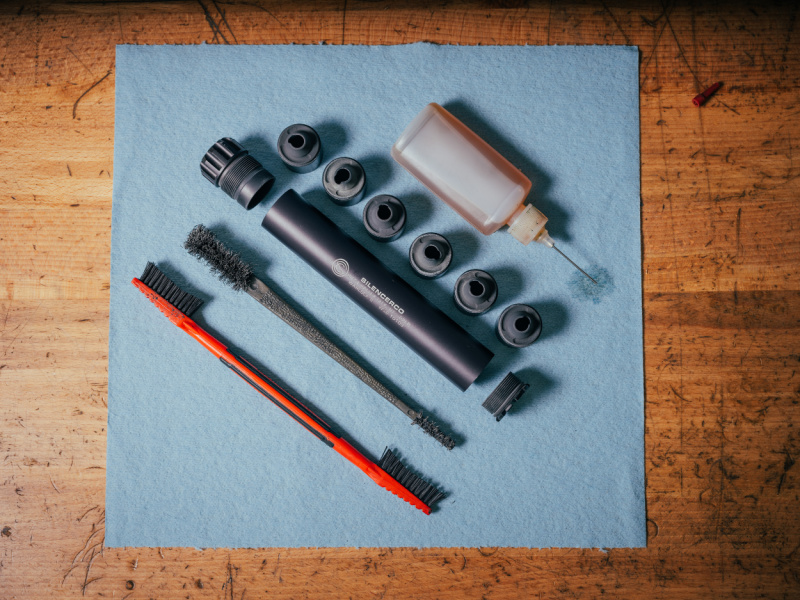
We’re going to focus on user-serviceable methods for cleaning a suppressor. This assumes you are a typical user who doesn’t own the mechanical means to clean suppressors. We will address mechanical methods later.
Prior to cleaning any suppressor, make sure you grab gloves and safety glasses. This is necessary to protect yourself from any caustic cleaning solvents. And before you do anything, stop and consult your suppressor’s manual. Look for specific instructions relating to maintenance and follow them.
How to Clean Fully Welded Suppressors
There isn’t much you can do with a fully welded suppressor, but the good news is that cleaning them is simple. You can soak them in solvents, in a process that requires you to soak and dump until carbon is no longer visibly flowing out. To reduce the quantity of solvent used, you can seal one end of the can and fill the other with solvent. Let the solvent sit for a bit, then dump it.
It’s important to be aware that some cleaning solvents can remove the finish on your suppressor. Make sure to research your solutions before using them to clean your suppressor.
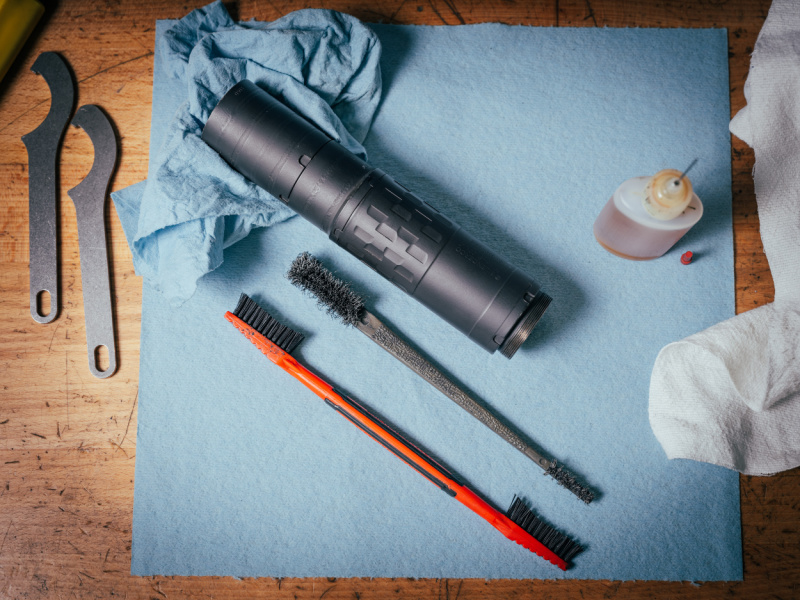
You can also run a cleaning brush through the suppressor to forcefully remove carbon. Silencer-specific cleaning brushes do exist, and they’re perfect for quick and easy cleaning. Brushes help clear out the gunk and debris and help to ensure that your suppressor lasts as long as possible.
Before shooting with your clean suppressor, make sure it’s completely dry. The most common method is using an air compressor, but no matter the method you choose, be sure all moisture is gone before shooting.
How to Clean User Serviceable Suppressors
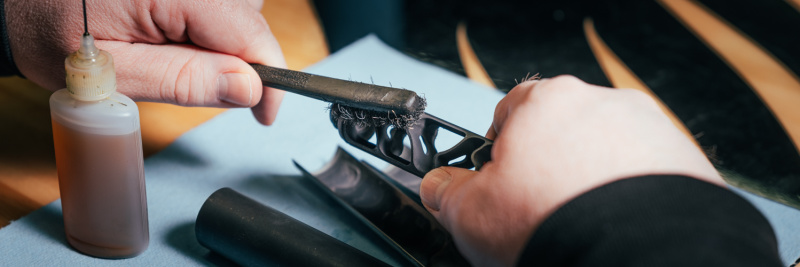
Cleaning user serviceable suppressors is quite easy. First, grab your manual and follow the directions on how to disassemble your suppressor and how to remove the core of the can. Second, use an all-purpose brush, solvent, and elbow grease to get your suppressor clean. Wipe the solvent on, let it sit momentarily, and then scrub off lead and fouling with the brush.
When using an all-purpose brush, make sure the material of the brush is softer than the material of the baffles. For example, brass/bronze brushes are good on steel but can damage aluminum. For aluminum, use a stiff nylon brush.
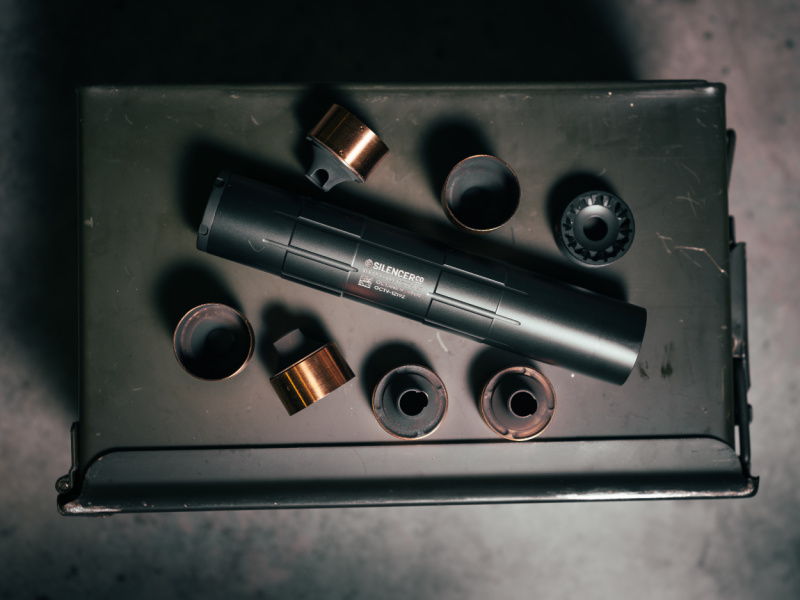
It’s also a good idea to wipe the inside of the suppressor walls to ensure you aren’t adding a clean core to a dirty tube. This is usually quick, and it wipes right off.
Before putting the silencer back together I would suggest using a dry, absorbent material to wipe off the solvent and dry it out. An old T-shirt often works wonderfully in this role. Follow the instructions and reassemble the can to factory specifications.
What You Should Never Do to Clean Suppressors
Never, ever run cleaning patches through a suppressor. The bore of a suppressor might not seem much different than the bore of a rifle, but it is. There are plenty of places for these patches to get lost. If one gets stuck and left behind, you could cause serious damage to the can and risk harm to the shooter.
Do I Need to Clean the Suppressor Mount?
Cleaning the core and body of your can is important, but it goes beyond that. You should also clean any mating surface. Nielsen devices on pistol silencers are a good example of parts that must be cleaned to ensure reliability. You should also clean QD mounts, muzzle devices, and any other interfacing surface. While you’re cleaning these components, it’s also a good time to check for unusual wear or damage that could cause an unsafe live fire situation.
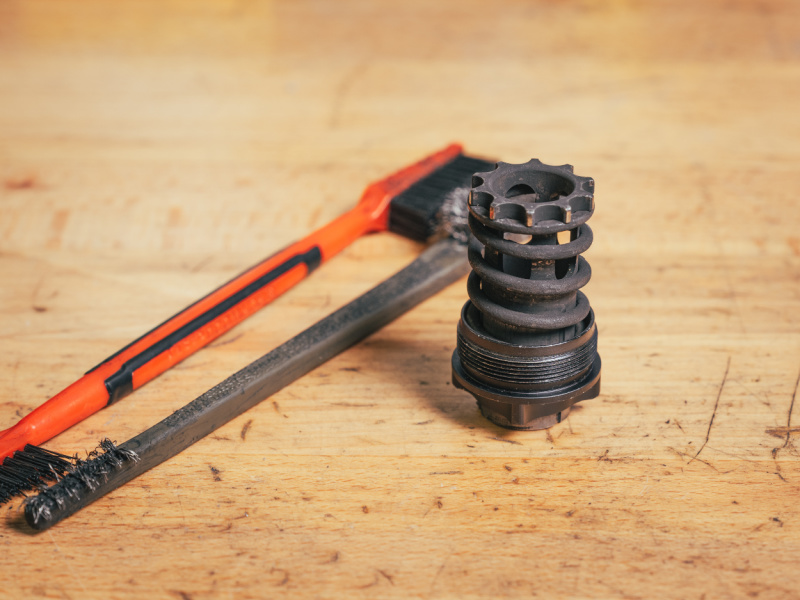
Be sure to clean the suppressor threads, as well, to ensure it attaches securely and properly to your gun every time it’s used. Take a moment to wipe down the outside of the can to make sure it’s not put away wet.
How Often Should I Clean My Suppressor?
Refer to the manual to see how often your particular suppressor might need cleaning. With double-checking your manual in mind, here’s the general rule of thumb for suppressor maintenance.
High-pressure rifle suppressors rarely need to be cleaned. Pistol suppressors typically only need to be cleaned if you are using cheap, dirty ammo or running an excessive number of rounds through in a short period. Anytime you use lead projectiles you should clean pistol suppressors.
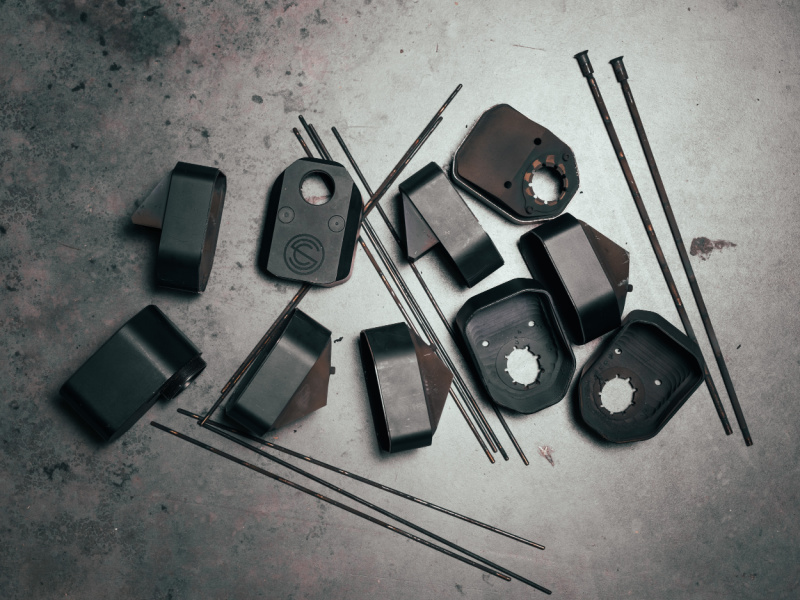
Shotgun suppressors vary—remember, check the manual— the Salvo 12 should be cleaned every 1,200 rounds. Shotgun hulls are plastic and can leave behind bits and pieces inside the suppressor, along with carbon and lead debris, so it’s smart to check the Salvo 12 out periodically.
Rimfire cans are the suppressors you should clean most often. Clean cans like the Sparrow 22 every 1,000 rounds. You can clean well before that point to make the process easier. Rimfire ammunition is dirty, and pure lead projectiles are common.
Mechanical Cleaning Methods
If you dislike manual cleaning and would like a simple, automatic solution, there are options. These include ultrasonic cleaners, wet and dry media tumblers, and soda blasters. Do not use any of these methods on your outer tube because it will remove the finish; these methods are meant for the baffles. Consult the manufacturer before utilizing these methods to clean your suppressor. Asking questions is a good way to avoid causing permanent damage to your suppressor.
Ask which wet or dry media can damage your can in a tumbler? And did you know that ultrasonic cleaners can weaken aluminum? Or that if you don’t use a blast box for a soda cleaner, your significant others will be very disappointed in you? Those are the kinds of things you need to know before tossing a can in a mechanical cleaner and hitting go.
Keeping Clean
Suppressor maintenance is straightforward. Even the highest maintenance suppressor requires less cleaning than most rifles. At the end of the day, they are relatively simple devices to clean and maintain. Hopefully, you now know how to maintain your suppressor to get the best possible performance out of it. And remember: Check your manual.
Kat Ainsworth Stevens
The post How To Clean a Suppressor appeared first on SilencerCo.
“]]

