Got a Gun for XMAS? Here’s How to Suppress It

0
64

[[“value”:”

Thank you for reading this post, don't forget to follow and signup for notifications!

Picture of David Higginbotham

David Higginbotham


Well before Ralphie’s cinematic “You’ll shoot your eye out” debut in 1983, Christmas has been a great time to pick up a new gun. Once you know what gun you’re working with, you should take the next step and find a way to prolong the peace and quiet that seems so short lived this time of year. The best way to cut the noise of a new gun is the right suppressor—and SilencerCo has the answer. 

Finding the right suppressor isn’t complicated, but there is a basic question to answer first: is your new gun’s barrel threaded?

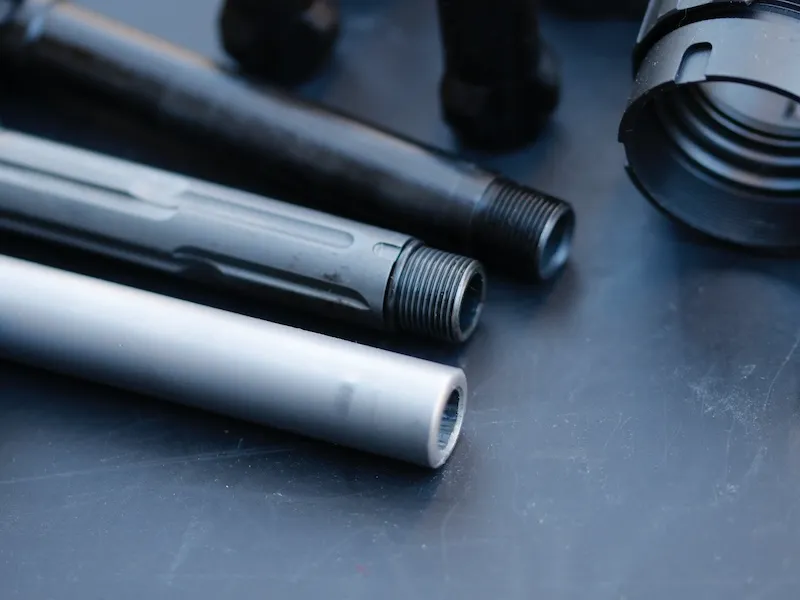
closeup shot of two threaded barrels and one non-threaded barrel
If your barrel is threaded, you are ready to go. If not, there’s work to be done.

Attaching a Suppressor to Your New Gun

Let’s start with a simple examination of the business end. Having a threaded barrel makes adding a suppressor easy. 

Many gun manufacturers have wised up and are adding threaded barrels as standard features. If you’re lucky enough to have received a gift that’s suppressor ready (meaning the barrel came threaded), you can skip ahead to picking your silencer; if not, there’s work to be done. 

The Process: Getting a Barrel Threaded

If your rifle barrel isn’t already threaded, you generally have two paths: purchasing an aftermarket threaded barrel or having a gunsmith thread your existing one. I strongly recommend professional help for this task, as many gunsmiths specialize in precisely this task. 

Threading a barrel is not difficult. It can be done with a simple die. Threading one correctly, though, while protecting the muzzle crown and barrel, requires practice. While you might know a guy who says he can do it, or even have some experience with basic DIY, the threads need to be concentric, and the crown of the muzzle needs to be protected to preserve accuracy. 

You may also need to move the front sight (common on many lever-actions). Again, call in a professional.

Options for Handgun Barrels

Most centerfire semiautomatic handguns have barrels that make threading difficult because they fit perfectly inside the slide. These barrels are easy to replace, unless the model is brand new or obscure.

Once a gun hits a certain point in popularity, the aftermarket parts become much easier to find. If the gun maker doesn’t offer a factory threaded barrel, others will quickly pick up the slack. 

SilencerCo makes threaded barrels, too. You can check out the options here. 

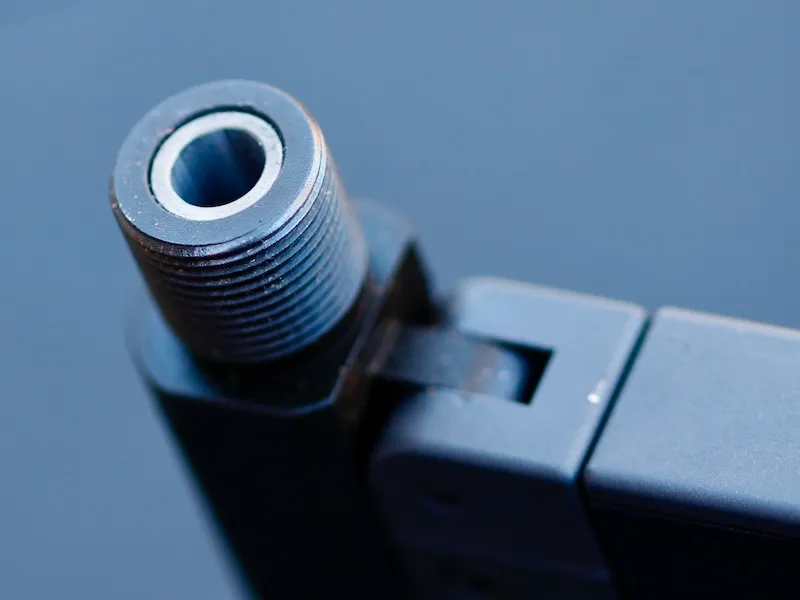
Lifecard 22 threaded barrel
Even the LifeCard 22 has a threaded barrel option. Here, the barrel is threaded for a sleeve that is then added on top of the barrel. This go-between is common on some .22 LR designs.

Can You Suppress a Revolver?

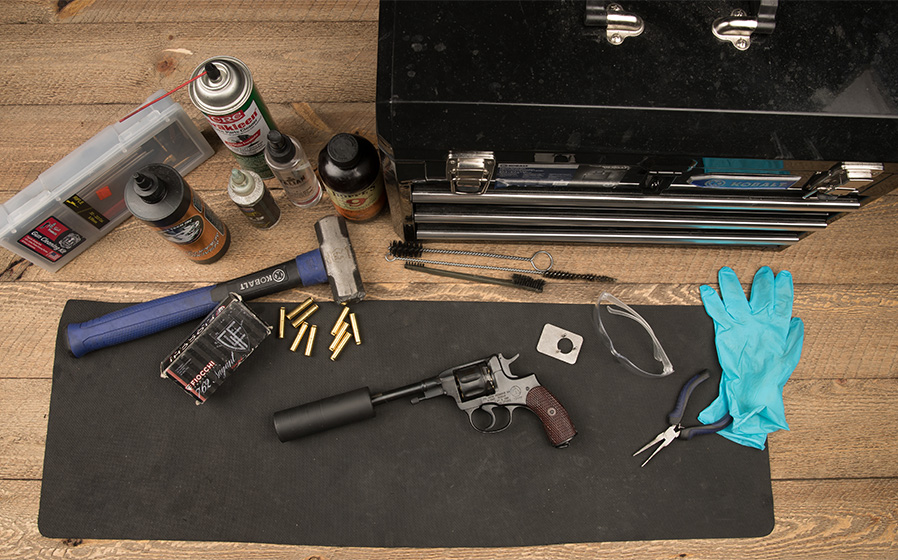
In most cases, no, revolvers cannot be effectively suppressed. The lone practical exception is the Nagant M1895, which uses a unique cylinder mechanism and specialized ammunition to seal the cylinder gap. While it is technically possible to thread a revolver barrel or attach a suppressor, doing so is usually ineffective and offers little real sound reduction.

Nagant M1895 with the SilencerCo Omega 9K.
The Nagant M1895 features a gas-seal system that moves the cylinder forward when fired, closing the gap between the cylinder and the barrel. This design prevents propellant gases from escaping sideways, allowing a suppressor to function as intended.

On standard revolvers, there is an open space between the cylinder and the barrel known as the cylinder gap. This gap allows high-pressure gas and often fine shavings of lead or copper to escape laterally as the bullet passes through.

Because a suppressor works by capturing and slowing expanding gases after the bullet exits the barrel, gas venting through the cylinder gap undermines its effectiveness. In many cases, this escaping gas can be loud, forceful, and potentially hazardous, making suppressing a conventional revolver impractical at best.

Picking the Right Suppressor

Once your host gun is ready, it is time to make the hard decisions in selecting your silencer. While sound suppression is always my first consideration, there are others—like the length and/or weight of a suppressor, or the durability of the design—that will help you decide. 

I’ll group these suppressors the way I tend to think of them.

Rimfire Suppressors

There’s something addictive about the genuinely muted sound of a suppressed subsonic .22 LR round. From bolt-action rifles to semiautomatic pistols, there are probably more options for suppressible guns in this class than any other. 

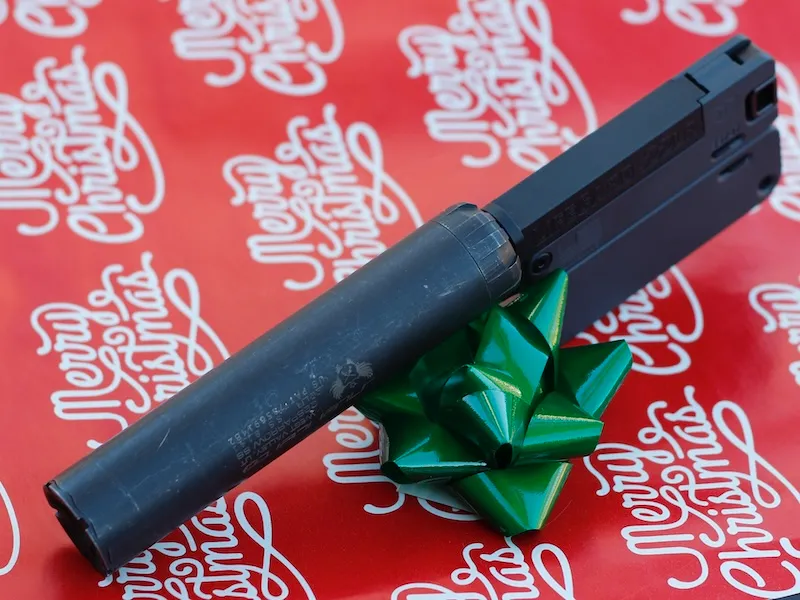
The Sparrow 22 is a do-it-all classic. It’s robust design is capable of handling anything rimfire, including full-auto .22 LR.

lifecard 22 pocket gun, suppressed, with a SilencerCo Sparrow, on Christmas wrapping paper with green bow
I’m old-school, and love my SilencerCo Sparrow.

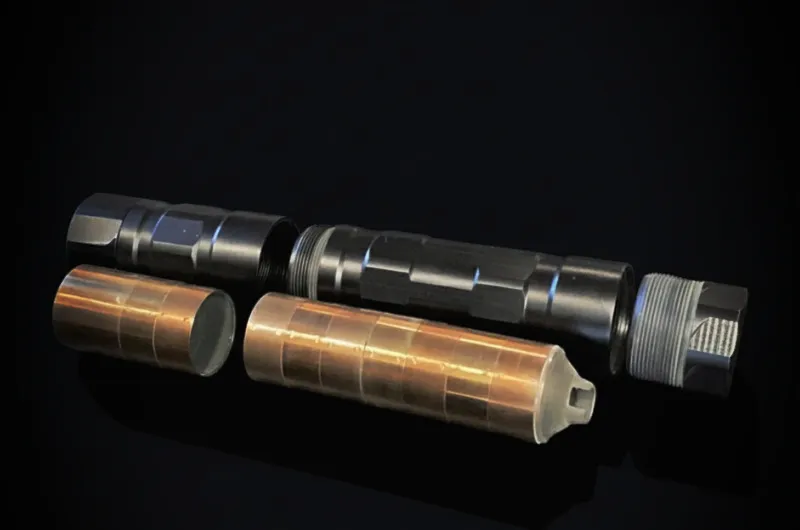
The Switchback 22 offers the ability to move between orientations optimized for pistols or rifles. With two main sections, the Switchback can also be run in shorter or longer configurations for those who want to maximize sounds suppression or privilege weight and length. 

SilencerCo Switchback 22 rimfire suppressor disassembled to show modularity
The Switchback’s modular design makes it usable in four total configurations: Long (default), Medium, Short, and Rifle Optimized.

Hunting and Bolt-Action Suppressors

As an avid hunter, one who tends to hike a bit in the process, I’m conscious of weight. I hunt with a Savage 110 and a SilencerCo Scythe Ti, which is supremely light. This titanium can takes the bite off a .308’s report, making hunts hearing safe. 

The Scythe Ti is my go-to for .30 caliber rounds. For larger rifles, the Hybrid 46M is a rockstar. The larger bore is ideal for .45-70, .460 Weatherby, but the suppressor can handle everything smaller, too, just as well. 

hunter looking through scope mounted to .308 Savage 110 High Country rifle suppressed with Silencerco Scythe Ti
The Scythe is the lightest, shortest suppressor I’ve ever owned for a .30 caliber rifle. This would be meaningless if it wasn’t also built strong and capable of impressive noise suppression.

You may know precisely what gun you want to suppress now but future possibilities include that you may want a suppressor that is versatile enough to handle everything, and the Hybrid 46M is it. Its modular design makes it a solid choice for shooting from the bench or for carrying in the bush.

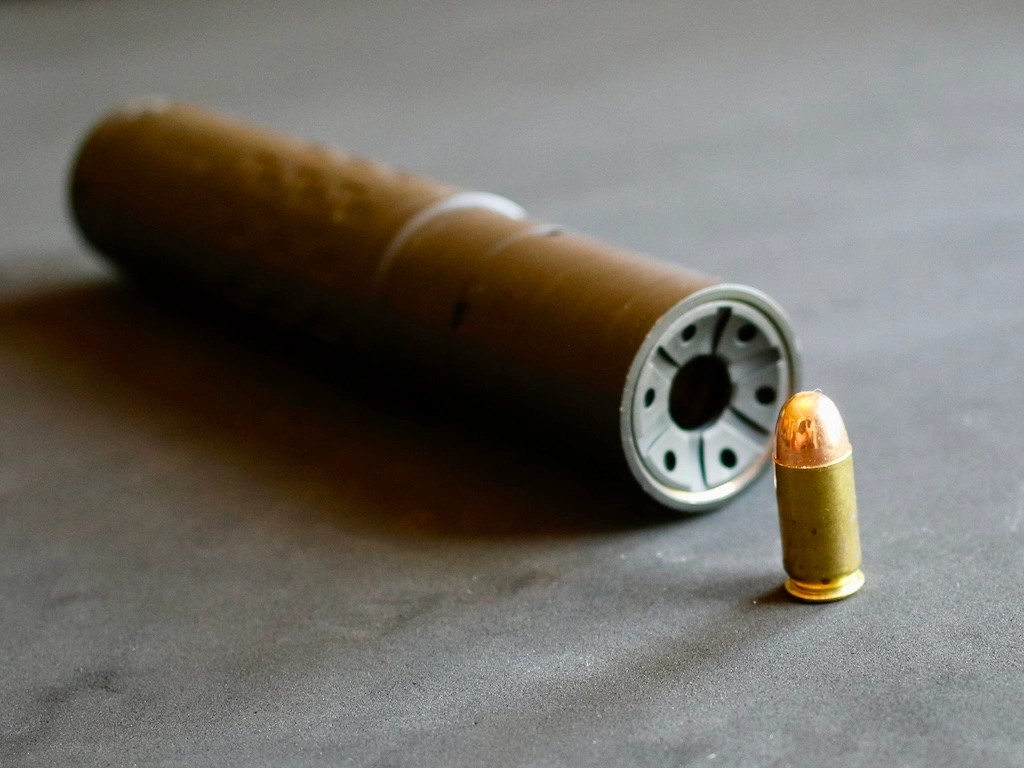
SilencerCo Hybrid 46M with a round of .45 caliber ammo
Make sure the suppressor you intend to use has a bore that’s wide enough for what you intend to shoot. With many SilencerCo suppressors, the name will get you most of the way there. The Hybrid 46M is ideal for anything .46 or under.

Suppressors for Tactical & Black Rifles

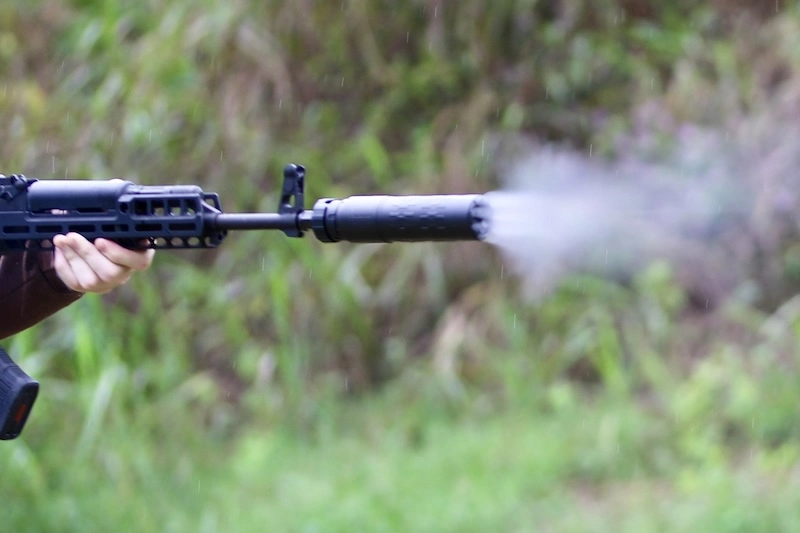
While the Scythe Ti and Hybrid 46M will work on many hosts, the Velos line is my go-to for tactical rifles. The Velos Low Back Pressure is ideal for semiautomatics. By allowing gasses to escape from the front of the suppressor, the Velos prevents that excess gas from creating as much blowback, which is a real problem for gas-driven guns. 

vlos lbp 762
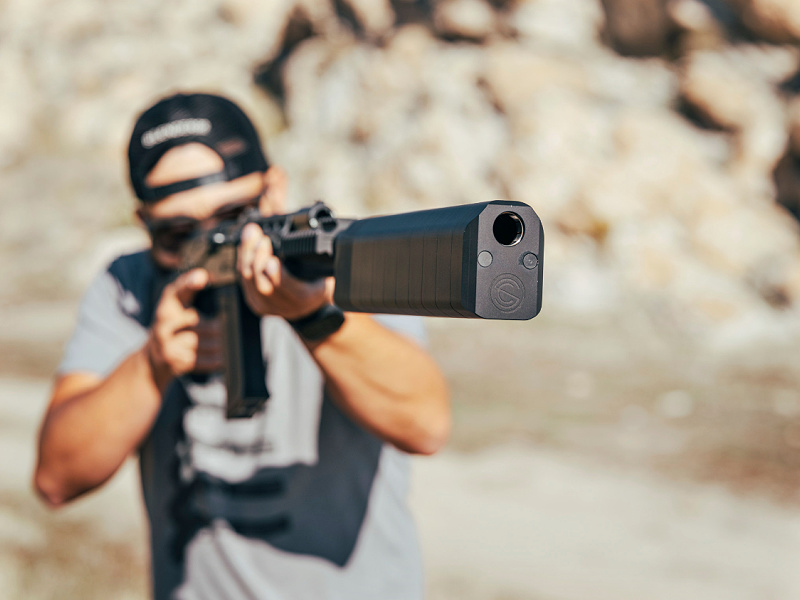
Shooting in the rain. Capturing this bit moment “when the magic happens” with the Velos LBP 762 isn’t easy. As the shot fires, the gas begins to vent. The pressure clearly drives forward, rather than backing up in the silencer.

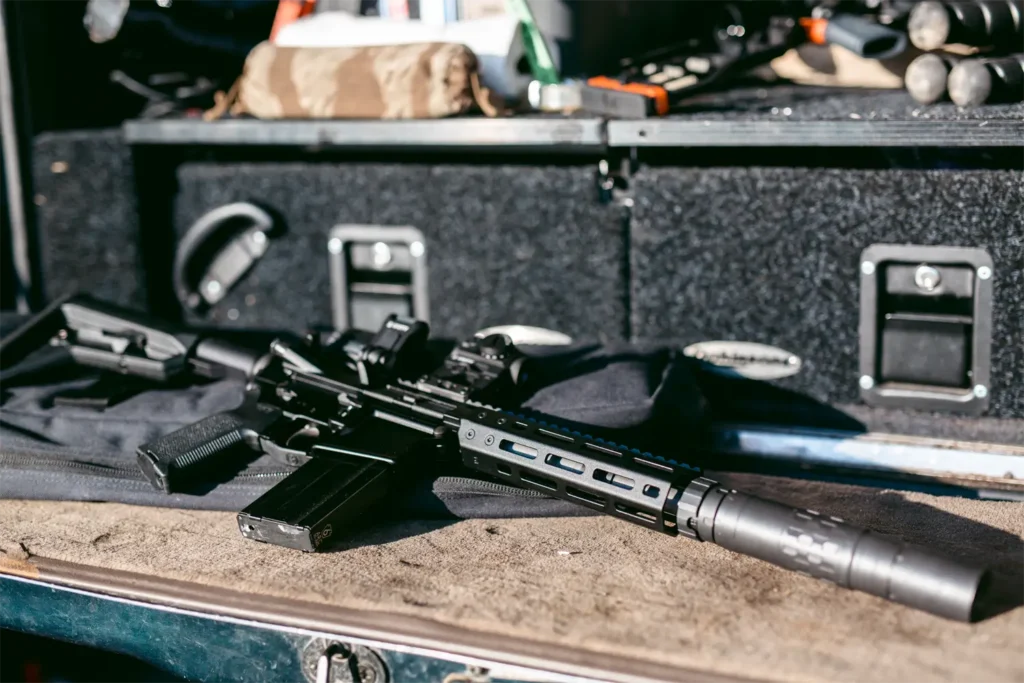
For something more versatile, the Omega 36M works like the Hybrid 46M, but it is built to tackle .30 caliber ARs and can even tackle the pressure of .338 Lapua. While has a .36” bore, it works well for 5.56, too. Its modular design allows for a longer length for work from the bench and a shorter version for short-barreled configurations. 

Silencerco Omega 36M on .338 ARC rifle - florida suppressor laws
The Omega 36M is the ideal multi-caliber, modular suppressor for many gun owners.

Centerfire Pistol Suppressors

When I’m looking at centerfire pistol suppression, I like to balance weight. For heavier guns with steel frames, I like longer designs and I’m less concerned about the weight of a suppressor addition. 

The Omega 36M, again, is ideal for 9mm guns and the versatility of the can makes it ideal for those looking for a suppressor that can move between rifle and handgun hosts. 

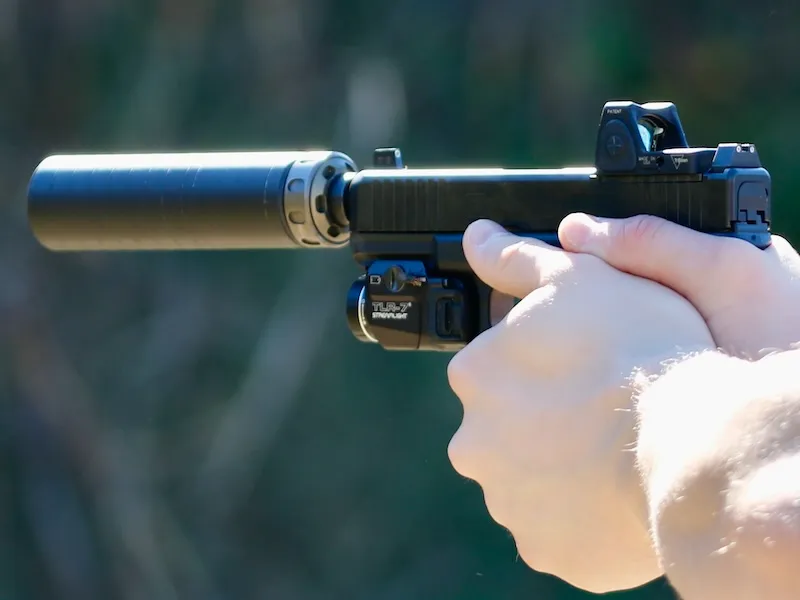
Glock suppressed - While I’m most interested in noise reduction, I like the Spectre 9’s almost imperceptible lightweight design, too. This has fast become my favorite of SilencerCo’s pistol cans.
While I’m most interested in noise reduction, I like the Spectre 9’s almost imperceptible lightweight design, too. This has fast become my favorite of SilencerCo’s pistol cans.

For smaller guns, those with lighter frames, I’d suggest the S98. This eccentric design keeps the bulk of the open space inside the silencer below the centerline of the gun’s bore, which makes it ideal for EDC guns with shorter sights.

Suppressing the Modern Shotgun

Shotguns are another matter altogether. Balance is critical to the swing of a shotgun, so there are many shooters who hesitant to add weight and length to the end of their barrels. The benefits, though, especially for those who hunt with dogs, make it worth the extra effort required to learn the nuances of wing shooting with a suppressor. Protecting a dog’s hearing is important, too.

Salvo 12 shotgun suppressor on semi-automatic shotgun
The Salvo 12 is a modular shotgun suppressor designed to operate with most pump action and semi-automatic shotguns.

The Gun Is Ready, You’ve Picked a Suppressor, What’s Next?

Once you have the gun and the suppressor, you need the right hardware to join them together.

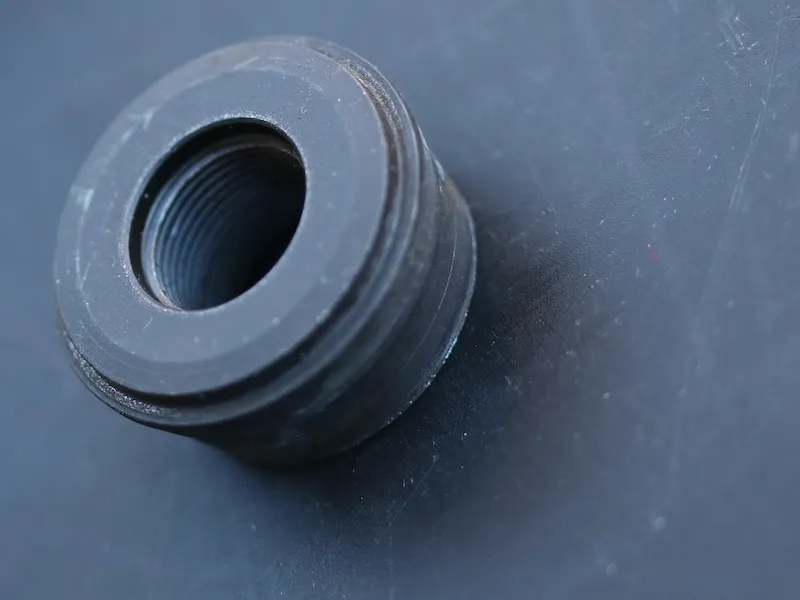
direct thread mount
This simple threaded block is all that’s needed to secure a Scythe Ti to my .308. Direct thread mounts are intuitive and easy.

For many guns, the direct-thread option is a good place to start. This is the only way to do rimfires, and my preferred method for most bolt-action rifles. 

SilencerCo makes many direct thread attachments in different thread patterns that thread onto the bottom of the suppressors. This is needed due to the wide variety of barrel thread pitches and sizes out in the wild. Make sure your adapter is threaded to the pattern on the barrel.

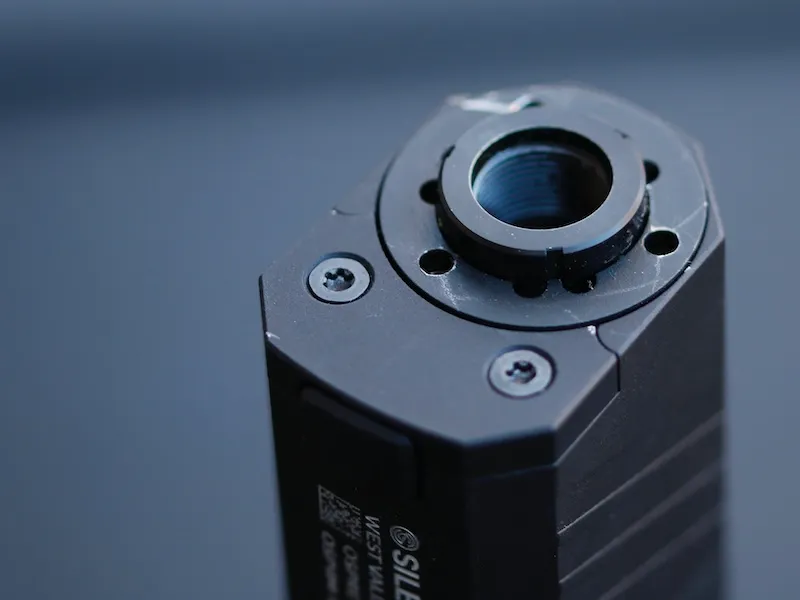
nielsen device in silencerco osprey 2.0
Pistons (or Neilsen Devices) are hidden on the inside of the suppressor. They thread directly to the muzzle, but are housed inside the suppressor, which allows semiautomatic handguns to cycle normally.

Handguns, though, may need an extra helping hand. Almost all the centerfire guns currently on the market will require a Neilsen Device (often called a piston) to make cycling reliable. 

For black rifles, even for some bolt-actions, you may want an attachment system that’s faster than direct-thread. Like pistons, this can be an involved process, and we have a full article explaining the options here. 

No matter how you decide to attach it, the fun is about to start. There are so many practical reasons why shooting suppressed is worth the extra effort. It isn’t all about preserving the tranquility of a Silent Night. There’s the quiet of a still snow at dawn, and the ability to talk at the range. Noise reduction is the gift that keeps on giving.


The post Got a Gun for XMAS? Here’s How to Suppress It appeared first on SilencerCo.

“]]