Safariland Is Making a Holster for a Silencer: Early Look

0
70

[[“value”:”

Thank you for reading this post, don't forget to follow and signup for notifications!

Picture of David Higginbotham

David Higginbotham


Making holsters can’t be that complicated, right? As long as there have been guns, people have been stitching up leather to hold them. And there’s still a cottage industry for Kydex thermoform plastic holsters. Dudes are churning out decent fits with little more than a hair dryer and some padded clamps. So why is it so hard to find a rock-solid holster for a suppressed handgun?

The answer is reasonably easy. Sewn and friction-fit one-off holsters are easy. A well-built retention holster is not. Making a design that is scalable and repeatable is wildly complicated.

A Safariland Holster for a Suppressed 9mm

While I’m writing about this on behalf of SilencerCo, I have experience with holsters. I work for Safariland where I move between sales, marketing, and engineering. Safariland is the undisputed leader in duty holster production. And soon we’ll be able to holster suppressed handguns.

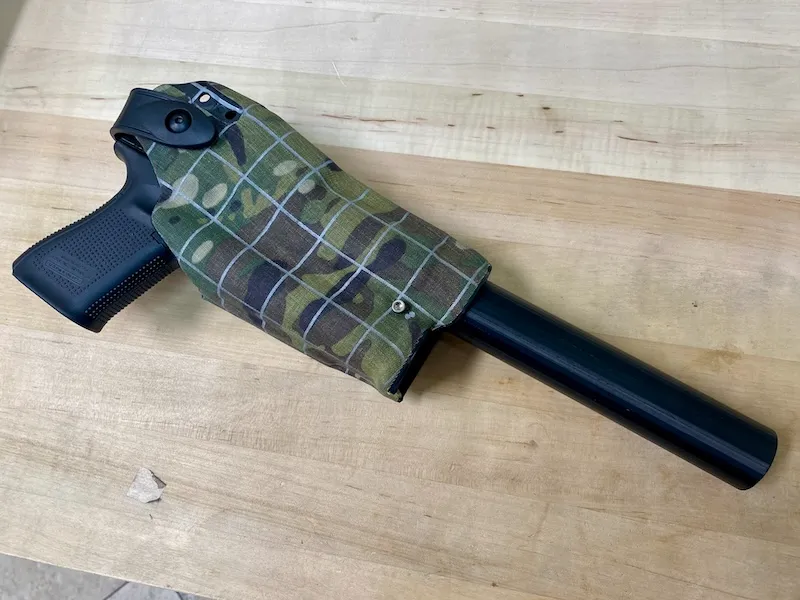
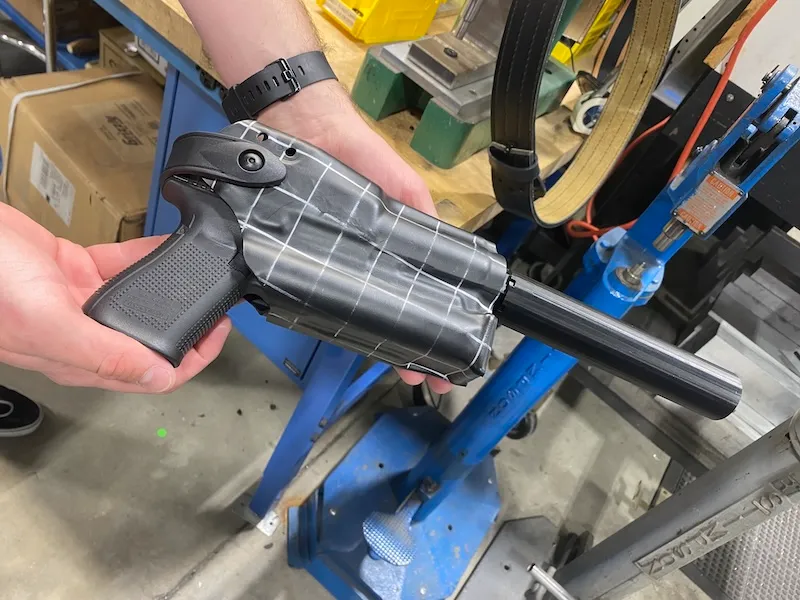
Safariland suppressor holster prototype with white grid lines to help determine Boltaron bends and stretches
A prototype with a stand in for a suppressor. Lines help us determine where the Boltaron bends and stretches during pattern work.

To be clear, this article is an early look. This holster isn’t for sale yet, but it is coming. The holster pictured is a prototype. I want to emphasize this from the outset. We’re lifting the hood on the process to show how we do what we do at Safariland—not to frustrate anyone but to build some momentum for the project.

The Objective: A Retention Holster for a Suppressed Pistol

Safariland’s engineers are designing outside the waistband (OWB) holsters meant to securely retain suppressed handguns. The holster’s primary purpose is to carry a gun until it is needed. While there is often convenience in the act of reholstering, having the gun accessible and at the ready is far more critical than any perceived need to get it back in the holster quickly. 

This is a fundamental I teach in concealed carry classes, and it would hold true for a suppressed pistol OWB, too. But it becomes crucial when we add heat into the equation.

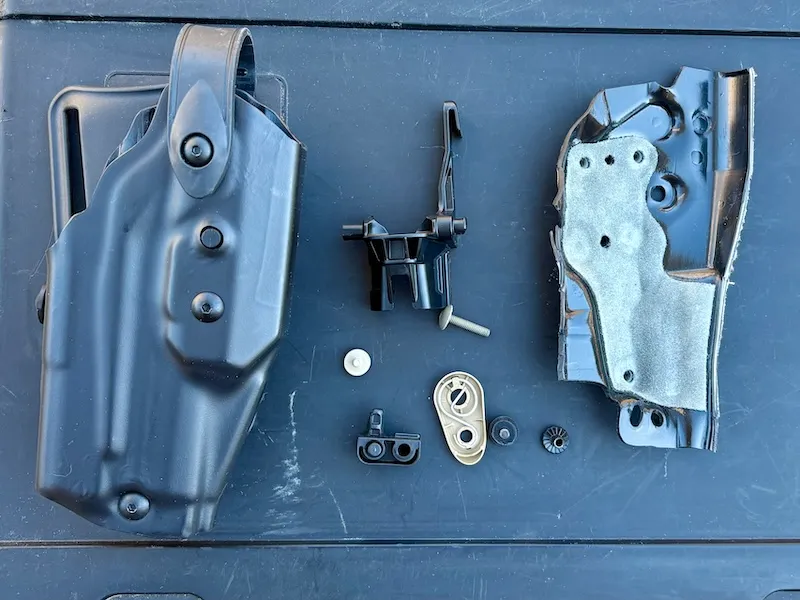
Safariland 6TS Holster parts disassembled, including Boltaron body, injection-moloded nylon belt attachments.
Anatomy of a Safariland 6TS holster: The body of the holster is Boltaron, a thermoform plastic with excellent performance in extremes of heat and cold. The belt attachments are injection-molded nylon. The wrap on the exteriors (not pictured here) is 500D Cordura nylon.

We’re working on a 6,000 Series holster line that will allow a suppressor to pass through the muzzle end (which is typically closed off with a muzzle plug and a light cap).

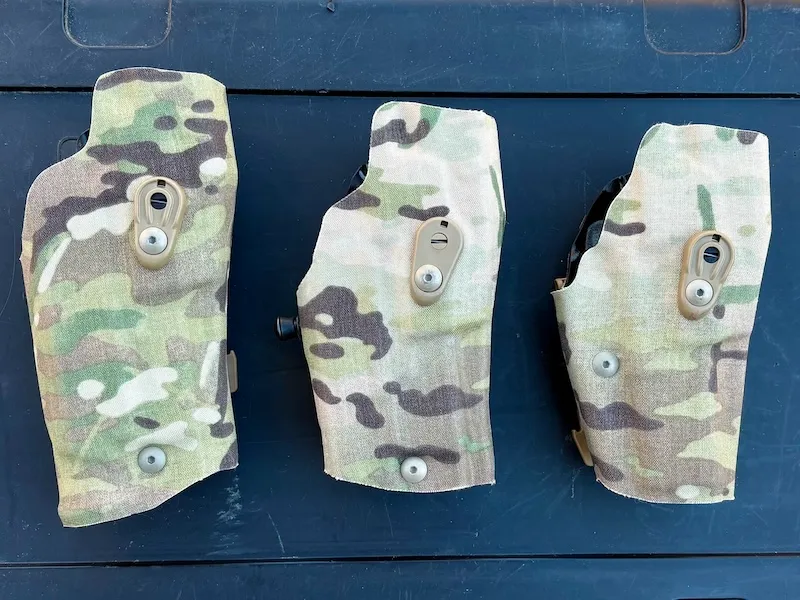
Safariland 6000 Series RDSO (red dot sight open) holster line - large light, small light, non-light - suppressor holster
Safariland’s 6,000 Series has been evolving longer than some readers have been alive. This is a large light, small light, and non-light for the Red Dot Sight Open (RDSO) line for the G19. The new suppressor holster will fit in this lineage.

The 6,000 series (6360, 6390, 6354…) has many models. We often abbreviate 6,000 Series as 6TS (6 Thousand Series). If you don’t speak Safariland, you’re not alone. The initial “6” means a similar group of thermoformed holster bodies. The numbers that follow (and there are many variations) denote the belt mount and the retention level. It is a complex system that catalogs literally thousands of SKU variations. 

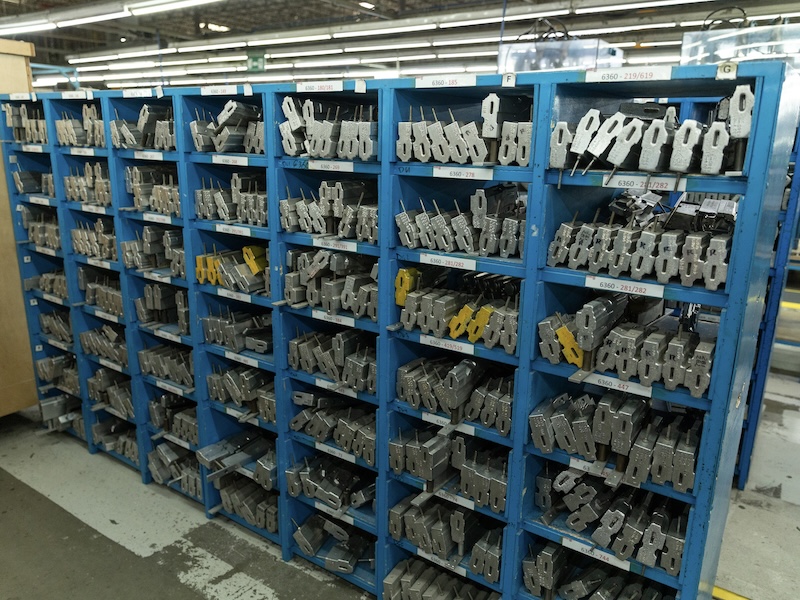
Safariland Production Mandrels - the forms used to shape holsters
Our production mandrels (the forms around which we shape holsters) are unique for each fit. A G17 is different from a G19 or G34. Large light, small light, no light, Red Dot Sight (RDS), Red Dot Sight Open (RDSO), wrapped, non-wrapped… each of these would require a dedicated set of mandrels for thermoform production.

This new project begins with a GLOCK architecture and clearance for 9mm suppressor designs. We should have new prototypes at SHOT Show.

One Big Challenge: Silencer Shapes and Lengths

Guns are built for efficiency of space. Maybe not the Desert Eagles, but most everything else. Holsters, as a direct result, hold very close to these geometries. Suppressors, most of which are round, use space inside to trap gas. While it is hardly the only specification that determines noise reduction, internal volume (commonly seen in both length and width) tends to correlate well with efficient sound suppression.  

In other words, it is difficult to hold tight to the gun when you must accommodate the width of a silencer.

Safariland suppressor holster design and engineering - boltaron with grid marks conformed to profile of handgun, light, optic, and suppressor
When our skilled team of experts work their magic, the flat sheet of Boltaron will conform tightly to the profile of the new gun/light/optic combination. This takes 2D plastic sheets into 3D holster bodies, and back again to 2D, so we can see where the plastic bends and stretches.

There are some notable exceptions to this sizing rule in SilencerCo’s catalog. The Osprey sheds the tubular shape common to suppressor design in favor of a can that positions most of its internal volume below the bore axis. The S98 has a similar shape, but a smaller footprint. Both drop the internal volume lower than the bore axis.

Safariland/SilencerCo suppressor holster prototype for Steiner DBAL-PL
While most of our light-bearing holsters are built for large lights or small lights (like the X300 or TLR-7, respectively), this prototype here is built for the Steiner DBAL-PL. Final versions will accommodate a large light models on the larger guns.

The length of a suppressor is determined by its use case. Hunting suppressors tend to be shorter for maneuverability. SilencerCo builds many suppressors to be modular, meaning they can run in a long for or shorter forms. The versatility of the Omega 36M or Hybrid 46M is ideal for holstering a handgun. 

The same can be said for the Switchback 22, a modular rimfire can. Once we’re in production with the 9mm designs, we’ll turn our attention to the suppressed rimfire holsters.

Another Challenge: Safety

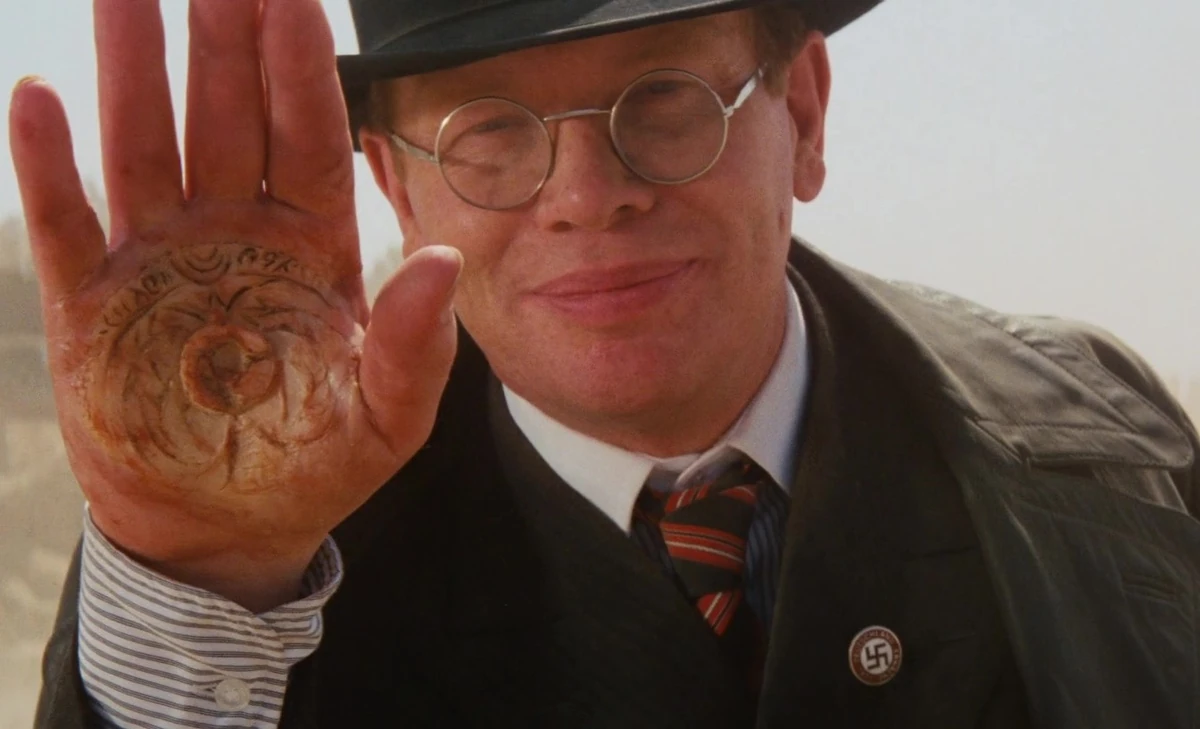
Suppressors get hot. I’m not spilling any trade secrets here. Anyone who has ever reached up to tighten a loose can on the end of a rifle may have learned this lesson. Think Major Arnold Toht from Spielberg’s 1981 Raiders of the Lost Ark.

If you fire a round or two through a suppressor, it will get warm. Run several mags through in fast succession and you can get serious burns from contacting the suppressor. It is doubtful that any resulting scar tissue will lead you to the Ark.

From a holster-maker’s perspective, this presents a dilemma. Try to holster a flaming hot suppressor and you could melt your fancy Crye pants to your thigh. And to the suppressor. And you might also melt the holster itself. 

Don’t holster a dangerously hot suppressed pistol. 

Major Arnold Toht from Spielberg's 1981 Raiders of the Lost Ark with emblem melted into palm of hand
“Fräulein Ravenwood, let me show you what I am used to….” (Image: Paramount Pictures, Raiders of the Lost Ark, 1981)

I can’t stress this enough. We’d love to develop a holster that will accept a red-hot suppressed handgun and dissipate the trapped heat efficiently and safely without any threat to the one wearing the holster, the holster itself, or the polymer frame of the gun, but we’re not there. This is a holster designed to carry a cold suppressor. 

Practical Concerns

Safariland makes 6,000 Series holsters from Boltaron, which is a thermoform plastic. Thermoform plastics are moldable when they are heated. If you holster a hot suppressor, it might still deform the plastic. 

While less bad than surgically removing nylon pants that have fused to your thigh, it is still hardly optimal.

Our objective remains, though, to holster a cold suppressor that is attached to a handgun. Safariland’s R&D team has accepted the next level of that challenge: how to handle a decently hot suppressor. More on that, soon.

Functional pre-production Safariland 6TS suppressor holster with handgun and Spectre 9 suppressor
This is a functional pre-production version with all of the appropriate parts. It is a rock-solid build. We’re almost to the proverbial finish line.

Holster Retention

The gun industry can’t decide on how to define “retention.” This is ironic. Bill Rogers, the brains behind the first Kydex holsters and countless innovations in Retention (who would go on to form Roger’s Holsters, and who then took these designs with him into Safariland), also invented the terminology. 

Safariland’s definition is based on hand motions required to defeat security mechanisms. 

user activating Safariland Level 3 retention duty holster with ALS and GLS security mechanisms
Retention at Safariland: The Automatic Locking System engages with the ejection port. This provides one level of retention. The Secure Locking Strap rides over the rear of the slide. The SLS alone proves two levels of retention. This redundant protection is meant to secure the firearm for duty use.

The Automatic Locking System (ALS) is the thumb lever at the top of the holster that shifts the lever which engages with the ejection port on the gun. One rearward sweep unlocks the gun. Alone, the ALS would constitute a Level I retention system (as it does on the 6390 models).

The Secure Locking System (SLS) is a strap that must be pushed down (one level of retention) and then rocked forward (a second motion). The SLS alone is a Level II. With the ALS (like on a Safariland 6360) it would require you to press down and forward on the SLS, then sweep back on the ALS. Level III. 

Safariland 6360 holster with suppressed handgun
The new silencer holster (as yet unnamed) will have an SLS, but no ALS. The suppressed handgun won’t pass through the ALS lock.

Adding a suppressor into this mix complicates how the ALS works. Because the ALS attaches to the ejection port, and tolerances here are insanely tight, there’s no room to expand the internal dimensions through here to clear the added bulk of a suppressor. 

But the SLS strap doesn’t interfere with the internal geometry of the holster body, so this becomes the logical option for securing the gun in the holster. While this new holster will have an SLS strap, Safariland is not building this design for traditional duty use.

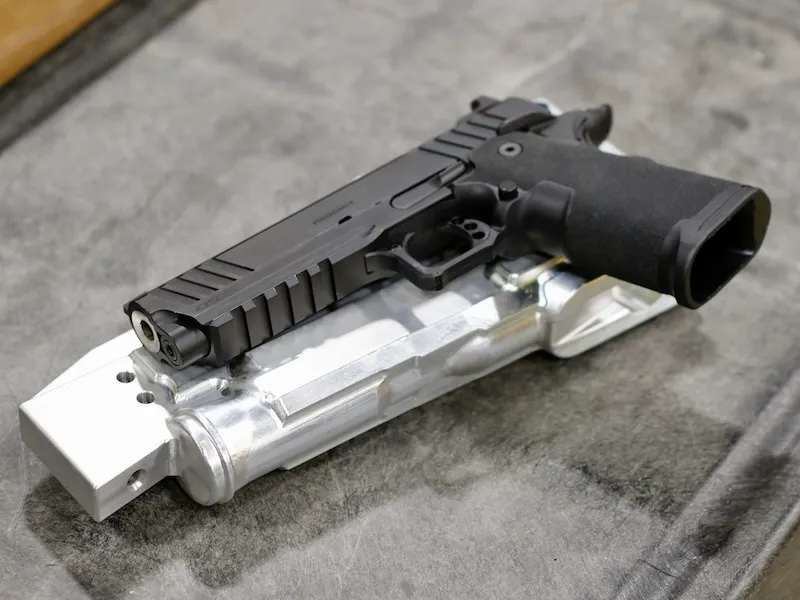
Safariland mandrel for Springfield Prodigy with large light
This is an example of the mandrel for a Prodigy with a large light. Note how the farthest width of the light needs clearance through the whole internal volume of the holster body. The same will hold true for a suppressor.

Other Holster Design Considerations

When a holster is open at the bottom, a firearm may insert too far. There has to be a stop of some sort at the bottom. These Safariland holsters use a muzzle plug—a small block that indexes with the muzzle—that is bolted in place at the bottom of the holster. With this block catching one end, and the strap riding over the rear of the gun, the SLS locks a handgun in place. 

In order to get a suppressor through, the path must be clear. This means eliminating that block. There’s no practical way to capture the end of the suppressor as a hard stop. Instead, the light becomes a key stopping point. If there’s no light, the trigger guard may be used. 

Either way, those who are accustomed to the Goldilocks just-right fit of a Safariland holster will notice that there’s more room inside this version. 

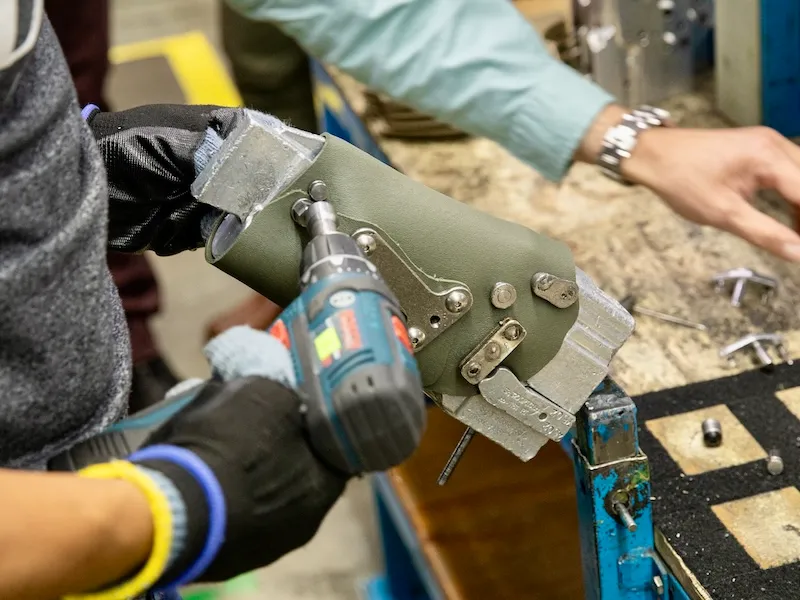
thermaformed boltaron on Safariland mandrel, hardware installed by hand
Thermoformed Boltaron goes onto a mandrel, hot, and is formed to the exacting contours needed for the specific build. The whole process is done by hand.

On the Range (and Off) With a Safariland Silencer Holster

Our intentions at Safariland are clear; we intend to build the most reliable and secure holsters available. 

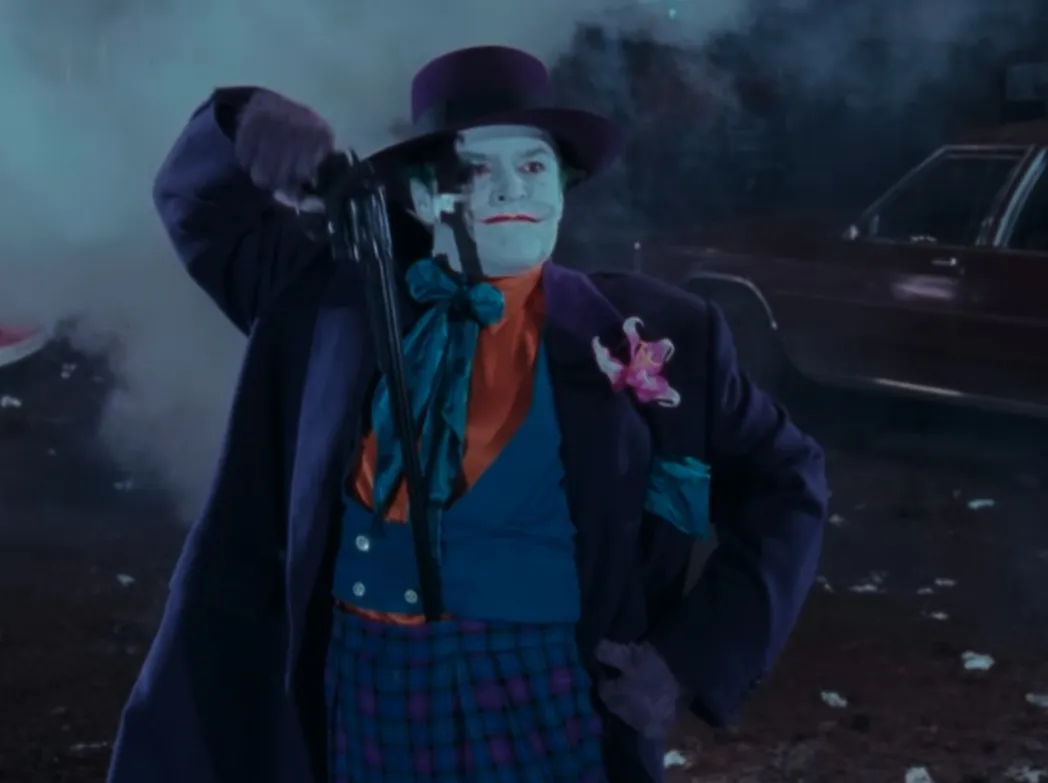
That said, holstering a suppressed pistol is odd. Imagine a full-sized handgun with a long suppressor (like a Hybrid 46M on a 1911). Your draw stroke will require a decent vertical draw before the suppressor will clear the holster.

Joker in Warner Bros 1989 Batman, demonstrates required drawstroke for long handgun
If you’ve seen Batman, directed by Tim Burton for Warner Bros in 1989, you may have already had a primer on the required draw stroke. The Joker knows. (Image: Warner Bros)

Carrying this leaves the length of the suppressor hanging down the side of the thigh. Carrying this on a thigh rig would mean many suppressors would extend below the knee. This new length has a learning curve.

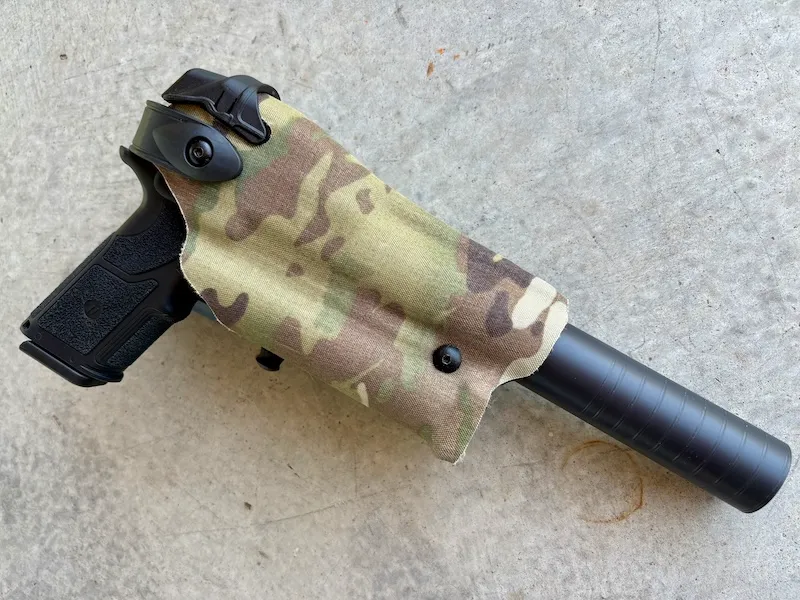
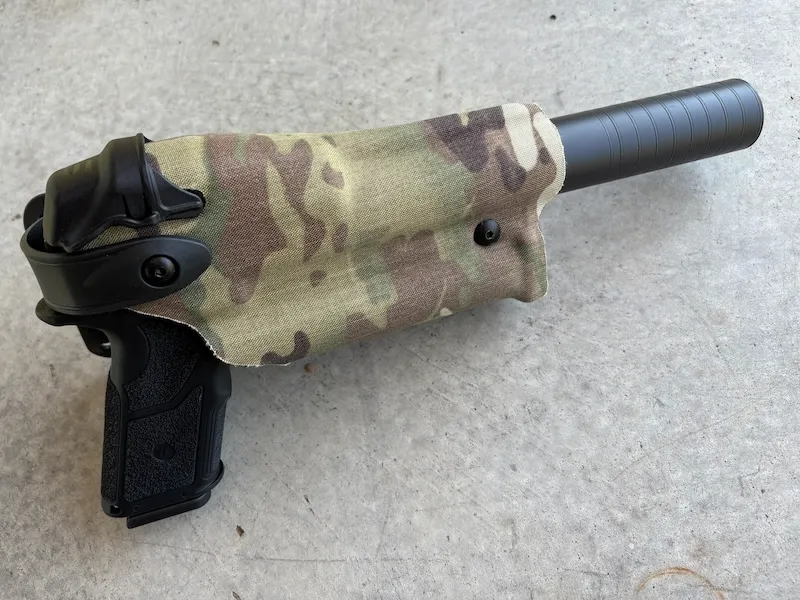
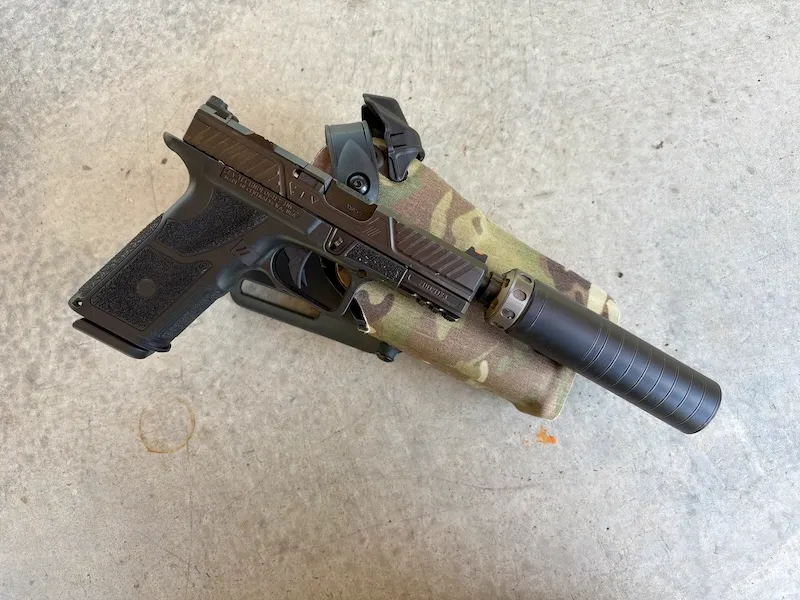
Zev OZ9 suppressed with SilencerCo Spectre 9 with Safariland 6TS RDSO suppressor holster in multicam
The Zev OZ9 and a SilencerCo Spectre 9. Safariland is the next logical addition.

I’ve worked with this holster on the range with a Spectre 9. The first few draws are awkward, but the new motion isn’t hard to learn. Keep your finger free from the trigger until you are driving the muzzle end down range. 

As always, I am adamant about safe practice. Build skills with an unloaded gun with a live trigger, or snap caps. Make sure you are comfortable with the mechanics before you hit the range. Even though this will be an OWB holster, it is still your responsibility to practice the rules of gun safety.

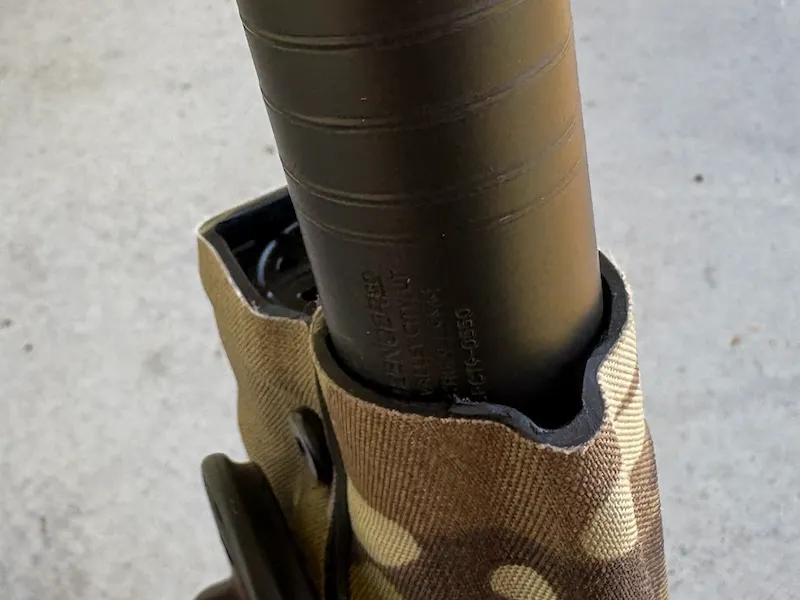
Spectre 9 suppressor in bottom end of Safariland suppressor holster
SilencerCo’s Spectre 9 on this Zev makes an effective combination. The gun fits well, but we’re snug against the Spectre 9 and are increasing the clearance here.

Inside 6TS holsters you will see a grey suede. This leather protects the finish on the gun. It will also act as a buffer for the suppressor. 

One design question we faced has to do with the width of the new holster’s opening. Too tight, and the suppressor is impossible to holster. The suede grabs the suppressor and the force needed to holster it pushes the slide out of battery. And it drags on the draw. Too loose, though, means everything fits less securely. It has to be versatile and effective.

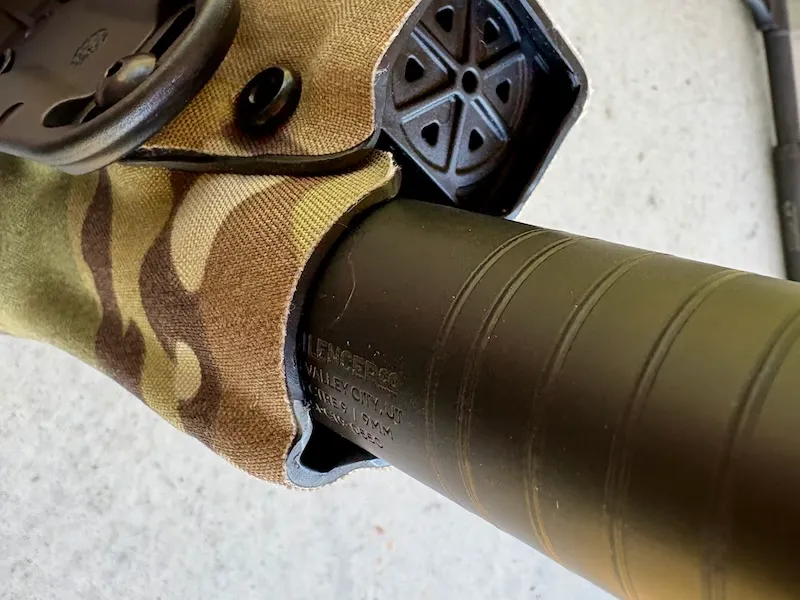
silencer in suppressor holster
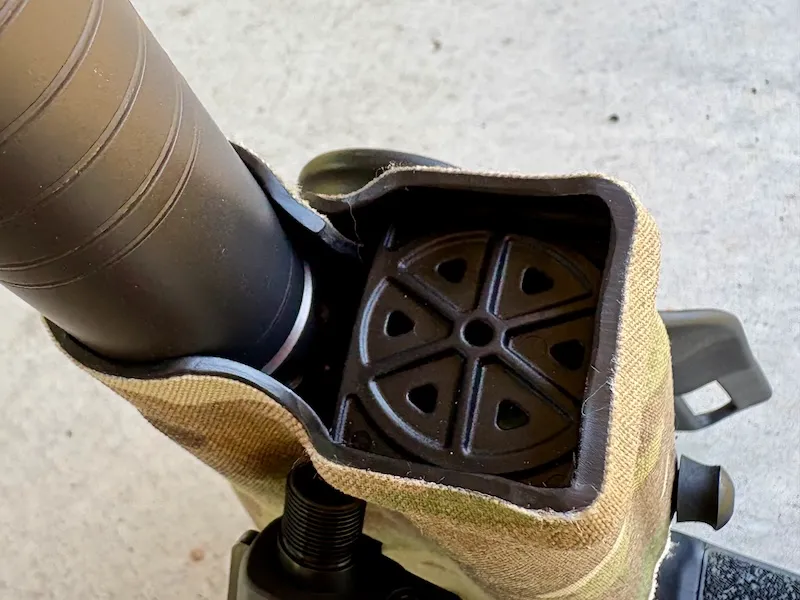
There’s no muzzle plug in the bottom of this holster. Instead, a bolt ties the two sides together. Newer prototypes are using a new type of muzzle plug.

Coming Soon

We’re tooling up for production now. Once we get everything finalized, we’ll be back with more details–and a name. We haven’t even named it yet. Stay tuned.


The post Safariland Is Making a Holster for a Silencer: Early Look appeared first on SilencerCo.

“]]