

[[{“value”:”
Thank you for reading this post, don't forget to follow and signup for notifications!
If you have ever been confused about what does AR mean in guns?
This is your article.
But first things first…
“AR” does not mean Assault Rifle.
It never has, historically, technically, or legally.
Here’s the quick reality check:
The AR-15 is semi-automatic, not full-auto.
“Assault Rifle” is a military term for rifles with selective fire, an option that civilian AR-15s don’t have.
And the “AR” in AR-15? It’s just short for ArmaLite, the company that designed the original rifle
The letters “AR” stand for ArmaLite Rifle, the name of a California-based firearms company founded in the 1950s.
ArmaLite pioneered the use of aerospace materials like aluminum and polymers at a time when rifles were still built almost entirely from steel.
Engineer Eugene Stoner led the development of the AR-10 in 1956 — a lightweight, gas-operated rifle that would become the foundation for the iconic AR-15.
The AR-15 was designed as a smaller, lighter, and more controllable version of the AR-10.
It offered less recoil, greater maneuverability, and easier maintenance — key advantages over traditional battle rifles of its era.
These traits made it one of the most influential designs in modern firearms history, laying the groundwork for both civilian and military adaptations.
In 1959, ArmaLite sold the AR-15’s rights to Colt’s Manufacturing Company.
Colt refined the design and successfully marketed it to the U.S. military, which adopted it as the M16.
Meanwhile, the civilian semi-automatic version retained the name Colt AR-15, preserving its original branding and sparking decades of discussion.
One of the most persistent misconceptions is that “AR” means Assault Rifle.
That’s wrong basically because….
- The AR-15 is semi-automatic, not fully automatic.
As mentioned above, the “AR” designation reflects its manufacturer’s name,not its purpose or function.
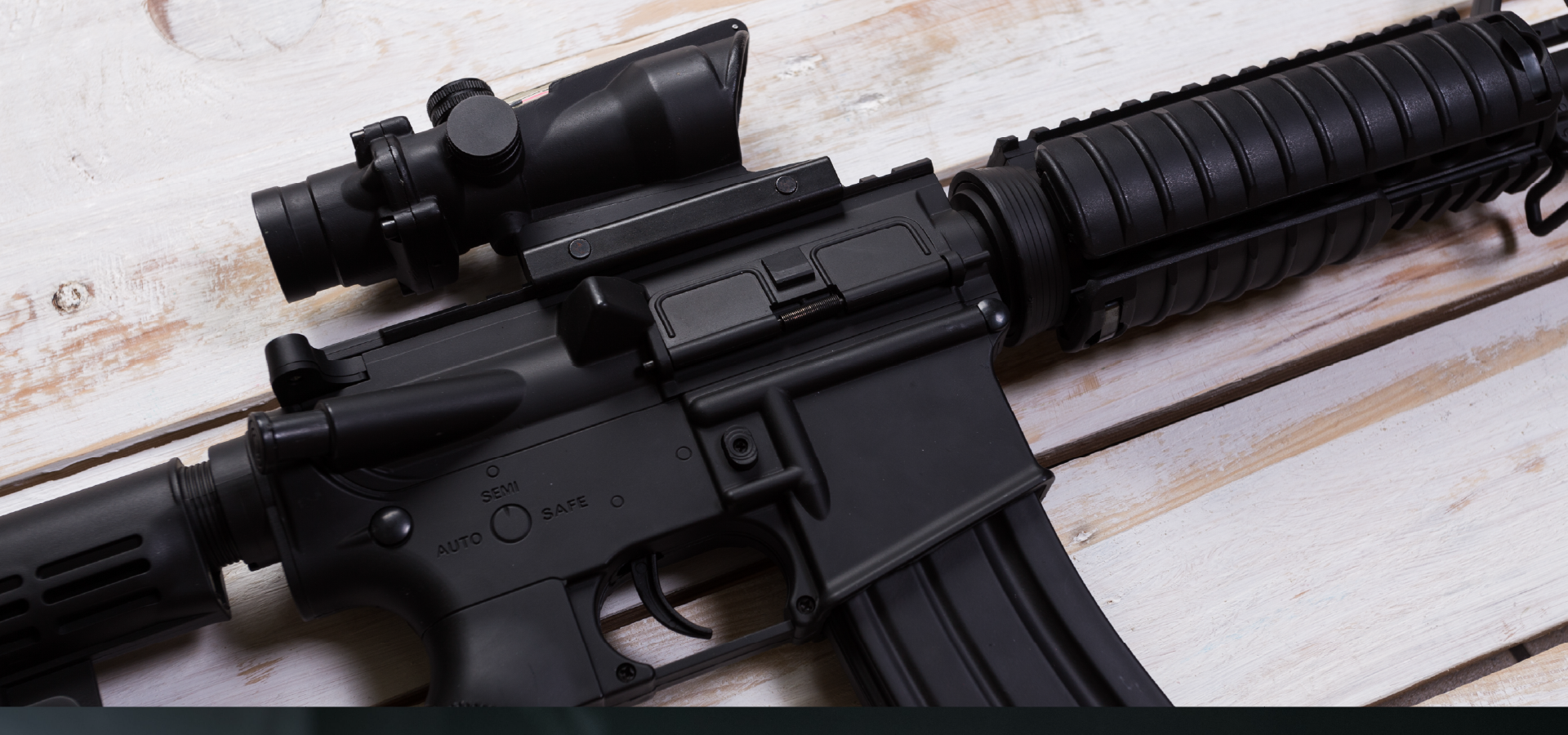
Today, “AR” doesn’t refer to a single model but to an entire rifle platform.
Dozens of manufacturers now produce rifles based on the AR-15 architecture, offering interchangeable components and customization options for a wide range of calibers and uses.
The result?
A highly modular family of rifles that can be built for different calibers, different roles, and different shooters.
It’s the mechanical version of LEGO for grown-ups: swap a part, upgrade a system, personalize the entire setup.
No wonder this modular design has made the AR platform a favorite among competitive shooters, hunters, and tactical instructors alike.
The continued success of the AR platform lies in its smart engineering and adaptability:
- Lightweight construction using modern alloys.
- Reduced recoil thanks to its direct impingement gas system.
- Highly modular design — parts can be swapped easily.
- Excellent accuracy even under rapid fire.
- Ease of maintenance in field conditions.
It’s a blend of mechanical precision and human-centered ergonomics that few platforms have matched.
The media’s misrepresentation of “AR” as “Assault Rifle” has fueled decades of misunderstanding.
In truth, the civilian AR-15 is a semi-automatic sporting rifle, widely used for training, competition, and home defense.
The technical and legal distinctions matter — and confusing them blurs the line between design and ideology.
Accurate terminology is essential for responsible firearms education and informed discussion.
More than sixty years later, “AR” has evolved from a company name into a symbol of innovation, modularity, and precision.
What began as ArmaLite Rifle has become the blueprint for modern sporting rifles worldwide.
It’s not a label of aggression, it’s a legacy of engineering efficiency and adaptability that continues to shape the shooting community.
“}]]

