

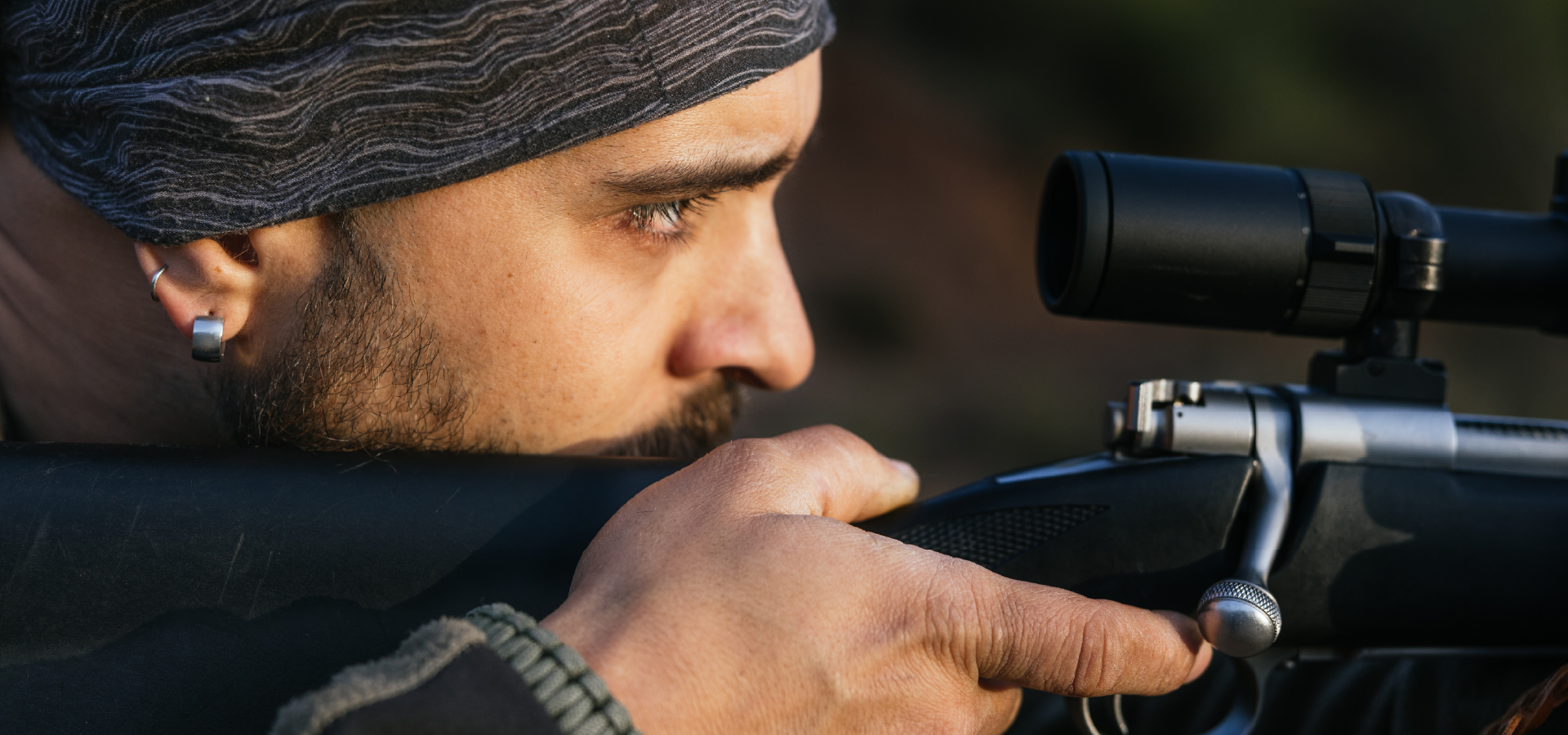
Have you ever wanted to master your aim?
Thank you for reading this post, don't forget to follow and signup for notifications!
The firearm doesn’t define accuracy; this is built through control, awareness, and consistency.
From competition champions to tactical instructors and veteran marksmen, America’s top shooters agree on one principle: precision isn’t talent; it’s trained discipline.
These eight fundamentals form the backbone of reliable marksmanship, whether on the range or in real-world defensive scenarios.
It might sound obvious, but really every shot starts with a consistent, firm grip.
Top shooters maintain even pressure with both hands, with the support hand driving slightly forward to counter recoil.
Keep your wrist in a neutral, natural position and your thumbs pointed in the direction of the shot.
A proper grip should feel stable but not tense. Remember that precision comes not from pressure but from feeling that the gun is an extension of your body.
Proper stance anchors your shot and absorbs recoil.
Lean slightly forward, knees soft, and feet shoulder-width apart for maximum balance.
Tactical shooters train in dynamic stances, preparing for real-life scenarios, should include feeling comfortable with getting ready to move, yet stable enough to stay on target.
A strong foundation keeps your aim steady and your recovery fast.
The most common error among beginners is focusing on the target instead of the front sight.
Since the human eye can only focus on one plane, the front sight must always be the point of clarity.
In low light or under stress, that discipline becomes critical.
As instructors from the U.S. Army Marksmanship Unit say, “Your eye guides the bullet.”
And they’re right. Your sights don’t lie, but your brain will absolutely try to convince you that the target is the priority. It isn’t.
Front sight, clean press, repeat.
Trigger discipline defines accuracy.
Apply pressure smoothly and directly to the rear—no jerks, no anticipation, no movement of the sights.
The goal is for the shot to surprise you, not the other way around.
Dry-fire training and trigger reset drills develop the muscle memory for perfect release.
Top shooters spend thousands of rounds mastering that single moment.
Trigger prep, clean break, controlled reset, over and over until your finger knows the motion without your brain babysitting it.
Experts burn through thousands of rounds and just as many dry-fire reps to perfect that one tiny fraction of a second. That’s part of the learning journey.
Believe it or not, your breathing pace can make a big difference in the practice outcome.
Breathing controls your pulse, focus, and physical steadiness.
The ideal moment to fire is right at the end of an exhale, when the body is naturally still.
Competitive marksmen time each shot with their breathing cycle, creating a natural rhythm.
Under pressure, controlled breathing keeps your focus sharp and your hands steady.
Marksmanship is as much mental as physical.
Eliminate distractions and narrow your awareness to the essentials: grip, sights, and trigger press.
The best shooters practice lots of mental visualization, seeing the perfect shot before it happens.
That mental rehearsal builds confidence, reinforces muscle memory, and keeps you steady when stress ramps up.
When you visualize the outcome, your body follows the script you already wrote.
The mind trains the body, not the other way around.
Most shooters fail the moment they think the shot is over.
Proper follow-through means maintaining your sight picture, trigger control, and body position until the gun naturally returns to alignment.
Only then should you release the trigger to the reset point.
That discipline ensures shot-to-shot consistency—and separates deliberate shooters from reactive ones.
Shooting more doesn’t make you better—training with purpose does.
Elite marksmen break their sessions into specific goals: grip, breathing, sight alignment, rhythm.
Every session has intention, evaluation, and correction.
Conscious repetition builds reliability.
Precision isn’t achieved in a day—it’s built through thousands of mindful corrections.
True mastery isn’t hitting the target once—it’s reproducing precision under any condition.
For elite shooters, accuracy is both a technical skill and a personal philosophy.
On the range or in life, precision begins in the mind.

