

[[{“value”:”
Thank you for reading this post, don't forget to follow and signup for notifications!
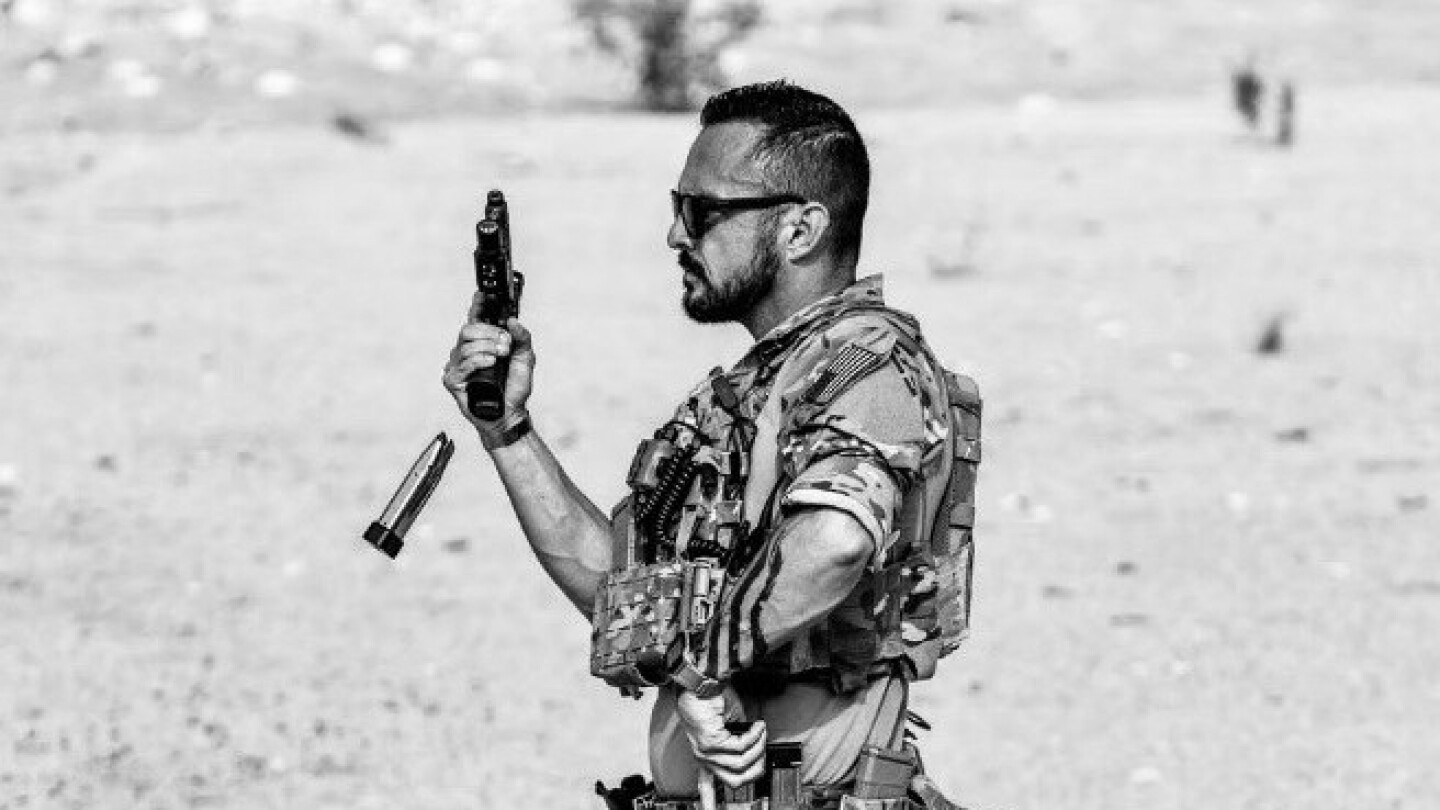
Jorge “George” Pastore’s path to law enforcement wasn’t direct, but was instead found through previous service in EMS and as a firefighter. Those roles prepared him in important ways: Repetition builds competence, discipline sharpens performance, and trust in your team is everything — and that doing good work is the ultimate goal.
In the wake of tragedies like the Pulse nightclub shooting in 2016, followed by Parkland and the Fort Lauderdale airport attack, Jorge saw a gap he felt called to close. He believed lifesaving care needed to be closer to the point of crisis. Law enforcement became the way to do that.
In 2023, Jorge sadly lost his life in the line of service during a SWAT hostage rescue. His loss reverberated nationwide. Today, the Jorge Pastore Foundation carries his legacy forward, focused on strengthening training, preparedness, and support systems for first responders.
First responder readiness is built long before an emergency call is made. It’s built in quiet hours filled with repetition and routine. And when critical incidents end, the need for support often continues. The Jorge Pastore Foundation exists to address both realities.

The Foundation aims to make preparedness more accessible for professionals, offering no- or low-cost training, grants to help cover expenses, and wellness resources that can help first responders better manage the realities of their day to day. Training, community engagement, and mental wellness programs are supported by donations, sponsorships and fundraising efforts.
Founder Kim Pastore says the approach is working and has made an immediate impact on those who have taken advantage of the Foundation’s services. For example, since 2024, the Foundation has supported more than 500 officers across 45 agencies and provided approximately $80,000 in training assistance.
“The demand for training is real,” says Kim. “And so is the appetite for quality and meaningful training that ensures readiness moving forward.”
Turning loss into action
Following the tragic loss of her husband Jorge “George” Pastore during a SWAT team hostage rescue mission in 2023, Kim Pastore turned her focus to what wasn’t in place. When recounting her story and detailing the mission behind the founding of the Jorge Pastore Foundation, she often turns her focus to a single, practical question: What needs to be better for the next call?
Answering that question seemed pertinent in the immediate wake of Jorge’s death. As Kim examined Jorge’s gear following the incident, she noticed damage to his helmet, which prompted a deeper investigation into the protective equipment that is responsible for protecting the lives of first responders.
“A lot of our work is centered around education,” she said. “For example, gear providers often use terms like ‘rifle-rated’ to communicate efficacy, but the details behind those claims don’t always follow. Without context, it’s difficult to compare equipment accurately.”
Kim further notes that readiness for first response encompasses both training and the equipment decisions being made prior to incidents, and it’s why her focus extends beyond helmets to the broader evolution of PPE. Technology and options have advanced, and she believes agencies must keep pace with what protection can realistically offer today.
Where equipment decisions take shape
Decisions about protective gear often happen in practical settings like training sessions, debriefs, or discussions between officers and decision-makers. These conversations shape priorities, but they can also reinforce assumptions if not challenged.
It’s why the Foundation prioritizes creating space for informed dialogue. Kim engages directly with agencies, industry professionals, and training environments to focus conversations on key questions: What is the equipment expected to do? Against what threats? Under what conditions?
The goal is to help critical decisions stand up to real-world scrutiny when lives are on the line, and Team Wendy is one example of how this kind of industry engagement can work when education is the focus. Kim connected with Team Wendy via speaking opportunities tied to her outreach and work with the Foundation, and the collaboration has focused on helping organizations understand how to think about “rifle-rated.”
Few terms in PPE carry as much ambiguity as “rifle-rated.” Kim notes that it’s a loosely used term without an established, industrywide consensus on meaning.
“’Rifle-rated’ can mean very different things depending on what standard is being referenced, what threats were used, and what the test conditions were,” Kim said. “That means two products can share the same label but may be worlds apart, depending on the benchmarks they were measured against.”
For example, velocity is one detail that too often gets lost in such discussions, according to Team Wendy experts. Some rifle-rated labeling in the market may be based on reduced-velocity approaches, including reduced-load ammunition, lower-velocity rifle cartridges, or specific rounds such as .300 Blackout.
Those approaches may fit some needs, but they are not the same as testing at full muzzle velocity, which Team Wendy believes should be accounted for to distinguish a product as truly “rifle-rated.”
In short, when lives are on the line, test conditions should imbue the term with real meaning that correlates with in-field use. For example, FBI LEOKA statistics show that 62.2% of officers killed by firearms were shot from 0 to 10 feet away. This underscores why definitions and test conditions matter when the environment compresses time and distance.
“People hear rifle-rated, assume it’s a single definition, and later discover the term can vary,” Kim said. “It’s a reflection of how mission-critical PPE has entered a new era: more technology, more nuance, and more need to evaluate options with discipline.”
Looking beyond the label
For these reasons, it is important to understand how any manufacturer defines “rifle-rated.” The term can be useful, but the more relevant question is: “rifle-rated” against what threat, under what conditions, and according to which standard?
A more complete discussion should identify the specific rounds involved, the velocity at which they were tested, the distance from which they were fired, the test method used, and the standard being referenced. Without that context, two “rifle-rated” helmets that were tested under very different conditions may appear comparable.
National Institute of Justice (NIJ) standards are an important reference point because they give agencies and manufacturers a shared way to talk about protection levels. But citing an NIJ standard is not the full answer. Agencies still need to know if the test conditions reflect the threats their teams are preparing for. That context is especially important when comparing different measures of ballistic performance:
- Resistance to penetration addresses whether a projectile passes through the helmet.
- Backface deformation (BFD) looks at how much the helmet material deflects inward after impact (important because blunt trauma can still occur even without penetration).
- Fragmentation resistance, often evaluated through V50 ballistic limit testing, provides another point of comparison by measuring the velocity at which a specified projectile has a 50% probability of complete penetration.
Together, these measures give agencies a more complete picture than any one term can provide, helping move the conversation toward a practical evaluation of what the helmet was tested against.
That same level of specificity is central to the work Team Wendy is doing around helmet design, testing and education. The company’s role in these conversations is not only to provide protective equipment, but to help agencies better understand what different helmet systems are designed to do, where the limits are, and what questions should be asked.
That work starts with research. Team Wendy studies head-impact mechanics, traumatic brain injury risk, liner performance, retention stability, and the way helmet systems behave under different conditions. Through tools such as the Dynamic Research Evaluation Workbench (DREW for short), the company evaluates impact performance in ways that account for the movement of the head, neck, and torso, providing more insight than a simple vertical drop test. Team Wendy also participates in broader research efforts, including the PANTHER Program, which is focused on improving the understanding of head impacts and traumatic brain injury.
That research becomes most useful when it is translated into practical design and evaluation decisions. It can inform material selection, liner construction, retention-system performance, helmet stability, ventilation, and even how accessories are integrated into the overall system. It also helps connect lab-based testing with the actual scenarios that users are likely to encounter in training and tactical operations.
For agencies, the broader takeaway is that helmet evaluation should begin with clear questions. The more specific the discussion becomes, the easier it is to evaluate whether a helmet system reflects the threats and conditions users are preparing for.
Looking ahead
The Jorge Pastore Foundation’s work will continue to focus on training opportunities for first responders, more comprehensive wellness support, and helping community departments make more informed decisions based on the real, meaningful data that matters in the field.
Kim knows that readiness is built before the next emergency call arrives and has established a recipe for what works: Training that gets done. Support that is reachable. Education that makes decisions stronger. Team Wendy will continue to support these goals, contributing a manufacturer’s perspective to PPE evaluations when it’s helpful, alongside the training and operational voices that set and keep a high standard.
Jorge Pastore’s legacy lives on through these efforts.
Contributed by Sara Jonas, Team Wendy.
“}]]

