

[[{“value”:”
Thank you for reading this post, don't forget to follow and signup for notifications!
By Barry Bittenmaster
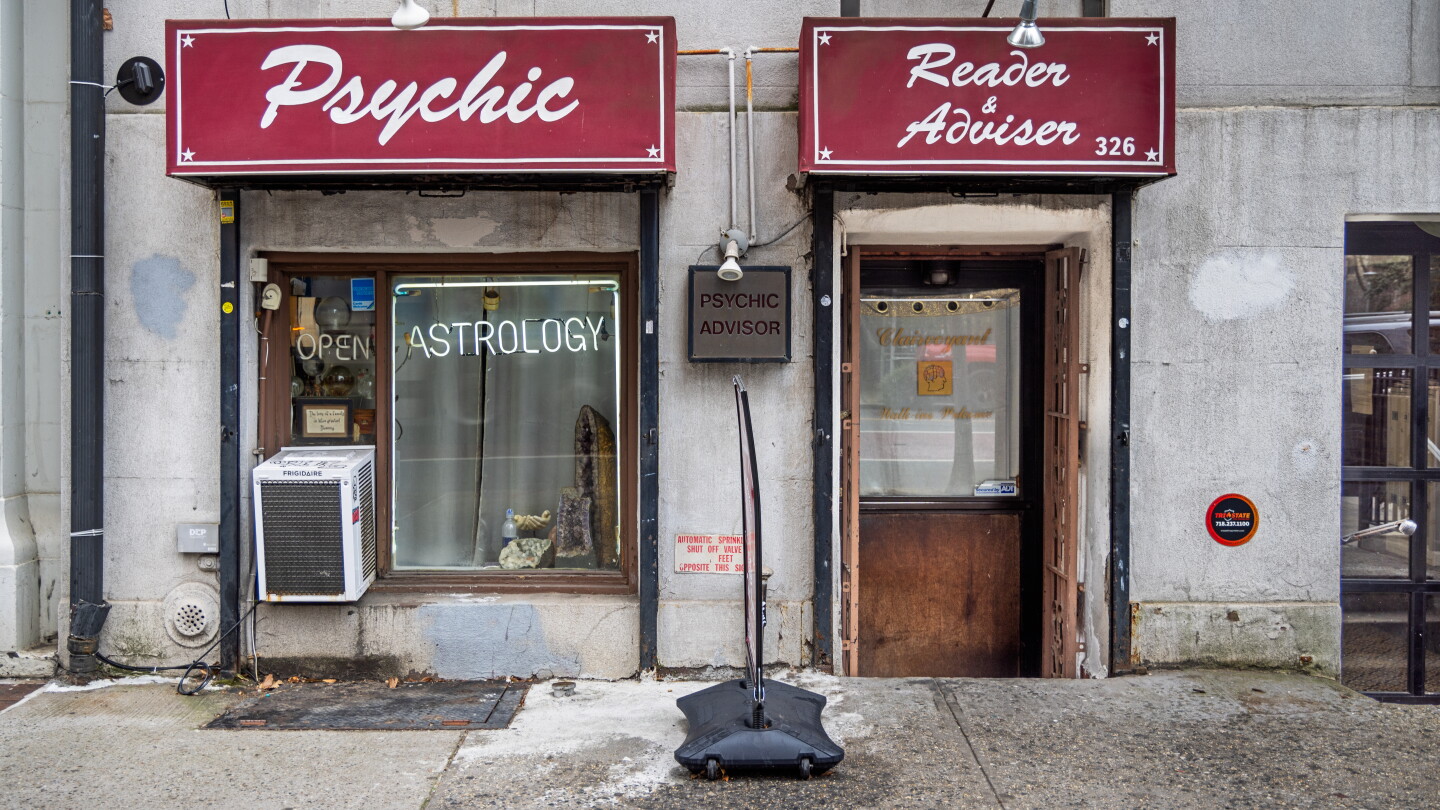
Travel through almost any city in the U.S. and you are likely to see signs advertising fortune telling or psychic readings. The storefronts often feature familiar images: a palm, crystals, candles or Tarot cards. For $50, you can have your palm read. Innocent enough, it seems.
Television shows such as “Crossing Over with John Edward” and “Long Island Medium” helped bring psychics into mainstream conversation, fueling debate about psychic abilities and the possibility of knowing what lies ahead. Mystics, fortune tellers and psychics have been part of American culture for more than a century and have an even longer history in Europe. After all, who doesn’t want to know what the future holds?
Complaints to law enforcement about psychics taking large sums of money from customers often go nowhere. Many are viewed as civil disputes and closed quickly. Prosecutors are often reluctant to take them on. When my turn came to investigate one of these scams, I was determined to learn as much as I could about the world of fortune teller fraud.
| DOWNLOAD: The connected investigation playbook: Reduce investigative delays and surface leads faster
Covered wagons, pentagrams and “The Wolf Man”
In the 1941 Universal movie “The Wolf Man,” actor Lon Chaney Jr. gets bitten by a werewolf. Seeking assistance, he seeks out the “old gypsy woman,” who is peddling her wares in a horse-drawn wagon parked on a misty, dark path. She provides him with advice — use a silver bullet — and gives him a pendant for good luck. A palm reading by “Bela” — Bela Lugosi — the “Gypsy King,” then reveals a faded pentagram on the right hand, the hand that “predicts your future.” Confused and upset, Chaney later turns into the “Wolf Man,” a frightening transformation scene that scared many of us as kids.
The public fascination with fortune tellers and psychics continues and unfortunately attracts its share of scam artists. As a detective in the Specialized Crimes Squad of the Morris County Prosecutor’s Office in New Jersey, this type of case would be ours. In my 25th year on the job, I was assigned to a languishing psychic case that had floated around the agency for several years. Determined to resolve the case one way or the other, I read up on the topic, attended pertinent training seminars and reached out to other law enforcement agencies nationwide that had handled these types of cases.
Almost as fascinating as the Wolf Man transformation, the fortune teller underworld was a much larger web of organized con artists than I could have imagined. It was a connected network with a hierarchical structure. If you wanted to open a psychic shop in town, permission had to be given. The iconic “palm-hand” sign in the window meant “stop” to the unauthorized.
A pattern emerges
A review of the file revealed that six victims had sought out the fortune teller in my case at her storefront on a major highway nearby. The business had since closed after an eviction and the psychic, “Paula Lee,” had moved on to parts unknown.
As I looked over the police reports, a pattern emerged in the victims’ complaints. All reported that they initially sought out the psychic for advice regarding health concerns, family issues, romance or financial worries. What started as a simple Tarot card or “cold” palm reading — so called because it is the first session — eventually led to additional sessions and requests for more money. From here, the scams became more elaborate.
As additional sessions were held, victims were told they had a “curse” or a “darkness” surrounding them. During one session, an egg was produced and, when cracked, a blood-red liquid oozed out. Of course, this represented nothing good. The recommended solution? Take multiple bundles of $9,000 in cash, place them in small red boxes with various trinkets and provide them to the psychic. Worried? No need. Promises were made that the money would be “cleansed at the church” and then returned.
Other treatments included the purchase of tabletop cathedral models for $12,000, crystals, candles and vials of “holy water” to be carried by the victim only after substantial payments for near-worthless items.
Finding the silver bullet
After discussing the case and the evidence we had, the reasons why cases like this are often closed as “civil” became apparent. Here, I had six victims who, at various times, had provided Paula Lee — or a representative — with a total of $331,000. I also identified a number of other victims who did not want to come forward.
It was embarrassing and humiliating. Reflecting on some of the victims’ accounts, it was a heartbreaking ordeal. At some of the most upsetting times in their lives, they had sought help. Instead, they were victimized.
Within this subculture, the women is typically the fortune teller. The husband is often never seen but works behind the scenes. Moving money around, opening and closing bank accounts, managing multiple safe-deposit boxes and dealing with complaints are his domain. Bank suspicious activity reports and currency transaction reports were helpful in this case and should be requested in any similar investigation.
With the assistance of the National Association of Bunco Investigators and a retired NYPD detective with expertise in the gypsy subculture, I put together a litany of criminal charges. Perhaps the most helpful resource was a bespectacled man who came to the office wearing a crumpled blazer and a baseball cap. Armed with a large folder of documents and a yeoman’s work ethic, the case was sealed. This investigator from the Criminal Investigation Bureau of the State Taxation Division proved that my suspect had never filed an income tax return or declared any income, ever.
Handcuffs, a silver bullet and a failed prediction
My partner and I tracked our suspect, Paula Lee, to a new psychic storefront she had opened in Nassau County, New York. With an arrest warrant in hand, we entered the shop just as Paula was completing a Tarot card reading with an elderly woman. As I snapped the handcuffs on Paula, I could not help making a snide remark: “Guess you didn’t see this coming.”
As a polygraph examiner, I was more than anxious to interview Paula. Before asking for counsel, her explanation was one I expected. The money she collected from the “customers” was for “personal coaching services” — what could be the problem?
Among the many problems I explained was the manipulation of vulnerable victims and the failure to return money as promised. Once the “silver bullet” was mentioned — no income tax filed — the conversation was over. As if on cue, the “gypsy king” then arrived at the station. Could a deal be made to pay back the money?
Investigative lessons from psychic fraud cases
These cases are unusual, but the investigative fundamentals remain the same: document the deception, follow the money and build a victim-centered case.
Document the scam
The precise details of what takes place between the victim and the psychic are important. Investigators should carefully document what was said, what promises were made and what objects or trinkets were used during the session. Tarot cards, crystal balls, eggs, candles and vials of “holy water” may seem insignificant, but they can become important evidence if they were used to convince a victim that a curse, darkness or other threat existed.
Expect embarrassed victims
Many victims are reluctant to come forward because they feel embarrassed or ashamed. At a time when they sought help, they were taken advantage of. Officers should approach these victims with empathy and understanding rather than judgment. If the suspect is still operating, consider whether a consensually recorded session, undercover operation or other investigative technique is appropriate under your state’s laws and agency policies.
Follow the money
These cases often rise or fall on financial documentation. Obtain records showing when and how money changed hands, including bank withdrawals, ATM records, wire transfers and receipts. Subpoena bank records for both the victim and suspect. This is a classic “follow the money” investigation. Bank records may identify additional victims, associates or other criminal activity. Don’t overlook safe deposit box records, Suspicious Activity Reports (SARs) and Currency Transaction Reports (CTRs).
Know the elements of the crime
Closely review the criminal statutes you intend to charge. In this case, a key element involved proving that money was provided to the psychic with the understanding it would be returned and then documenting that it was never returned as promised. Prosecutors like documentation. The stronger the paper trail, the stronger the case.
Be creative
These investigations often require investigators to think beyond the fraud allegation itself. Review business licenses, zoning requirements, tax filings and corporate records. Photograph the business location, signs and vehicles early in the investigation, as they often disappear once complaints begin to accumulate. Suspects frequently change names, move locations or operate through family members. In my case, the psychic moved out of state and adopted a different identity.
Educate prosecutors and agency leadership
One challenge in these cases is convincing others that the conduct is criminal and not merely a bad business deal. Consider putting together a briefing or presentation explaining how the scam works, how victims are groomed and how the evidence supports criminal charges. Sometimes seeing the Tarot cards, crystals and other props used in the scam helps prosecutors and supervisors understand the deception involved and the impact on victims.

Photo/Barry Bittenmaster
Not the end I expected
In the last year of my law enforcement career, I entered the gypsy world and learned much. A thousand-year history, a unique subculture, fascinating sleight-of-hand scams and how victims are groomed and manipulated. I suddenly became the “gypsy cop” receiving calls from competing psychics, snitches, other police departments and additional victims.
No, this was not the “big case” I was looking for to end my career with, but it was the one I got. Now that I’m retired, I have more time to watch “The Wolf Man” and look for the “old gypsy woman” scene. Perhaps she has a message for me too.
About the author
Barry Bittenmaster spent 26 years in NJ law enforcement, the majority with the Morris County (New Jersey) Prosecutor’s Office Specialized Crimes Squad. After retiring in 2013, he worked as a VP in corporate investigations for a global financial services firm. Currently he is a private Fraud Training Consultant and true crime writer, focusing on New Jersey historical cases. During his law enforcement career, he worked undercover narcotics, major crimes and financial crimes. In 2003, he was one of the detectives who investigated the most notorious serial killer case in New Jersey history, Charles Cullen, the “Angel of Death” nurse, who was convicted of killing 27 patients in various hospitals.
“}]]

