

By Sasha A. Larkin
Thank you for reading this post, don't forget to follow and signup for notifications!
There is a particular weight that settles on a leader’s shoulders the moment they learn one of their people is gone. It is heavier than grief. It is grief tangled with responsibility, guilt and the unanswerable question: What could I have done differently?
On June 8, 2014, that weight landed on mine.
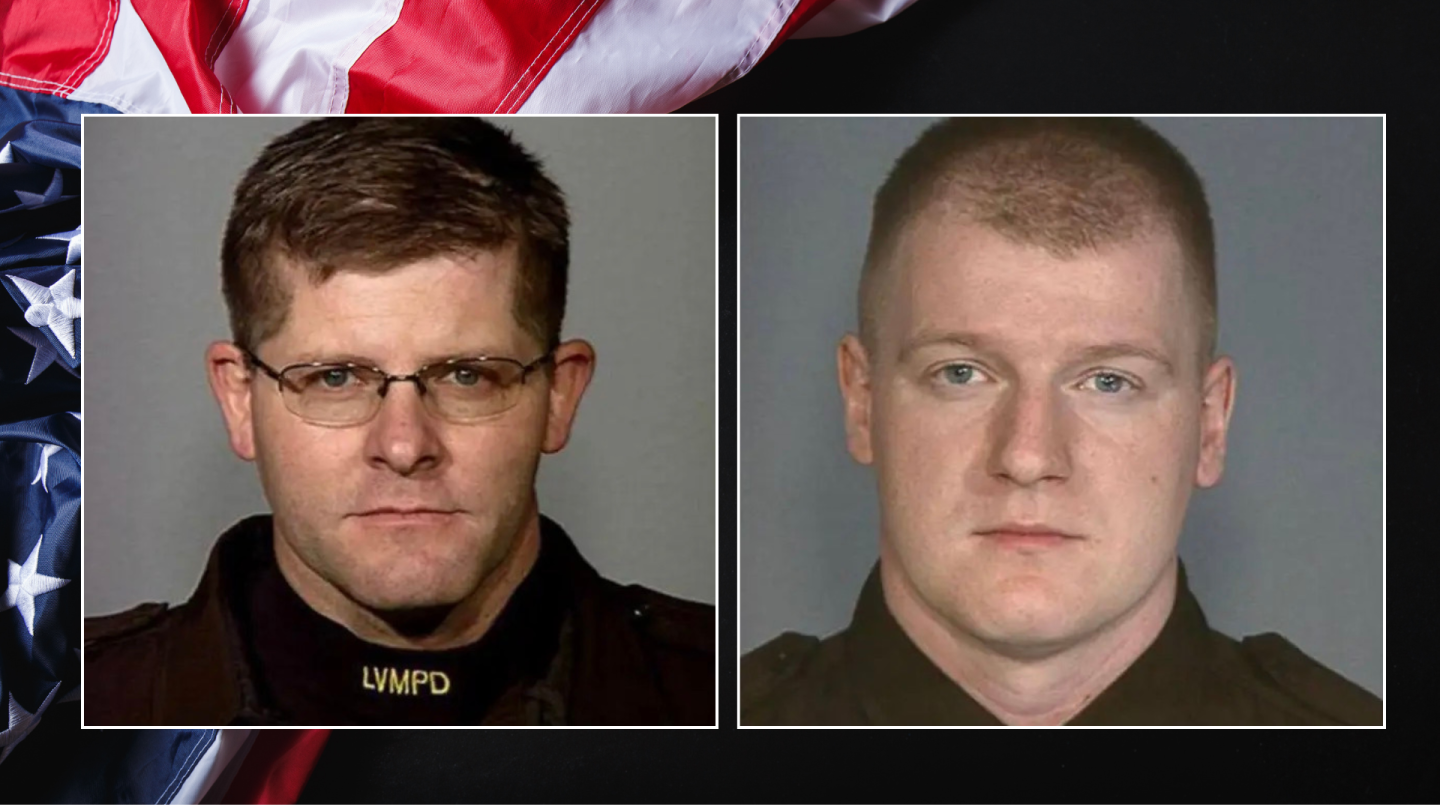
Las Vegas Metropolitan Police Officers Alyn Beck and Igor Soldo were eating lunch at a CiCi’s Pizza on North Nellis Boulevard when Jerad and Amanda Miller walked in and executed them where they sat. Alyn was 41, a husband and father of three. Igor was 31, born in Bosnia, with a baby at home who wasn’t yet a year old. Alyn’s youngest daughter was the same age as my twins. We were all in the same season of life: babies at home, photos taped inside locker doors, sleep measured in fragments. They were my officers. I was their lieutenant. In the years since, I have come to understand that the cross a leader carries after a line-of-duty death is one of the most under-discussed wounds in our profession.
Last time I wrote for Police1, I wrote about the practices that protect us from the inside out: breathwork, nutrition and self-love as resilience tools for the officer on the street. This one is for the leader who has lost someone and is still trying to lead.
The wound no one sees
Police psychologists have a clinical term for what happened to me and to every commander who has stood at the casket of one of their own: traumatic bereavement. When that loss is compounded by command responsibility, it can evolve into what researchers call moral injury — the psychological, social and spiritual harm that occurs when an event violates our deepest sense of duty and identity.
The FBI Law Enforcement Bulletin has documented moral injury extensively, noting that it is distinct from post-traumatic stress disorder (PTSD). PTSD is largely about fear. Moral injury is about meaning. It is the quiet, persistent ache of believing you failed to protect the people you were charged with protecting — whether or not that belief is accurate. Research has found that exposure to morally injurious events is significantly correlated with guilt, shame, depression, loss of spirituality and, in the most tragic cases, self-destruction.
For leaders, the injury is amplified. We are the ones who briefed the shift. We approved the assignment. We signed the schedule. When the worst happens, the architecture of command — every decision, every email, every roll call — becomes a courtroom inside our own minds.
What very few people outside our profession understand is this: Police leaders rarely get to grieve. Police Chief Magazine and the American Institute of Stress have both highlighted how leadership grief in law enforcement is structurally invisible. We are expected to be the steady ones. We sit with devastated families. We stand in front of cameras and relive the trauma over and over as we tell the story. We help plan the service. We make sure the honor guard is in place and the flags are folded properly for the spouse and parents. Then we go back to work because the radio is still calling and the next shift still needs a sergeant or lieutenant who can hold the line.
Why “just be strong” is the wrong prescription
For decades, the unspoken playbook for grieving cops, especially grieving commanders, has been to compartmentalize. Lock it in a box. Drink it down. Drive on.
Research increasingly shows that this approach can have devastating consequences. Studies cited by the International Association of Chiefs of Police and published in peer-reviewed journals such as Frontiers in Psychology document elevated rates of alcohol misuse, prolonged grief disorder and suicidal ideation among officers exposed to line-of-duty deaths, particularly those who were close to or responsible for the deceased. Dr. Brett Litz of the VA describes a “three-legged stool” of first responder suffering built on terror, loss of comrades and moral injury. Ignore one leg, and the whole structure becomes unstable.
Here is the truth I have had to make peace with as a leader: Stoicism is not a strategy. It is a delay. Grief will demand its due. The only choice we have is whether we face it consciously, through practices that help us heal, or unconsciously, in ways that harm us and the people we love.
The evidence on what helps
In the years since June 8, 2014, I have read the research, sat with practitioners and tested these practices in my own life. Here is what the science and my own experience support.
Mindfulness and breathwork. Research published in the American Journal of Psychotherapy shows that mindfulness-based interventions can be effective for first responders. Mindfulness practice has been associated with faster recovery after potentially traumatic incidents, increased emotional intelligence and reduced PTSD symptoms. Breathwork, particularly slow diaphragmatic breathing and box breathing, can help down-regulate the sympathetic nervous system. For a leader carrying the weight of a lost officer, even five minutes of conscious breathing in the morning is a small act of survival.
Self-compassion. This is the one I resisted the longest. Self-compassion sounds soft. It is not. Research summarized in clinical reviews shows that self-compassion can help buffer trauma-exposed people against PTSD severity and reduce trauma-related guilt, the exact wound a leader carries after losing a subordinate. Treatments that combine cognitive behavioral therapy with self-compassion and forgiveness practices have shown improvement in moral injury symptoms among veterans, with some participants reporting post-traumatic growth. The mechanism appears to be moral repair, the slow, deliberate restoration of the leader’s relationship with their own conscience.
Prayer, meditation and connection. Whatever your tradition, the research is consistent: Leaders who engage in connection practices such as prayer, meditation, contemplative reading or ritual recover from traumatic loss at higher rates than those who do not. The FBI Law Enforcement Bulletin identifies loss of spirituality as a marker of moral injury, and the inverse appears true as well: Restoration of spiritual practice can be a marker of recovery.
Talking about it. Out loud. With someone qualified. Peer support is essential, but it is not a substitute for clinical care. A licensed clinician who specializes in first responder trauma is not a luxury. For a leader who has lost an officer, it is the equivalent of going to the doctor after a gunshot wound. You would never tell a wounded officer to walk it off. Stop telling yourself the same thing.
What I would tell my younger self
If I could go back to the lieutenant I was on June 9, 2014, the day after, here is what I would say:
You did not kill them. The Millers killed them. Hate killed them. An ideology that had been festering for years and metastasized into two people armed with five guns and 200 rounds killed them. You did not. Carrying that lie will not honor Alyn or Igor. It will only add your name to a list that is already too long.
You are going to think you should have known. You are going to replay the radio traffic in your head. You are going to question every decision that led to that moment. You are going to wonder about shift assignments for the rest of your career. That is not leadership. That is the wound talking. Real leadership, the kind Alyn and Igor deserved from you then and deserve from you now, learns from loss, builds better systems, trains the next generation harder and smarter and refuses to let one loss become two — them, and then you.
Breathe. Pray. Sit on the mat. Find a therapist. Tell your kids you love them. Eat real food. Move your body. Cry when you need to and laugh when you can. None of this is weakness. All of it is body armor.
For the leaders reading this
Thank you for your service and for being willing to lead.
If you have lost one of your people — whether in the line of duty, by their own hand, in a crash on the way home or in any of the thousand ways this profession takes them from us — I want you to know three things.
First, the weight you are carrying is real, and it has a name in the clinical literature. You are not weak. You are wounded. There is a difference.
Second, the practices that protect the officer on the street are the same ones that can protect you in the corner office. Breath. Movement. Stillness. Connection. Faith. Self-compassion. The body armor I wrote about last time is for you, too.
Third, the best way to honor the people you lost is to stay. Stay present in your body. Stay connected to your family. Stay grounded in your faith. Stay committed to the work. Become the kind of leader whose own healing helps make the next generation safer than the last.
Every June 8, I think of Alyn and Igor. I think of their wives and children. I think of Joseph Wilcox, the civilian who tried to stop the Millers and gave his life doing so. I think of every officer in our department who carried something heavy home that night.
And then I breathe. I pray. I move. I work. I lead.
The names we hold do not get lighter. We get stronger. And we get stronger together.
About the author
Sasha Larkin retired as the Assistant Sheriff of Homeland Security and Investigative Services for the Las Vegas Metropolitan Police Department and currently serves as Director of Intelligence & C4 Operations for FIFA World Cup 2026. She is an international executive speaker, an adjunct instructor at the Naval Postgraduate School, and a yoga practitioner & teacher of 28 years.

