

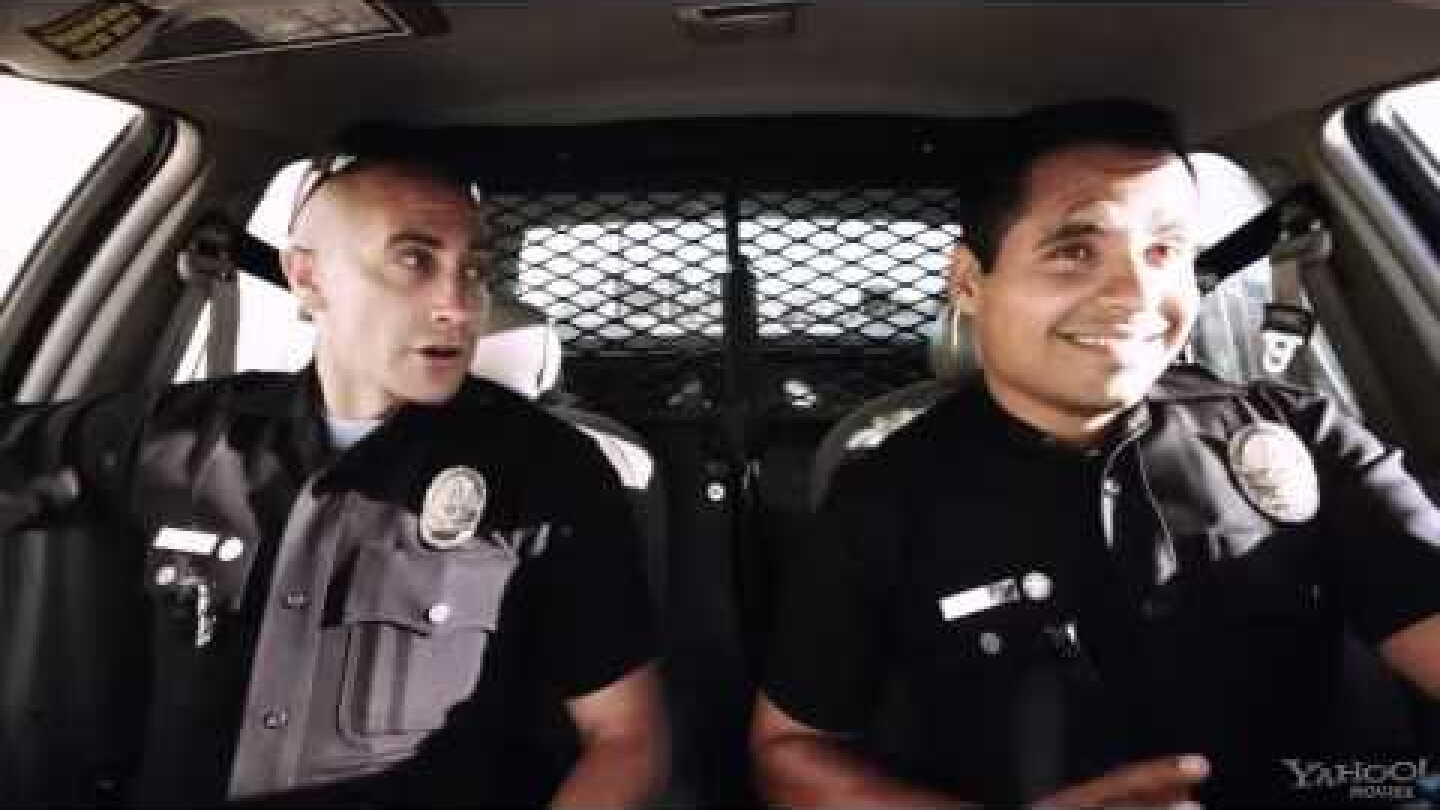
Leadership in policing is often discussed in terms of rank, policy and formal authority. But the reality experienced on the street is very different. The 2012 film “End of Watch” offers a raw and realistic look at how leadership actually works in day-to-day patrol operations through relationships, culture, trust and split-second decision-making.
Thank you for reading this post, don't forget to follow and signup for notifications!
“End of Watch” follows LAPD Officers Brian Taylor and Mike Zavala as they patrol South Central Los Angeles. The film focuses less on traditional police drama and more on the realities of patrol work, including partner relationships, unpredictability, exposure to violence and the emotional toll of the profession. Through their daily interactions, the movie provides an unusual but realistic portrayal of patrol culture and officer decision-making.
For modern police leaders, the film serves as a valuable case study in informal leadership, organizational culture, operational risk and officer wellness. It highlights how leadership often develops under pressure, particularly in environments where formal authority matters less than trust, credibility and adaptability. Projecting forward, the experiences officers have on patrol often shape how they lead later in their careers as they move into formal supervisory and command roles.
Leadership without rank
One of the most striking aspects of “End of Watch” is the presence of strong leadership without formal authority. Officer Brian Taylor emerges as the informal leader of the partnership not because of rank, but because of initiative, confidence and influence. Officer Mike Zavala follows his lead because of trust and shared purpose rather than obligation.
The film highlights an important reality in policing: leadership on patrol looks very different from leadership in an office or command setting. On patrol, officers follow people they trust and respect, not simply those with rank. Credibility is earned through competence, consistency and performance under pressure.
This dynamic shows up in agencies every day. Senior patrol officers often shape the behavior, mindset and decision-making of younger officers far more than formal supervisors do. Informal leadership also influences how officers approach proactive policing, handle conflict, communicate with the public and manage stress.
Culture is built between calls for service
The film also demonstrates that police culture is not primarily built in policy manuals or training binders. It is built between calls for service through humor, shared hardship, storytelling, frustration with the community and police leadership, and most importantly, daily interactions between officers.
This lived experience often shapes officer behavior more powerfully than written policy. It influences how officers view neighborhoods, assess threats, respond to the public and define what good police work looks like.
It shows up on patrol in small ways every day, such as how officers talk about the neighborhoods they work in, how senior officers train rookies between calls or how informal expectations based on policy decisions and perceptions of support from leadership and the community influence whether officers choose to be proactive or avoid activity. Over time, those repeated interactions become part of the organizational culture.
For police leaders, this carries an important lesson: culture cannot be managed solely through policy and directives. Leaders must observe and pay attention to the informal conversations, behaviors and attitudes that shape how officers actually operate on the street.
The normalization of risk
Officer Taylor’s aggressive and proactive policing style highlights another important theme: the normalization of risk. His repeated pursuit of dangerous situations reflects a mindset common among many high-performing officers who become too comfortable operating in high-risk environments.
On patrol, this can appear when officers become desensitized and begin treating high-risk vehicle stops, foot pursuits, violent offenders or dangerous neighborhoods as routine simply because they encounter them frequently. Over time, familiarity can reduce an officer’s perception of risk.
Without strong decision-making frameworks and consistent training, officers may rely too heavily on instinct, adrenaline or habit when assessing risk. While intuition is necessary in policing, it can also create blind spots and lead officers to underestimate intent during an encounter or overlook changing conditions.
Rather than relying on rigid, outdated linear decision-making models, police leaders should focus more on training officers to continuously reassess evolving situations. One example is the U.S. military’s use of the OODA Loop — Observe, Orient, Decide, Act framework — which emphasizes time, distance and constant adaptation as conditions change. This approach better reflects the realities of patrol work, where situations are fluid, uncertain and rapidly evolving.
Trust as operational currency
The partnership between Taylor and Zavala also demonstrates that trust is not simply a cultural value; it is an operational necessity. Their ability to communicate seamlessly, anticipate each other’s actions and react decisively under pressure is rooted in deep mutual trust.
Some of the clearest examples occur during confrontations with gang members and armed suspects, where little verbal communication is required between them. Their movements and reactions reflect the type of trust that allows officers to function instinctively as a team. Neither officer hesitates because each trusts the other to respond competently and without hesitation.
Every patrol officer understands this dynamic. During fast-moving calls, officers often make decisions based on trust in their partner long before they have time to fully process the situation. In high-risk encounters, that trust reduces hesitation, improves coordination and can ultimately save lives.
The film also shows that operational trust is built long before critical incidents occur. It develops through training, shared hardship, repeated demonstrations of reliability and everyday interactions between calls for service.
For police leaders, the lesson is that trust cannot be manufactured during a crisis. It must be built consistently through accountability, teamwork, transparency and shared experience.
Identity and the false choice between guardian and warrior mindset
“End of Watch” also explores the role identity plays in policing. Taylor’s strong identification with the profession drives both his commitment and his willingness to take risks. The film presents a nuanced view of the so-called warrior mindset, showing both its strengths and its potential dangers.
The broader leadership lesson, however, is that the debate between a guardian mindset and a warrior mindset is more often than not a false choice. Effective policing requires both.
Officers are expected to protect constitutional rights, build legitimacy and maintain public trust. Those responsibilities require restraint, professionalism, empathy and communication skills. At the same time, policing remains an unpredictable profession in which officers may suddenly face violence, danger or rapidly evolving threats that demand courage, discipline and decisive action.
Patrol officers may shift between these roles multiple times during a single shift — de-escalating a mental health crisis one moment and responding to an armed confrontation the next.
The challenge for modern police leadership is not choosing between guardian or warrior mindsets but developing professionals capable of adapting between the two depending on the situation. Good policing requires officers to balance communication, restraint, tactical awareness and decisive action based on the realities of the moment. Perhaps a better way of framing it is developing a guardian mindset with warrior discipline.
The film also highlights how identity can shape perception. Officers who begin viewing every encounter through a purely adversarial lens may become more suspicious, hyper-reactive or disconnected from the communities they serve. Leaders must ensure that professional identity strengthens officer performance without narrowing perspective or reinforcing unhealthy assumptions that ultimately damage community relationships.
Emotional suppression and officer wellness
Throughout the film, officers manage stress and trauma primarily through humor, sarcasm and camaraderie rather than formal support systems. While this reflects longstanding policing culture, it also highlights a major leadership challenge within the profession.
The officers in “End of Watch” rarely discuss fear, emotional exhaustion or psychological strain directly despite repeated exposure to violence and trauma. Instead, stress is managed informally through peer bonding and emotional suppression.
This often appears in policing after difficult calls when officers joke about traumatic incidents in the report room or immediately move on to the next assignment without processing what they experienced. Emotional control is frequently associated with professionalism and survival, while vulnerability may still be viewed as weakness.
Although these coping mechanisms can strengthen team cohesion in the short term, they may also discourage officers from recognizing the long-term effects of repeated trauma exposure.
Modern police leadership requires a shift toward proactive wellness strategies that normalize peer support, mental health resources, stress recognition and early intervention. Officer wellness cannot remain a reactive conversation that occurs only after tragedy or a crisis. It must become part of organizational culture, leadership development and operational readiness.
The reality of unpredictability
Perhaps the most sobering theme in “End of Watch” is the role unpredictability plays in policing. Despite their experience, training, preparation and competence, the officers remain vulnerable to circumstances beyond their control.
The film reinforces an uncomfortable reality familiar to every patrol officer: even skilled officers making reasonable decisions can still encounter tragic or unintended outcomes.
Patrol work is fast-moving and constantly changing. Officers are often forced to make rapid decisions using incomplete information while dealing with emotional intensity, complex human behaviors and evolving threats. A routine encounter can suddenly become dangerous, while tense situations may quickly de-escalate without force.
The ending of the film serves as a reminder that training and experience reduce risk but never eliminate it entirely.
For police leaders, this has important implications. Organizations cannot operate under the illusion that every encounter can be scripted or perfectly controlled through policy and training alone. Instead, leaders must prepare officers to think critically, adapt under pressure, communicate effectively and reassess changing situations in real time.
Implications for modern police leadership
While “End of Watch” is ultimately a Hollywood film, and certain situations, personalities and events are understandably amplified for dramatic effect, it still captures many realities of patrol culture, officer relationships and decision-making under pressure that should resonate with law enforcement professionals. Viewed through that lens, the film highlights several important leadership lessons for modern policing:
- Leadership is often informal and based on credibility
- Culture shapes officer behavior more than policy alone
- Risk must be continuously observed and reassessed
- Trust is essential to operational performance
- Identity influences judgment and perception
- Officer wellness requires intentional leadership
- Effective decision-making depends on adaptability
Conclusion
“End of Watch” reveals a fundamental truth about policing: leadership is not confined to rank or formal authority. It is exercised in every interaction, every decision and every response to uncertainty.
Police leaders cannot focus only on policy, training, compliance and organizational charts. They must also understand and, more importantly, develop the informal culture that shapes officer behavior on the street — how officers build trust, assess risk, respond to stress and make decisions under pressure. Those realities ultimately shape performance far more than written directives alone.
The film serves as a reminder that effective leadership in policing is not about controlling outcomes. It is about preparing officers to operate professionally, ethically and adaptively in environments that are often unpredictable and emotionally demanding.
| NEXT: What ‘Top Gun’ gets right — and wrong — about police leadership under pressure

