


[[“value”:”
Thank you for reading this post, don't forget to follow and signup for notifications!

David Higginbotham
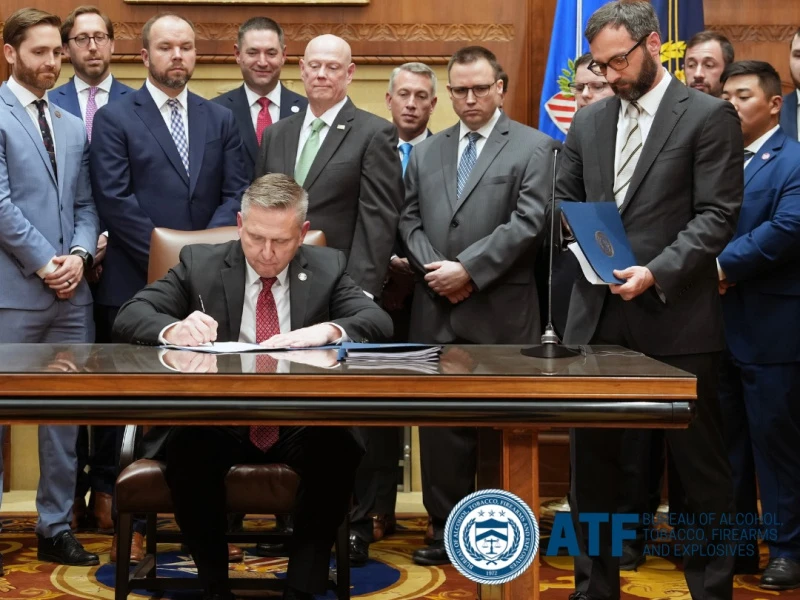
On April 29, 2026, the Department of Justice and ATF unveiled a comprehensive package final and proposed rule revisions, 34 in all. These new revisions are aimed at reducing regulatory burdens on law-abiding gun owners and businesses while aligning rules with current law, court precedents, and practical realities.
For suppressor owners, this represents meaningful progress in simplifying the National Firearms Act (NFA) process—building on the elimination of the $200 tax stamp earlier in 2026.
While not every change directly targets suppressors, several key updates in the “Reduce Burden,” “Modernize,” and “Clarify” categories will make buying, owning, sharing, and traveling with suppressors noticeably easier.
Understanding the Big Picture – 34 Rules Across Five Categories
When the ATF drops one rule revision, it is news. 34 is big. The ATF organized this batch into five broad categories meant to describe what the revisions are intended to do:
Repeal: This set is intended to repeal prior overreaches.
Modernize: This set aims to modernize forms and records.
Reduce Burden: This section cleans up some burdens associated with NFA items.
Clarification: This group provides clarity on enforcement and definitions.
Alignment: This set brings rules in line with recent statutes and court decisions.
As is to be expected with a list of 34 rulings, these cover a vast amount of territory. Some are aimed at end users, while others specifically make the business of buying and selling firearms far less complicated.
Many of the readers of SilencerCo’s blog are here for the suppressors, and the most impactful provisions for us falls under sections focused on burden reduction and modernization for NFA firearms.
Key Changes That Simplify Suppressor Purchases and Registration
From how you register your gear with a spouse to how you notify local authorities, the following key changes are designed to streamline the front end of the NFA application process.
Joint Spousal Registration – Trusts Optional for Married Couples
One of the most practical updates allows married couples to jointly register NFA items like suppressors on a Form 4, eliminating the need for a trust solely for spousal sharing in many cases.
“ATF is proposing to allow married couples to file a joint application as makers and/or transferees of NFA-regulated firearms. Under current regulations, spouses who wish to jointly possess an NFA firearm typically establish a legal trust to do so, a process that involves legal expense and administrative complexity. This proposal would allow both spouses to be registered jointly as possessors without creating a trust. Under a joint registration, the transfer of a firearm between spouses would not constitute a separate NFA transfer, reducing both administrative burden and cost for law-abiding NFA firearm owners.”
Spousal sharing. I’ve known more than a few suppressor owners and even more hunters who don’t care to share their range time or hunts with their significant others. Still, this new rule is big, if only for questions of ownership and possession as it relates to estates. Now, should you die (and we all eventually do) your suppressor can be legally owned by your wife or husband. If you don’t want to establish a trust for this purpose, you don’t have to.
Those who wish to legally enable multiple users, or who might want to leave their suppressors to someone other than their spouse, may still establish a trust. If you need more information about the benefits of a trust and how they work, you can learn more here.
Elimination of CLEO Notification Requirement
For decades, every application for suppressor acquisition required the new owner notify their local Chief Law Enforcement Officers (CLEO). The new rule eliminates this obligation, which removes an often contentious point of friction (especially in less suppressor-friendly jurisdictions).
This change should make Form 4 applications even faster. And it strips part of the process that, especially for those new to NFA applications, can be intimidating—the unnecessary interaction with local law enforcement.
Modernized Form 4473 and Electronic Recordkeeping
As someone who works in the firearms industry, I do a lot of transfers. I could have my own FFL, but I’m not engaged in the business of buying guns. Instead, I do many transfers—sometimes more than 100 annually.
I’m a champion at filling out Form 4473. The new rules will provide full digitization of Form 4473. Now, the forms can be stored as electronic records for FFLs. There’s hope for people like me, too, in that the new rules enable auto-population of the form for repeat buyers, and there will be longer NICS validity periods to further streamline overall firearms purchases.
These front-end improvements make suppressor buying—from dealer counter to approved Form 4—more efficient. But what about when you leave the shop?
Easier Ownership and Use – Travel, Builds, and Enforcement Focus
The latest NFA updates finally acknowledge the “real world” logistics of modern gun ownership, replacing outdated roadblocks with common-sense flexibility for travel and customization.
Streamlined Interstate Transport for NFA Items
ATF has proposed changes to interstate transport rules. This revision includes the elimination of advance approval (Form 5320.20) for trips under 365 days. Now you can go on hunts without so much hassle.
“ATF is proposing to update the administrative process for transporting lawfully registered National Firearms Act (NFA) firearms within the United States. Under the proposal, individuals transporting NFA firearms for short-term purposes (365 days or fewer) would no longer be required to submit advance notice to ATF or await approval before departing. Individuals transporting NFA firearms for long-term purposes (more than 365 days) or permanent relocation would still submit notice but would not need to await ATF approval before transporting. This change to ATF Form 5320.20 (Form 20), per 27 CFR § 478.28, is intended to remove an unnecessary regulatory burden on law-abiding NFA firearm owners without affecting applicable federal, state, or local legal requirements.”
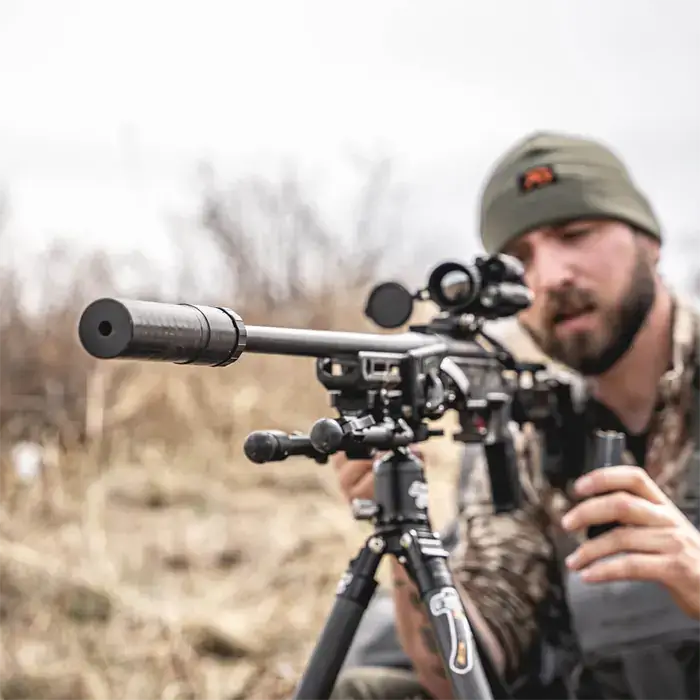
Another needed update reflects the realities of actual travel. How would you get your suppressor from point A to point B, knowing you would have to drive through states or areas where restrictions were onerous? What would happen if your plane were to be delayed at Newark overnight, and the TSA required you to take possession of your bags? These proposed changes reflect complex realities and will make it far simpler to take suppressors and SBRs across state lines.
“ATF is proposing to clarify regulations that govern the interstate transportation of firearms by lawful owners. The proposed rule formally recognizes that common, reasonably necessary activities during travel – including overnight stops, vehicle maintenance, refueling, emergency stops, and medical treatments – are considered as a necessary part of “transport,” and are therefore covered under the Firearms Owners’ Protection Act’s interstate transport protections. The proposed rule also updates requirements for transporting ammunition and firearm accessories and clarifies requirements for securing firearms during transit.”
Want more on traveling with suppressors now, pre-change? Read here.
No More Re-Engraving for Certain Builds and Other NFA Efficiencies
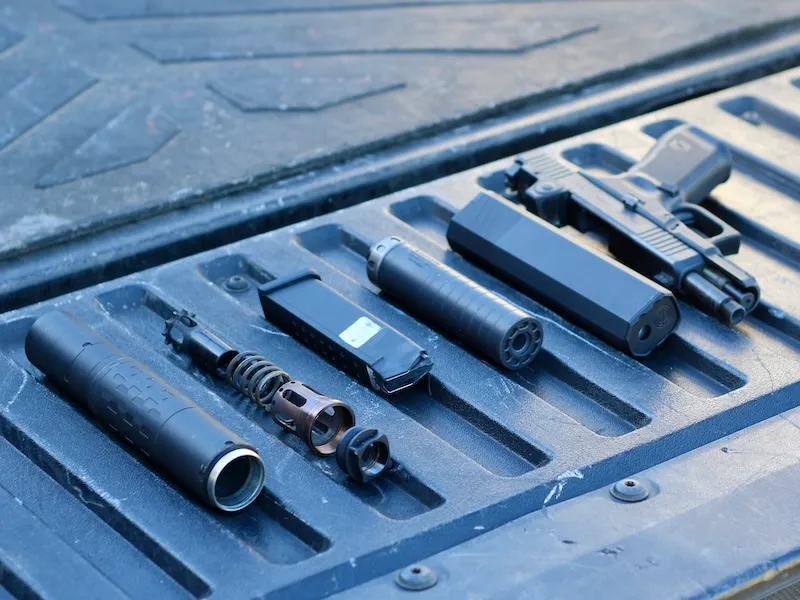
For those building short-barreled rifles or shotguns, these new rules eliminate the need for new serial number engraving on existing serialized firearms. This simplifies Form 1 processes and reduces costs.
A Shift in Enforcement – Focusing on Willful Violations
So much of the ATF’s time, up to this point, seemed bureaucratic. The rules, such as they are, can be cumbersome and manual data entry leaves room for human error. Now, these rules suggest that ATF is reorienting enforcement toward intentional violations rather than inadvertent paperwork errors, providing greater peace of mind for responsible owners and dealers.
Collectively, these updates lower barriers without compromising core safety and traceability goals.
What These Changes Don’t Do – And What’s Next?
When news of the new rules broke, many of us were wildly optimistic that this was the big moment. This is big. While these rules do not remove suppressors from the NFA registry or eliminate the need for Form 4 approvals and background checks, even with the $0 tax stamp now in effect, the new list will have a lasting impact.
The ATF’s announcement marks a significant step toward a more reasonable regulatory environment for suppressor owners. By reducing unnecessary paperwork, modernizing processes, and focusing enforcement where it matters, these changes promise to expand responsible suppressor adoption while maintaining public safety.
And remember that ATF is part of the Executive Branch. These are not laws, but regulations intended to provide interpretation on how existing law is enforced. And the summaries, such as they are—26 of the 34, at least—are just proposals, at this point. Changes will need to go through the Federal Register process. Public comments are being accepted now. Weigh in.
David Higginbotham
The post ATF Announces 34 Rule Revisions: What They Mean for Suppressor Ownership appeared first on SilencerCo.
“]]

