

By Lieutenant Christopher Rengel
Thank you for reading this post, don't forget to follow and signup for notifications!
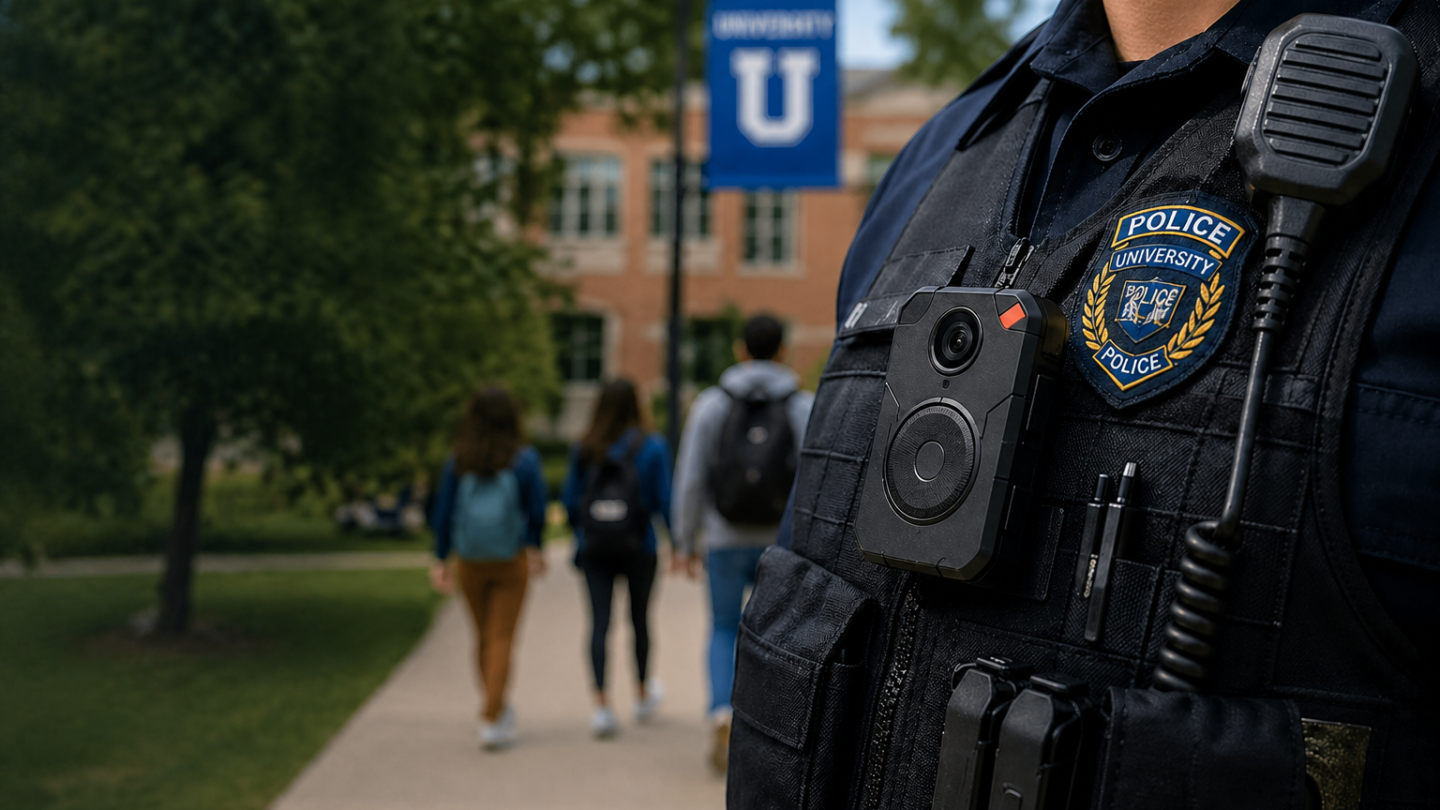
As college campuses continue to face increased security demands, many campus police departments are considering implementing a body-worn camera (BWC) program. Although the technology is familiar to most law enforcement agencies, deploying a BWC program in a higher education setting presents unique challenges that go beyond typical campus policing operations.
Campus police departments operate within a complex governance structure that includes university leadership, administrators, faculty, staff, students and the public. Successfully implementing a BWC program involves much more than simply purchasing equipment. Stakeholder input, clear policies, grant funding, communication and training are all vital components.
Based on law enforcement leadership and current research, here are five considerations for implementing a BWC program on a college campus.
| RELATED: How to buy body-worn cameras (eBook)
1. Stakeholder expectations: align early, not after an incident
Solicit ideas and feedback from college stakeholders before beginning a pilot program. It is vital to include administrators, faculty, students and campus law enforcement when drafting policies, procedures and regulations. Open forums and campus events are effective ways to introduce the concept and gather expectations and concerns.
At a minimum, agencies should be prepared to address three core questions:
- What BWCs are intended to do
- How will BWCs improve campus safety?
- What privacy safeguards will be put in place?
Parents and guardians of prospective students are also stakeholders. A brief introduction during an open house can help build understanding and support.
2. Clear policies protect everyone
Clear policies benefit both the officers wearing BWCs and the stakeholders they interact with. Officers should understand when to activate and deactivate their cameras. Students, faculty and administrators should also be able to access policies to understand what to expect during interactions with campus police. On campus, this issue is particularly sensitive due to privacy concerns, student conduct and field encounters.
Strong policies should clearly address the following:
- Clearly define when recording is required or prohibited, especially in gray areas
- Designate sensitive settings where activation is not required
- Provide guidance to reduce officer hesitation
Ambiguous policies create confusion. When officers are left to guess whether to activate their BWCs, those decisions can have significant consequences, including internal complaints, lawsuits and public scrutiny.
3. Grant funding: Long-term sustainability
Implementing a BWC program can be relatively straightforward. Sustaining it over the long term is more challenging. University and law enforcement leaders should strive to secure reliable, up-to-date technology. While many companies operate in this space, not all offer consistent support.
Key cost and planning considerations include:
- Ongoing storage costs (cloud or server-based)
- Secure storage and docking locations for BWCs
- Whether the vendor provides updated equipment over time
- Initial and ongoing training costs for officers and supervisors
- Administrative workload associated with reviewing footage
Colleges that treat BWCs as a one-time purchase often underestimate the long-term operational and financial commitments. Federal and state grants are available to support implementation.
4. Communication to college stakeholders
College students are naturally curious, especially when new technology is introduced. When implementing a BWC program, it is important to share information across multiple communication channels.
Effective outreach should include:
- Encourage officers to engage with stakeholders so they can see and understand the technology
- Host campus events to introduce BWCs
- Share information across social media platforms (many students do not regularly check email)
- Build familiarity to increase comfort and cooperation
Clear, proactive communication helps reduce uncertainty and builds trust in the program.
5. Training
Campus police leaders should ensure their staff receive ongoing training. Annual assessments and feedback are essential to effective BWC use. Training should also address gray areas, using real or hypothetical scenarios to guide decision-making. These situations can inform policy updates and improve consistency in the field. The goal is to maintain continuous learning and avoid complacency.
My doctoral research examined perceptions of BWCs among campus police officers, students, faculty and administrators. BWCs are successful not because of the technology itself, but because of clear policies, engagement and feedback. College administrators and campus law enforcement leaders must collaborate across multiple areas to implement, refine and evaluate a BWC program.
BWCs can enhance transparency, accountability, engagement and trust between campus law enforcement and the communities they serve. When implemented effectively, they protect officers and strengthen institutional legitimacy. When implemented poorly, they can create confusion, mistrust and disengagement. The question is no longer whether BWCs belong on campus, but whether institutions are prepared to implement them correctly.
| NEXT: The untapped potential of body-worn cameras in law enforcement training
About the author
Christopher Rengel is a police lieutenant in Union City, New Jerset, with over 20 years of law enforcement experience, including internal affairs, investigations, patrol supervision and executive staff roles. He will receive a Doctor of Education degree in Educational Leadership, with a focus on Higher Education, from Saint Elizabeth University in May of this year. Christopher’s doctoral research examined the perceptions of body-worn cameras between campus law enforcement officers and stakeholders, regarding the quality of engagement

