

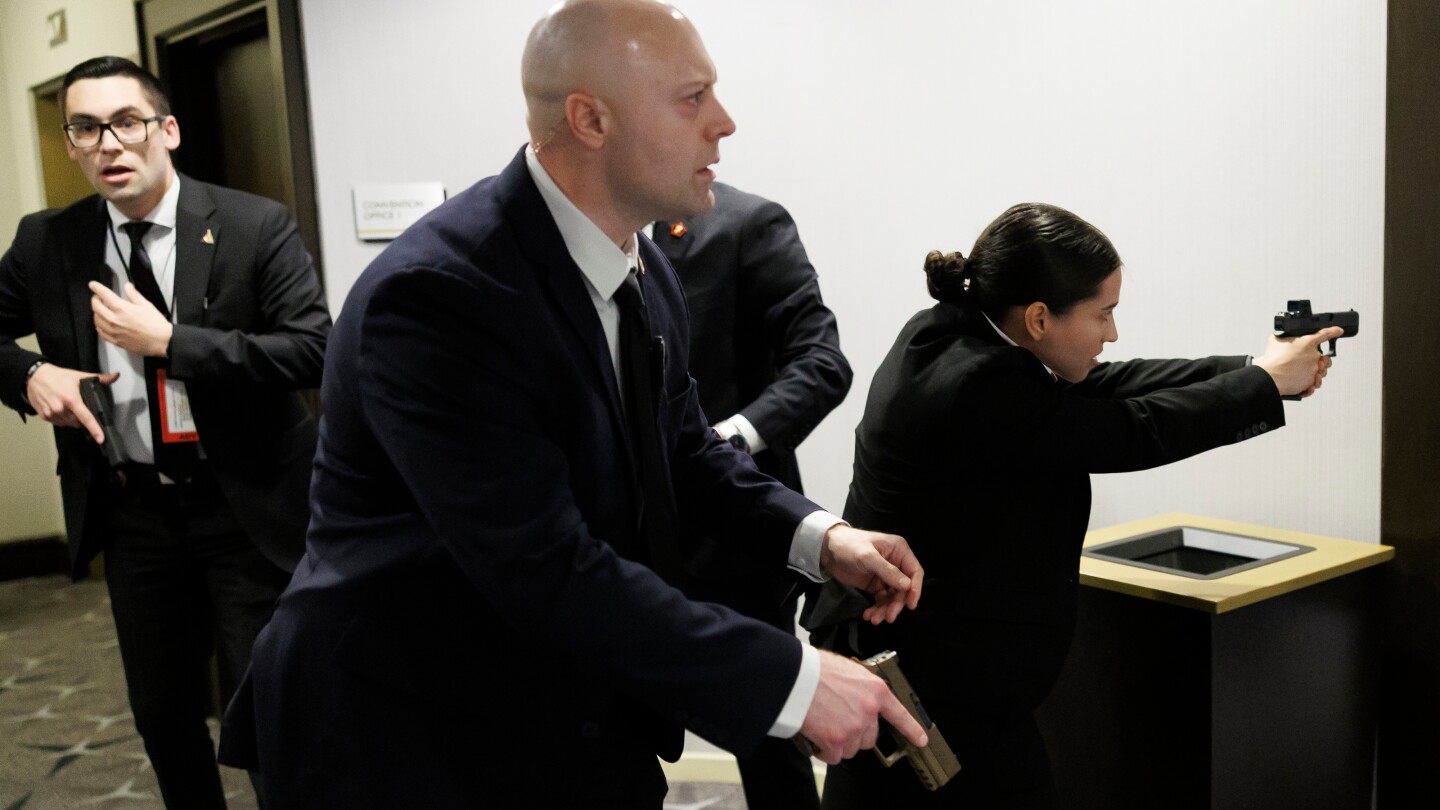
A gunman armed with multiple weapons charged a security checkpoint and opened fire inside the Washington Hilton as the White House Correspondents’ Association dinner got underway Saturday night, with President Trump and top national leaders inside the ballroom. The suspect breached the lobby and moved toward the event before being stopped by law enforcement in an exchange that left an officer struck at close range but saved by body armor.
Thank you for reading this post, don't forget to follow and signup for notifications!
What does it really take to respond when everything changes in an instant? In law enforcement, critical incidents don’t come with warning — and there’s no time to think through your response. The ability to act decisively is built long before the moment arrives.
So how do you prepare for those moments in your career when you have to respond instantly, when lives — including your own — are on the line?
| RELATED: Protecting high-profile figures: A police plan for preventing targeted attacks
Here’s what it takes:
- Personal training. This is the foundation of such a response. You can’t train enough. In the debrief after events such as this, where law enforcement officers prevail, you will hear this statement: “…and then my training kicked in.”
- Team training. The “T” in team stands for training. Training is essential for having an effective emergency response by any team.
- Planning. In the case of an event, there has to be a plan in place so every officer knows what their responsibility is and is properly trained to do it.
- Be a master in the use of all your life-saving and life-protecting equipment. Know not only how to use your equipment, but when. In moments where they are needed, you must be able to be not only effective, but also decisive.
- If you are protecting presidents or residents, believe “it” can happen here and now. Realize that “protect and serve” are not just words on your squad. They are your mission, and if you believe you are necessary, then you must believe that something bad could happen at any time where you are. Be prepared at all times for something to happen on your shift and be surprised when something does not happen.
- Maintain the fitness level of a person on whose lives depend. If you wish to be able to move fast on a moment’s notice to save lives, you need to develop and maintain a high level of fitness. Lift, stretch and run. Run distances, hills, steps and sprints to develop such speed.
- Maintain a position of advantage. No matter what you are doing, whether working an accident, approaching a scene, standing a post or eating lunch, take up and maintain a position of advantage. It should allow you the ability to see the area, go mobile in a moment, draw your weapon if needed and move to cover quickly, while stopping the threat of anyone who might do harm to you or anyone else. Keep your weapon side out of reach of others.
- Scan and assess constantly. On duty, during any assignment, have your head on a swivel. Scan the area constantly to see who is there and assess what they are about. Ask yourself: What are their hands doing? What are their eyes surveilling? What do their clothes, their gait and demeanor, and personal history — if you know them — tell you about them? Constantly scan the area and assess the people in it. It costs nothing to pay attention.
- Keep your weapon hand free. When you are in public, keep your weapon hand free of a flashlight, a coffee cup and any items that will slow you down if you suddenly have to defend yourself or someone else against a deadly threat.
- Have your knees flexed slightly. Avoid locking your knees, being flat-footed or leaning against walls, cars and such when on a detail. All these habits will not only slow down your response when one is suddenly needed, but you will become less alert when your posture is relaxed. Maintain a proper stance when standing on a detail.
- Get enough rest. To be at your best, get enough rest.
- Stow your personal phone. Distractions slow reactions.
- If you are bored, then “When-Then.” To stave off boredom, use “When-Then” thinking. Using the area you are assigned to, play out scenarios in your head. For example, “If a shooter comes through that door, I will move to that pillar, draw and defend the people mingling in the area.” To your brain, this kind of thinking not only keeps you alert, it is a very valuable exercise for preparing for a sudden assault.
- Be a presence, not just present. When you, as an officer, arrive at the area you patrol, the post you are sent to protect or the parade you are assigned to, remember the uniform you wear demands that you not be just present — you must be a presence for good.
- Maintain a perpetual state of alert readiness at all times on duty. An officer running radar does not do so with his squad turned off. That officer will be parked with the engine idling, watching every car approach. An officer should never be at a full stop either when on duty. Cops must be alert and ready at all times.
- Strive to be sacredly dangerous. The Native American people felt that those in the tribe who were tasked with protecting needed to be dangerous. They strongly believed it was “sacred to be dangerous.” Like them, police officers tasked to protect others must strive to not just be capable, but sacredly dangerous to anyone who would do harm to the innocent officers are sworn to protect.
So I ask you, when you hit the streets, are you a presence — trained, ready, fit and rested? Are you a master at all your tools, designed to protect yourself and others? Are you alert and paying attention to developing threats at all times? Are you sacredly dangerous to those who would harm those whom you are sworn to protect?
There is one other reason for always being alert and prepared to go from zero to one hundred in the blink of an eye. By being prepared and alert, you will prevent some attacks from ever happening.
However, stay prepared, because no matter where you police, at any moment you may be expected to go from zero to one hundred and be tested, as those officers were at the Washington Correspondents’ Dinner. If you are tested in a manner such as this and you perform as magnificently as the officers in D.C. did, then we at Police1, along with every cop in the country, will be able to say to you, as we do now to those officers in Washington, D.C.: BRAVO!
| READ NEXT: How local law enforcement can prevent political violence against public officials

