

Every year, investigators are tasked with finding people, devices and evidence in places where sight and certainty disappear: a missing hiker somewhere in the backcountry, a dementia patient who wandered from a care facility, a fugitive moving through city blocks, or a suspect blending into the crowd of a packed event.
Thank you for reading this post, don't forget to follow and signup for notifications!
Traditional policing tools like interviews, surveillance video, canine teams, aircraft and cell provider data help narrow the search, but they all have limits. Phones die, GPS fails and witnesses go missing. When that happens, we are forced back to old-school ground canvassing and following faint trails in the dark.
Signal detection changes that. Instead of depending on a phone’s network history, investigators can now smell the digital trail as it happens, catching the scent of Bluetooth, Wi‑Fi, and other radio-frequency emissions drifting through the air. It turns the invisible pulse of the radio spectrum into a tangible signal scent that can be tracked, mapped and pursued in real time.
Often referred to as a “signal sniffer,” the more accurate term is signal detection — the passive identification of radio-frequency (RF) emissions without interacting with the device.
Signal detection in the field
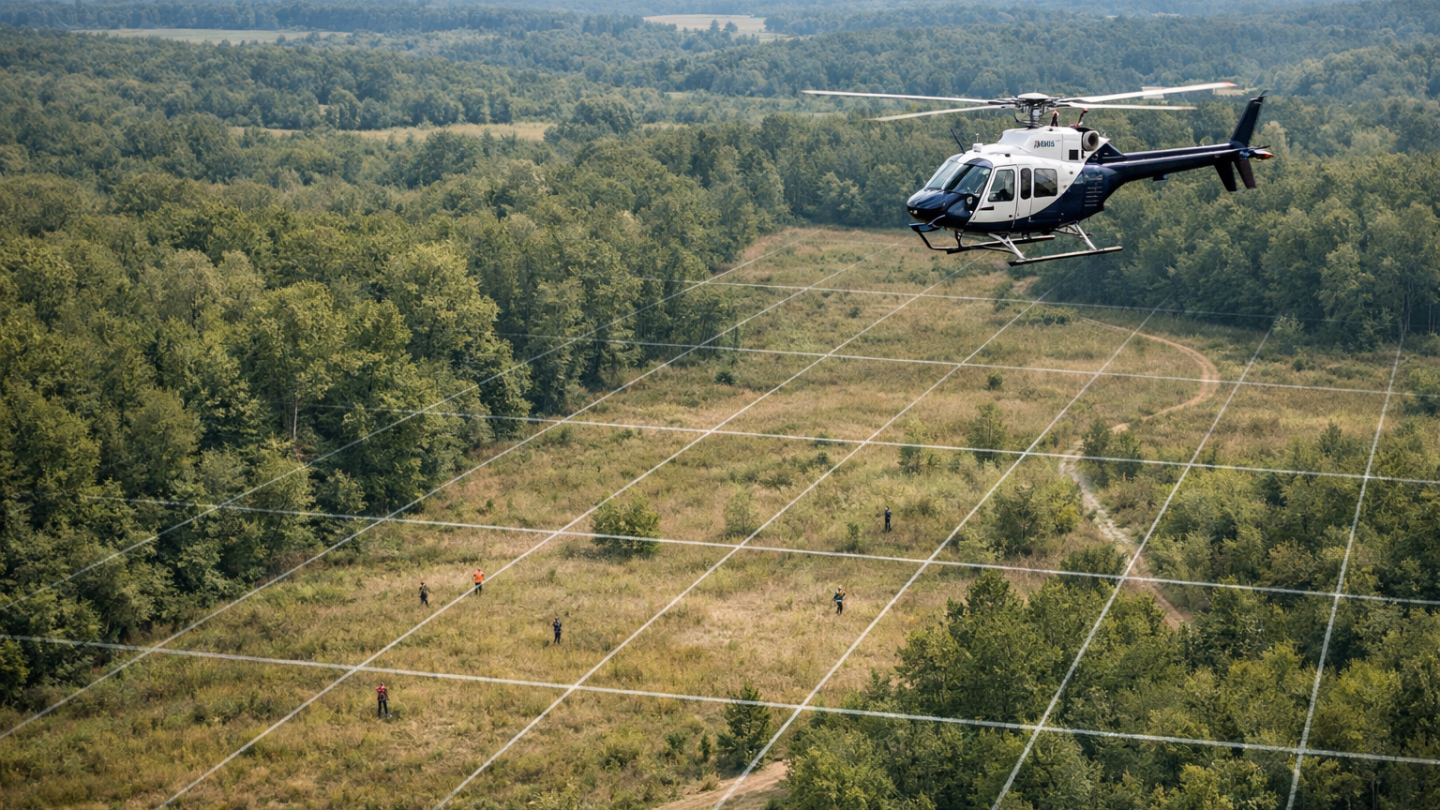
One of the most widely reported uses of signal detection in 2026 was during the search for 84-year-old Nancy Guthrie. News outlets reported investigators deploying a tool called a signal detector mounted on a helicopter to detect transmissions from her pacemaker after the device lost its connection to her phone. The system detects Bluetooth Low Energy (BLE) signals emitted by the device, which are amplified and captured using directional antennas. This allows investigators to map signal strength over terrain and, when needed, triangulate the signal’s origin before sending officers to the ground.
Police agencies have been using this technology for years, but the Guthrie case opened up the discussion on what exactly signal detection does and, more importantly, what it doesn’t do.
How signal detection works
Many types of digital listening devices are available for purchase from online retailers and mobile app stores. Unfortunately, the term “signal sniffer” is often used loosely to describe all of them. In reality, a true signal detector works differently. It listens passively, simply detecting the presence of signals without capturing data, imitating networks, or forcing connections. It does not extract encrypted content. It measures the presence of a device and its strength.
To understand how it works, a brief technical overview helps.
Every wireless device transmits on a specific frequency. Bluetooth and BLE use the 2.4 GHz range, Wi‑Fi uses 2.4–6 GHz, and cellphones transmit across various MHz and GHz bands. A detector has receivers tuned to these frequencies, often involving multiple radios and antennas. Bluetooth signals are already weak, and BLE signals are even weaker since they are designed for low power use. The lower the transmit power, the closer the signal detection device must be to detect it. The range for communications is typically 7 to 35 feet, but the RF propagates farther and can be detected at ranges in excess of 2,000 feet depending on the device and conditions.
These devices broadcast small data packets that include unique IDs (often a MAC address), service information, and even optional manufacturer data. These packets function like digital beacons that announce, “I am here.” Because these broadcast packets are typically unencrypted, they can be detected passively, which makes them valuable for investigators and appealing to malicious actors.
Signal detectors use signal strength, called RSSI, to estimate distance. A stronger signal usually means the source is closer. Drones or aircraft can make multiple passes to create a heat map of signal strength. Although this method cannot match GPS precision, it narrows down search areas.
To locate the signal’s direction, police use several receivers or directional antennas to determine its bearing, known as azimuth. By moving or flying in patterns and collecting measurements, they can triangulate the origin of a transmission, much like cellphone tower tracking.
Drone-mounted detection
Many consumer apps and devices claim to “detect signals,” but most are not investigative-grade tools. Government-only tools are much better. They are more reliable, more versatile, and more powerful.
A recent Police1 article highlighted how a system called BlueFly (a BLE/Wi-Fi detector mounted on drones or helicopters) helps responders locate missing persons faster by capturing low-power Bluetooth and Wi-Fi signals, then transmitting that data in real time into TAK mapping platforms for responders on the ground.
Airborne platforms significantly improve area coverage per unit time, much more than ground teams alone could manage. In rugged wilderness or dense forests, you can sweep a large grid in hours that might otherwise take days. The efficiency of using airborne systems has also been proven successful in many academic studies.
Limitations, challenges and considerations
Signal detection is a tool; it’s not perfect. If you do not understand its constraints, you will overestimate what it can do and make bad operational decisions.
1. Range is physics
Bluetooth and Wi-Fi were engineered for short-range communication. BLE typically operates within tens of feet under normal conditions. With high-gain antennas and amplification, you may extend over 2,000 feet.
Terrain is also important. Urban canyons behave differently than open fields. Forest canopy behaves differently than desert. Any model that ignores RF propagation variables is setting itself up for operational failure. That is why it is important to have various deployment modalities like helicopter, drone, and handheld.
2. RF congestion is real
Urban environments are saturated with 2.4 GHz traffic. If you want to get a good idea of how many signals are floating around your neighborhood, just download a phone app. You will be surprised at what you find. Apartment complexes, stadiums, shopping centers and office buildings are loud in the radio spectrum, and trying to manually navigate these signals is very hard.
High device density areas create signal clutter. Without proper filtering and contextual intelligence, you are not detecting a specific device. You are detecting everything. Effective systems require filtering logic, signal profiling and sometimes signature matching to separate the target device from background noise.
3. Not every signal is your signal
Smart watches, vehicle telematics systems, fitness trackers, wireless earbuds and IoT sensors all broadcast. If analysts cannot distinguish routine ambient traffic from the device relevant to the investigation, they are generating data instead of usable intelligence. Signal identification and case-specific correlation matter more than raw collection volume. Collection without analytical discipline just becomes digital wandering.
4. Legal boundaries are not optional
Passive collection, meaning listening to signals already being broadcast, is fundamentally different from active interaction.
Once you move into stimulating devices, emulating infrastructure, or capturing carrier identifiers such as IMSI data, you are operating in a different legal category. That category often requires heightened judicial authorization and, yes, a warrant.
If your agency cannot clearly explain whether a system is passive or active, you are creating suppression risk. Know the technical distinction. Document the authority and stay within constitutional limits.
Conclusion
Signal detection is a powerful asset when investigators understand and apply it correctly. It brings together radio frequency science, wireless communication protocols, and real‑world law enforcement practice. When used with clear awareness of its strengths and limits, it can greatly accelerate search-and-rescue efforts and missing‑person investigations.
Signal detection is not just another gadget or media headline. It is science put to work to help locate people faster and with greater precision. Yet one principle always remains: advanced technology does not replace boots on the ground. It simply helps them know where to step.

