

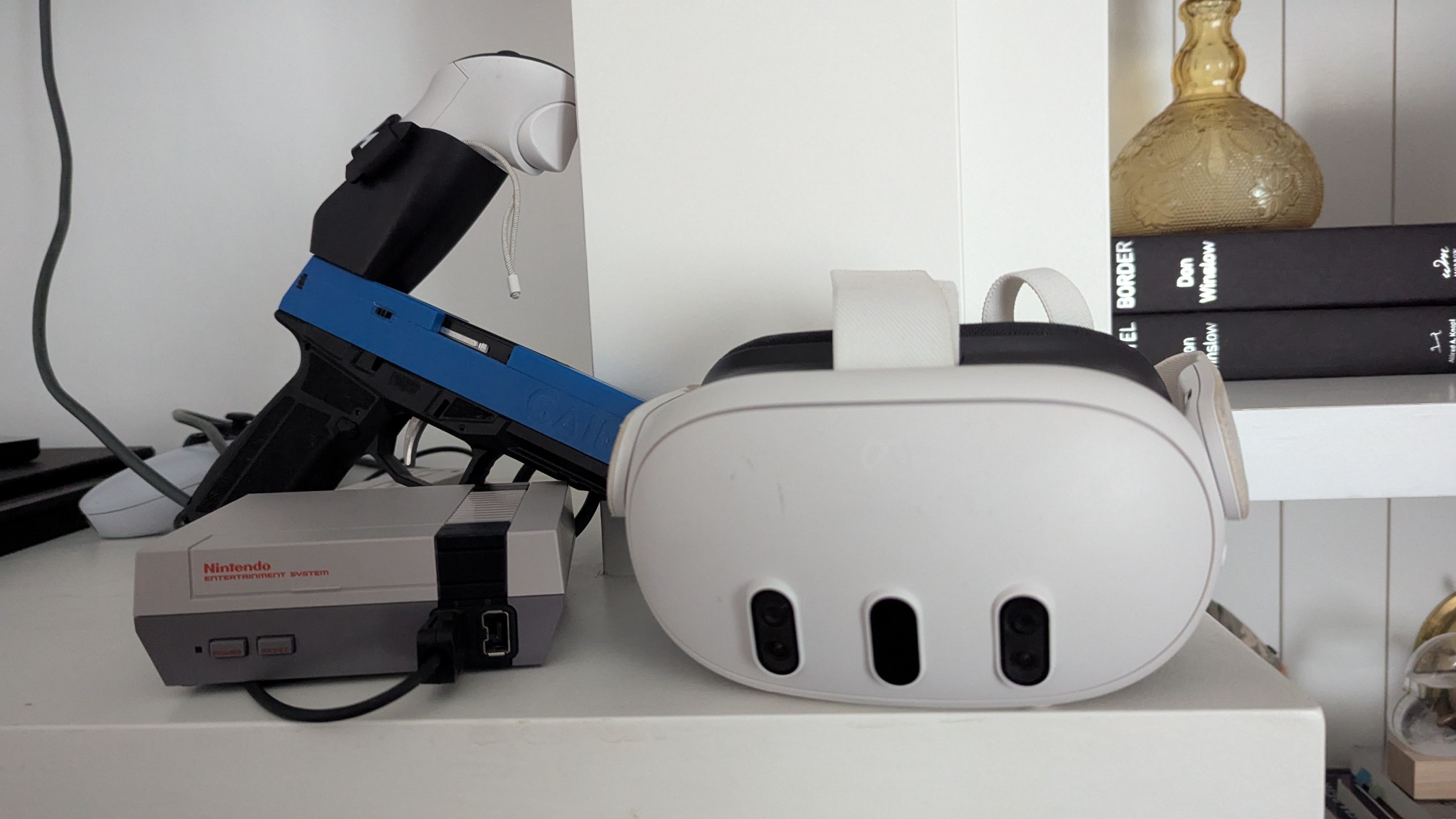
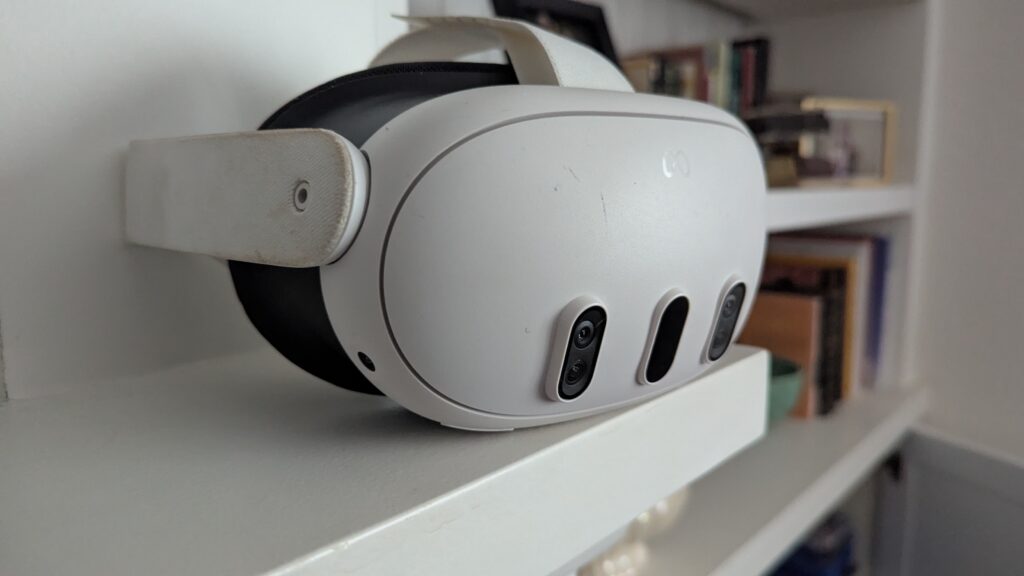
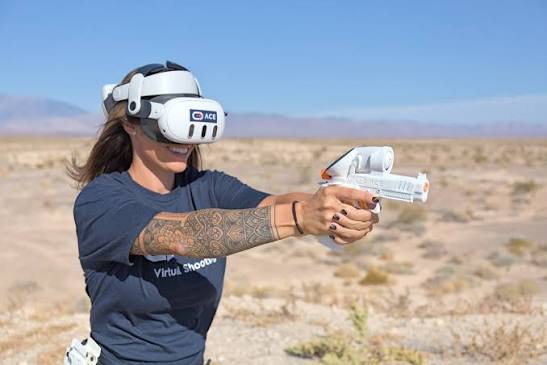
VR has become one of the more popular training aids for firearms in recent times. The AceVR system and GAIM for Aimpoint have become two purpose-built training programs designed for Oculus headsets. Along the way, there have been a variety of firearm-based controllers, holsters, and more designed to turn the training into a realistic proposal.
Thank you for reading this post, don't forget to follow and signup for notifications!
The big question is, does it work? Both GAIM and AceVR are expensive to get into, require expensive peripherals, subscriptions, and more. Are you paying to play a very expensive version of Time Crisis, or are you getting quality training?
- VR and Basic Education
- Basic Education – Check
- The Purpose Built VR Options
- Does VR Work
Advertisement — Continue Reading Below
Outside of the dedicated training programs, can you learn anything from the various quasi-realistic first-person shooters? Can VR be a firearms education tool? I have an Oculus, a few FPS games, and GAIM, and I wanted to find out how it could work in the real world. I already have a base of training, so I also employed a firearms newbie to try a few things in the system to see what they could learn.
I’ve played a lot of FPS games in VR. Some do a fantastic job of mixing in realistic firearms handling in a not-very-realistic environment. Things like reloads were realistic to each firearm. A lot of these games have terrible tutorials, so they rely on a bit of experimentation or a bit of know-how.
For example, I know how to reload a SAW and M240, but if you don’t, it will be a challenge. The same goes for tube-magazine shotguns. I didn’t know how to reload a FAMAS, though, but I was able to learn through the game. With that in mind, I took my newbie shooter inside the game, and we started with automatic handguns.
Advertisement — Continue Reading Below
We walked through the loading process, the make-ready process, then shot the magazine. We did the same with an AR rifle. We repeated the process with both guns a few times, working through the process slowly. The game, Contractors VR, featured a realistic AR and pistol reload with the ability to use the slide or charging handle, or press a button to drop the bolt/slide.
We worked the charging handle and slide for each reload. After a few practice sessions, we moved to real steel with magazines loaded with dummy rounds. I observed but didn’t intervene. After ten minutes in VR, the newbie was able to load the weapons on the first try.
Advertisement — Continue Reading Below
Clearly, walking through it was enough to teach them the basics of loading. After that, we did the basics of aiming; again, not a problem. In the game, they used irons on the handgun, and in real life, they didn’t need coaching on how to align iron sights.
I think VR can serve as a basic education class on multiple firearms. As long as the weapon handling is realistic, you can learn the basics of weapon manipulation. It won’t make you well-trained beyond basic weapon handling, but you can learn how to load weapons, shoulder the gun, and, at the least, use your sights.
What about a more experienced shooter? I shoot a lot, and GAIM was kind enough to send me a kit with their peripherals. GAIM is an Aimpoint product that focuses on sport shooting, like Steel Challenge. You can also create your own ranges from a vast number of targets.
Advertisement — Continue Reading Below
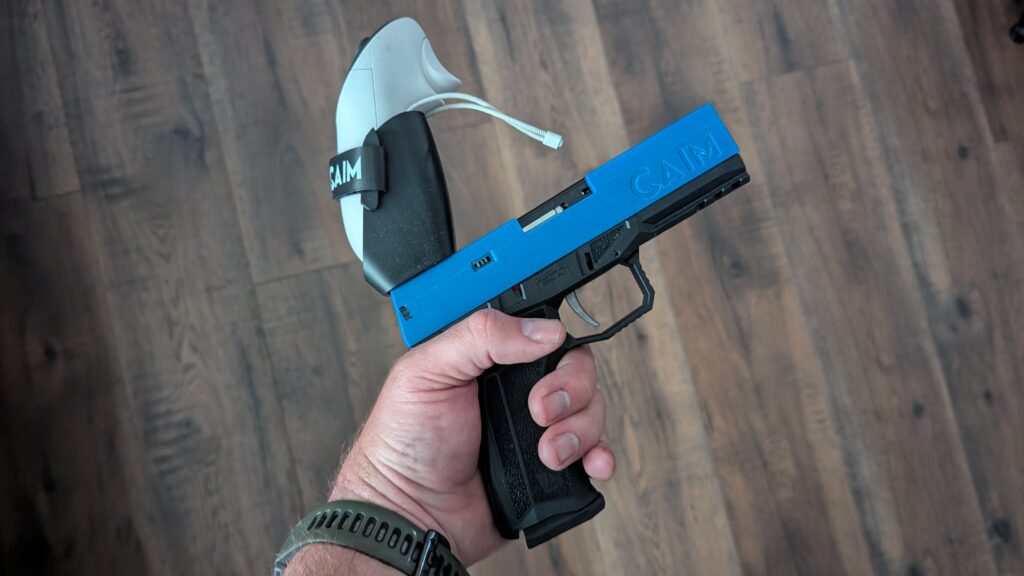
The peripheral is an Arex Delta handgun mockup with a Bluetooth connection. It attaches to your handgun and creates a device that allows you to pull a real trigger on a fake gun to fire inside the game.
For this article, I tried one simple drill. I used the El Pres as a base, but it’s not an El Presidente drill. I set up three USPSA targets, and the goal was to go from the low ready and shoot two shots into each A-zone.
Advertisement — Continue Reading Below
I shot it once at the live fire range, establishing a baseline time. I then repeated the same drill on a range I built inside of GAIM. I ran the drill over and over for a week inside GAIM. At the end of the week, I did it again live.
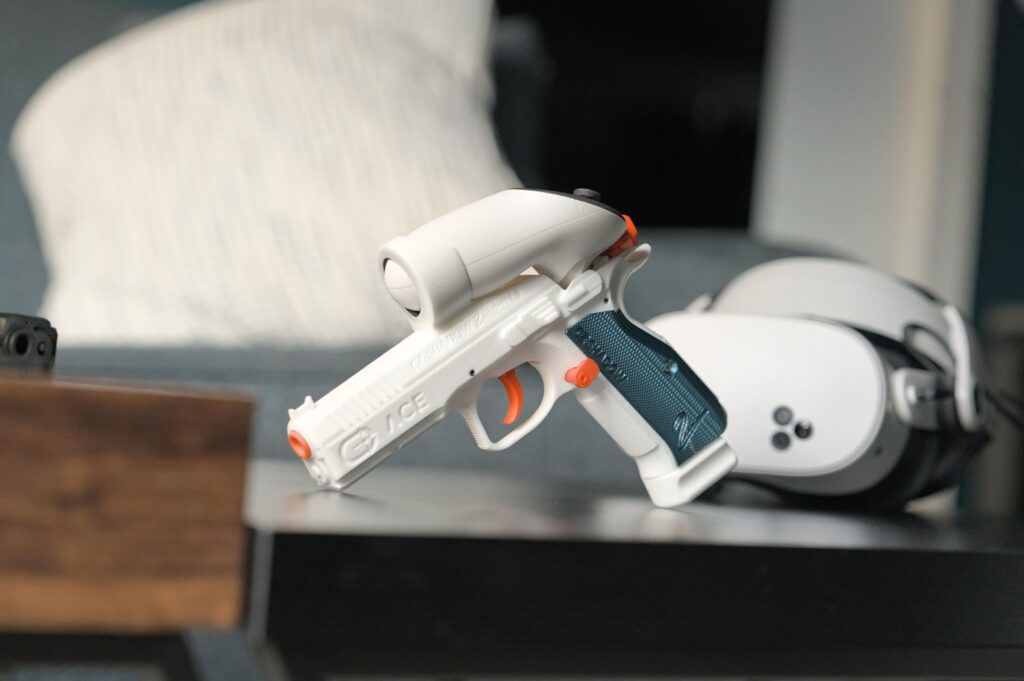
I trimmed a second off my time on the first run. Not only was I faster, but my shots were closer, my split times lower, and I generally just felt more confident shooting the drill. I sailed through it quickly and smoothly.
Advertisement — Continue Reading Below
My experiments were limited, but from what I can tell, VR can be another valuable part of training. At the end of the day, it’s fancy dry fire, but it’s much more entertaining. Being able to build realistic ranges and shoot with feedback is fantastic. You can put the gas to the floor and practice until the wheels fall off—something that’s tough to do in dry fire.
It’s expensive, but it’s a lot of fun, and if you can train and have fun, why not?

