


[[{“value”:”
Thank you for reading this post, don't forget to follow and signup for notifications!
This post was originally published on this site.
Bear attacks are rare, but when they do happen, they can be disastrous. Bears can kill humans, and occasionally do. If you are going to venture into places where bears exist, which is most of North America, it is important to know what to do if you encounter one.
Three species of bears roam some of the country’s most beautiful wilderness. The first and foremost thing when it comes to bears is to be aware of your surroundings and do everything possible to avoid an incident. Carry bear spray in areas where bears are known to exist.
Advertisement — Continue Reading Below
Understanding the differences between bear species can directly impact your safety when an encounter happens. Let’s break down the three different bears you might encounter and how to handle each situation for the best outcome.
Black Bear
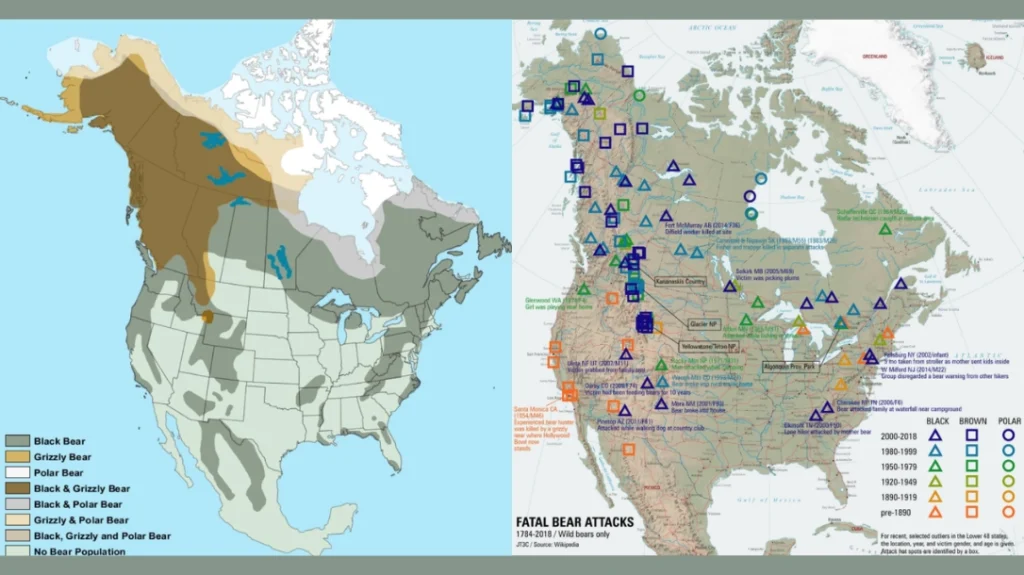
Black bears are the most widespread bear species in the U.S. They are commonly found across the Northeast, Appalachians, Great Lakes region, the Rockies, and parts of the South and the Southwest. Despite the name, black bears aren’t always black, as they can be seen in various color phases, including brown, cinnamon, or even blonde. Black bear encounters are the most common. They are the smallest of the North American bear varieties, and tend to be more skittish around humans, but that doesn’t mean they aren’t a threat. If food or cubs are involved, all bets are off.
Advertisement — Continue Reading Below
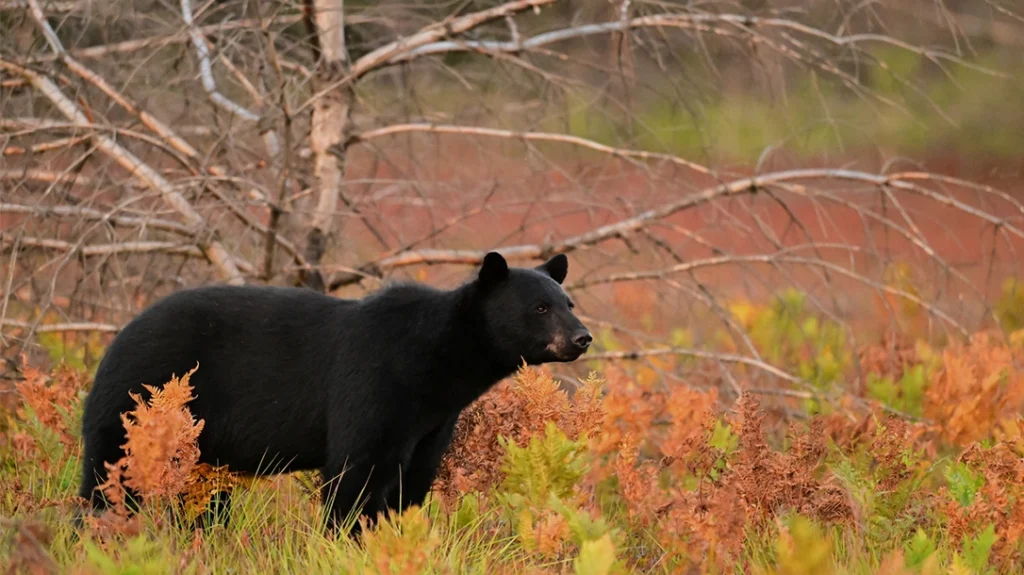
To identify a black bear, look at its body shape. A black bear’s shoulder lies level or flat with its back. They lack shoulder humps, which is a key identification feature for other types of bear. The rump is higher than front shoulders, not the other way around. They have a straight, narrow face.
When you encounter a black bear, think big and loud. Make noise while moving through thick cover to avoid surprising one. Some people sing or shout if they think a bear could be close. If you see a black bear, do not run. Running can trigger a chase instinct. Instead, make yourself look as big as possible and stand your ground. If possible, back away slowly and methodically. Remember not to make any sudden movements.
Advertisement — Continue Reading Below
If attacked by a black bear, fight back aggressively. Do not play dead, or there is a good chance you will end up actually dead. Playing dead doesn’t stop a black bear attack. It only makes it easier for the bear.
Brown Bear/Grizzly Bear
Grizzly bears are a subspecies of brown bear. Most of the brown bears in the United States are grizzlies, and are found found in Alaska, Washington, Montana, Wyoming, and Idaho.
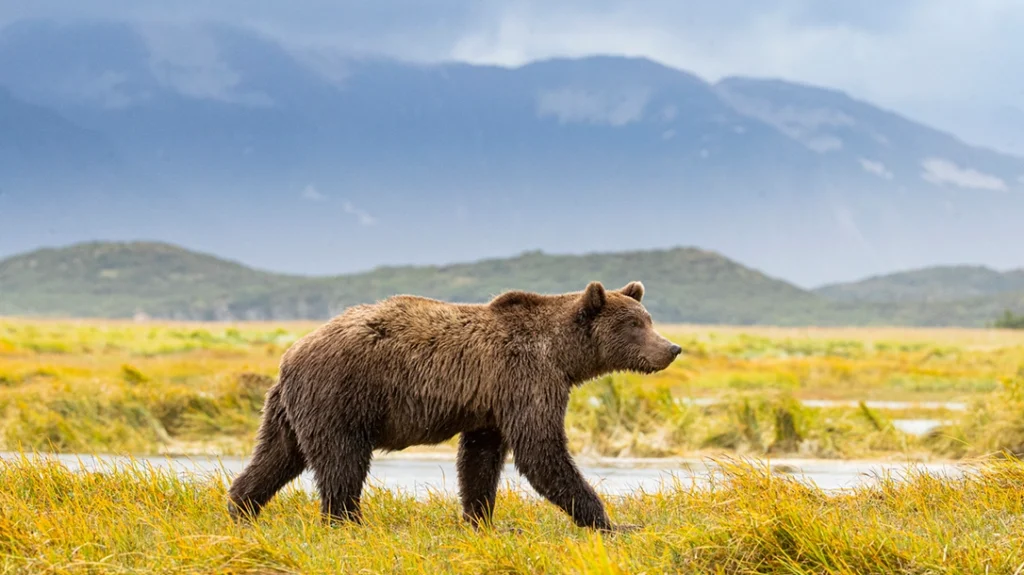
Grizzlies are larger, more powerful, and more aggressive than black bears. They may guard or defend their territory, where a black bear is more likely to run. Grizzly bears can be identifed them by their distinct shoulder hump, which looks like a bump right on the top of their shoulders. Other distinctive features include a concave face, as opposed to a black bear’s more straight face, and ears that look smaller and rounded in proportion to the rest of the head.
Advertisement — Continue Reading Below
With grizzlies, avoid startling or surprising them. If they notice you, just like with black bears, do not run. Avoid eye contact, as grizzles can interpret this as a challenge. You want to avoid challenging an already territorial and agressive grizzly bear at all costs. Back away out of sight slowly and deliberately.
If a grizzly charges you, stand your ground. Make yourself as big as possible by raising your arms and opening your jacket. Take up space. The biggest difference here is what happens if a grizzly bear attacks. Do not fight back. This is the time to play dead. With grizzlies, defensive attacks are the most common, and playing dead can de-escalate the situation.
Advertisement — Continue Reading Below
Polar Bear
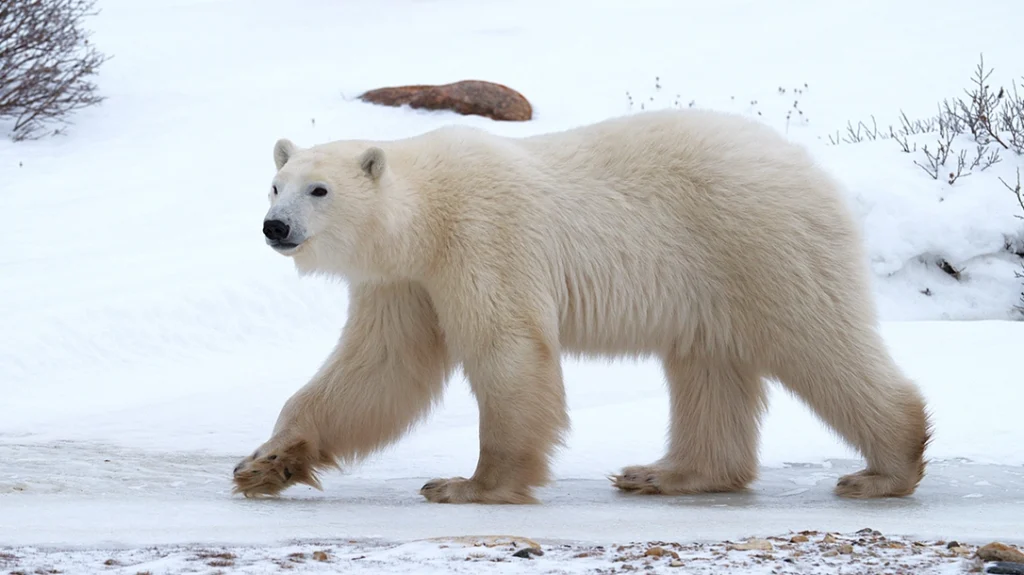
Polar bears are found only in Alaska, primarily along the northern Arctic coast. Polar bears are not only extremely aggressive, but they view humans as prey, meaning they will attack you to eat you. Avoid becoming supper by staying as far away from polar bears as possible. If you do encounter one, like all bears, do not run. Stand your ground. But unlike grizzly bears, if you are attacked by a polar bear, fight back agressively. Playing dead will make for an easy meal for the bear.
Respect the Animal
Most negative encounters happen because a bear is surprised, protecting something, or has learned to associate people with food. Be proactive when in bear country. Keep food secured, make noise when traveling through dense areas to avoid starting a bear, know what species you’re in range of, carry bear spray, and be aware of your surroundings. When it comes to bears, the wrong reaction in a critical moment can be a deadly mistake.
Advertisement — Continue Reading Below
The post Bear Safety Guide: How to Stay Safe Around Black Bears, Grizzlies, and Polar Bears appeared first on Athlon Outdoors Exclusive Firearm Updates, Reviews & News.
“}]]

