

By Ben Haiman, Center for Public Safety and Justice
Thank you for reading this post, don't forget to follow and signup for notifications!
In public safety, leadership has traditionally been defined by rank, uniform and time in service. The challenges facing the profession today are more complex than ever — from technological transformation and workforce shifts to evolving community expectations and the need for interdisciplinary problem-solving. These challenges require a broader range of backgrounds and skill sets.
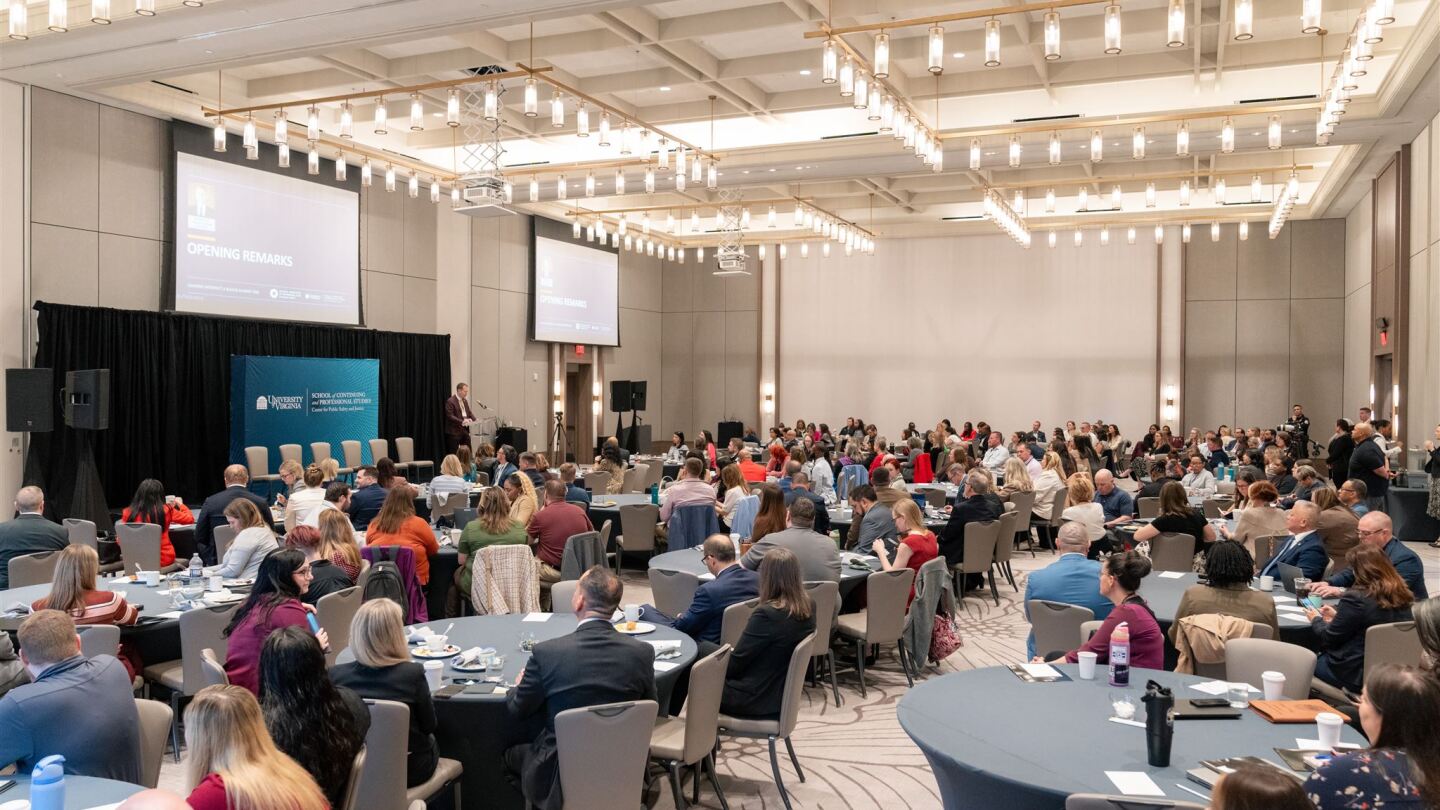
That is why gatherings like the 2nd Annual Leading Without a Badge (LWOB) Summit at the University of Virginia in Charlottesville matter.
Not just a conference
The 2nd Annual Leading Without a Badge Summit 2026 was more than a professional convening — it reflected a growing shift within public safety. One that recognizes professional staff — analysts, HR professionals, technologists, policy experts and senior leaders — as critical to the mission.
From my perspective, what makes LWOB unique is not just the content, but the people in the room. These are leaders who operate without formal command authority traditionally defined by rank, yet shape outcomes at the highest levels. They influence policy, drive innovation and ensure organizations function effectively in a complex environment.
As Arif Alikhan, President and Chief Legal Counsel of TacLogix, Inc. and longtime public safety leader, reflected: “What made this conference unique was the caliber of professional staff in the room — people who are already solving the challenges policing is facing today and building the capabilities agencies will need tomorrow.”
That observation captures something important. This convening was not about preparing professional staff to contribute someday — they are already leading organizations right now.
The power of identity and authentic leadership
Several participants pointed to Ganesha Martin, Deputy Chief for the Minneapolis Police Department, and her message: “When you start trying to conform, you lose what you uniquely bring to the table.”
That idea speaks directly to a tension many professional staff leaders experience. In institutions historically structured around sworn hierarchies, there can be pressure to fit into a predefined mold of leadership. But the strength of professional staff lies in what they bring — a different and diverse set of expertise, alternative perspectives and often a bridge between disciplines.
As Liam Price of the Royal Canadian Mounted Police shared after the event: “I took away something to reflect on from every session and [I’m] heading home ready to be a better leader, a better teammate and a reenergized contributor to my organization’s success.”
That sense of reflection and renewed energy was the result of creating a space where professional staff are not just included, but are the focus — still an uncommon experience in many public safety environments.
Building community in a traditionally fragmented space
Professional staff in public safety often operate in silos — within agencies, across disciplines and even nationally. The National Association of Professional Staff in Public Safety, formed out of this convening in 2025, and the Leading Without a Badge series are designed to break down those barriers.
Amy Bishop of the New York Police Department captured this dynamic: “LWOB2026 felt more like a homecoming than a conference. The level of engagement and sense of community rivaled that of the first summit, as did the number of new connections and thought partners that formed.”
That sense of “homecoming” matters. When people find community, they also find confidence and solutions. They are more willing to share ideas, challenge assumptions and collaborate across traditional boundaries.
And that collaboration is essential. As Quiana Young of Brown University noted: “Getting professional staff in the same room isn’t just meaningful — it’s necessary for the future of public safety.”
She’s exactly right. The future of the profession depends on how well agencies integrate expertise across roles and fully leverage it.
Expanding the definition of public safety leadership
Leadership is demonstrated in many ways — translating strategy into action, building systems that support operations, leveraging data and technology to inform decisions, navigating complex political and community environments, and strengthening organizational culture and workforce resilience.
Professional staff leaders are often uniquely positioned to do this work because they operate across boundaries — between sworn and civilian personnel, operations and administration, policy and practice.
This perspective was reinforced by a panel of chiefs, including Chief John Drake of Nashville, Paul Noel of Knoxville, Wayne Jones of Miami Beach and Lieutenant Colonel Daven Byrd of the Arizona Department of Public Safety. Each emphasized the importance of diverse skill sets in addressing modern policing challenges.
Additional conversations, including fireside chats with Chief Michael Sullivan of the U.S. Capitol Police, Chief Administrative Officer Krista Ashbery, Amy Litwin of the Office of Policing Strategy and Innovation and Isa Ibbassi of the New Jersey Office of Policing Strategy and Innovation, further underscored the value of collaboration between sworn and professional staff leaders.
The keynote address by General Robert B. Neller, 37th Commandant of the U.S. Marine Corps, reinforced a central theme: effective leadership practices transcend title — and the parallels between civilian professionals and military leadership are increasingly relevant in today’s law enforcement organizations.
Leadership is about impact, not title.
Looking ahead
Agencies that recognize and invest in professional staff leaders will be better positioned to adapt, innovate and build trust. This does not diminish the role of sworn personnel — it strengthens the organization by expanding its capabilities and allowing sworn leaders to focus on functions that require law enforcement authority.
Organizations that fail to leverage this broader workforce risk falling behind in an environment that demands agility and collaboration.
To learn more about the University of Virginia’s Center for Public Safety and Justice, visit: https://www.scps.virginia.edu/center-public-safety-and-justice. To learn more about the National Association of Professional Staff in Public Safety, visit http://napsps.org.
About the author
Marvin “Ben” Haiman is the Executive Director of the Center for Public Safety and Justice at the University of Virginia, where he leads initiatives to advance innovation, leadership, and education in public safety. He previously served a variety of positions, including Chief of Staff for the Metropolitan Police Department in Washington, D.C., where he oversaw strategic operations including the Office of Communications, the General Counsel, and the Professional Development Bureau. Haiman holds a master’s degree in management from Johns Hopkins University and a bachelor’s degree in mathematics from the University of Iowa, and he is also a Visiting Fellow at Rutgers University. He is also a graduate of the Naval Postgraduate School’s Executive Leadership Program and continues to serve as a reservist with the MPD. Recognized by the International Association of Chiefs of Police as a “40 Under 40″ honoree, Haiman has also received the prestigious Gary P. Hayes Award from the Police Executive Research Forum.

