


[[“value”:”
Thank you for reading this post, don't forget to follow and signup for notifications!

Travis Pike
Choosing the right pistol suppressor makes all the difference in recoil control, sound reduction, and shooting comfort. Once you put a suppressor on your handgun, you’ll never want to shoot without a suppressor again. The first time I slapped a Spectre 9 on my Beretta 92, I knew I couldn’t go back.
If you’re looking to take advantage of the $0 tax stamp, we’ve gathered the best pistol suppressors on the market. In this 2026 guide, we highlight the best SilencerCo suppressors by caliber—and the one we think dominates the subgun category.
Whether you’re running a .22 plinker, a duty-sized .45, or a 10mm hand cannon, there’s a SilencerCo suppressor built to handle it.
Why Suppress Your Handgun?
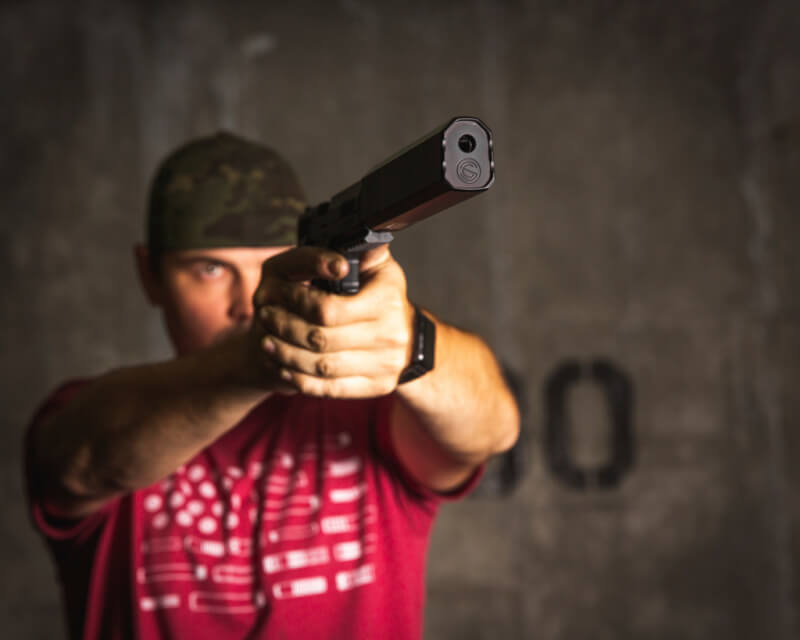
The most obvious answer is to cut noise. It’s downright polite to reduce noise pollution. It makes shooting more comfortable, easier, and overall safer. Putting a “can” on a pistol may seem counterintuitive—you’re adding length to a tool prized for its compact size—but the advantages easily outweigh the extra inches.
A quality suppressor not only quiets the report but also tames recoil, reduces muzzle flash, and makes every trigger press more controllable.
Key Benefits of a Pistol Suppressor
Hearing Protection: Lower decibel levels mean you can train all afternoon without your ears ringing—or risk damaging everyone’s hearing in a confined indoor range. Pair a suppressed handgun with subsonic ammo and you’ll have a quiet, capable firearm that’s far easier on the ears.
Low-Flash Home Defense Setups: In a dark room, a bare muzzle’s flash can momentarily blind you and give away your position. A suppressor significantly reduces that flash, helping you stay focused on the threat. In low-light scenarios, like a nighttime home invasion, this can protect your natural night vision and give you a critical edge—while also preserving your hearing.
Competitive Shooting and Training: Suppressors reduce recoil and muzzle rise, leading to faster follow-up shots and tighter groups—benefits that apply whether you’re running drills or racing the clock. While some action shooting sports prohibit suppressors, the ban isn’t universal, and they can still be a valuable training tool for competitors.
Night Vision Shooting: Shooting under night vision is almost as much fun as shooting suppressed. Adding a can to your night vision setup makes things not only quieter but easier to see. The reduction in muzzle flash under night vision is significant, making shooting much easier, especially with shorter-barreled guns.
Hunting and Field Use: Handgun hunting with powerful calibers like 10mm has grown in recent years. Adding a suppressor reduces noise and preserves hearing in environments where traditional hearing protection can be burdensome. Plus, it’s also polite to reduce noise in areas where other hunters might be trying to bag their trophy buck.
We can also go back to reduced muzzle rise, recoil, and flash. Being able to shoot with less recoil makes follow-up shots easier, and heavy hunting loads often have increased recoil.
Pure Shooting Enjoyment: Finally, it’s just nice to plink with. It somehow makes shooting even more fun. Shooting a suppressed handgun is a joy, and that’s enough for most of us.
How to Pick the Best Pistol Suppressor
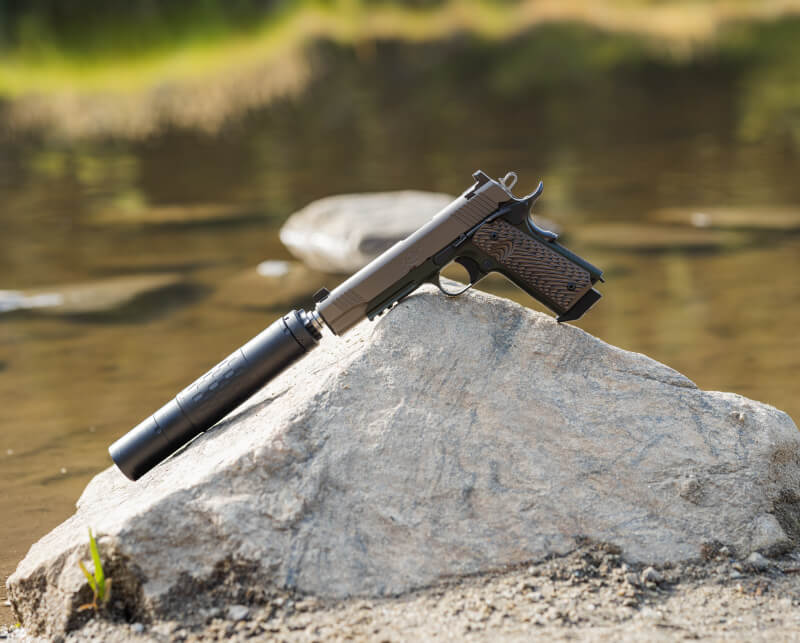
Suppressors are not a universal item. You need to make sure your suppressor matches your firearm. They aren’t an inexpensive investment, and with hurdles of the NFA, it’s wise to get things right the first time. Here are a few key factors to consider.
Caliber Compatibility
This is arguably the most important factor. Suppressors are often caliber-specific, and using the wrong one can be dangerous. The baffles are sized for specific bullet diameters, so firing a larger round—like .45 ACP through a 9mm suppressor—can destroy the can. Always match your suppressor to the calibers you plan to shoot.
Mounting Options
Adding a suppressor to a handgun—especially one that uses a tilting-barrel, short-recoil system—can disrupt reliability due to the extra weight on the moving barrel. This system will require a booster, or Nielsen device, that allows for a bit of movement and ensures reliable cycling.
Other guns, notably gas-retarded (also known as gas-delayed) and straight blowback systems, use a fixed barrel. These systems do not require a booster and can use a direct thread option.
Pistons, often used in conjunction with boosters, allow for easy swapping between thread pitches on host guns and also help manage recoil impulse.
Size and Weight
A suppressor adds both bulk and mass to a handgun, which can affect handling. You can toss a heavy suppressor on a light gun and not have suppression issues or cycling issues when using a booster, but it makes the gun front-heavy. What feels balanced on an HK Mk 23 might feel clumsy on a Walther PPK. I always try to pair my suppressor to my gun in a way that makes sense and helps keep the gun comfortable and easy to shoot.
Sighting Options
Because of their diameter, the design of most suppressors will obscure your line of sight when using standard-height iron sights. You may need to invest in suppressor height sights or use optics.
Alternatively, some suppressors, like the Osprey series, sit flat across the top and work with standard-height sights. Make sure you consider your sighting options before you buy a suppressor.
Durability and Build Quality
Materials matter. I like suppressors made from stainless steel, titanium, or Inconel for long-term durability. If you’re running high round counts or using the can across multiple hosts—including carbines or full-auto firearms—consider a suppressor with a full-auto rating.
Best SilencerCo Pistol Suppressors by Caliber
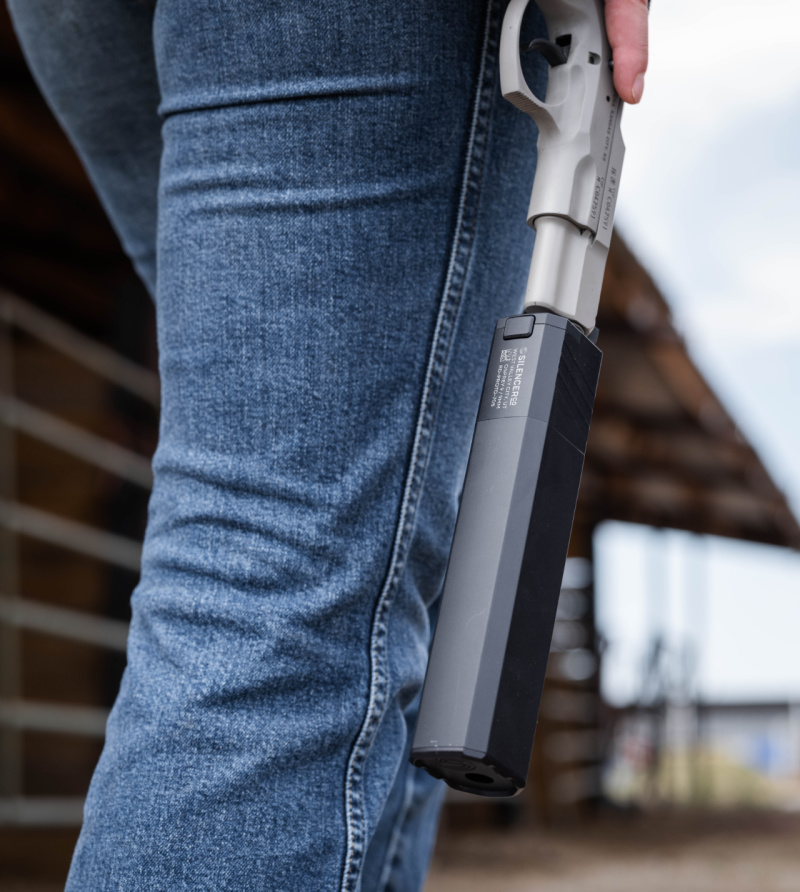
SilencerCo offers a range of suppressors tailored to different calibers and shooting needs. Whether you’re plinking with rimfire or carrying a duty-caliber pistol, there’s an option that gets the job done right.
Best Overall: Spectre 9
The Spectre 9 earns the top spot by delivering the rare trifecta of high-volume durability, maximum weight savings, and a slim profile that doesn’t compromise the balance of a handgun.
I use the Spectre 9 on everything with a threaded barrel. I use it primarily on handguns, but it’s even been mounted on a PCC or two with an ASR mount or a fixed-barrel spacer installed. The Spectre 9 is made from titanium, making it incredibly light at only 3.9 ounces.
I’m Beretta-biased too, so mixing this with my Beretta 92GTS has become a dream come true. An optic and some 147-grain 9mm make the 92GTS a dream to shoot. It’s so quiet, without being front-heavy or overly long. The pair makes for an extremely capable home defense weapon.
The Spectre 9 blends suppressed performance with a lightweight, rugged design. The titanium construction makes it incredibly strong—even capable of shooting .300 Blackout in semi-auto—while remaining full-auto rated and effective at mitigating heat.
9mm is by far the most popular handgun cartridge on the market, and if you want a do-it-all 9mm suppressor, the Spectre 9 is tough to beat.
Best 9mm Pistol Suppressor: Osprey 9 2.0
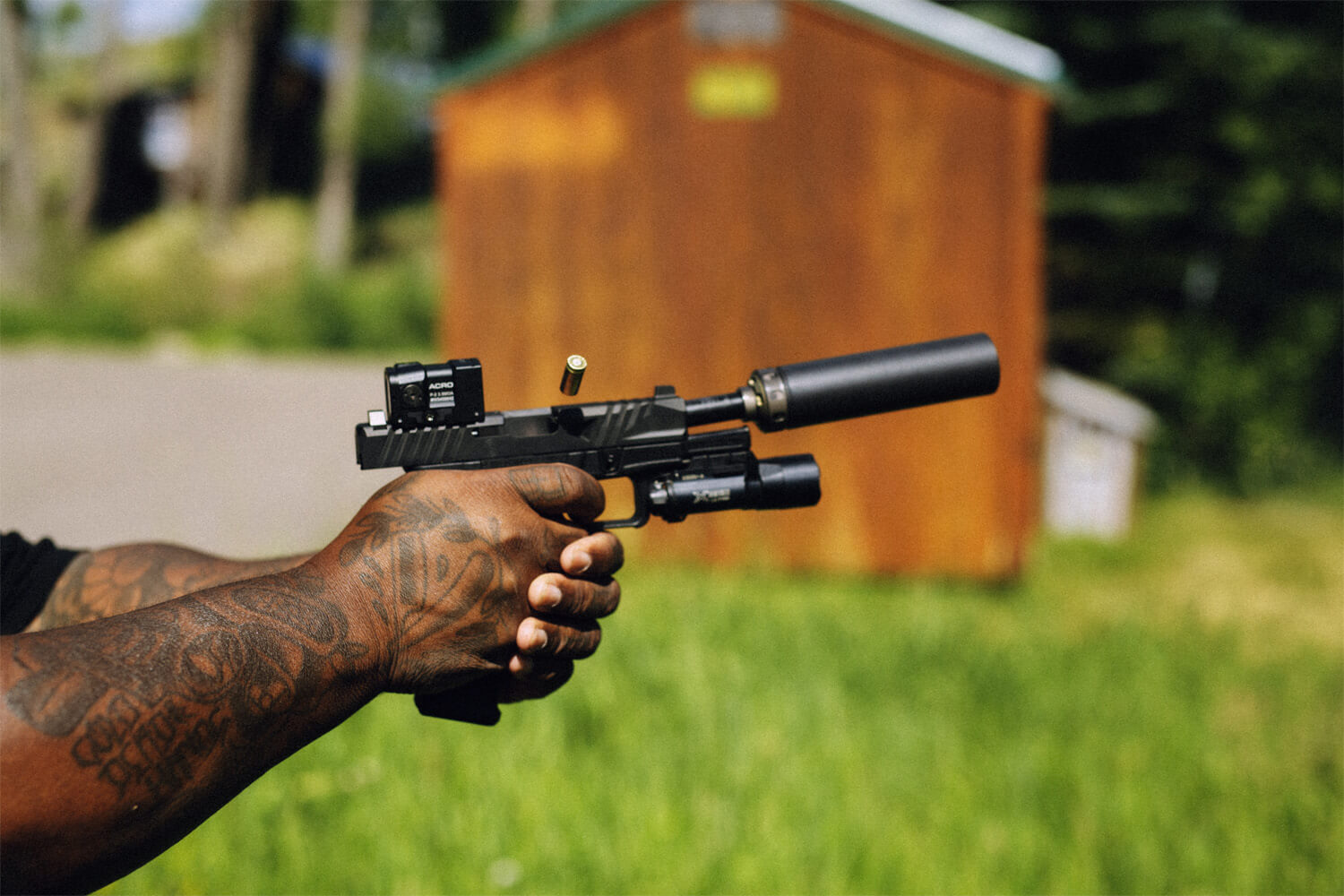
The Osprey 9 2.0 takes all your worries about suppressor-height sights and makes them disappear. The flat-top design of the Osprey works with standard-height sights on the vast majority of handguns. Indexing is easy thanks to the push-button locking system that lets you line up just right.
Don’t let the Osprey’s odd looks fool you; it’s more than a one-trick pony. Inside the monolithic core, a polygonal design ensures the suppressor doesn’t obstruct your view and also gives you an edge in sound suppression. You can always enhance the suppression a bit by shooting it wet and cutting noise down just a hair more.
The Osprey 9 is built to last. It utilizes aluminum and stainless steel in its design. This results in a suppressor tough to handle a subsonic .300 blackout without much concern. It can certainly eat its fair share of 9mm rounds, both subsonic and supersonic, without any concern. The Osprey proves that doing things differently can be valuable.
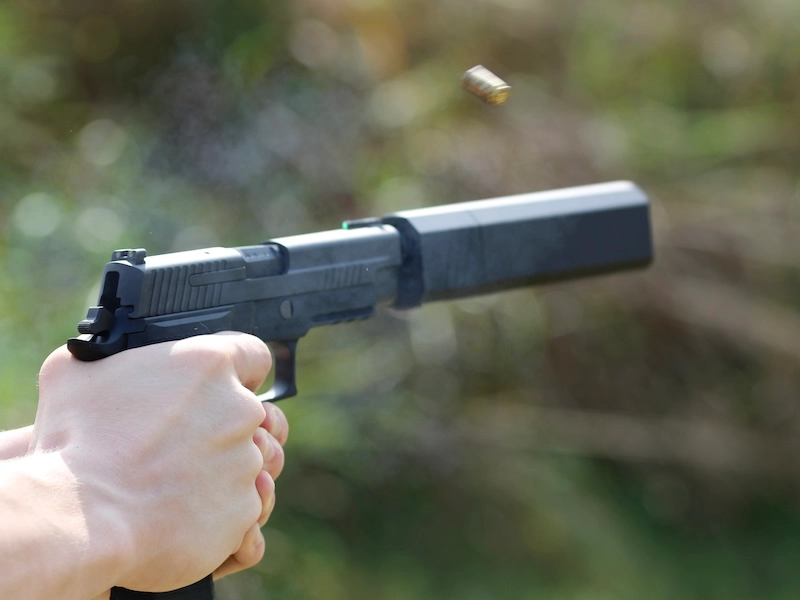
Best for .22 LR: Sparrow 22
The .22LR is, by name, a rifle cartridge, but .22LR pistols are among the most popular firearms on the market. The Sparrow 22 lets you turn your average .22LR pistol into a crazy-quiet gun. The popularity of .22LR subsonic ammo makes this an awesome option for quiet plinking and pest control.
The .22LR is a dirty little round, but the Sparrow handles it well. The monolithic core slides right out of the tubular sleeve for easy cleaning. Cleaning is something you’ll need to do every so often when it comes to .22LR cans, at least more than other suppressors.
The small size of the Sparrow 22 allows you to use standard-height sights for easy, no-modification plinking. The Sparrow 22 suppressor is rated for .22LR, .22 Magnum, .17 HMR, .17 WSM, and even 5.7x28mm. The stainless steel design makes it tough and rugged, capable of handling .22LR in full auto.
The Sparrow has become the benchmark of rimfire performance and even offers an affordable price point to dip your toes into the world of .22LR.
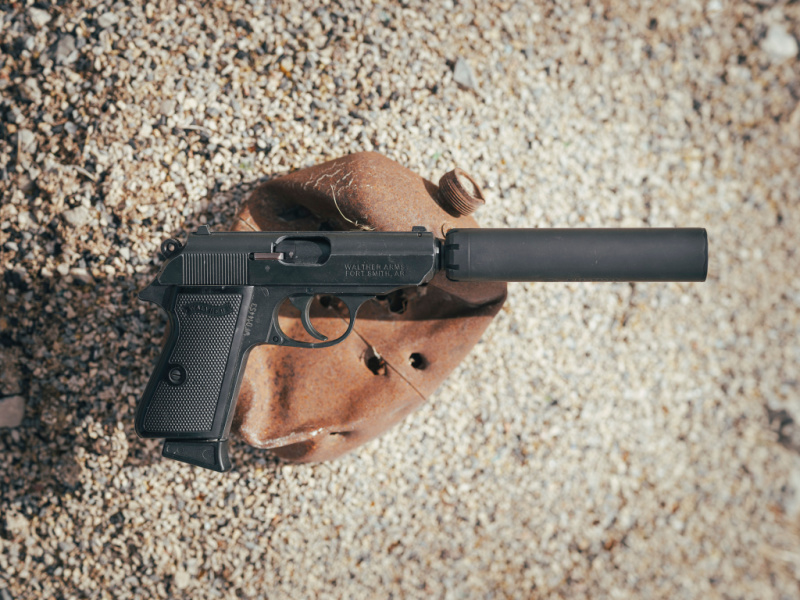
Best for .380 ACP: Spectre 9
I’ve already talked about how capable this suppressor is at sound reduction. Those same qualities apply to the .380 ACP, but the Spectre 9 fits it especially well. The .380 round is still a 9mm projectile, but it’s often fired from lightweight, compact handguns.
The lightweight design of the Spectre 9 makes it a natural fit for guns like the Walther PPK, the Beretta 80X Cheetah, and even the micro-sized LCP 2. A lot of .380 ACPs are blowback-operated and simplistic to suppress. The .380 ACP comes in numerous subsonic loadings, so it’s natural for running suppressed.
The Spectre 9’s titanium design means it won’t feel overly front-heavy and maintains a pleasant shooting experience with a lightweight, compact handgun.
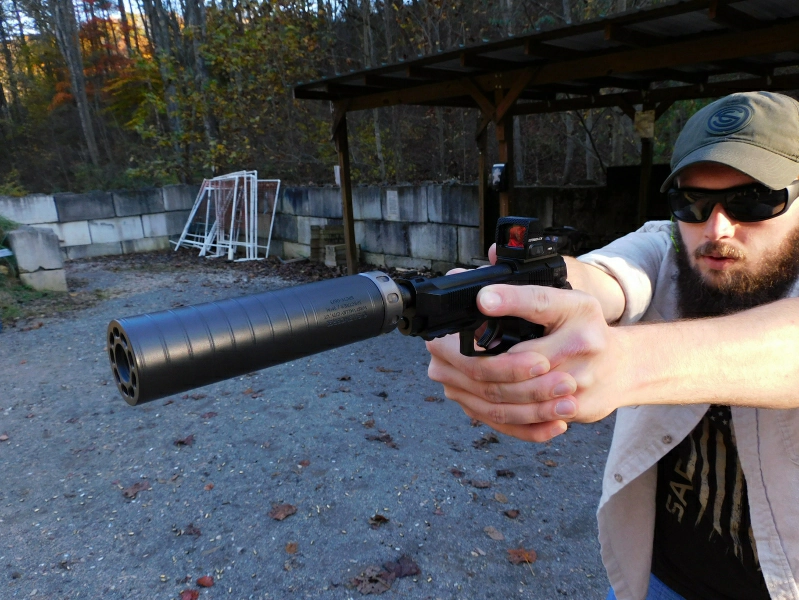
Best for .40 S&W and 10mm: Hybrid 46M
When it comes to cult cartridges, the .40 S&W and 10mm each have dependable followings that don’t rely on military or law enforcement adoption. The .40 S&W and 10mm use the same-sized projectile. The .40 S&W has a slightly shorter case, and can’t be loaded as hot as the 10mm. They can interchange with compatible suppressors without a problem. I grouped them together because they are basically brothers.
Because both calibers use .40-caliber projectiles, they’re too large for most large and compact cans, but the Hybrid 46M can handle them. In fact, the Hybrid 46M can handle powerful cartridges, like the .45-70, .450 Bushmaster and .458 SOCOM—so it shrugs off the recoil and muzzle blast of .40 S&W and 10mm without issue.
The Hybrid 46M is a modular suppressor, and on a handgun, the shorter configuration makes a lot more sense. At 5.78 inches, it’s not overly long, and at 12.2 ounces, it works best on full-sized handguns. With heavy subsonic .40 caliber projectiles, you can make a very quiet handgun.
The extra weight can certainly tame the hottest of 10mm and .40 S&W loads. The Hybrid 46M is full auto-rated, so you can fire it up and rip through any semi-auto mag over and over without any major concerns.
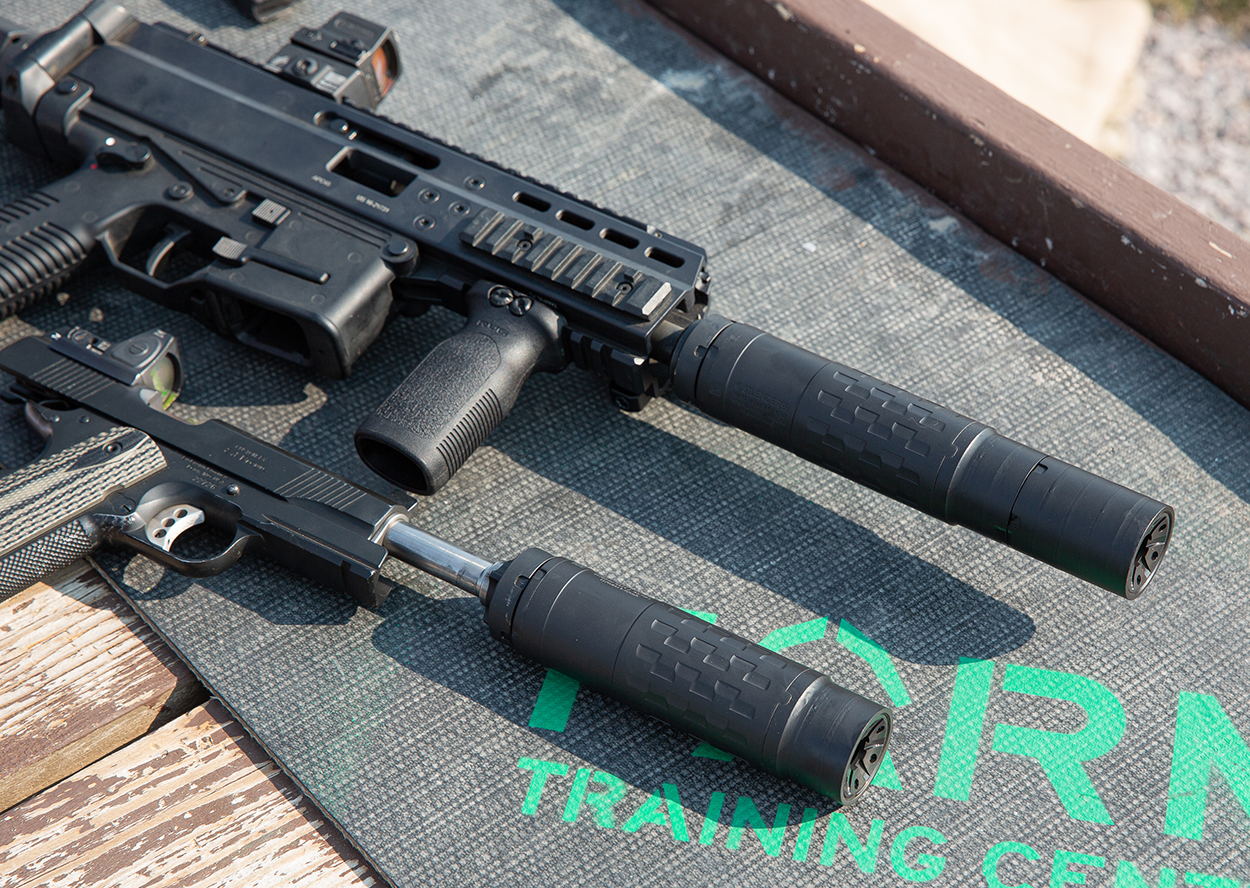
Best for .45 ACP: Osprey 45
The .45 ACP cartridge is America’s cartridge. It served on the front lines with the United States military from 1911 to 1985, and continued to serve afterward in special units. America loves the .45 ACP, and so do suppressors. The most common load, a 230 grain ball cartridge, is naturally subsonic.
Pair your favorite .45 ACP with the Osprey 45, and you have a big bore made quiet. The Osprey features a unique flat top design that allows most guns to use standard sights. Slap it on your average 1911, and no changes are needed. The Osprey suppressors use an indexing button that makes it easy to ensure the flat top aligns with the top of your firearm.
The Osprey 45 features a polygonal design that provides greater internal volume and better sound performance. The suppressor can even be used wet to make the design a little quieter overall. At 9.2 ounces, the suppressor isn’t overly heavy and fits well on the heavy metal handguns that most commonly chamber the legendary .45 ACP.
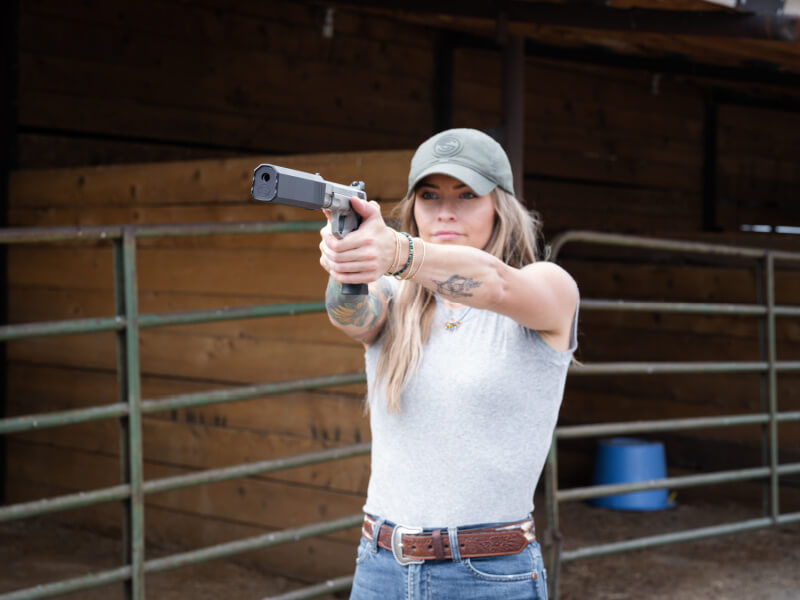
Best PCC Suppressor: Omega 9K
The Omega 9K is perfect on a PCC or large-format pistol. It weighs only 7.3 ounces and is 4.54 inches long. This keeps your PCC short and light. It works with Alpha mounts, ASR mounts, and 3-Lugs, making it compatible with tons of PCCs.
If you have a proper submachine gun, the can is fully auto-rated, so no worries. For most of us, this means FRTs and binary triggers aren’t a problem.
I promise you, you will be impressed by the amount of sound a 147-grain projectile has through a 16-inch barrel and suppressor. This reduces noise drastically and creates a comfortable shooting environment. For those using the PCC for defensive purposes, a suppressor goes a long way toward keeping things quiet.
The Omega 9K works quite well for defensive use, training, plinking, and even PCC competitions that allow for suppressors. The Omega 9K offers effective sound suppression, extreme durability, and a compact package that’s perfect for PCCs.
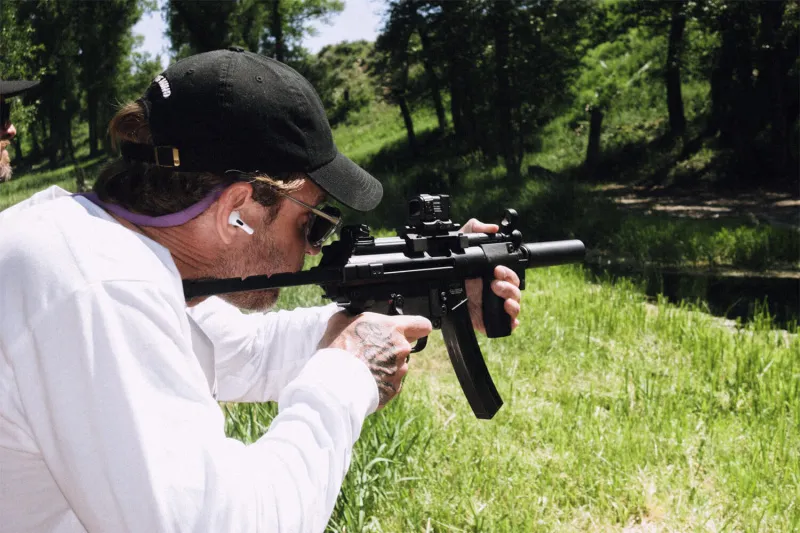
Best Quick Attach Suppressor: S98
The S98 is one of the few handgun suppressors that uses a quick-attach design. It comes with a 1/2×28 QD Mount for easy attachment and detachment capabilities. This makes it easy to attach on the fly, making it convenient to swap between various guns fitted with identical QD mounts.
Much like the Osprey series, the S98 sits low, allowing you to use standard iron sights. Pop it on, rotate it into position, and you’re ready to go with whatever sights you’re using.
The S98 is only rated for 9mm handguns, but it can work with a wide variety of designs. At 5.54 inches long and seven ounces, it’s lightweight and fairly short. It has a near-seamless look with modern handguns.
The S98 sounds better than it looks. It cuts through noise to make your 9mm downright pleasant.
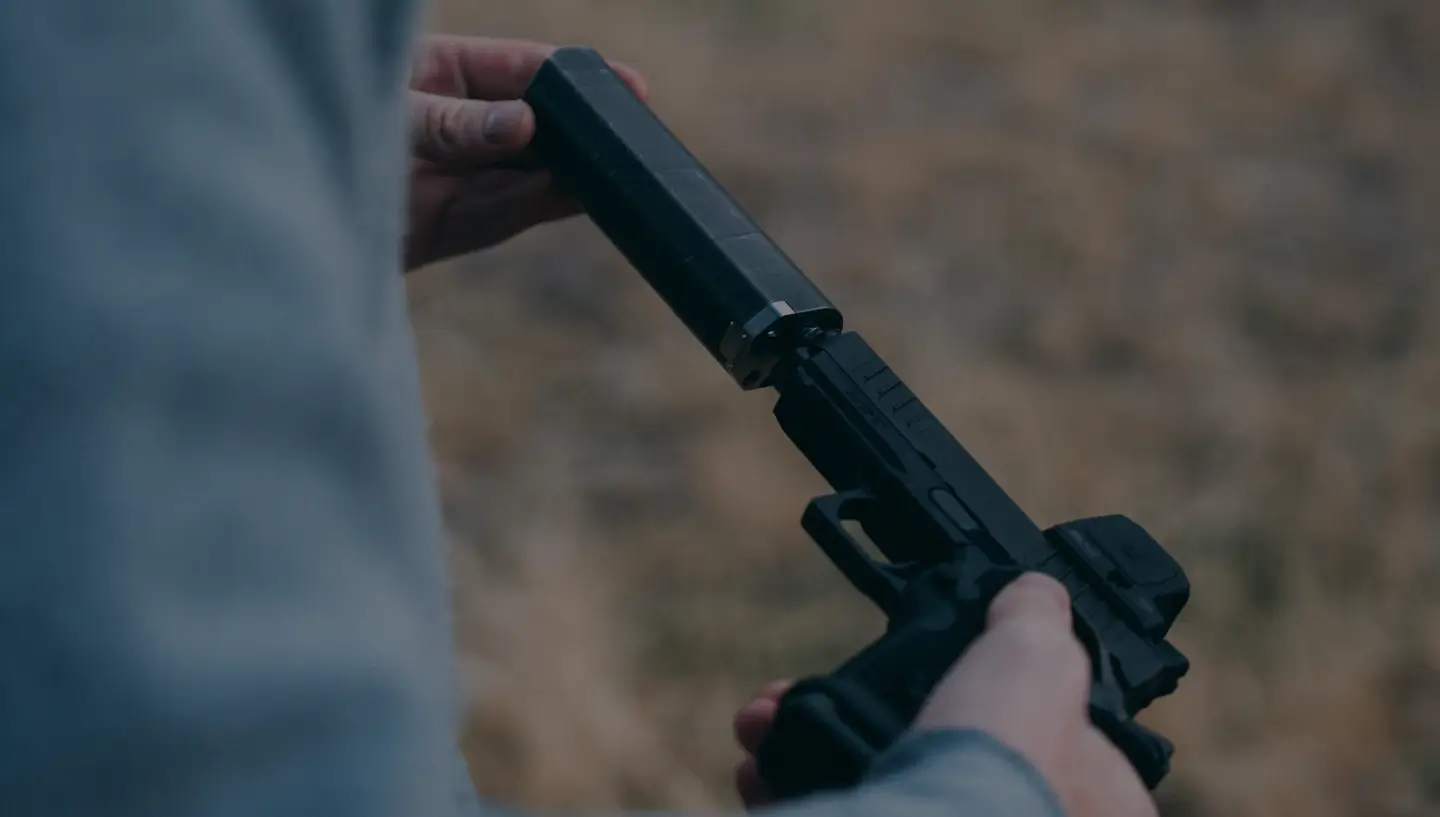
Legal Considerations When Buying a Suppressor
Suppressors are regulated under the National Firearms Act (NFA), which means purchasing one involves a few additional steps beyond your typical firearm transaction. Here’s what to expect:
ATF Background Check and Wait Time – After submitting your application, you’ll undergo a thorough background check. Wait times can vary but thanks to e-forms, they’re now great reduced.
Dealer Transfer to a Licensed FFL/SOT – Suppressors must be transferred through a dealer with a Special Occupational Tax license (SOT).
Trust vs. Individual Registration – You can choose to register the suppressor as an individual or through a trust, each with its own benefits. A trust can allow multiple responsible persons to legally possess and use the suppressor.
SilencerCo helps make the process easier with customer support, step-by-step guidance, and a dealer locator tool to connect you with licensed dealers in your area.
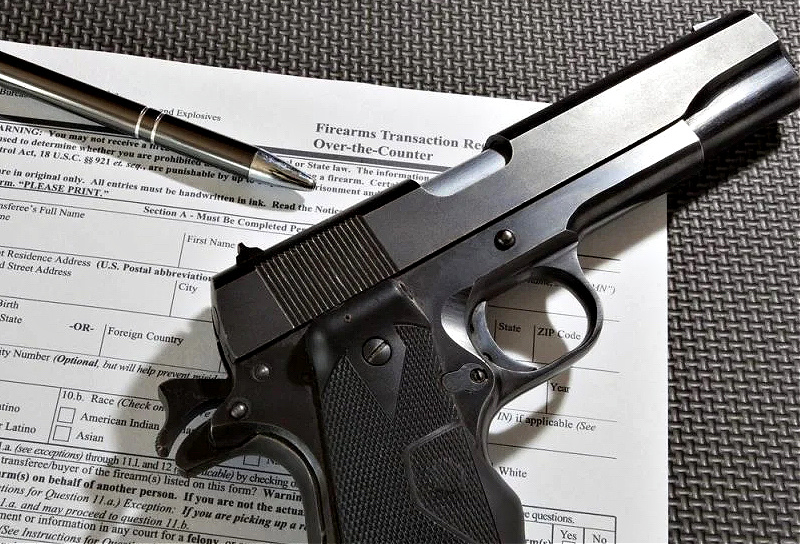
Final Thoughts: Choose Proven Performance
Suppressing a handgun changes how it sounds, how it handles, and how it runs. While it can be plug-and-play, it still requires some forethought, planning, and key considerations. Be sure to factor in your firearm’s design, caliber, and intended use.
Tossing a can on your handgun or PCC makes a ton of sense because subsonic ammo is so common in handgun calibers. It makes for a reliable, affordable, and easily suppressible platform. Give it a try, and you won’t ever want to go back to unsuppressed handgun shooting.
SilencerCo continues to lead the market with innovation, durability, and class-leading suppression. Whether you’re a first-time buyer or an experienced shooter, there’s a SilencerCo suppressor to match your needs.
Travis Pike
The post Best Pistol Suppressors in 2026 appeared first on SilencerCo.
“]]

