


[[“value”:”
Thank you for reading this post, don't forget to follow and signup for notifications!
National Firearms Act (NFA) and Silencer Laws
Home

William Lawson
Silencers, or suppressors if you prefer, are becoming more popular every day. The benefits to shooters and hunters are paramount. The advantages are clear. In addition to sound mitigation, a silencer also reduces felt recoil by redirecting the gases released when a gun is fired.
One would think that such beneficial devices would be on every gun store shelf in the United States, as they are in parts of Europe. But thanks to reactionary and poorly conceived legislation, Americans have to jump through a series of bureaucratic hoops to obtain a silencer legally.
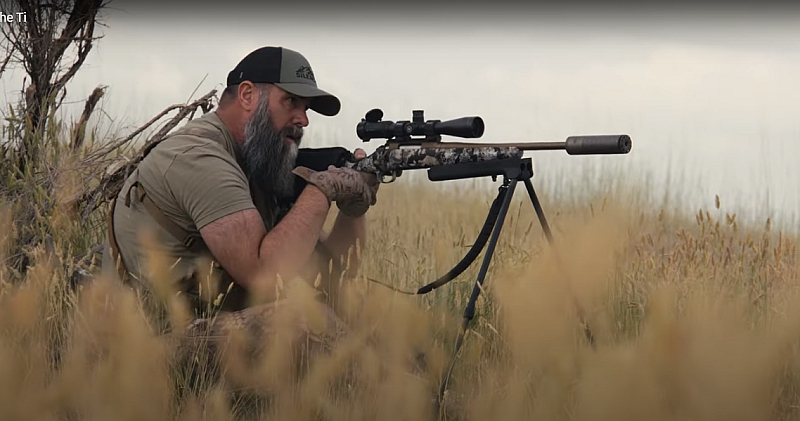
This article is not intended to describe all the minutiae of silencer purchasing and ownership. It will cover the basics so that prospective buyers know the history behind the National Firearms Act (NFA) regulations and how it impacts buyers today.
History of the NFA: Why Silencers Were Regulated
The National Firearms Act of 1934 (NFA) is the federal law that regulates certain types of firearms and their possession by the public – including silencers. The NFA has had a significant impact on the silencer industry, and it is important to understand its history, purpose, and impact.
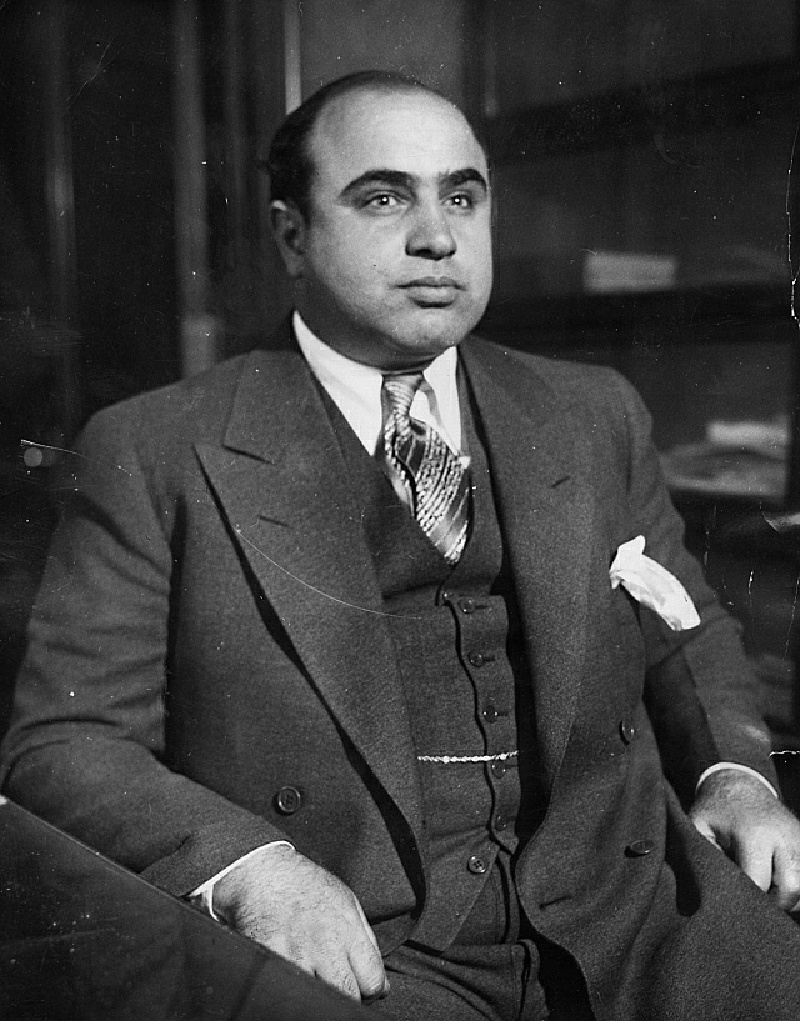
The NFA came about in response to seemingly out-of-control gang wars during the Prohibition Era. The infamous St. Valentine’s Day Massacre, in which Chicago mob boss Al Capone whacked several rivals, made national news in 1929. That incident prompted Congress and US Attorney General Homer S. Cummings to “do something.”
The result was the NFA, a Constitutionally suspect law that Cummings took care to present as a tax bill, knowing that outright gun bans violated the Second Amendment. When asked how the proposed Act “escaped” the Second Amendment, Cummings replied:
Oh, we do not attempt to escape it. We are dealing with another power, namely, the power of taxation, and of regulation under the interstate commerce clause. You see, if we made a statute absolutely forbidding any human being to have a machine gun, you might say there is some constitutional question involved. But, when you say, “We will tax the machine gun” and when you say that “the absence of a license showing payment of the tax has been made indicates that a crime has been perpetrated,” you are easily within the law.
Capone was never busted for murder or racketeering. He went down for income tax evasion. With respect to guns, the government knew that criminals would never pay the tax on weapons they owned, so that was a bonus to framing the NFA as a tax, not a ban. The public could still own NFA controlled items. They just had to pay the tax first.

That criminals like Capone, Clyde Barrow, and others used automatic weapons was well-known, so those firearms were the NFA’s primary target, along with short-barreled rifles and shotguns, which were viewed as being easily concealable by criminals. So why were silencers regulated in the NFA?
Officially, silencers were regulated because they were seen as a potential threat to public safety when used by criminals. However, contrary evidence suggests that during the Great Depression, the choice to include silencers may have been driven by the fear that they would be used for poaching. At the time, purchasing a silencer was cheaper than purchasing a hunting license, which may have been the reason the $200 tax stamp was mandated. While that may not seem like a lot today, that tax is the equivalent of $4,921.21 in 2025.
There are also some arguments that Hollywood was cause for lawmakers to assume that silencers were the tools of criminals and assassins, however it’s hard to find evidence of exactly when silencers first appeared in cinema. Whatever the real reason was for their inclusion, silencers are still regulated by the NFA today.
From the NFA’s inception in 1934, anyone purchasing a silencer must file special paperwork with the Bureau of Alcohol, Tobacco, Firearms, and Explosives (ATF), pay the $200 tax, and receive their tax stamp before taking possession of a silencer. But recent legislation that takes effect on January 1, 2026, changes all that.
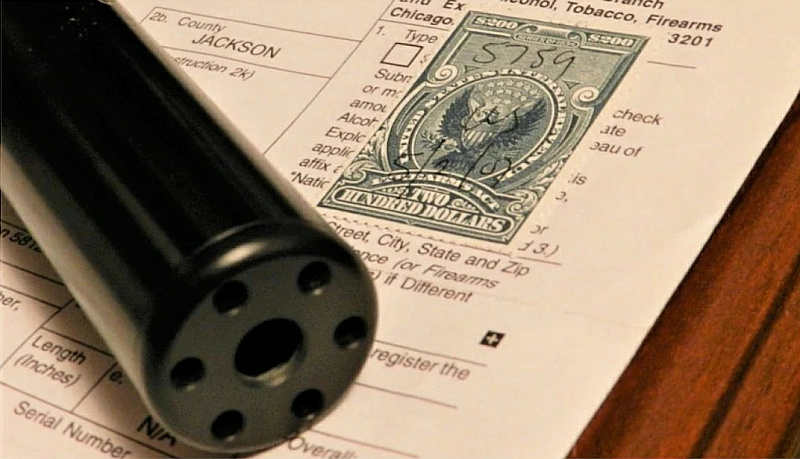
Major Change: The $200 NFA Tax Stamp is Eliminated
The so-called “Big Beautiful Bill” became law on July 4, 2025, but it does not take effect until January 1, 2026. Part of that law eliminates the $200 tax stamp on NFA items, including silencers.
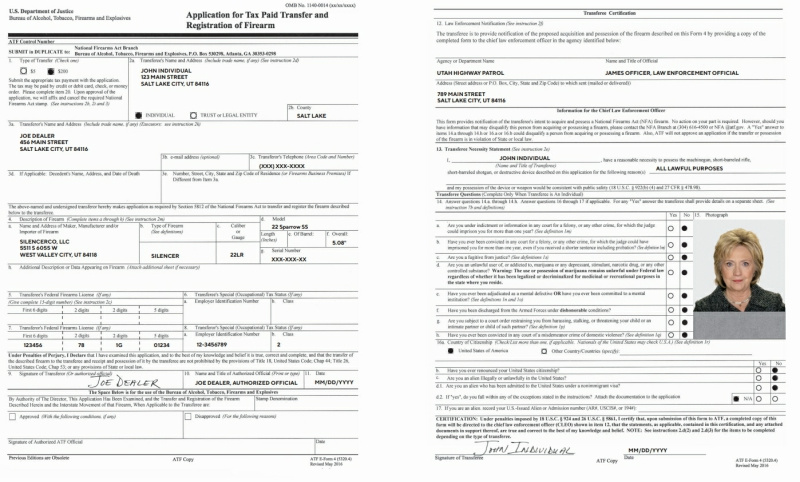
But that doesn’t mean you can just buy a silencer off the shelf. You will still need to fill out and submit ATF Form 4 or eForm 4. The ATF will conduct the same background check as before, meaning there could still be an extended wait time. You also must still await approval before taking possession of your silencer.
The Ongoing NFA Registry Challenge
Submitting the Form 4 also means that your silencer, or any other NFA item, will be registered with the ATF. A legal challenge to the registration requirement has already been filed. After all, the NFA registry was designed to document who had paid the tax and, more importantly, who had not.
With the tax requirement eliminated, one would assume that the registry’s purpose is now moot. The Senate Parliamentarian disagreed with that notion and ruled that the Big Beautiful Bill could not include removing the registry.
The ATF and the Department of Justice are defending the registry, though they appear to be on shaky ground. SilencerCo is a plaintiff in that legal challenge. The law, and the ATF, are unclear about whether NFA items purchased before January 1, 2026 will still require the accompanying tax stamp. The ATF may claim the registry is still necessary to track those stamps. So, if you own a silencer purchased before the law takes effect, keep the stamp just as you always have. Better safe than sorry. Even so, one could argue that items purchased on or after January 1st should not be included, so we will have to see how that lawsuit goes.
Either way, the registry still exists for now and the Form 4 must be filed. Be aware that background check requests are expected to surge after January 1st. That will likely slow the approval process considerably until demand returns to normal levels.
All other legal requirements, listed below, remain in place. The new law does not affect state laws regarding silencer ownership and use.
Current Federal Requirements for Silencer Ownership
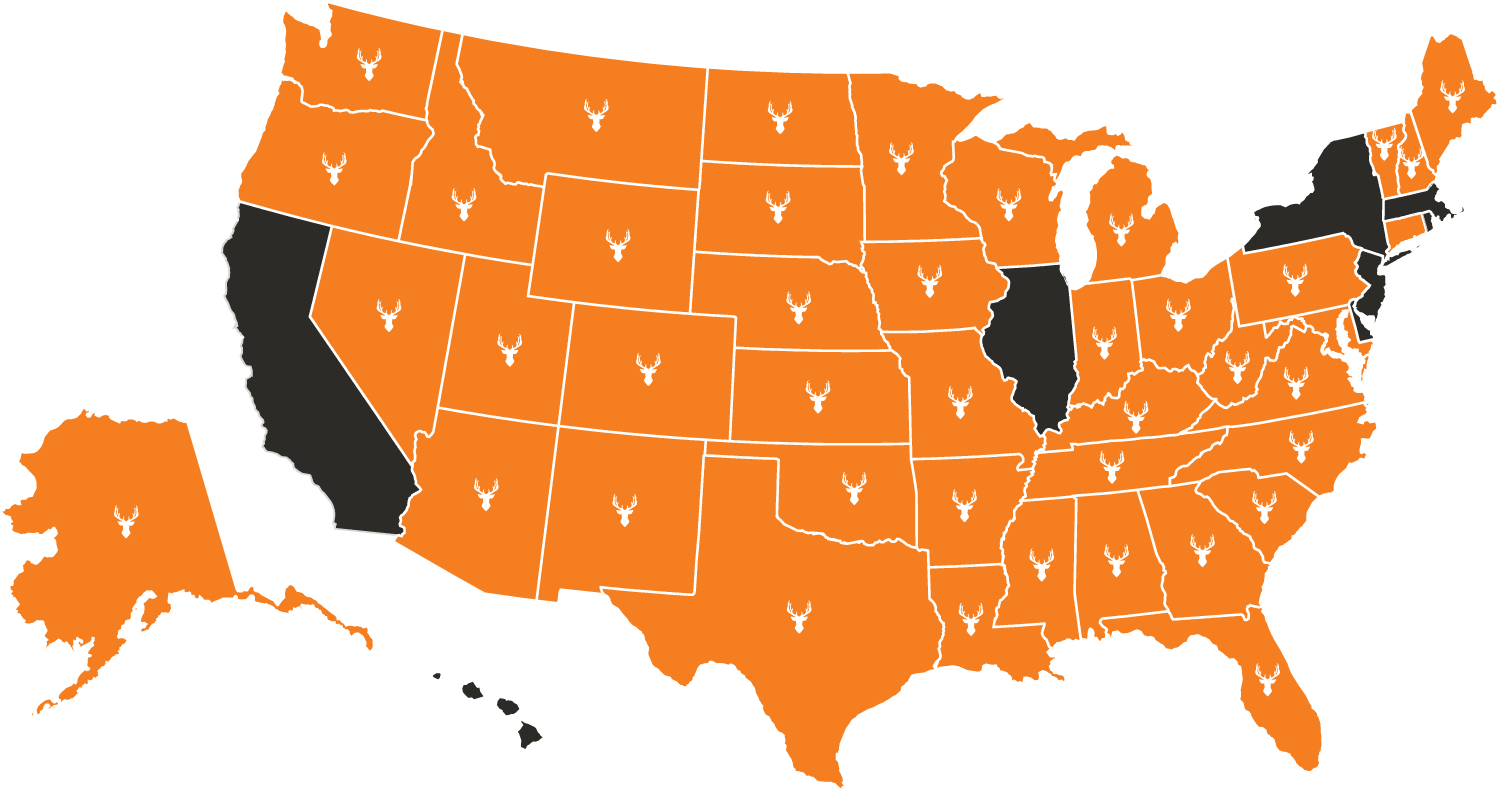
Federal requirements for silencer ownership are similar to the requirements for firearms ownership. Keep in mind that individual states may have additional requirements, while silencers are completely illegal in eight states and Washington DC.
- You must be at least 21 years old to purchase a silencer from a licensed dealer.
- You must be at least 18 years old to purchase a silencer from an individual.
- You must be at least 18 years old to possess a silencer as part of a trust or corporation.
- You must be a resident of the United States.
- You must be legally eligible to purchase a firearm.
- You must pass the federal background check.
As noted, eight states and the District of Columbia currently prohibit civilian silencer ownership or possession. Those states are Hawaii, California, Illinois, New York, Massachusetts, Rhode Island, New Jersey, and Delaware. Of the states where silencers are legal, only Connecticut prohibits hunting with a silencer.
The ATF Form 4 and eForm Process Explained
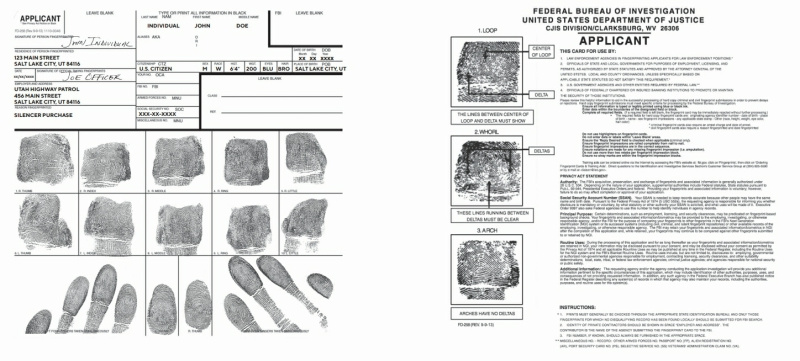
Suppressor companies and retailers do a good job of sharing information with potential customers. SilencerCo breaks down the process into the following steps while also providing examples. You will need to be fingerprinted as part of this process. You will submit the fingerprint cards with your ATF Form 4. Electronic fingerprint cards can be submitted with ATF eForm 4s.
- Carefully complete the ATF eForm 4, or two copies of BATFE Form 4 (5320.4) using blue or black ink.
- Obtain two passport photos and upload them for eForms, or affix one photo to each Form 4. Do not staple them.
- If using eForms, download a copy for your records. For paper forms, make one photocopy of your completed Form 4 with passport photo affixed.
- Use SilencerCo’s example (below) to carefully complete two copies of FBI Form FD-258. Use blue or black ink.
- Submit your paperwork to your Chief Local Law Enforcement Officer (CLEO), declaring your intent to purchase a silencer. That official will also have the opportunity to present disqualifying material to the ATF.
Keep in mind that you cannot possess the silencer during this process. You’ll purchase it from the retailer or manufacturer, who will retain it until you receive your tax stamp.
Current wait times range from just a few days for eForm 4 submissions, up to several months for paper Form 4s. As noted, increased demand after January 1, 2026 will likely slow the process for a while, even with eForms.
Using NFA Gun Trusts for Shared Ownership
NFA Trusts are legal arrangements by which family members or other designated “responsible persons” can use your silencer without you being present. A trust also allows you to transfer your silencer to one of those responsible persons without having to go through the entire transfer process again.
You can establish the trust yourself, with which companies like Capitol Armory can help you. An attorney can also set up the trust if you prefer. You still go through the Form 4 process and pay for the tax stamp, but the trust owns the suppressor.
To create a trust, follow the steps below when going through the ATF Form 4 process:
- Carefully complete BATFE Form 5320.23 (trust application). Use blue or black ink for paper forms. Each designated responsible person must also sign.
- Obtain one passport photo for each responsible person and affix them to the form. Do not staple. Upload for eForms.
- Make a photocopy of the completed Form 5320.23, with photo, for each responsible person. Download for eForms.
- Carefully complete two FBI Form FD-258s for each responsible person. Use blue or black ink.
Note that each responsible person included in your trust will have to submit fingerprints. Also, if any of your responsible persons lives outside your jurisdiction, they must notify their Chief Law Enforcement Officer in addition to yours.
Conclusion: The Suppressor Market Has Changed
We have laid out the basic requirements and processes for owning and purchasing a silencer. The fact remains that the suppressor market is undergoing its biggest transformation since 1934. While the bureaucratic red tape of the ATF Form 4 and background check remains, the elimination of the $200 tax stamp starting January 1, 2026, removes the largest financial barrier for enthusiasts.
It’s important to study the process and know ahead of time what you need to bring, as even one small error can lead to a significant delay. Make sure you research your local and state laws regarding silencers before making a purchase. Fortunately, companies like SilencerCo have easy-to-understand resources to help. With a bit of guidance from your dealer and using these resources, you can confidently navigate the process and soon enjoy the benefits of suppression.
William Lawson
The post National Firearms Act (NFA) and Silencer Laws appeared first on SilencerCo.
“]]

