

By Christine Fernando
Associated Press
Thank you for reading this post, don't forget to follow and signup for notifications!
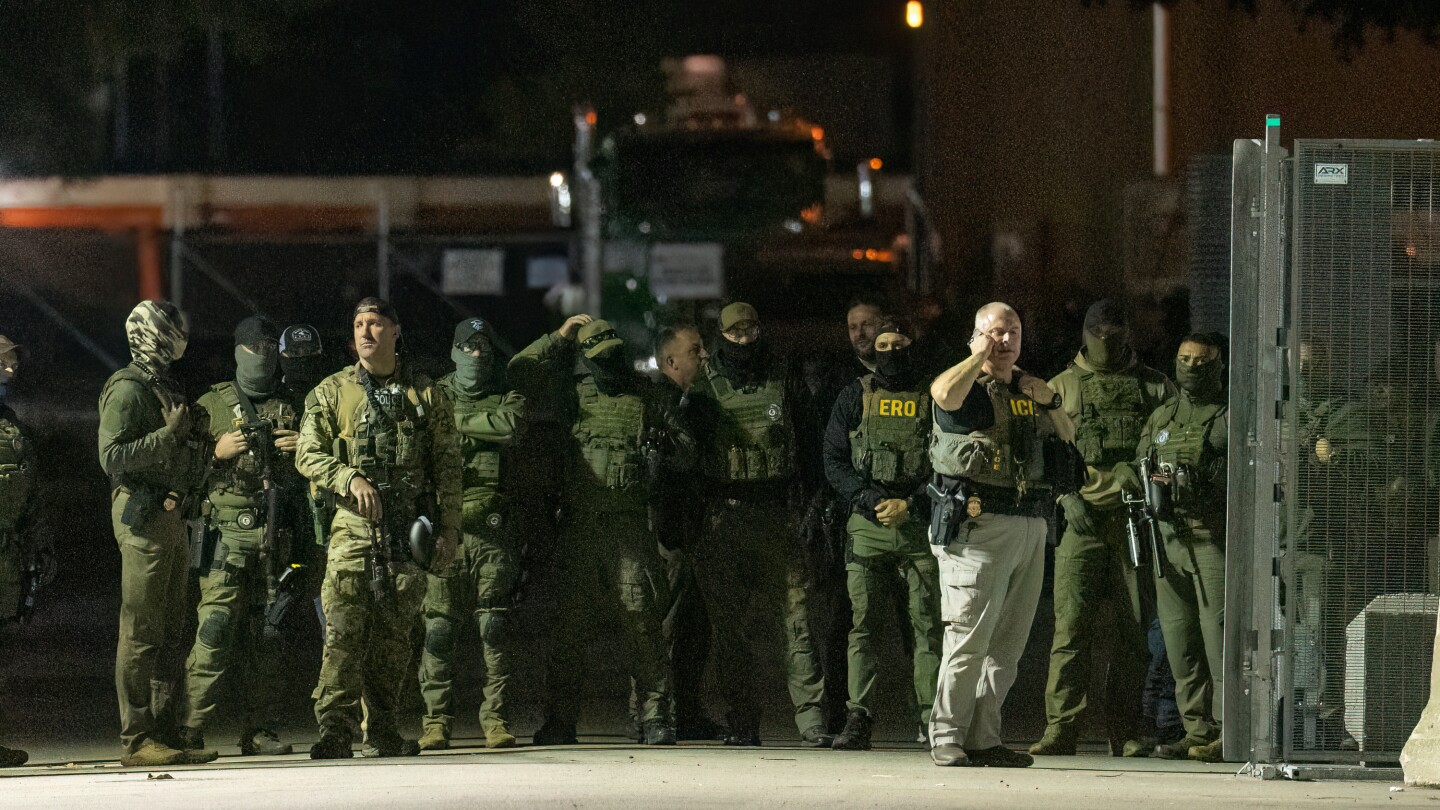
CHICAGO — Federal immigration officers in the Chicago area will be required to wear body cameras, a judge said Thursday after seeing tear gas used against protesters.
U.S. District Judge Sara Ellis said she was a “little startled” after seeing TV images of clashes between agents and the public during President Donald Trump’s administration’s immigration crackdown.
| REGISTER NOW: Protecting major events from drone threats
“I live in Chicago if folks haven’t noticed,” she said. “And I’m not blind, right?”
Protests to oppose U.S. Immigration and Customs Enforcement have ramped up in the nation’s third-largest city, where groups have assembled to monitor ICE activity and film agents.
Separately, the Trump administration has tried to deploy National Guard troops, but the strategy was halted last week by a different judge.
Ellis last week said agents in the area must wear badges, and she banned them from using certain riot control techniques against peaceful protesters and journalists.
“I’m getting images and seeing images on the news, in the paper, reading reports where I’m having concerns about my order being followed,” the judge said.
Sean Skedzielewski, an attorney representing the government, laid blame with “one-sided and selectively edited media reports.”
In 2024, Immigration and Customs Enforcement began deploying about 1,600 body cameras to agents assigned to Enforcement and Removal Operations.
At the time, officials said they would be provided to agents working in Baltimore, Philadelphia, Washington, Buffalo, New York and Detroit. Other Homeland Security Department agencies require some agents to wear cameras. U.S. Customs and Border Protection has released body-camera video when force has been used by its agents or officers.
What challenges or benefits do you foresee in implementing body-worn cameras for federal immigration officers?
- Some challenges I see are them getting dislodged during scuffles but otherwise they will capture what every law-abiding citizen sees: “people violently protesting the removal of illegal aliens” and the federal officers protecting themselves, others and federal facilities.
- I think that overall body cameras have protected law enforcement, they have also held us accountable. Most LE personnel in the country now have to wear them, and I think that with the controversy and different stories coming out about immigration enforcement, it is a good idea. If stories of officers being out of line are true, it should provide evidence of that; if they are behaving professionally, like the majority of law enforcement does, it should provide evidence of that as well. My biggest concerns about the use of the cameras are first that, like all body cameras, these will only show what is visible from where the chest is pointed. The full story needs to be documented. The other concern is that in recent months, Homeland Security hasn’t always been transparent as to what is being done, they need to release footage when needed and appropriate to help people understand what is being done. This needs to be done for the vast majority of the time that officers act appropriately, as well as those few times that they don’t.
- BWCs will benefit LE 90% of the time, but we will never see that 90% on the news. We will only see the 10% or less times when things get out of hand.
- Sean Skedzielewski, an attorney representing the government, laid blame on “one-sided and selectively edited media reports.” The Judge issued the order and the listed bias and selectively edited media reports can and does go away with the agents wearing body-worn cameras. Are there issues? Yes, absolutely, as cameras do not always capture every angle or observations made by the agent/officer. The cameras can and do capture things the agents/officers do not see. All of that requires detailed reports and follow up that officers throughout the country experience every day. Language and comments become important, which is good. Makes folks think before, which is very good. And, the actual actions taken are documented, which is even better. What the agents/officers endure and experience will be captured to document that “the mostly peaceful demonstrations and protests” really aren’t. Best of all, the heroic efforts and actions taken can be shown and the agents/officers can receive credit for the great work they do and the service they are providing on a regular and ongoing basis.
- Anything which they can will be employed to interfere – especially in Chicago.
- I’d like to see that judge go out there with the ICE agents. And when they start throwing rocks and bottles, what would they do? Probably run!
Trending
Company News


