

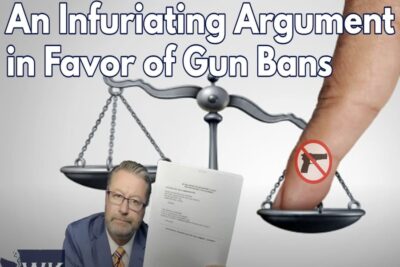
William Kirk of Washington Gun Law recently broke down a troubling development in Colorado’s ongoing litigation over municipal “assault weapon” and magazine bans.
Thank you for reading this post, don't forget to follow and signup for notifications!
In Rocky Mountain Gun Owners v. Town of Superior, the defendants have filed a renewed motion for summary judgment, essentially asking the court to toss out the lawsuit without even moving forward to discovery or trial.
But as Kirk explains, the most alarming part isn’t the procedural move itself—it’s the dangerous legal reasoning behind it.
According to Kirk, the government is attempting to reframe the Second Amendment standard in a way that could make it nearly impossible to ever challenge a ban.
Instead of acknowledging that firearms are protected if they are “in common use for lawful purposes,” the defendants argue they must be in common use specifically for self-defense. That distinction may sound minor, but as Kirk points out, it creates an evidentiary impossibility.
Plaintiffs would never be able to prove such a narrow definition, allowing courts to sidestep the Second Amendment entirely.
On top of that, the defendants argue that they don’t need to show a direct historical precedent for their bans, only a vague “historical principle” that can be loosely tied to modern restrictions.
Kirk describes this as a dangerous cocktail: narrowing “common use” to self-defense while at the same time broadening historical analogies to almost anything.
If courts adopt this formula, any ban could be justified with the thinnest historical reference, no matter how far removed from the founding era.
Kirk notes that this isn’t just sloppy lawyering—it’s a deliberate effort to rewrite the rule of law in real time.
By reframing both the applicability of the Second Amendment and the historical tradition test, governments can build legal escape hatches that allow restrictions to stand regardless of precedent.
He likens it to the broader trend of civilian disarmament advocates reframing not only the debate, but the very rules of the debate, until the outcome is predetermined.
This, Kirk warns, is why groups like RMGO and the National Association for Gun Rights are fighting these cases so hard.
If courts accept the government’s arguments here, it won’t just affect Colorado. It will set a precedent that undermines Second Amendment challenges everywhere, making it almost impossible to win in court.
For Kirk, the takeaway is clear: gun owners need to pay close attention to the legal arguments being advanced, not just the outcomes. Because if courts start accepting this reframing, the right to keep and bear arms could be hollowed out one ruling at a time.

Instant Checkout
SIG SAUER
$600.00
Buy Now
Instant Checkout
Sig Sauer P938
$599.99
Buy Now
Sig Sauer P250
$300.00
Buy Now
Instant Checkout
Sig Sauer P320
$499.99
Buy Now
Instant Checkout
Sig Sauer P229R
$699.99
Buy Now
Instant Checkout
Sig Sauer P225
$950.00
Buy Now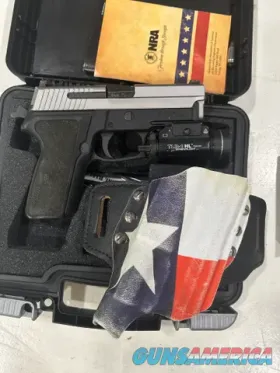
Instant Checkout
Sig Sauer P229
$1,000.00
Buy Now
Instant Checkout
SIG SAUER 556
$2,999.00
Buy Now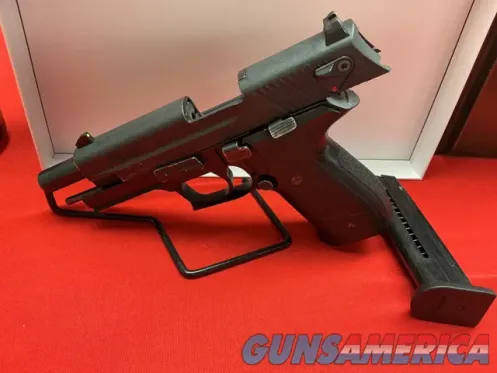
Sig Sauer Mosquito
$200.00
Buy Now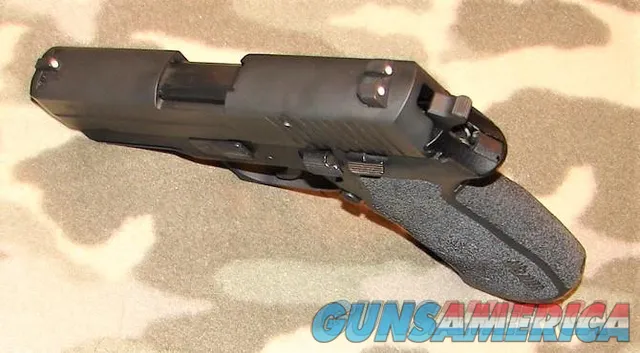
Instant Checkout
Sig Sauer P220
$999.00
Buy Now

