

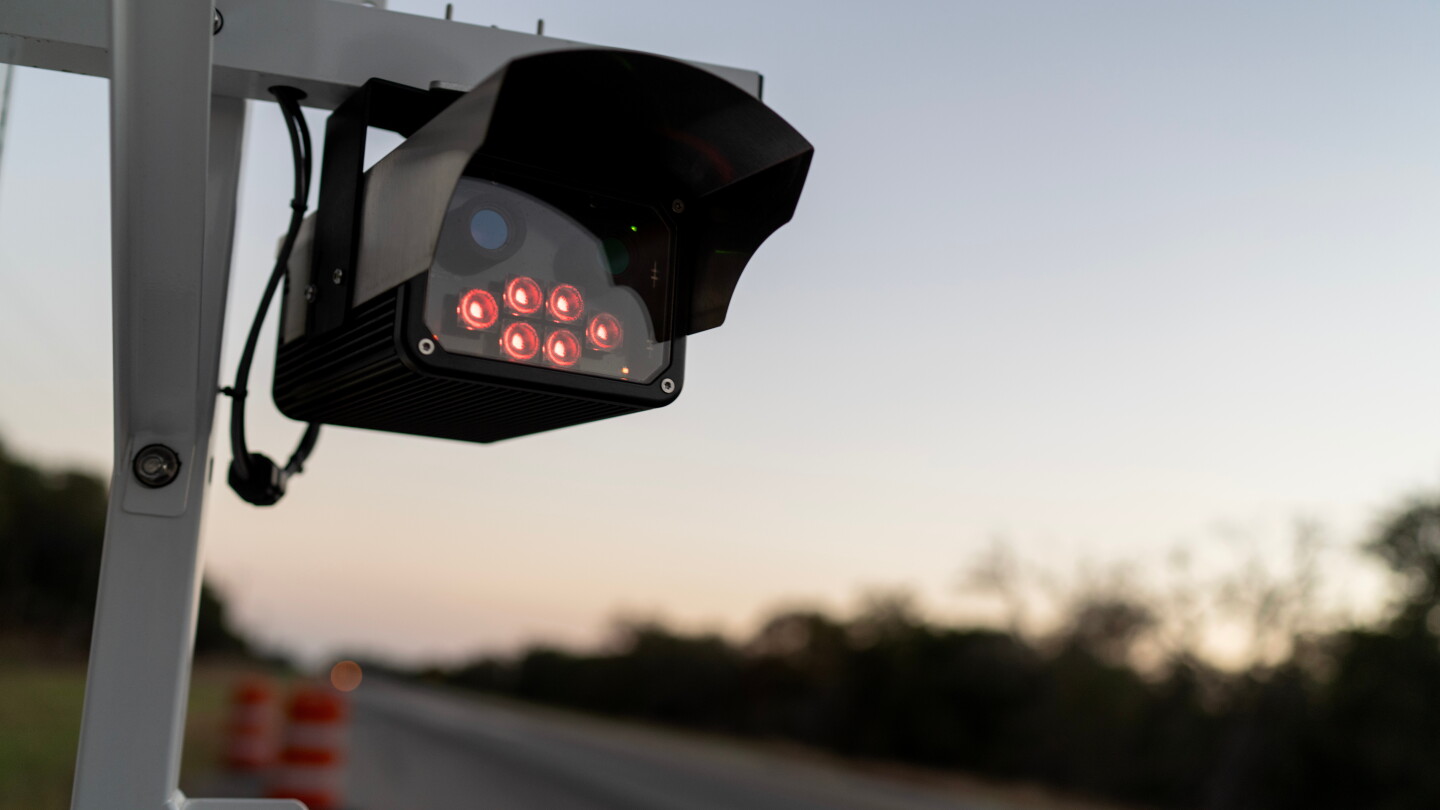
Every generation of police leaders has faced the same challenge: How do you embrace technologies that can make policing more effective while ensuring they are implemented responsibly? The answer has less to do with the technology itself than with the leadership behind it.
Thank you for reading this post, don't forget to follow and signup for notifications!
When fingerprinting emerged in the early twentieth century, critics questioned its reliability and raised privacy concerns. DNA technology faced similar resistance. Over time, many public safety innovations from 911 systems and mobile data computers to automatic vehicle locators, in-car cameras, body-worn cameras, TASERs, drones, and acoustic detection systems were initially met with skepticism before becoming accepted tools in modern policing.
At the time, many of these technologies were described as expensive, intrusive, unnecessary or dangerous. Body-worn cameras, for example, were introduced in many places from a posture of distrust: Prove what happened because people do not believe you. TASERs were often framed as inherently brutal or deadly. Like any tool, there are outliers and legitimate concerns, but much of the early criticism surrounding emerging technology has often proven to be more alarmist than accurate.
History teaches us that disruptive technologies often become indispensable technologies.
Today, few would argue that fingerprints, DNA, body-worn cameras or mobile computing failed to make policing better. Modern license plate reader systems belong in that same lineage.
Smarter policing requires smarter tools
Arguably, no investigative technology since DNA has had a greater impact on solving crimes than license plate readers. That should not surprise us. We are a vehicle-based society, and vehicles are connected to a significant amount of crime. Suspects arrive in them, leave in them, use them to move stolen property or are otherwise associated with them before, during or after an offense.
This is also why precision matters. We know crime is not evenly distributed across a city. A small percentage of places often account for a large share of crime, and in many environments, a relatively small number of people, places and patterns drive a disproportionate amount of harm. That reality should push us toward smarter, more focused public safety strategies.
The goal is not to cast a wide net. The goal is to fish with a spear.
When used responsibly, license plate readers help agencies focus investigative attention where it is most relevant, reduce guesswork and avoid broad, inefficient enforcement approaches that can create unnecessary community impacts and disparate outcomes.
Like fingerprints and DNA, license plate readers do not prevent or solve every crime. They are not magic, and they are not a substitute for good police work. They provide information that was previously unavailable or would have taken countless hours to obtain. The same is true of smart computer vision cameras and video management systems that can quickly detect, decode and deliver images to detectives and analysts — work that previously could take hours or days.
These tools help identify suspect vehicles, locate hit-and-run drivers, recover stolen cars and develop investigative leads. In many cases, they allow officers and detectives to do what they have always done — faster, more accurately and with greater accountability.
Innovation in policing has never been about replacing people. It has always been about giving good people better tools.
That does not mean there is no potential for misuse. Of course there is. The same could be said of running plates through dispatch, querying databases, accessing video or using crowdsourced camera systems. The answer is not to reject useful tools outright. The answer is strong policy, regular audits, clear retention rules, proper training and accountability.
Innovation in policing has never been about replacing people. It has always been about giving good people better tools.
History is repeating itself
Henry Ford is often credited with saying that if he had asked people what they wanted, they would have said “faster horses.” Whether or not the quote is exact, the lesson remains relevant. Progress often requires leaders willing to responsibly embrace innovation rather than preserve the status quo out of fear.
Had we rejected fingerprints, countless cases would have gone unsolved. Had we refused DNA analysis, investigators would have lost one of the most powerful tools ever developed for identifying offenders and exonerating the innocent. Had we dismissed body-worn cameras, we would have forfeited one of the greatest tools for transparency and accountability. Had we rejected mobile computers and automatic vehicle locators, officers would still rely almost entirely on radio traffic and paper reports. Had we refused drones outright, officers would continue entering certain scenes without the ability to first create time, distance, better information and safer outcomes.
License plate readers are following that same path.
They do not replace the instincts, experience or judgment of officers and investigators. They provide information that once required significant manual effort — or was not available at all. Like the technologies before them, they can make policing more efficient, more accurate and more accountable when used with clear policy, oversight and purpose.
The next trust test is already here
Artificial intelligence will likely be the next truly transformative force in public safety. AI will help analyze evidence, summarize reports, identify crime patterns, translate languages, improve dispatch operations and reduce administrative burdens that consume officer time. Drone-as-first-responder programs, real-time sensor networks, robotics and advanced analytics may further reshape how agencies prevent, investigate and respond to crime.
These technologies deserve thoughtful discussion. Privacy, accountability, bias, transparency and governance all matter.
But history suggests the question is not whether innovation will arrive. It already has. The real question is whether we will shape it responsibly or allow fear to delay progress.
Tomorrow’s police departments may include AI specialists, drone operators, cyber investigators, robotics technicians, digital forensic analysts and real-time crime center personnel working alongside traditional officers. The work will still involve people, victims, neighborhoods and harm. But the tools, speed and threat environment will continue to evolve.
The technology will change. Leadership won’t
The greatest challenge may not be technological. It may be leadership.
Trust, legitimacy, ethics, compassion, courage and accountability are not products of algorithms. They remain human responsibilities. As technology becomes more capable, principled leadership and responsible governance become even more important.
Public safety has always adapted to the future. The men and women who embraced fingerprints, radios, 911 systems, mobile computers, DNA, body-worn cameras and drones were not abandoning the fundamentals of policing. They were building upon them.
License plate readers are another chapter in that same story.
And somewhere, right now, another disruptive technology is emerging that future generations may wonder how we ever lived without.
A version of this article originally appeared on the Future Policing Institute website. The Future Policing Institute (FPI) was established in 2019 as a vehicle for anchoring foresight and innovation to the culture of policing. This website launched in early 2024. It is a practitioner, policymaker and community-focused knowledge organization. It examines issues and technologies that will affect policing in the future. It is predicated on the belief that the best way to predict the future of policing is to create it.

