

[[{“value”:”
Thank you for reading this post, don't forget to follow and signup for notifications!
The following content is part of Police1’s Police Leader Playbook, a resource aimed at helping new law enforcement leaders move beyond basic management and supervision skills and become inspirational leaders with integrity and passion. Through a handful of questions presented by Police1, veteran leaders reflect on their early days in leadership roles and offer advice, while newer leaders detail their experiences taking on a new position. Email editor@police1.com to offer your insights for the Police Leader Playbook.

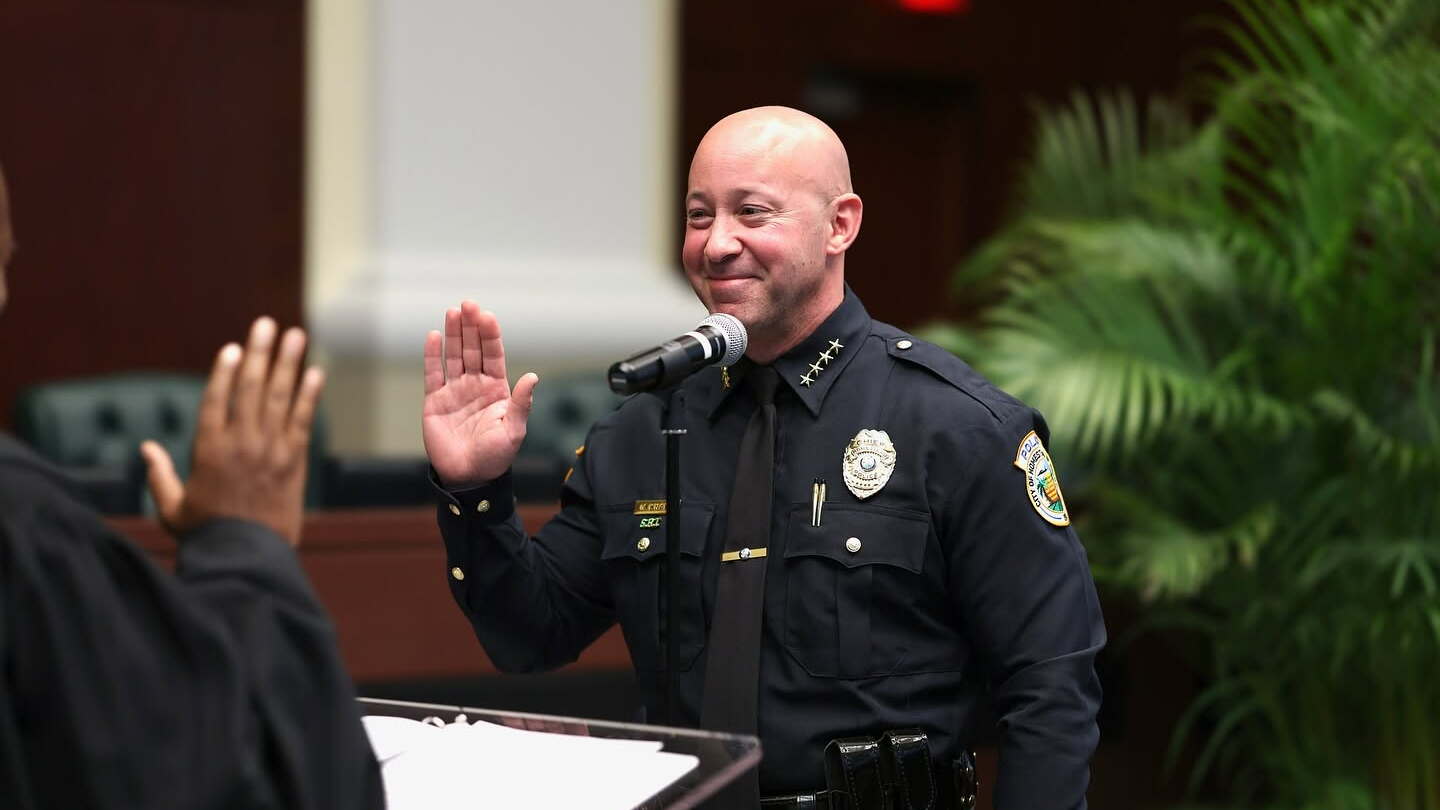
Chief Mario Knapp serves as Chief of Police for the City of Homestead Police Department in Florida. He is a 27-year veteran of the Miami-Dade Police Department, where he retired at the rank of Major. His last official assignment was to MDPD’s Special Patrol Bureau, overseeing the Tactical Operations Section, Special Events and Planning Section, and Police Operations Section. He previously served as Captain of the Warrants Bureau, the Kendall District, the Northside District, and the Miami-Dade Police Training Bureau, where he acted as the department’s use of force expert. Chief Knapp is a member of the Police Executive Research Forum (PERF) and holds a Bachelor of Science in Criminal Justice Management from the Union Institute and University.
The Homestead Police Department serves a rapidly growing community in South Florida with 190 sworn and civilian staff, providing law enforcement services to a population of roughly 85,000 residents while handling over 41,000 calls for service annually.
What was the moment that set you on the path to becoming a chief?
I don’t think there was one single incident or one single person. Over the course of nearly three decades in policing, I was fortunate to work in assignments that exposed me to leadership under pressure: violent crime suppression, SWAT, dignitary protection, large-scale event planning, training and executive management.
What ultimately pushed me toward becoming a chief was realizing that culture matters more than almost anything else in an organization. I saw firsthand how strong leadership can motivate people, create accountability and professionalism, and positively impact an entire community. I also saw how poor leadership can slowly erode morale and trust. That realization made me want to lead at the highest level possible.
Serving as the department’s use-of-force expert also shaped my leadership philosophy. I always felt responsible for implementing policies and training that balanced officer safety with the legal and liability implications facing the department. That role taught me the importance of thoughtful, principled leadership in high-risk environments.
What did you prioritize in your first 30 days, six months and first year as chief?
In the first 30 days, my focus was understanding the true condition of the organization. I wanted to identify deficiencies, evaluate personnel and structure, and establish immediate accountability. Very early on, I uncovered significant issues involving staffing shortages, evidence security concerns, technology that had not been deployed, and inconsistencies in supervision and operational structure.
By six months, the focus shifted toward modernization and stabilization. We restructured the department, filled vacancies through aggressive recruitment and implemented stronger oversight systems. We also expanded equipment deployment, strengthened media responsiveness, and began laying the groundwork for accreditation and long-term organizational improvement.
By the one-year mark, the goal moved toward committing to those changes so they would survive personalities and political cycles. I wanted to create systems built around transparency, accountability, professionalism and measurable performance.
View this post on Instagram
, strengthen culture and position the Homestead Police Department for long-term success.
How are you building a culture people want to join — and stay?
Culture starts with consistency. People want to work in organizations where standards are clear, leadership is visible, and employees feel valued and unapologetically protected when they do the right thing. I believe in accountability, but I also believe in recognizing good work, investing in training, modernizing operations and giving employees opportunities to grow.
We’ve focused heavily on improving not just the structure of the organization, but making a conscious effort to create an environment where chances for career growth are visible and available. We’ve also tried to create an environment where officers understand that professionalism and proactive policing are not mutually exclusive. Officers want leadership that supports them, develops them and holds everyone to the same standard regardless of rank.

Nolan Regan
How do you approach major decisions as chief?
I try to make decisions based on operational need, data and long-term sustainability rather than emotion or trends. Even on subjects that I feel confident in, I always try to gather input from the people closest to the issue, evaluate risks and unintended consequences, and ask whether the decision improves officer safety, efficiency and public trust. I also believe strongly in deliberate implementation. Before making major decisions, I prefer to test systems, compare options, involve end users, and ensure the department can sustain the change operationally and financially over time.
How do you demonstrate values-based leadership in your daily actions?
I believe in principle-based leadership. I often ask three questions before making decisions: Is it fair? Is it respectful? And does it improve public trust? Those principles help guide everything from policy decisions to disciplinary issues and daily interactions with personnel.
Officers pay attention to consistency, and credibility is built when leadership applies standards fairly, communicates honestly and supports employees while still maintaining accountability. I also believe leadership means protecting your people from unnecessary politics while still holding them accountable to the law and policy. Officers need to know that leadership will stand beside them when they act appropriately, but also that integrity and professionalism are non-negotiable.
What is a leadership book, podcast or seminar you’ve found invaluable?
The Police Executive Research Forum’s (PERF) Senior Management Institute for Police (SMIP) was one of the most impactful leadership experiences of my career because it challenges leaders to think critically about ethics, organizational behavior and decision-making.
How do you stay organized and manage your schedule?
I prioritize operational issues first, block time intentionally, and try to stay disciplined about separating urgent matters from important long-term objectives.
If budget were no issue, what is one investment you would make today?
I would build a fully integrated Real-Time Crime Center to improve daily situational awareness, interagency coordination and emergency response capabilities.
What is one way leaders can show they care about their people?
Be present during difficult moments and consistently show your personnel that they matter beyond the position they hold.
At the end of the day, how do you recharge?
I recharge by spending time with family, working out and cigars.
THE LEADERSHIP BEAT
“}]]

