


A Japanese sword took LT George Cairns’ arm on a Burmese hilltop. He seized that same blade, kept fighting, and earned a place among Britain’s most savage Victoria Cross legends.
Thank you for reading this post, don't forget to follow and signup for notifications!
Mankind has been consumed with war since our very beginnings. Ever since Cain knocked his brother Abel’s brains out with a rock, we have been a species of scrappers. We venerate warriors and celebrate their wars. Along the way, we have somehow lost touch with just how ghastly real war actually is.
Everybody dies. That’s obviously a given. However, that war takes young people in their prime is what makes it so utterly repugnant. Were that not so, I’m sure we would be doing even more of it.

The development of weapons brought us such stuff as GPS, microwave ovens, and the Internet. Jet engines, digital cameras, synthetic materials, and EpiPens all had their origins in military technologies as well. However, at the end of the day, whether it is a HIMARS rocket, a ship-mounted laser, or a 16th-century Scottish Claymore broadsword, the ultimate objective is still simply to tear the very life out of our enemies. No matter how much seems to change, the unfortunate end goal nonetheless remains the same.
Modern battlefields are truly horrible things. JDAM smart bombs, shaped charges, thermobaric weapons, and depleted uranium projectiles all conspire to make a proper mess of human flesh. However, war in eras past was hardly all unicorns and butterflies. Hacking some poor schmuck limb from limb was also fairly untidy. It turns out that this propensity toward vivisection extends up into the last century as well.
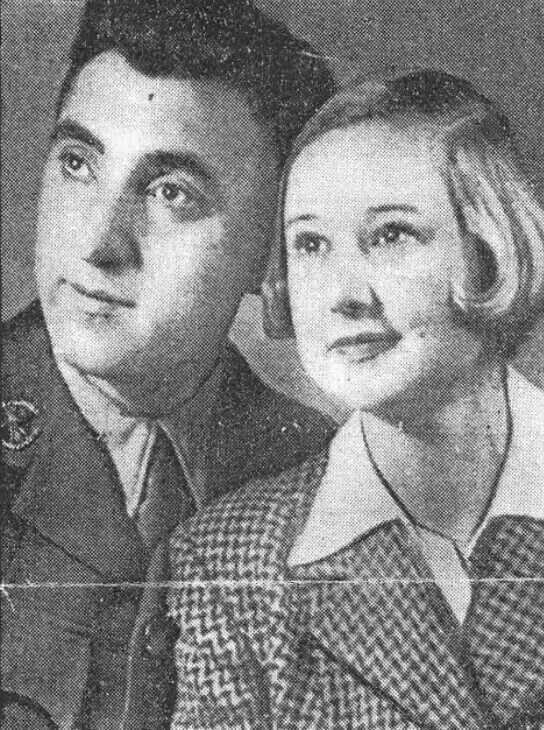
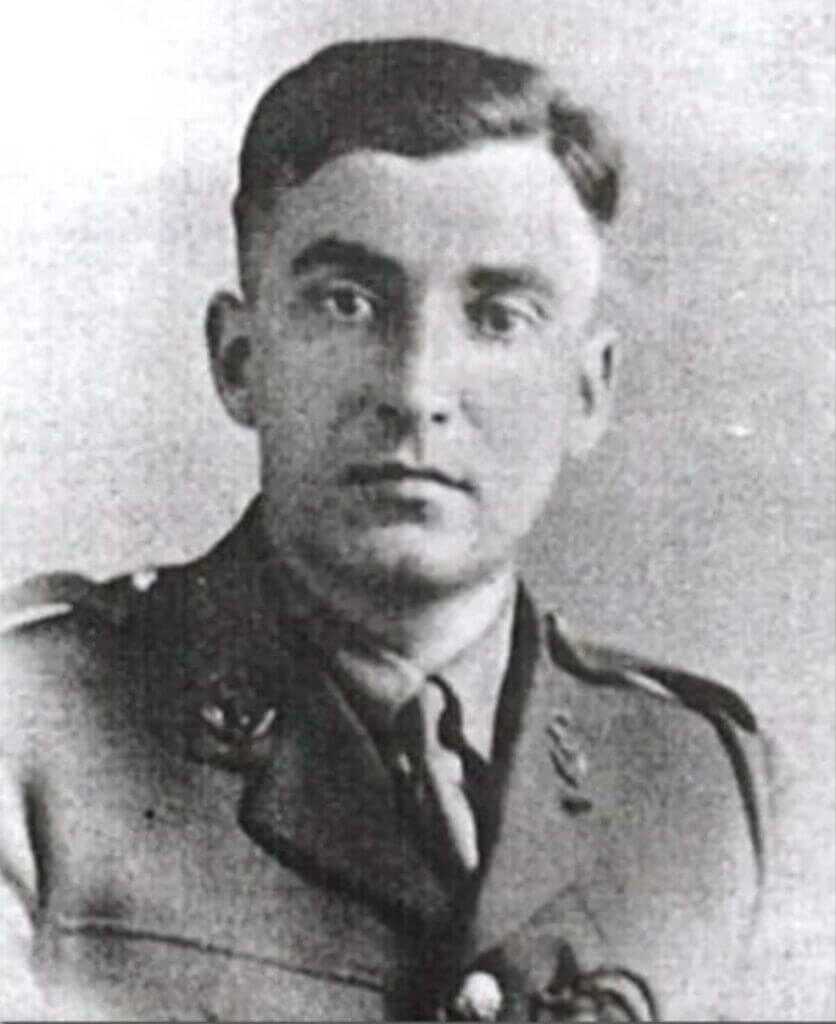
George Albert Cairns was born in December 1913 in London. He attended the Sir Henry Compton School in Fulham from 1923 through 1930. He subsequently took a job in a bank in Kent, where he met his future wife, Ena. The two were married in 1940. The following year, George answered his nation’s call and went off to war.
Cairns was a dedicated natural leader. He earned a commission and was appointed to the Somerset Light Infantry (Prince Albert’s). He was subsequently attached to the South Staffordshire Regiment and deployed to Burma. The South Staffordshire was a Chindit battalion subordinate to the 77th Indian Infantry Brigade commanded by the legendary Brigadier Michael Calvert.
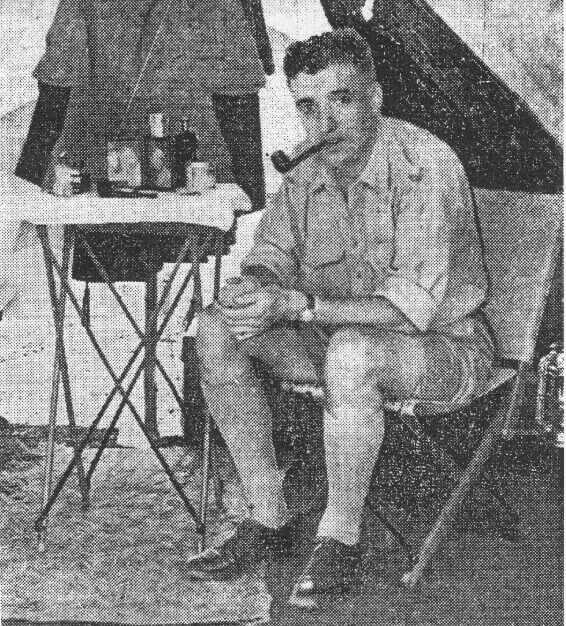
By March of 1944, Cairns was 30 years old. That seems pretty young to me. However, in soldier years, he was veritably ancient.
Soldiering is a young man’s game. I look back with fondness on my time in uniform. However, I do recall being tired and sore a lot. Deprivation, hunger, and misery are integral parts of the life of any proper combat soldier in the field. Cairns and his mates found that in abundance in the fetid jungles of Burma.
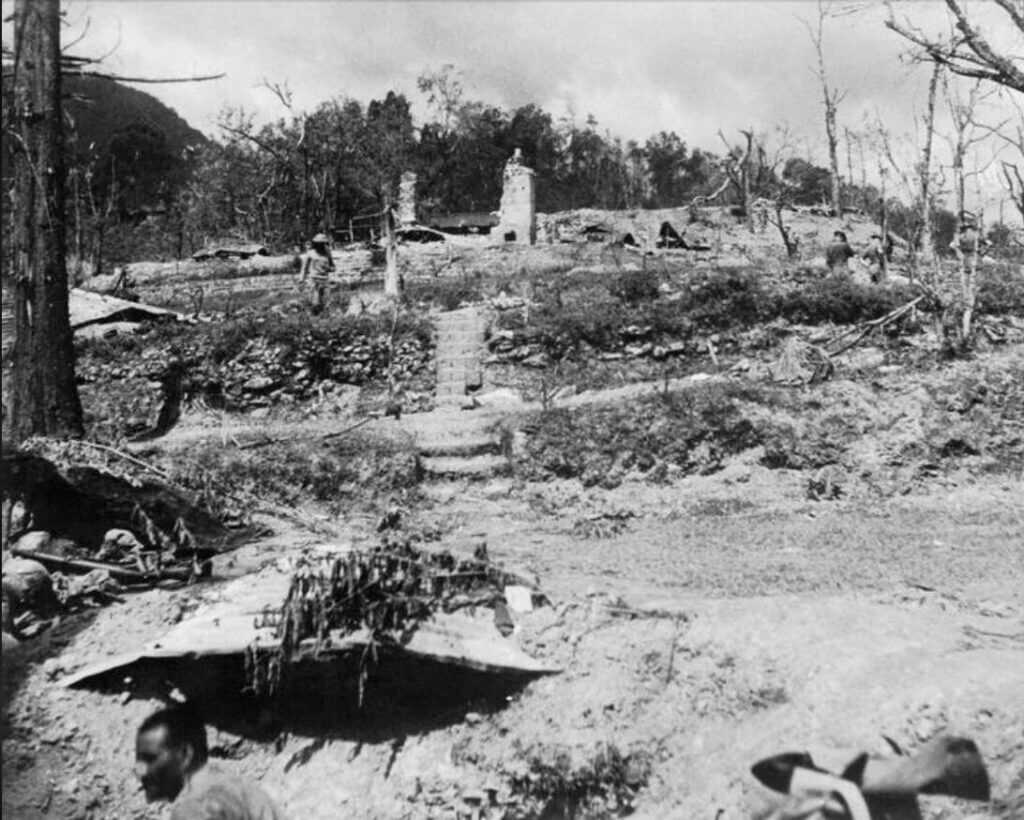
On 16 March 1944, Cairns and the South Staffords dug in near a place called the White City. The Japanese were rabid to stop the British advance. The Brits, for their part, were disinclined to comply. The end result was a most ferocious fight.
Near the South Staffords’ fighting positions was a pagoda on a prominent hilltop. As near as anyone could tell, neither force had bothered to take that place just yet. Both sides had actually dug formidable fighting positions within earshot of the other, apparently without either unit being the wiser. That all changed when an unsuspecting Japanese patrol wandered across the abandoned pagoda in search of something or other. At around 11 am, everything came unglued.
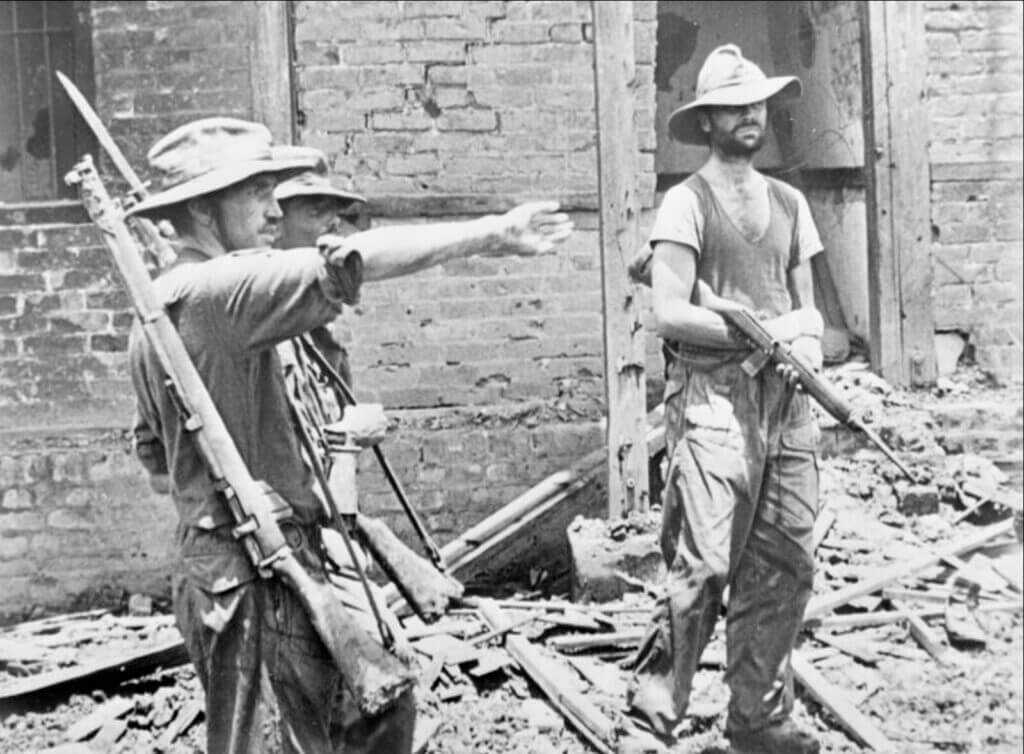
Brigadier Calvert led the attack himself. He later wrote, “On the top of Pagoda Hill, not much bigger than two tennis courts, an amazing scene developed. The small white Pagoda was in the centre of the hill. Between that and the slopes which came up was a mêlée of South Staffords and Japanese bayonetting, fighting with each other, with some Japanese just throwing grenades from the flanks…There, at the top of the hill, about fifty yards square, an extraordinary mêlée took place, everyone shooting, bayoneting, kicking at everyone else, rather like an officers’ guest night.”
Amidst all of that mayhem, LT Cairns strived mightily to hold the defensive line intact. While coordinating this vigorous defense, Cairns looked up just in time to spot a Japanese officer charging toward him at a dead run, waving a sword. There was no time to react properly. In the face of imminent death, Albert Cairns did what any normal person might do–he reflexively raised his left arm. The maniacal Japanese officer slashed with his weapon and all but took LT Cairns’ left arm off.
At this point, LT Cairns had a decision to make. If some screaming nutjob hacked my arm off with a big honking sword, I’m fairly certain I would just take my toys and go home. Not so, LT Cairns. Cairns shot and killed the Japanese officer who had taken his arm before snatching up the dead soldier’s blade and going to town on the rest of his maniacal buddies.
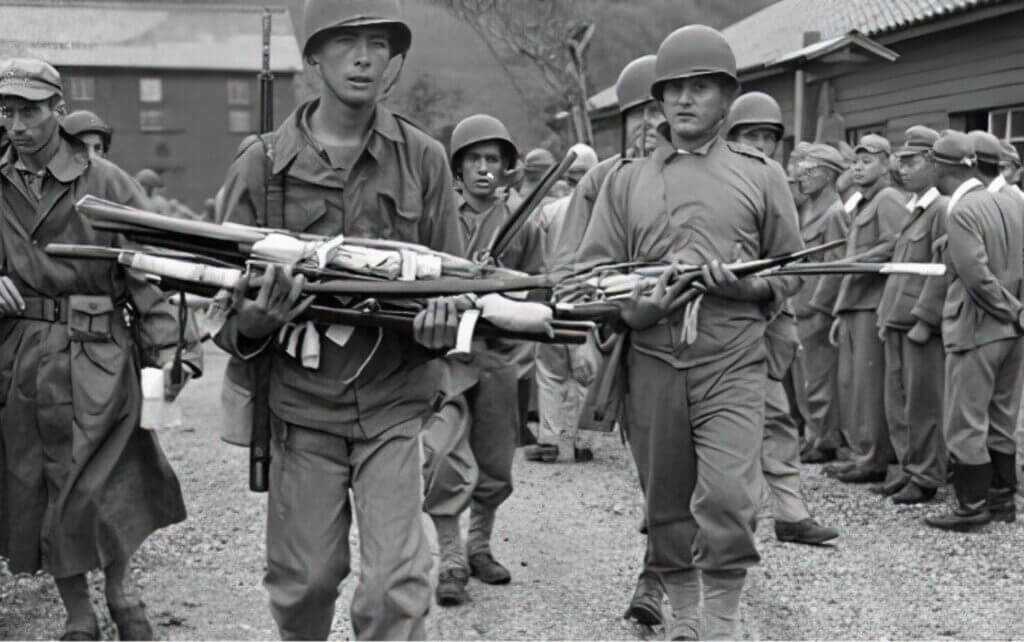
LT Norman Durant was a machine gun platoon leader assigned to the same unit. His vantage with his support weapons afforded him a fairly decent view of the battlefield. This is what he had to say about LT Cairns: “The first thing I saw on reaching the path was a horrible hand-to-hand struggle going on further up the hill. George Cairns and a Jap were struggling and choking on the ground, and as I picked up a Jap rifle and climbed up towards them, I saw George break free and, picking up a rifle bayonet, stab the Jap again and again like a madman. It was only when I got near that I saw he himself had already been bayoneted twice through the side and that his left arm was hanging on by a few strips of muscle. How he had found the strength to fight was a miracle, but the effort had been too much and he died the next morning.”
So, this brass-balled young British infantry officer had been ventilated twice with bayonets before having his left arm quite literally chopped off. Despite these extraordinary wounds, Cairns unleashed his inner monster on the attacking Japanese. Using the dead Japanese officer’s sword, this one-armed lunatic launched himself into the remaining Japanese troops like a Dervish. When the dust settled, survivors counted 42 Japanese dead in and around the hilltop that housed the pagoda. Nobody knew who got whom. However, Cairns did most of his serious killing with the same sword that had been used to, moments before, lop off his own left arm.
Once the dust settled, LT Cairns understandably ran out of gas. His words were, “’Have we won sir? Was it all right? Did we do our stuff? Don’t worry about me.” The following day, this remarkable young man died.
Stripping a sword from an adversary and then using it to obliterate an attacking unit after having your own arm chopped off seemed like Victoria Cross material, no matter how you sliced it. The VC is Great Britain’s highest award for gallantry in action. It is the Limey equivalent of our Medal of Honor.
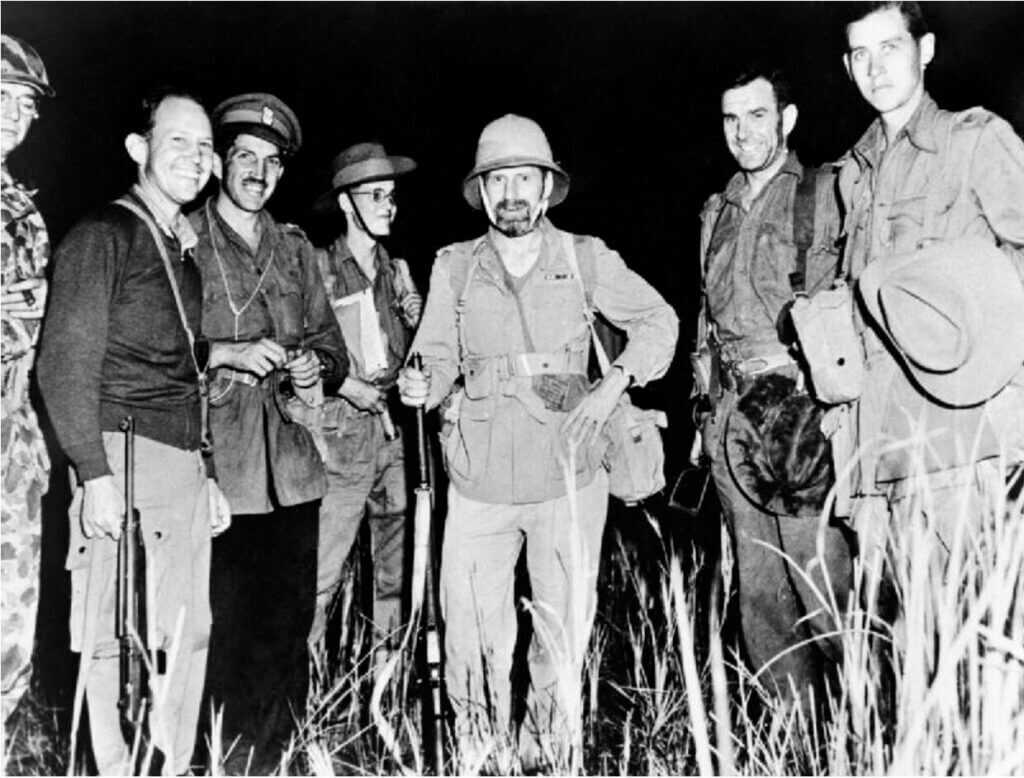
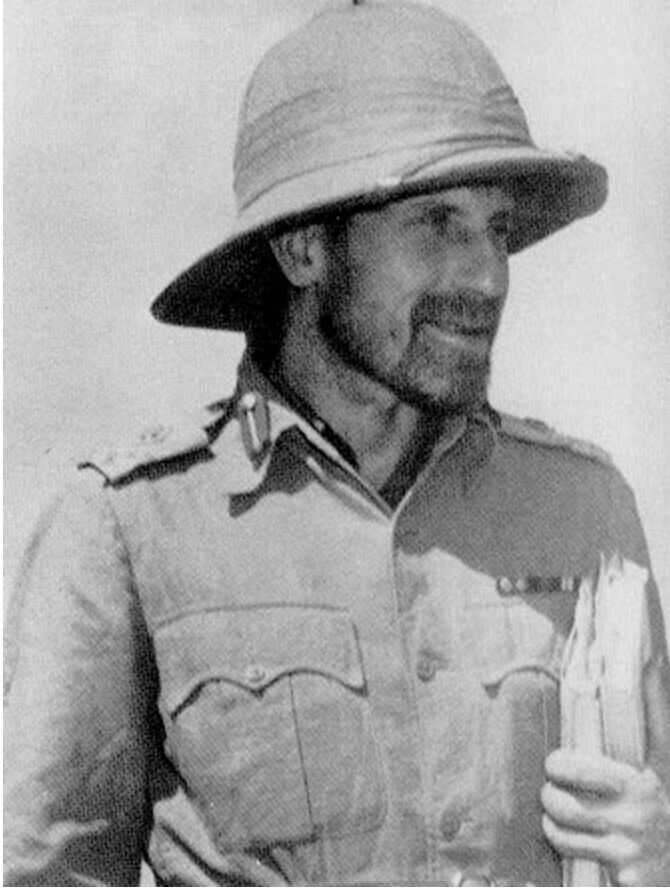
One of Cairns’ officers duly put in the work, and the award recommendation made its way up to General Orde Wingate, the commanding general of the Chindits. Wingate was a weird duck. A committed Christian Zionist, Wingate cut his teeth fighting the Arabs in British-occupied Palestine. He once attempted suicide by stabbing himself in the neck while under the depressing effects of atabrine for his malaria.
By the time he commanded the Chindits, Wingate was habitually munching on raw onions to help ward off disease and made a habit of greeting visitors in the nude. On 24 March 1944, Wingate climbed aboard an American B25 Mitchell bomber along with two British war correspondents. The pilot objected that the airplane was grossly overloaded, but Wingate insisted. The plane subsequently crashed into the jungle in India, killing all aboard. LT Cairns’ VC recommendation was on Wingate’s person at the time.
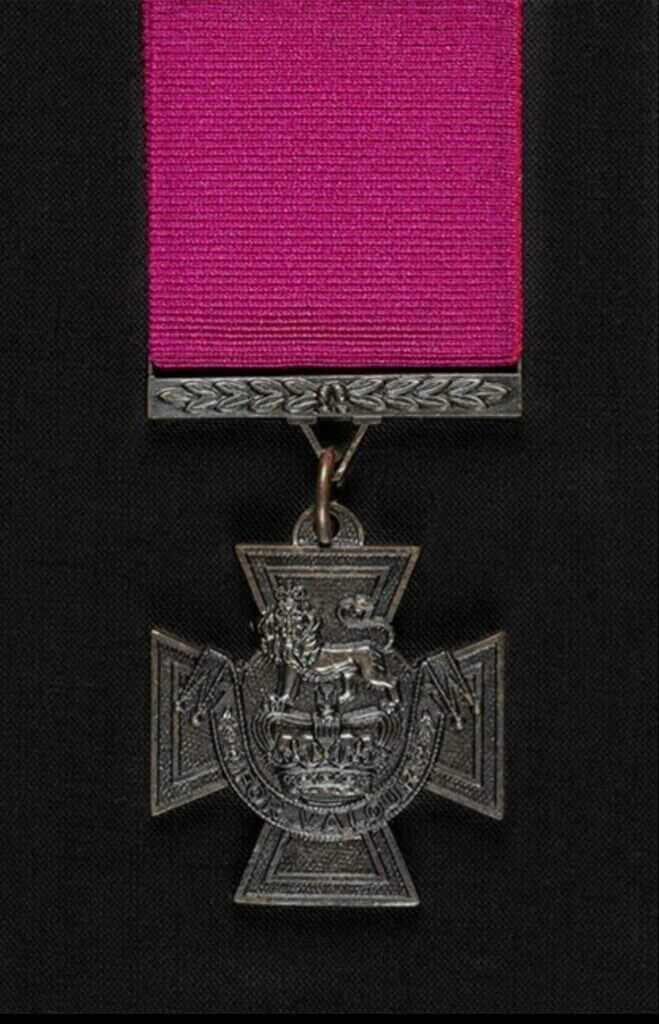
A 1949 article in The Times revived the process. By then, two of the three required witnesses had been killed in action. Eventually, thanks to the tireless efforts of his widow Ena Cairns, George’s Victoria Cross was approved. This is the citation:
“On 12 March 1944, columns from the South Staffordshire Regiment and 3/6 Gurkha Rifles established a road and rail block across the Japanese lines of communication at Henu Block.
The Japanese counter-attacked this position heavily in the early morning of 13 March 1944, and the South Staffordshire Regiment was ordered to attack a hill-top which formed the basis of the Japanese attack.
During this action, in which Lieutenant CAIRNS took a foremost part, he was attacked by a Japanese officer, who, with his sword, hacked off Lieutenant CAIRNS’s left arm. Lieutenant CAIRNS killed this Officer; picked up the sword and continued to lead his men in the attack, and, slashing left and right with the captured sword, killed and wounded several Japanese before he himself fell to the ground.
Lieutenant CAIRNS subsequently died from his wounds. His action so inspired all his comrades that, later, the Japanese were completely routed, a very rare occurrence at that time.”
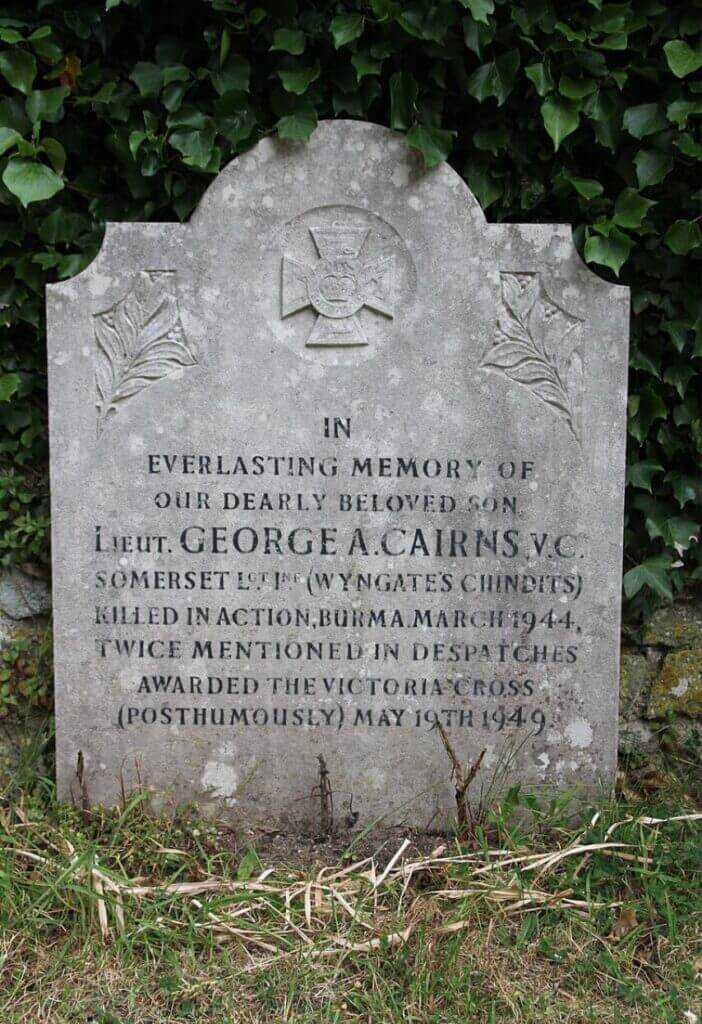
We have explored a great many remarkable tales of daring and elan in this space in the past. I can’t recall ever writing about some lunatic guy who kept on fighting with the sword his attacker had only recently used to relieve him of his arm. LT George Cairns was indeed a hero of the highest order.

