

By Mark Mitchell
Thank you for reading this post, don't forget to follow and signup for notifications!
Successful gang and organized crime investigations often begin with patrol officers who recognize how routine crimes connect to larger criminal networks. Thorough documentation, intelligence gathering and strong preliminary investigations can help turn everyday calls into major criminal cases.
The connection between everyday crime and organized crime
Patrol officers respond to a wide range of calls, from burglaries and robberies to narcotics complaints, vehicle thefts and catalytic converter thefts. While these incidents may appear unrelated, they are often connected to broader criminal enterprises.
A stolen catalytic converter, for example, is rarely kept by the individual who stole it. Instead, it is typically moved through a network where it is collected, graded, broken down and sold. Many of these operations meet the legal definition of organized crime in jurisdictions across the country.
| RELATED: What every young cop gets wrong about gangs
In many states, organized crime statutes require only two or three people acting together for a common criminal purpose. This does not necessarily involve traditional street gangs such as the Bloods, Crips or Latin Kings, which are identified by symbols, colors, hand signs or a common name. Organized crime can also involve loosely connected groups of three to 15 individuals who profit from criminal activity, including airbag theft rings, fraud schemes and other organized offenses.
Understanding this connection is critical. Many of the crimes patrol officers encounter are not isolated events. They are often part of a larger criminal ecosystem.
Why the initial investigation matters
The foundation of every successful investigation is the patrol officer’s initial response. Detectives often depend on the quality of that groundwork to move a case forward.
A bare-bones burglary report leaves detectives with few leads to follow. When officers fail to canvass for surveillance footage, document stolen credit card numbers or record serial numbers, investigations can stall before they truly begin.
Strong initial investigations should include:
- Thorough canvassing for surveillance cameras and documenting their locations
- Recording credit card numbers from stolen wallets, which may help investigators identify where the cards were later used
- Preserving evidence early by determining how long video systems retain footage and arranging for retrieval before recordings are overwritten
These steps provide detectives with actionable information and can transform a routine report into the starting point of a much larger investigation.
Building stronger partnerships between patrol and investigators
Investigators also play an important role in improving case outcomes. Rather than criticizing incomplete reports, they should actively mentor patrol officers and help them understand what information is most valuable during the initial investigation.
New officers, in particular, may not know which details can become critical later. Investigators can provide guidance on report writing, evidence collection and investigative techniques. Explaining the importance of quickly securing surveillance footage before it is deleted, for example, can help officers understand why certain steps matter.
This partnership benefits everyone involved. Patrol officers produce stronger reports, investigators receive better cases and prosecutors are better positioned to secure convictions.
Supporting gang investigations through intelligence gathering
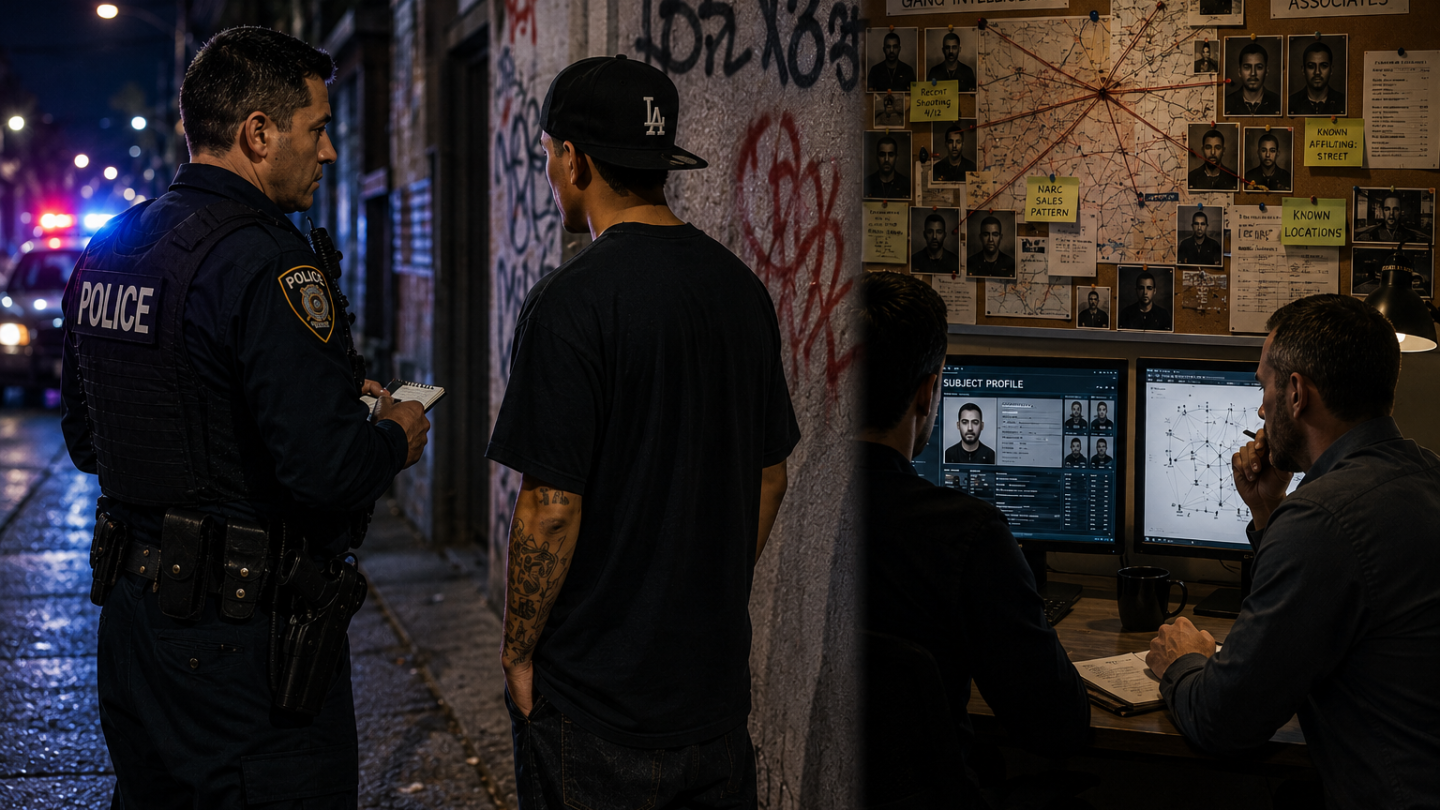
Patrol officers serve as the eyes and ears of the community, making them an essential source of intelligence for gang investigators. While specialized gang units conduct targeted investigations, much of the information they rely on originates from patrol contacts.
Patrol officers can support gang investigations by consistently documenting gang affiliations and gang-related activity during lawful encounters.
Every contact with a suspected gang member should be documented when appropriate. The value is not necessarily immediate officer safety, as affiliations may not be known at the outset of an encounter. Instead, the documentation creates a long-term intelligence record that investigators can use in future cases.
Over time, these records help establish timelines and demonstrate an individual’s involvement in a gang. In state and federal prosecutions, investigators may need to show that a suspect was affiliated with a gang during a specific period. Documentation from patrol officers can help establish those connections years later.
In gang investigations, crimes such as shootings and robberies are often described as being committed “in furtherance of the organization” because they strengthen the gang’s reputation and influence through violence and intimidation. While social media evidence can help establish these relationships, patrol documentation often provides some of the most reliable evidence available.
The long-term value of patrol work
Patrol officers may never see the final outcome of many investigations they help initiate. A burglary report completed today could become an important piece of a larger case years later.
A seemingly minor offense may eventually be connected to a state or federal organized crime investigation. When patrol officers thoroughly document evidence, witness statements and gang affiliations, investigators can revisit those reports and incorporate them into broader cases.
Conversely, sparse reports can result in missed opportunities. Critical information may be lost, making it more difficult to establish patterns, identify suspects or connect crimes to larger criminal organizations.
There are many examples of crimes that initially appeared insignificant but later became important pieces of gang or organized crime prosecutions. Patrol officers who take the time to conduct complete investigations help ensure those opportunities are not lost.
Conclusion
Patrol officers do far more than answer calls for service. Their observations, documentation and investigative work often provide the foundation for the cases that ultimately dismantle gangs, disrupt criminal organizations and bring offenders to justice.
By recognizing the connection between everyday crimes and larger criminal enterprises, conducting thorough investigations and working closely with investigators, patrol officers play a critical role in long-term enforcement efforts. The results may not be immediate, but a well-written report completed today could become the key piece of evidence that helps solve a major case years down the road.
60-second roll call discussion
1
What’s one piece of information you’ll make sure to document on your next property crime or suspicious-person call?
2
What investigative opportunities are patrol officers most likely to miss during an initial response?
3
Think about your last burglary, theft or gang-related contact. How could better documentation have helped investigators later?
About the author
Mark Mitchell is a 17-year law enforcement veteran currently assigned to the Patrol Division of the Hollywood (Florida) Police Department. Throughout his career, he has been assigned to various units including Drug Task Force, Interdiction, Street Crimes, Field Training, Vice, Intelligence and Narcotics. His last assignment was as a Task Force Officer on the FBI’s Safe Streets Task Force.
Ofc. Mitchell has been investigating complex cases involving gang activity for 15 years. His investigative experience involves conducting investigations as both an investigator and Undercover Officer for Gangs, Narcotics, Homicide, Domestic Terrorism, Public Corruption, Counter-Intelligence, Organized Crime, Cyber-Crimes, Internet Crimes Against Children, Art Fraud, Violent Crime and White Collar Crime cases. He was awarded Florida Gang Investigator of the Year by the Florida Gang Investigators Association and Task Force Officer of the Year by the FBI.
He has provided instruction on gangs to the Federal Bureau of Investigation, local Public Safety Academies, and for the Florida, South Carolina and North Carolina Gang Investigator Associations. He has also testified as a gang expert in the 17th Judicial Circuit of the State of Florida. Contact him at mmitch3505@gmail.com.

