

THE ART OF LIGHTING A MATCH
Thank you for reading this post, don't forget to follow and signup for notifications!
First of an occasional series on FIRE
Christopher Nyerges
[Nyerges is the author of “How to Make a Fire without Matches,” and founder of School of Self-Reliance. More information at www.SchoolofSelf-Reliance.com]
Like so many things that people used to do without even thinking about it, striking a book match is becoming something that seems to belong to the quaint past.
During a fire-making class attended by mostly children, my assistant, James Ruther, suggested that rather than jumping into the primitive methods of starting a fire, we should teach the children how to strike a match. It seemed all too simple, I thought.
We began by giving the young students a match book, and asking them to light a match. Most managed to tear a match out of the book, but not one managed to strike the match head across the striking surface in such a way to actually get a flame! Needless to say, I was a bit surprised. But before you argue that these were just young students, there were a few adults present who also had trouble striking a book match!
Begin by carefully pulling out a match, then closing the book, and then holding the match between your fingers. Though there are a few ways you can hold the match between the fingers, the most common is between the thumb and index finger. Assuming the person is right-handed, firmly hold the book in the left hand, and evenly strike the match across the surface.
It’s not difficult, as long as the matches, or striking surface, are not old.

STICK MATCHES
Stick matches are a notch above book matches. Carry them in a waterproof container. Even better, buy the stick matches with the longer heads.
Stick matches are several notches above book matches. They are more substantial, they don’t fall apart with a little moisture, and there’s a bit more to burn. You should choose these over book matches, and carry them in secure water-proof containers.
Camping stores sell stick matches with the longer heads. These are definitely worth the 50 cents to a dollar more you might pay over regular matches. These bigger-headed matches will burn many seconds longer, and will help to assure that you get a fire even in windy or moist conditions.

SHOULD YOU DIP MATCHES IN WAX?
Many articles in backpacking, survival, and hunting magazines have suggested that you can dip your matches in wax to help waterproof and protect them.
In one true story published years ago in the American Hunter, a man described how he prepared for a hunting trip. He carefully dipped a hundred or so stick matches into wax, let them dry, and then proudly carried them with him into the woods. When he went to light one of these matches, he reported the disappointment he felt when the first match fizzled but did not light. The second match also fizzled but did not light. The third match fizzled, and so did the entire rest of the box.
The writer pointed out that he did not test his matches before going into the field. Because there are many wax products available, such as beeswax, and various waxes at craft shops, and paraffin (an artificial product), he wasn’t making any recommendations, per se, except to encourage hikers and campers to test first before they set out. In this man’s case, though he had no backup, his fellow hunters fortunately had other methods for fire-starting, so they were able to make a camp fire for warmth and cooking.

BUTANE
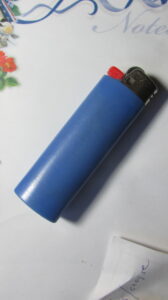
Carry a butane lighter. In fact, carry as many as you can. Each one is good for a few hundred lights, and they’re pretty reliable, unless you step on one.
Arizona wilderness instructor Al Cornell suggests that you only buy the butane lighters that you can see through, so you know how much fuel you have left.
Yes, they run out of fuel eventually, but even then they are not useless.
We once found an old discarded Bic lighter with no fuel left during the beginning of one of our survival skills outings. We kept it to demonstrate how you could still get a fire with the use of the sparking wheel. We placed ideal tinder in front of the spark, and we were able to ignite it and get a flame. We experimented with real cotton balls, shredded cedar bark, shredded elder bark, and mugwort, and got flames.
ATOMIC LIGHTER
Besides the standards, you can also buy an “atomic lighter”, which appears to be an ordinary refillable butane lighter, but it’s not. Rather than refill with any fuel, you plug it into a USB port, and charge a battery. Then, when you light it, two ports produce an electric flame good enough to light your cigar or tinder. It’s very high tech, and you need an electrical outlet to recharge it occasionally. If you’re very ingenious, you get a little solar panel and recharge this lighter with the sun!
BE PREPARED
Al Cornell suggests that you should always have at least three ways to carry fire. Carry at least two butane lighters – one should be kept in your pocket in cold environments, so it stays close to your body. Butane lighters can sometimes fail in very cold weather. He also suggests that you carry a ferocerrium rod. Also carry some cotton balls, soaked in Vaseline, stored in a film container.

