

[[{“value”:”
Thank you for reading this post, don't forget to follow and signup for notifications!

Designate The Lodge at AmmoToGo.com as your preferred source on Google News
In this article, we analyze recoil data for the most popular and widely used rifle cartridges. Using information from various sources, this article helps you understand the overall recoil from common hunting and target-shooting rounds. We hope this will be a useful resource when you select a rifle and cartridge for various shooting sports.
Recoil is an important consideration when selecting a cartridge. Whether you are choosing a new rifle or trying to pick a firearm from your gun safe, understanding “kick” is critical. As shooters and hunters, we should understand which rounds buck more than others, which deliver balanced performance, and which are best for recoil-sensitive shooters.
With this basic knowledge, we can be more strategic when we choose cartridges for hunting, varmint control, target shooting, competition, and all of our shooting activities.
Firearms 101: Recoil vs Felt Recoil
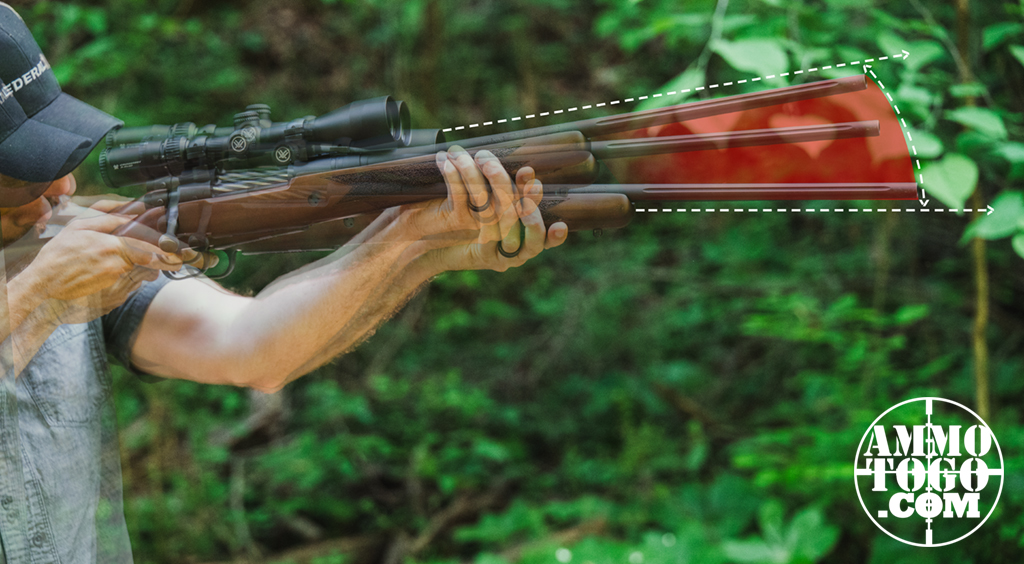
There is a difference between the actual recoil and the recoil you experience as a shooter. Recoil, often called actual recoil, is the science-based backward force of a rifle. It takes into account measurable factors and stays consistent across all rifles, handguns, and shotguns.
Felt recoil, which can also be called perceived recoil, is how strong a recoil feels to the shooter. It can be impacted by personal perception, the fit of the gun, technique, and many other personal factors.
This distinction matters because the same rifle-cartridge combination may feel stronger to one shooter and less so to another.
Factors That Impact Rifle Recoil
Before diving into our rifle recoil chart, let’s examine the factors that create (and reduce) recoil.
Velocity
Of all the factors that impact recoil, two are most important. The first is velocity, specifically muzzle velocity. The faster the bullet, the more recoil you will experience.
Bullet Weight
The other main factor is bullet weight. As bullets get heavier (assuming speed stays the same), the recoil will increase. However, a high bullet weight may reduce muzzle velocity, thereby reducing felt recoil. There’s a complex relationship between the two, but just remember that high speed and heavy weight is a recipe for stiff recoil.
Rifle Weight
Heavy rifles absorb recoil. Granted, heavy rifles usually load larger cartridges, but if you have two of the exact same rounds fired from an 8-pound rifle and a 12-pound rifle, the felt recoil will be softer from the heavier firearm.
Rifle Type
The rifle type can impact felt recoil as well. It’s generally believed that semi-automatic rifles, which use some of the recoil energy to chamber the next round, have less felt recoil than similar lever-actions and bolt actions. So if you want to reduce recoil, a good strategy would be to find a heavy semiautomatic rifle.
Rifle Recoil Chart
For this recoil chart, we used a variety of data from various locations, all trusted sources for firearms and ballistic information. To keep things simple, practical, and useful, we focused simply on recoil energy and recoil velocity. While real-world testing will vary depending on the rifle weight, muzzle velocity, and grain weight, this chart creates a useful overview of cartridge recoil.
| Cartridge (grain weight) | Recoil Energy (ft-lbs) | Recoil Velocity (fps) |
|---|---|---|
| .17 HMR (17) | 0.2 | 1.5 |
| .22 Long Rifle (40) | 0.2 | 1 |
| .22 WMR (40) | 0.4 | 1.5 |
| .223 Remington (55) | 3.2 | 5.1 |
| .243 Winchester (95) | 11 | 9.9 |
| 6.5 Grendel (123) | 7.9 | 8.0 |
| .270 Winchester (140) | 17.1 | 11.7 |
| 7mm Rem Mag (150) | 19.2 | 12.1 |
| .300 AAC BLK (135) | 7.0 | – |
| .300 Win Mag (180) | 25.9 | 14.0 |
| .30-06 Springfield (150) | 17.6 | 11.9 |
| .30-30 Winchester (150) | 10.6 | 9.5 |
| .308 Winchester (150) | 15.8 | 11.7 |
| .338 Lapua Mag (225) | 37.2 | 15.9 |
| .444 Marlin (265) | 27.6 | 15.4 |
| .45-70 Government (350) | 37.9 | 18.7 |
| .50 BMG (647) | 70 | 12.3 |
Analysis of the Rifle Recoil Chart
Obviously, our recoil chart does not cover every single rifle cartridge on the market, but it does cover just about every popular round among the American gun-owning public.
Reviewing the data, we can see a few trends worth discussing…
First, as a general rule, the wider the bullet diameter, the more kick you’ll experience. This is not exclusive, as recoil depends on bullet weight (not diameter) but wider bullets are, generally speaking, heavier. Therefore, a typical .30-06, for instance, will have more kick than a typical .270 Winchester. Again, it’s a general trend, not a perfect rule.
Another interesting trend, one that’s unsurprising but worth discussing, is that anything titled “magnum” will deliver a kick. Apparently it’s not just marketing hype, as magnum cartridges deliver more power and more recoil. The 7mm Remington Magnum with the same bullet weight, for example, has more recoil than the .30-06, .30-30, and .308 Winchester. The .338 Lapua Magnum is a standout cartridge with over 35 ft-lbs of recoil energy, matching the wider, heavier .45-70 Government. Don’t underestimate a magnum.
Best for the “Buck?”
We think of “value” as essentially getting a quality service or product for a reasonable price. It’s not the cheapest, but it delivers the most for your money; the most when you pay the least.
How about recoil value? Not necessarily the lightest cartridge, but a round that delivers the best performance for the lowest kick?
Two cartridges come to mind; both are considered small, especially for deer hunting. First is a .243 Winchester, which has a typical recoil around 11 pounds, yet maintains over 1,000 ft-lbs of ballistic energy at 300 yards. Another is the .65 Grendel, which hovers around 8 ft-lbs of recoil energy but stays above 1,000 ft-lbs to roughly 250 yards. These are both excellent options for light-recoil deer hunting.
You may notice the .300 AAC Blackout. Sandwiched in our recoil chart between the 7mm Rem Mag and the .300 Win Mag, it has a recoil energy significantly lower than either of these rounds. However, it’s downrange energy, as suggested by the recoil stat, is low, at least compared to the magnum rounds. High downrange power was not the intention of the .300 BLK, but if you want a capable deer-hunting round with manageable recoil, it seems to be a useful option.
How to Reduce Rifle Recoil (Without Using a Smaller Cartridge)
Obviously, the easiest way to reduce recoil is to simply use a different rifle. But what if you only have one firearm, and you don’t feel like spending the money on a new rifle? What if your .30-30 Winchester rifle (for example) is perfectly fine for your needs, and you simply want to lighten the kick for a youth shooter or beginner marksman?
There are ways.
Bullet/Ammo Selection
While lighter bullets can’t guarantee softer recoil, most agree that one way to reduce kick is to lighten the load. For instance, a 7mm Remington Magnum cartridge with a 120-grain bullet will have about 12.1 ft-lbs of recoil at a recoil speed of 10.2 fps. A 150-grain bullet will increase the kick to 13.9 ft-lbs and 10.9 fps.
If you want to use a high-powered cartridge but need to maintain moderate recoil, consider a heavier rifle. Granted, this may not be ideal for hunting, especially when you must lug the firearm over hills, forest trails, and mountainsides, but a heavier rifle will absorb some of the recoil and create easier shooting.
You can also find low-recoil products from some of the big-name manufacturers. Hornady’s Custom Lite, for example, has reduced recoil and muzzle blast, making shooting more convenient and comfortable. The 125-grain .30-06 Custom Lite, for example, has a muzzle energy of 2,023 while a typical .30-06 will approach 3,000 fps. Remington’s Managed Recoil line is another popular option, one that is also available in a variety of cartridges.
Accessories
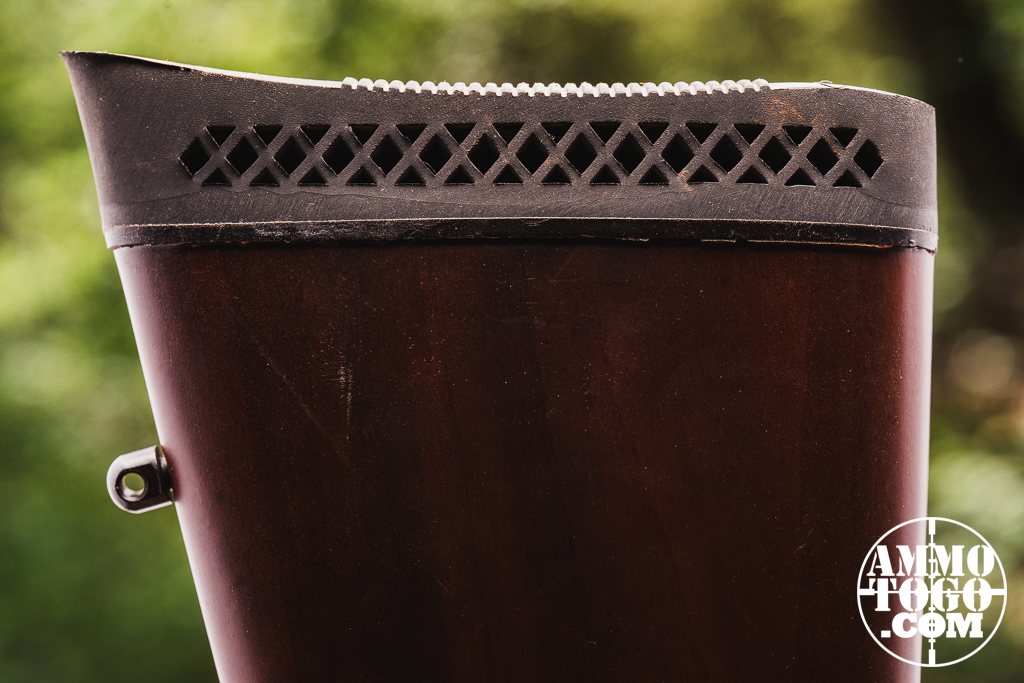
Shooters can also outfit their rifles with modern equipment that reduces felt recoil and softens the impact on their shoulders. Installing a high-quality recoil pad on the stock will make recoil easier to handle; it’s like having a soft pillow between the butt of the gun and your shoulder. You can also install a muzzle brake, which vents gas rearward, thereby pushing the rifle forward and counteracting some of the rear force.
Arguably the most important, you must work on your shooting technique. We won’t get into the details of proper stance and posture; just remember that a solid technique can help you maintain accurate, comfortable shooting even on the hardest-kicking rifle cartridges.
The Best Value on the Best Ammo
When you need quality rifle ammo at a fair price, we are your top choice. You’ll find the best ammo options from leading companies, including Federal, Winchester, Prvi Partizan, and more! Visit our site to find the right rounds for all of your shooting hobbies!
“}]]

