


Infitac’s Fast Mini FML19 brings a sharper 384×288 sensor and a 19mm F1.2 lens to the same tiny footprint. We ran it on pistol and as an offset rifle thermal to see where the extra clarity actually matters.
Thank you for reading this post, don't forget to follow and signup for notifications!
The Infitac Fast Mini FML19 is essentially the next step in the Fast Mini lineup, building directly off the original FMP13 that launched in mid-2025. At first glance, it looks and feels nearly identical, and in practice, it mostly is. The big changes come down to the sensor and lens. The FML19 upgrades to a 384×288 resolution sensor with a 19mm F1.2 objective lens and a lower NETD rating, all while keeping the same compact footprint, 60 Hz refresh rate, and 4-ounce weight.
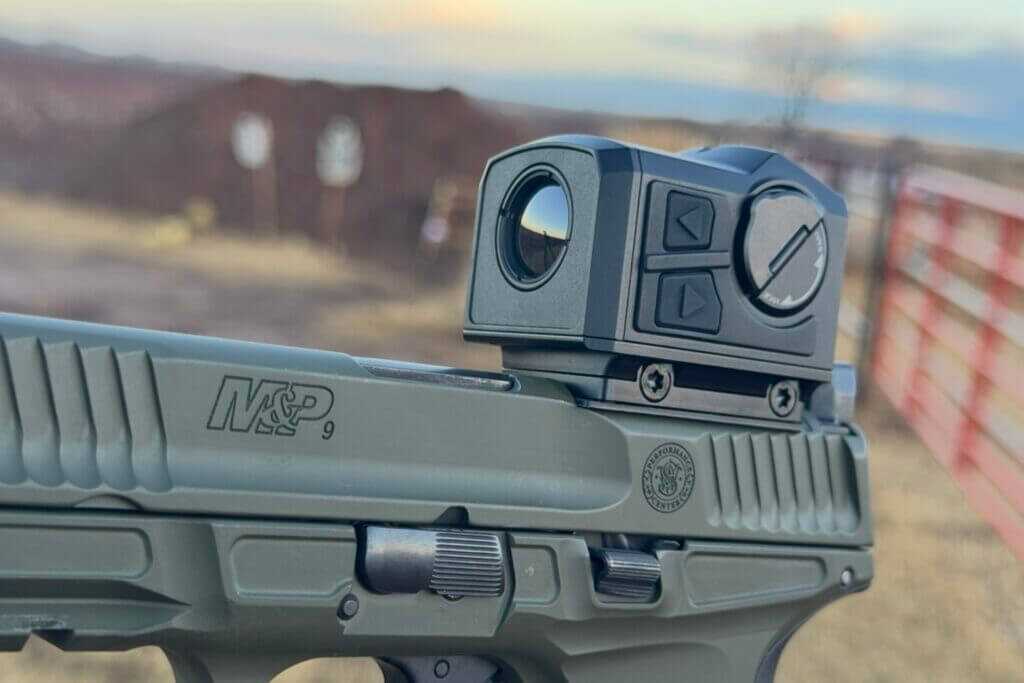
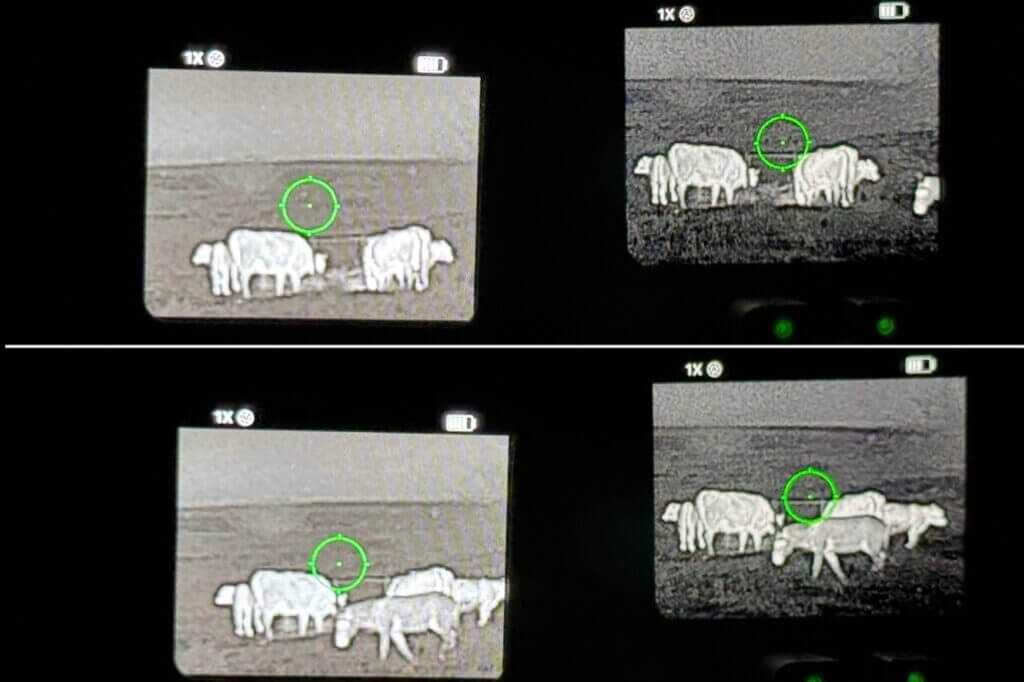
On paper, the numbers tell the story. Compared to the 256×192 FMP13, the FML19 works out to roughly 125% clearer in terms of raw pixel count. Side by side, that difference is absolutely visible. Targets appear cleaner, edges are sharper, and the identification range is slightly pushed out. Everything else (controls, mounting, battery, housing, and general performance) is effectively unchanged.
- Infitac FML19 First Look
- What You Get With the Infitac FML19
- Housing, Build, and Rating
- Battery Life You Can Trust for Night Work
- Touchscreen Controls and Reticles
- Daylight Brightness Limits and Nighttime Wins
- Thermal Performance and Range
- Shooting Performance: Pistol vs Offset
- Durability and Field Notes
- Price and Positioning
- Infitac FML19 Specifications
- Pros and Cons
- Related Reads from GunsAmerica Digest
Inside the box, the FML19 comes well-equipped. You get the thermal pistol sight itself, an RMR pistol adapter, mounting screws and tool, two heated thermal zeroing targets, two rechargeable CR2 batteries with a charger, a USB-C cable, lens cloth, stickers, manual, and warranty card.
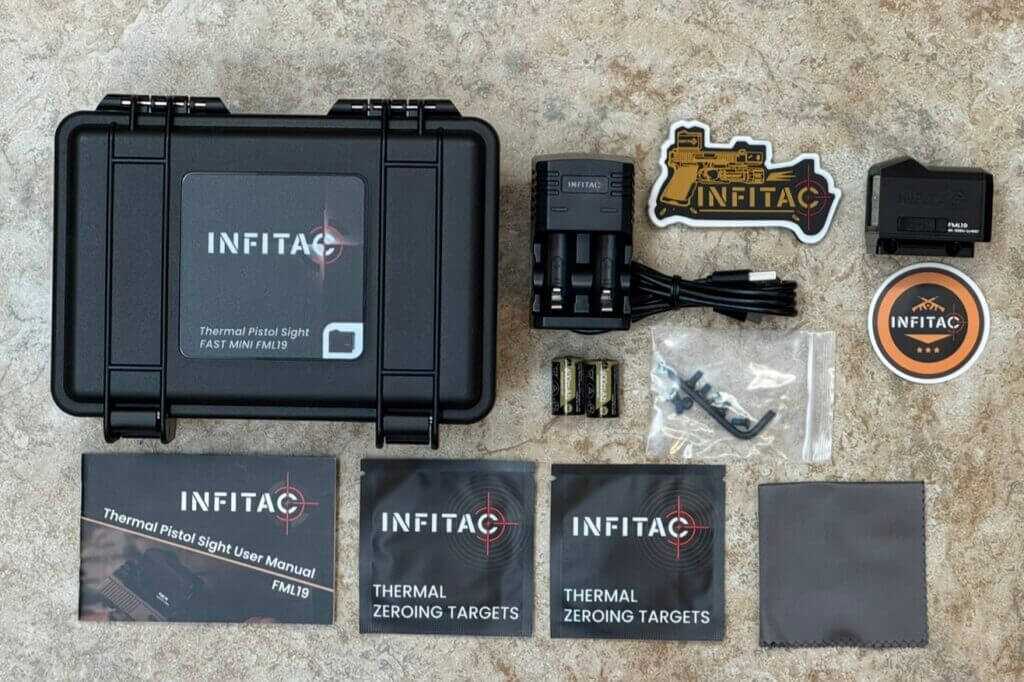
Everything you need to get up and running is included. Zeroing targets are a nice touch, especially for anyone new to thermal pistol optics. However, my cheap and readily available solution to sighting in thermals is to tape up tinfoil on paper. Either way, having some zeroing targets included is appreciated.
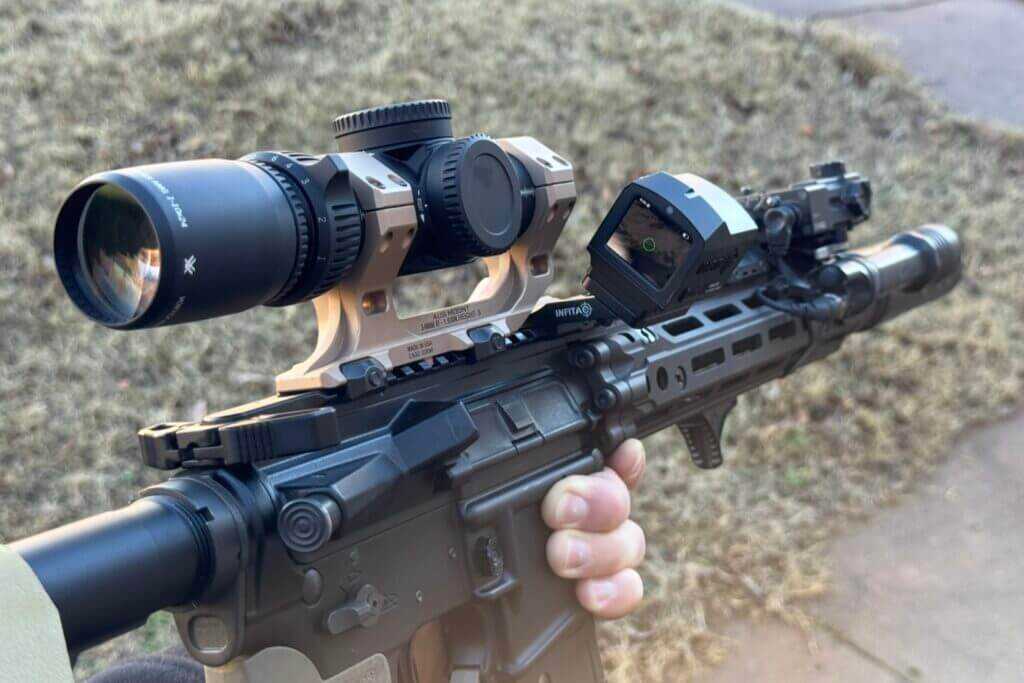
For my testing, I also used a 45-degree offset mount. Just like with the FMP13, this ended up being the most practical configuration. Running the FML19 as a secondary thermal alongside a primary daytime optic makes far more sense than committing it to pistol-only use in my opinion.
The housing is the same 7075 aluminum construction used on the FMP13. It feels solid, well-machined, and appropriately rugged for something that may live on a reciprocating pistol slide or rifle mount. The IP67 rating means it’s fully sealed against dust and water, and it’s rated to handle up to 1200 g/s² of recoil.
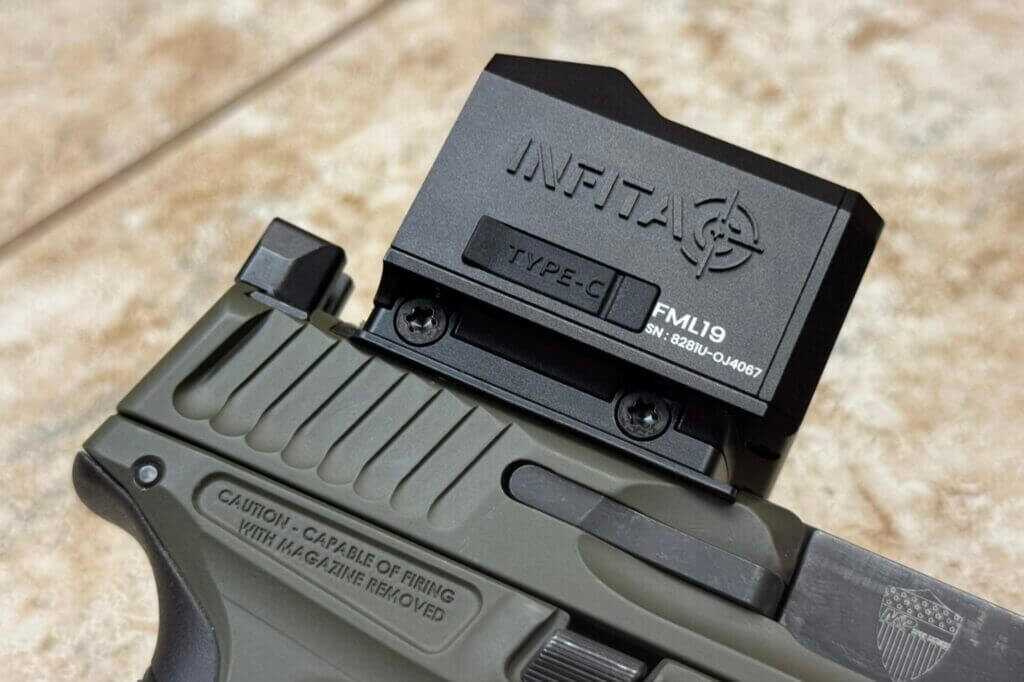
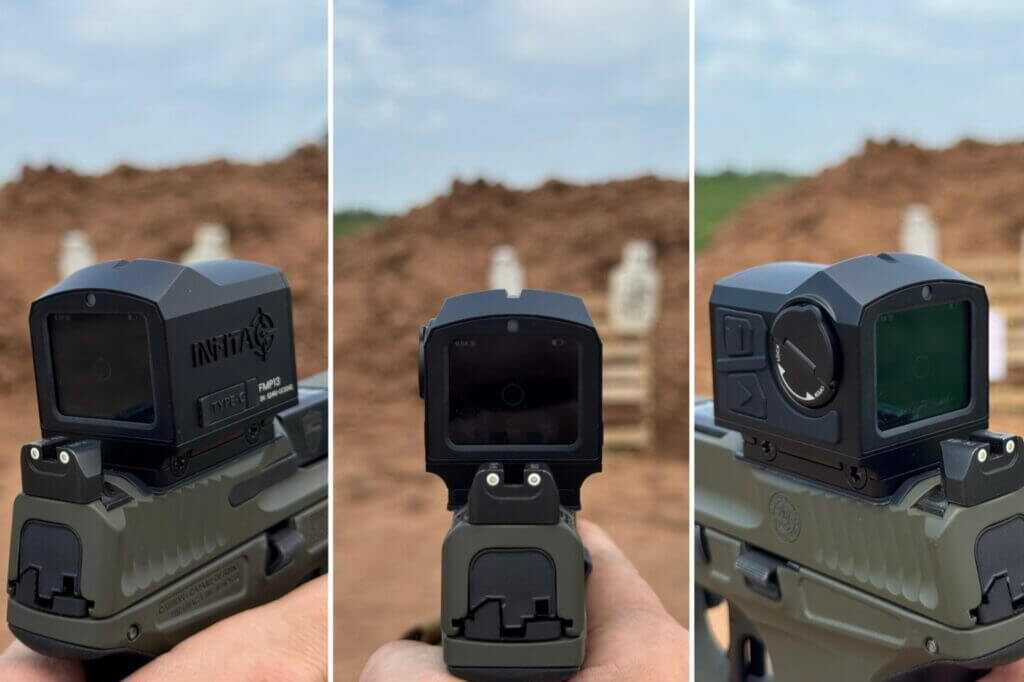
Despite being slightly heavier than most red dots, I didn’t experience any reliability issues when mounted on a pistol. Suppressed or unsuppressed, the extra mass didn’t cause malfunctions in my testing. The downside of the compact housing remains the same, though. The small screen size makes fast, intuitive shooting difficult, especially when the optic is bouncing around on a pistol slide.
The FML19 runs on a single rechargeable CR2 battery, offering around five hours of runtime at room temperature. There’s also a USB-C port for external power if you want extended use.
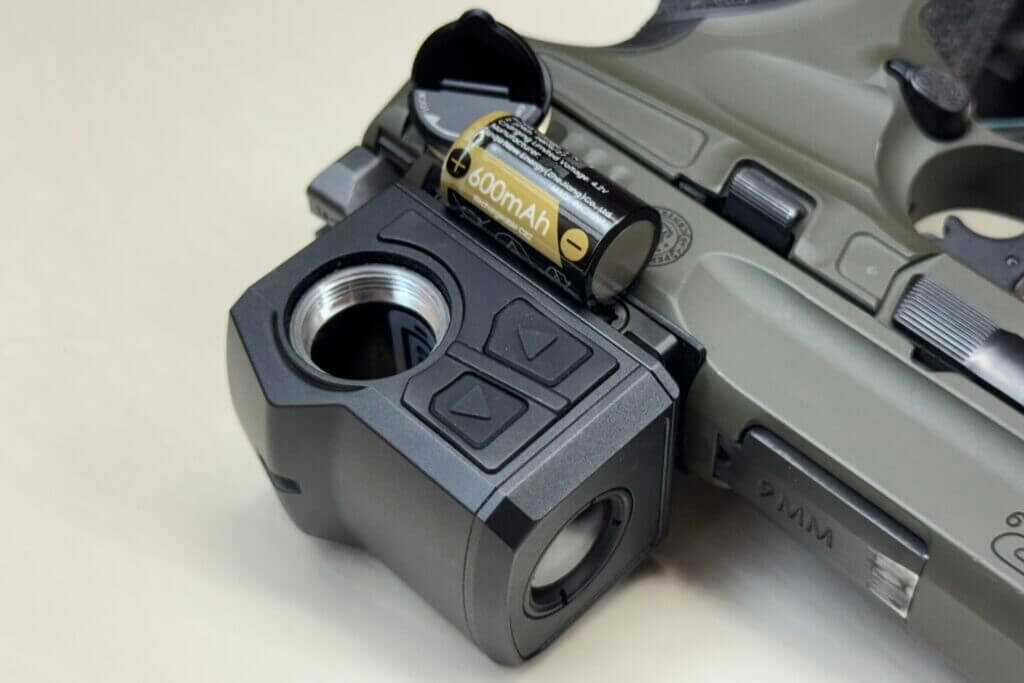
Five hours is quite respectable for a thermal, but it still reinforces that this isn’t something I’d want to rely on as a primary aiming system. As an offset optic on a rifle, battery life is much less of a concern since you’re only using thermal when you actually need it.
Controls are unchanged from the FMP13, which is a good thing. The touchscreen interface is intuitive and relatively easy to navigate. Zeroing, reticle selection, palette changes, and general settings are all quick to access. Physical buttons are used for powering the unit on and off, and NUC’ing the sensor.
The multi-reticle system offers a 6 MOA dot alone or paired with a 65 MOA or 130 MOA circle. Reticles are also available in green, black, white, and red, while the display offers four different color palettes as well. Auto brightness is also present, though display brightness remains one of the limiting factors of the system.
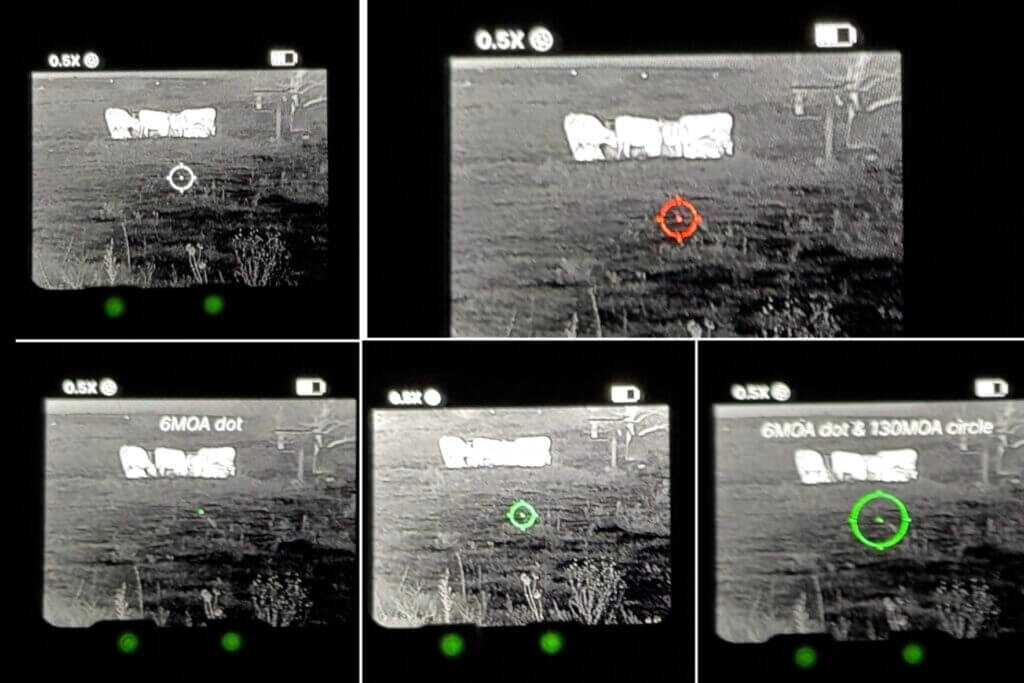
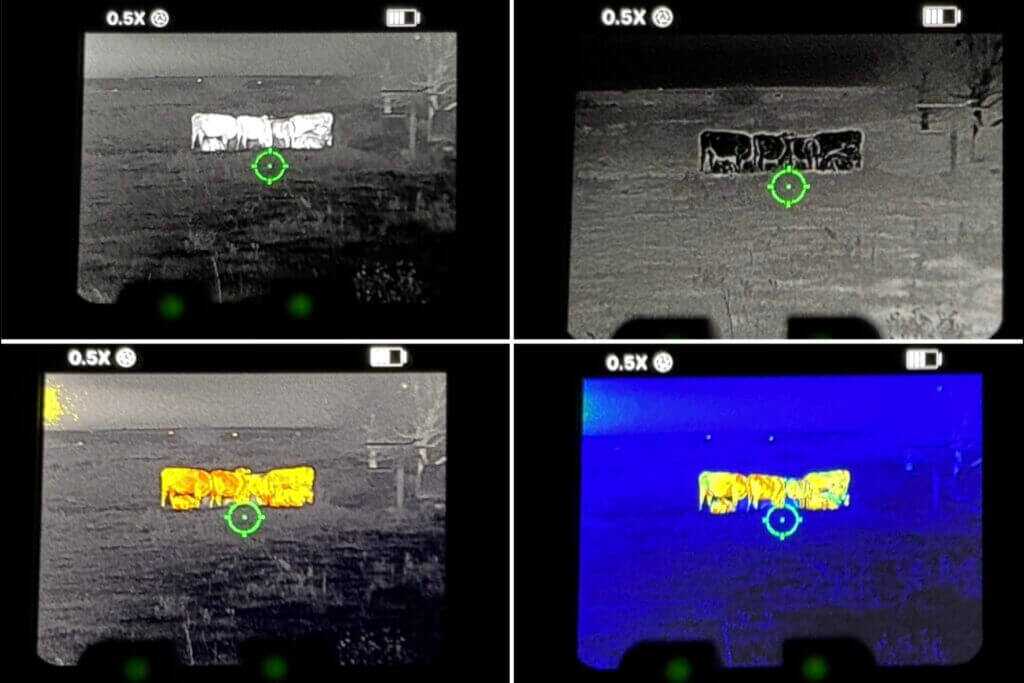
This is still the biggest limitation of the Fast Mini platform, and the FML19 does not fix it. During bright summer days, the display simply does not get bright enough to be usable on a pistol during the day. I struggled to see the reticle, let alone meaningful thermal detail. Zeroing during the afternoon required cupping my hand over the display and getting uncomfortably close to the optic, all while trying not to catch a reciprocating slide to the face.
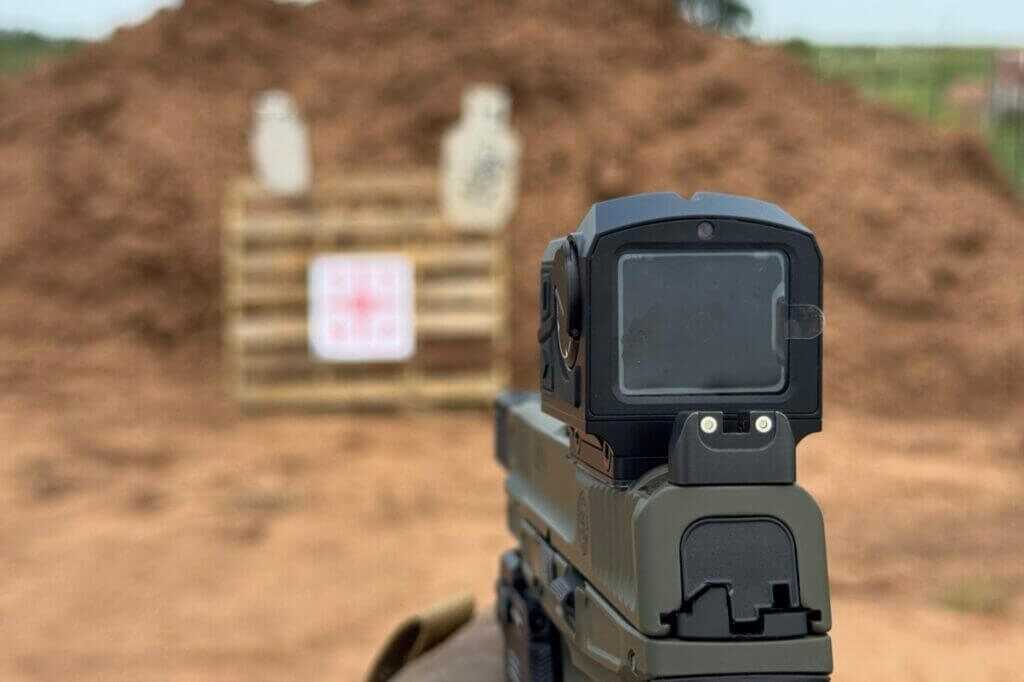
At night, however, the optic performs well. Brightness settings are much more usable, and I was able to tune the display to avoid excessive backsplash. That’s a big deal if you’re trying to stalk pigs or other game without giving away your position. The improved sensor and larger objective lens do help at night. Identification is cleaner and more confident compared to the FMP13, especially past the 100-yard mark.
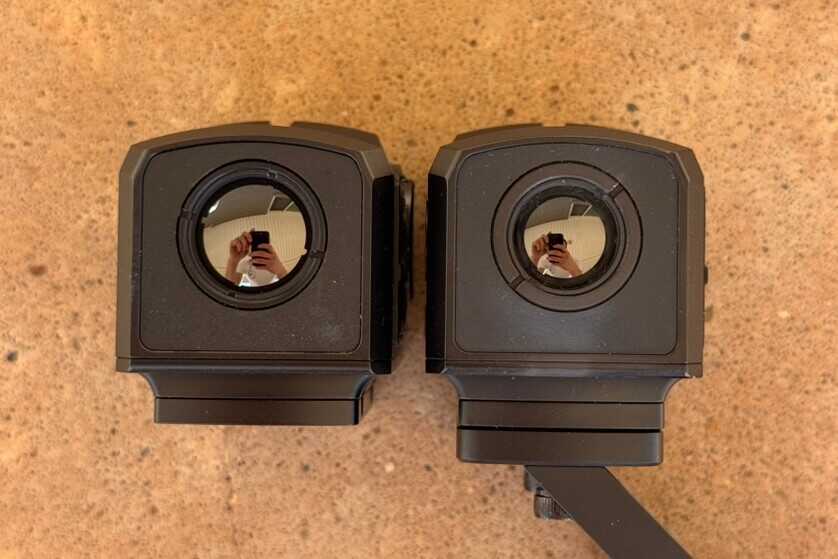
Thermal detection stretches well beyond the identification range. With the FML19, I could clearly identify coyotes or larger game out to around 150 yards. Beyond that, targets start to lose definition, but detection continues much farther. I was able to detect cows out to roughly 1,760 yards. At that distance, they were small heat blobs with no identifying detail, but the sensor had no trouble picking them up.
Compared side by side with the FMP13, the FML19’s image is noticeably cleaner. The additional resolution and lower NETD reduce noise and make heat separation easier, especially in cluttered environments.
Fast shooting with a pistol-mounted thermal is still a problem, regardless of sensor resolution. I was able to achieve roughly 0.75-second splits, but that was under controlled range conditions with a large berm behind the target. The fundamental issue remains unchanged. You cannot maintain a true target focus like you can with a red dot. Unlike a traditional optic where “dot on target” equals a valid shot, a thermal requires you to actually see the image on the screen. You can visually superimpose the reticle onto the target with one eye, but the pistol itself may be pointed somewhere entirely different.
For defensive or rapid shooting use, this just isn’t realistic in my opinion. For plinking or slow, deliberate shooting, it works, but it’s not intuitive. Where the FML19 does shine more than the FMP13 is as an offset rifle optic. The added clarity allows for better identification and more confident shots at distance, all while holding a rifle naturally close to your eye instead of awkwardly holding a pistol uncomfortably close to your face.
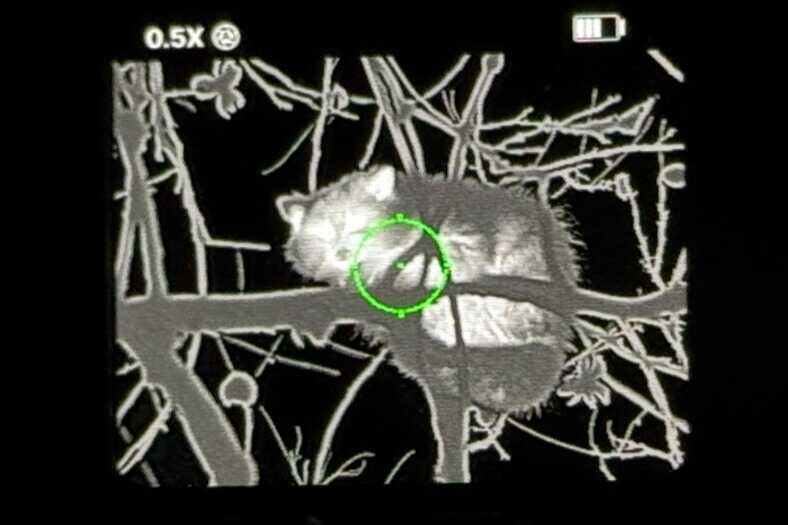
That said, it can still be effective as a varmint gun. I used it to dispatch a raccoon that was stealing nuts from my pecan trees.

Durability was solid in my testing. The optic handled everything I threw at it on a pistol without freezing or glitching. After three suppressed shots, I noticed a glow forming at the bottom of the display, but after a full magazine, it didn’t get significantly worse and remained usable.

That said, I heard from a few users who experienced screen freezing or spotting after exposure to hot objects. In those cases, INFITAC’s warranty department reportedly handled the issues without hassle. While I didn’t encounter these problems personally, it’s worth noting that some users have, and that INFITAC appears to stand behind the product.
The Infitac Fast Mini FML19 is essentially a refined FMP13. It offers a noticeably clearer image and slightly better identification range, but it doesn’t change the fundamental limitations of a pistol-mounted thermal optic. On a handgun, the added clarity doesn’t dramatically improve usability. Daylight brightness is still lacking, fast shooting is still difficult, and the platform still forces you into an optic-focused shooting style that reduces situational awareness. As a rifle-mounted offset thermal, the FML19 makes more sense. The improved sensor allows for better identification at a distance, and the stable shooting position lets you actually take advantage of the extra resolution.
At $1,199, the price is harder to justify. While the FML19 is clearly better than the FMP13, I’m not convinced the additional clarity alone is worth the extra cost for a pistol thermal, especially given how difficult it is to fully exploit that clarity on a handgun. If you’re looking for a compact, lightweight thermal to supplement a rifle setup and want better image quality than the original Fast Mini, the FML19 does that well. Just be realistic about what it is and what it isn’t.
| Model | Infitac Fast Mini FML19 |
|---|---|
| Sensor Resolution | 384×288 |
| Objective Lens | 19mm F1.2 |
| Refresh Rate | 60 Hz |
| Weight | 4 oz |
| Ingress Rating | IP67 |
| Recoil Rating | Up to 1200 g/s² |
| Battery | Single rechargeable CR2 |
| Runtime | About 5 hours |
| Power Options | USB-C external power supported |
| Reticles | 6 MOA dot, 65 MOA circle, 130 MOA circle |
| Display Palettes | 4 color palettes |
| Identification Range | About 150 yards (coyote or larger) |
| Detection Range | About 1,760 yards (cow-size heat) |
| Mounts | RMR adapter included |
| MSRP | $1,199 |
- Pros: noticeably cleaner image than FMP13, compact 4 oz footprint, simple touchscreen workflow, solid IP67 and recoil rating, useful as an offset rifle thermal.
- Cons: daylight brightness limits pistol use, small screen slows fast shooting, price premium over FMP13, runtime still favors secondary use.

