


[[“value”:”
Thank you for reading this post, don't forget to follow and signup for notifications!

David Higginbotham
If you’re looking for a capable rimfire rifle—one that will put rounds on target and perform reliably, Ruger has you covered. While there are many good rimfire rifles on the market, Ruger’s rotary magazine has given their guns the edge with the vox populi for more than 60 years.
For .22 LR, the 10/22 is the bar by which all others are judged. And now Ruger is using the best design elements from the 10/22 in a growing line of bolt actions: The American Rimfire.
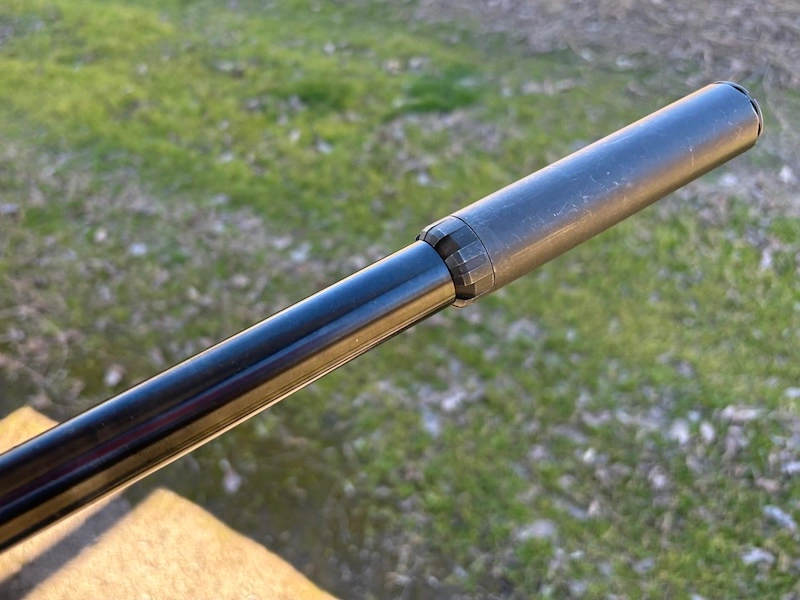
This .22 Mag American Rimfire adds some punch to the classic Ruger line. I’ve paired it up with my go-to rimfire suppressor, the SilencerCo Sparrow. .22 Magnum runs hotter than .22 LR, but the Sparrow handles the pressure and makes this rifle hearing safe.
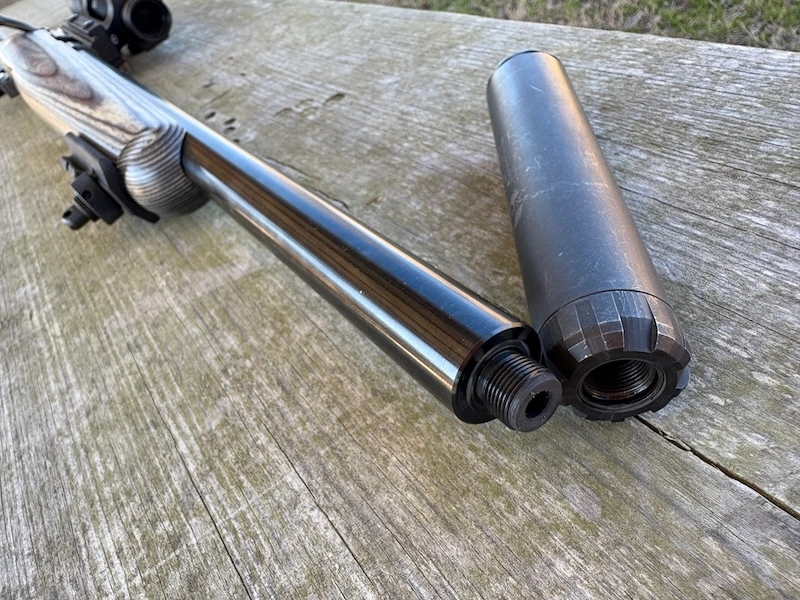
Ruger American Rimfire Target: .22 WMR Bolt Action
Ruger’s American Rimfire Target is part of a larger family of American Rimfire rifles that also includes Standard and Combat models, both of which have more baseline stocks and thinner barrels.
The rimfire collection, in turn, is part of the larger family of American Rifles, which come in many calibers. These bolt-actions are designed to hunt, plink, and poke holes in targets, and—at least in the rimfire lines—parallel the semiatomatic 10/22 line.
Why Bolt Actions Are Easier to Suppress
If we were talking about a .22 LR, I’d say the bolt-action rifle offers the most potential for noise reduction with a suppressor. By combining the closed action with subsonic ammo and a can like the Sparrow, these guns are quiet. .22 LR, though, isn’t known for its stunning accuracy.
.22 Mag steps up that game. Bull barrels add weight and stability. All of Ruger’s Target and Precision rifles lack iron sights, implying that your targets might best be seen through a bit of magnification. While .22 LR guns are often about volume of fire and versatility of design, the American Rimfire Target is more focused on the performance of the faster, more accurate round.
Regardless of caliber, bolt actions are easy to suppress. The action locks up tightly. By the time the bolt is run, the whole system is free from the pressure that would otherwise drive a semiautomatic action. This pressure can be abusive on semiautomatic actions, especially the blow-back actions common for rimfire guns. With direct impingement rifles, like the AR platform, that back pressure can be excessive and is remedied by Low Back Pressure suppressors like the Velos LBP, but bolt actions avoid the issue altogether.
Call it accuracy or simplicity, bolt-actions remain the go-to for slower-paced shooting.
.22 WMR vs .22 LR: Which Is Better Suppressed?
The magnum designation implies more power, but that is often hidden in some of this round’s abbreviated nomenclature: .22 Winchester Magnum Rimfire. You’ll hear it called .22 Win Mag, .22 Magnum or .22 Mag, and others. It is basically a hopped up .22 LR. The increase in powder makes the bullet travel faster.
Faster isn’t always good, though, when we’re talking about shooting suppressed. Rounds that break the sound barrier do so with a pronounced crack. Many .22 cartridges are subsonic, usually because the powder load is reduced or the bullet weight is increased (or a combination of the two). These slow-moving rounds sound impressive, but don’t hit hard.
Still, projectiles for both .22 LR and .22 WMR fall within a common range. .22 LR rounds are often heavier than the typical .22 WMR (which ranges from 30-50 grains).
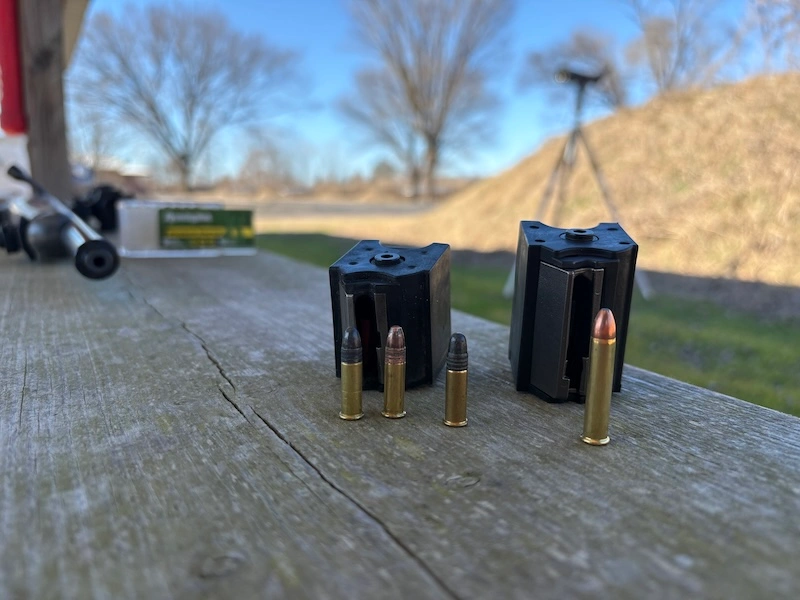
I’m shooting 40 grain Remington. Performance has been consistent. Muzzle velocity can break 1,900 FPS. At 100 yards, the round shoots very flat.
This speed make this small round effective for varmint hunting. My only caveat there is, as always, shot placement. A well placed .22 LR round can be lethal. Miss with a .45-70 and it is still a miss.
Suppressed .22 Mag won’t be as quiet as .22 LR. If you strip it of its velocity, you lose the efficacy of the terminal ballistics. In effect, it performs like a subsonic .22 LR. This alone may be why there’s a huge subculture of for .22 LR subsonics, but not for .22 WMR.
If you want more reliable accuracy at greater distance, the flat shooting .22 WMR is a solid choice. If you want more terminal ballistic reliability, go with .22 WMR. If you want a whisper-quiet rimfire, .22 LR would be your choice.
FAQ: Rimfire Suppressor Compatibility & Performance
Whenever you start mixing and matching different rimfire calibers with muzzle devices, the question of compatibility inevitably comes up. It’s easy to look at the numbers on paper and assume a twenty-two is a twenty-two across the board, but cutting corners here can cost you a lot more than just a ruined range day.
To clear up the confusion and keep your gear running safely, let’s break down the most common questions surrounding suppressed magnums.
Can you use a .22 LR suppressor on a .22 Magnum?
The short answer is: It depends entirely on the specific suppressor, and you should never just guess. While both rounds fire a .22 caliber projectile, the .22 WMR operates at significantly higher pressures than a standard .22 LR.
An aluminum silencer built strictly for standard .22 LR can split or suffer catastrophic failure under that extra magnum blast. However, many modern, heavy-duty rimfire silencers—like the SilencerCo Sparrow I’m running here—are engineered with stainless steel or titanium internals specifically rated to handle the higher pressures of .22 Mag, .17 HMR, and even the 5.7x28mm.
Before you thread your favorite rimfire can onto a magnum rifle, always double-check the manufacturer’s documentation to ensure it’s explicitly rated for .22 WMR.
Is a Suppressed .22 WMR Louder Than a Suppressed .22 LR?
Yes, and it comes down to basic physics. Because .22 WMR ammo is supersonic—frequently breaking 1,900 FPS—it creates a loud, distinct sonic “crack” as it travels downrange. A suppressed .22 LR firing subsonic ammunition can be Hollywood quiet because there is no sonic boom.
A good suppressor on a .22 Mag takes care of the expanding gases at the muzzle to make the rifle hearing-safe, but it can’t silence the sound of a bullet breaking the sound barrier.
Can You Shoot .22 LR Ammunition Through a .22 Magnum Rifle?
Absolutely not. Even though the bullet diameters look identical to the naked eye, the casings are completely different. The .22 WMR casing is wider and longer than a standard .22 LR case. If you chamber a .22 LR round into a .22 Magnum rifle, the loose fit will cause the case to rupture upon firing, potentially throwing hot gases and debris directly back toward your face. Always feed your rifle the exact cartridge stamped on the barrel.
Bull Barrel on a Rimfire: Does It Actually Matter?
Ruger has built its target line with heavy bull barrels. Bull barrels in larger calibers are meant to combat barrel whip. Wider barrels don’t heat up as fast, either. All of this makes a bull barrel a logical choice for precision shooting, but less useful for hunts that might require that you carry a rifle.
On a rimfire, though, barrel whip is rarely an issue. Guns don’t heat up as fast, either. But, a bull barrel can still be helpful. The extra weight along the length of this American Rimfire provides a unique balance. As it is heavier, the gun is easier to stabilize. There’s almost no barrel rise, and no kick, and you can watch targets through the scope after the trigger pull.
As upgrades go, this is a big one. But it is hardly the only one.
Laminate Stock: Worth It on a Rimfire Rifle?
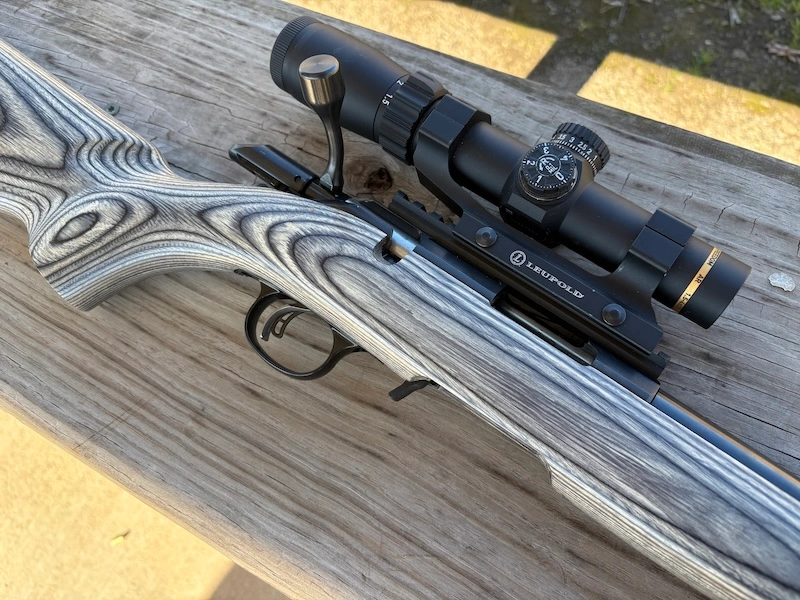
Ruger’s American Rifle line dominates entry level bolt actions. Polymer stocks and efficient use of materials keep the guns inexpensive. Add a laminate stock, like this one, and you get a bit of bling.
I can’t realistically suggest that a wooden stock provides a measurable improvement over a polymer stock, but performance isn’t everything. Sometimes how a rifle looks is important, too, and the grey/black combo of this laminate stock provides both contrast and compliment to the black action and barrel.
The wood will require maintenance. While laminate is inherently more stable than most woods, I’d still recommend keeping chemicals off if it and wiping it down with a lightly oiled rag from time to time.
Ruger Rimfire Magazines: The JMX-1 and BX-15 Magnum
Ruger’s magazines are legendary. I’ve never had one fail. My 10/22 gets a healthy amount of use, and the mags are never babied. After literally thousands of rounds, they all still run fine. I never service them, clean them—nothing.
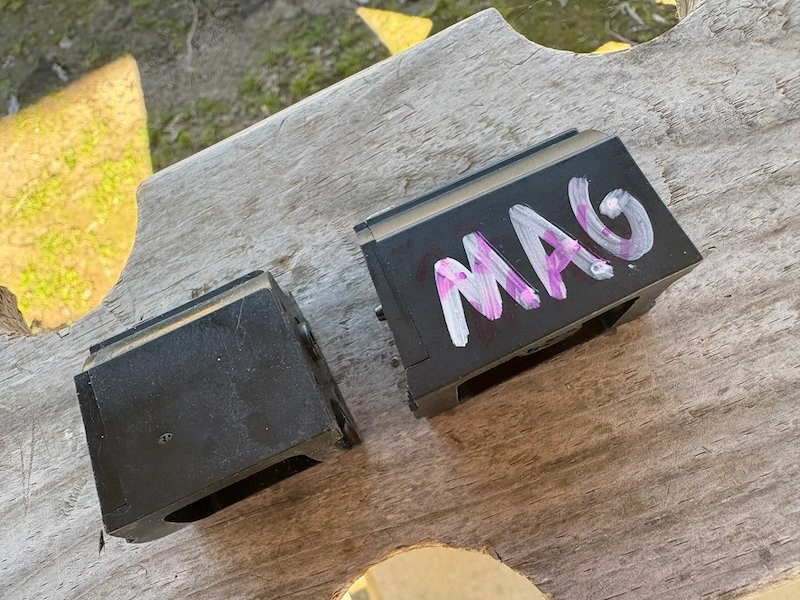
The .22 WMR requires a larger magazine, and the two that Ruger have built are the flush-fit JMX-1, 9-round magazine and the BX-15 Magnum mag. While these don’t provide the higher capacities of some .22 LR mags from Ruger, they tend to empty out more slowly.
Shooting the .22 WMR Suppressed: Range Report
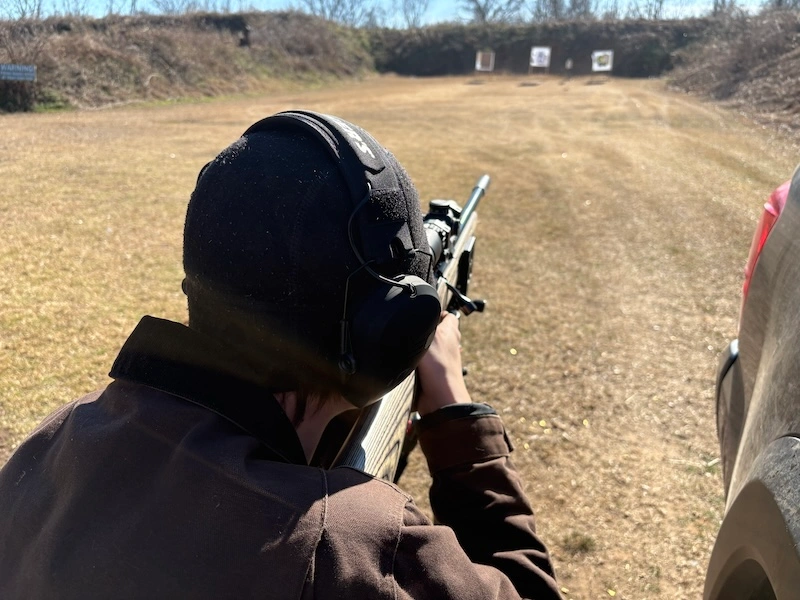
At over six pounds, this gun is heavier than most rimfires. With the addition of a scope, it weighs more. This stability makes it easy to steady. The trigger breaks under three pounds, and the entire package works exceptionally.
From the shoulder, this is a heavier combination than most would expect from a rimfire. I use a 10/22 with a Sparrow to teach many kids the fundamentals, but this .22 Mag might be too heavy for most smaller shooters to hold for long.
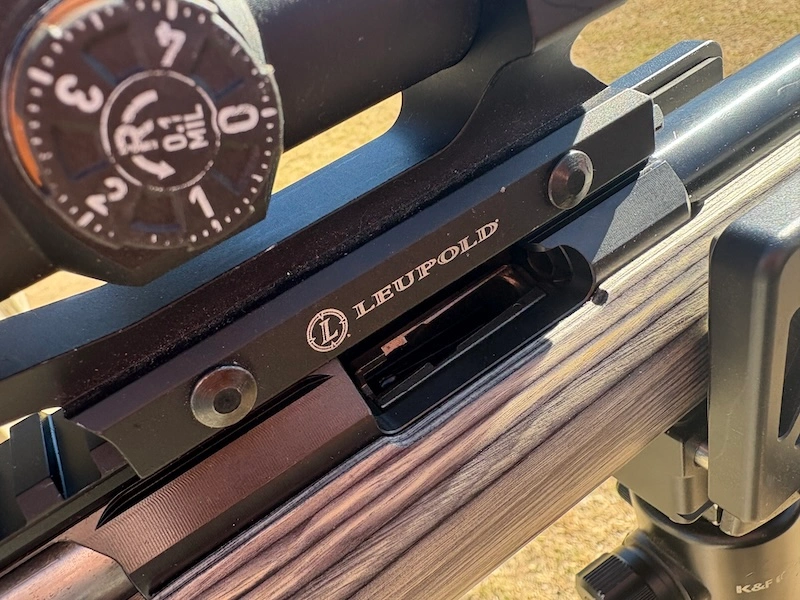
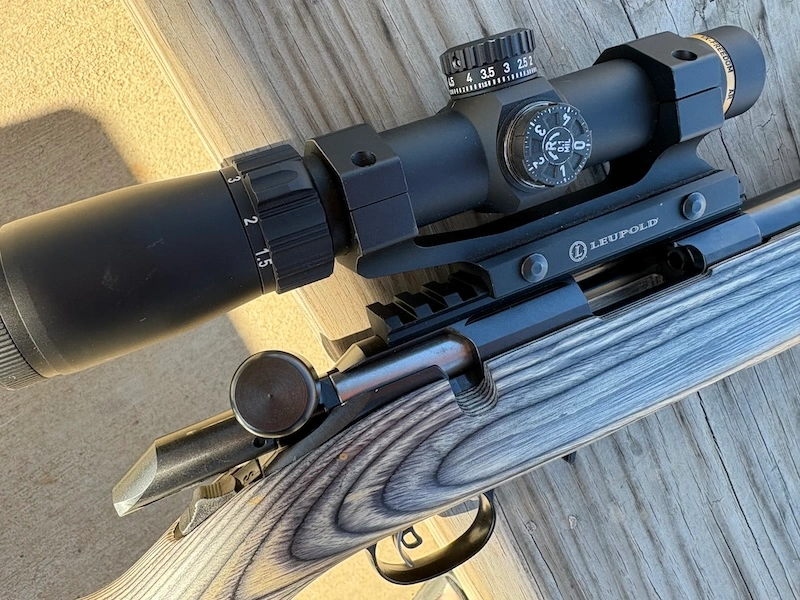
From the bench, though, this becomes a foundational way to teach accuracy skills, as the weight provides stability. The Leupold is a 1.5-4, which provides a wide field of view. I prefer this lower end of magnification on plinking guns and varmint guns, but I trust I could do more with 100-yard group sizes with more magnification.
Ruger 10/22 Suppressed vs. American Rimfire Target: Which Should You Buy?
Given how many design cues the American Rimfire borrows from its older brother, it’s only natural to wonder how a Ruger 10/22 suppressed setup stacks up against this bolt-action powerhouse. They share the same legendary rotary magazine DNA, but on the range, they are completely different animals built for different missions.
If your primary goal is high-volume plinking, running dynamic drills, or introducing kids to the shooting sports, a Ruger 10/22 suppressed with a can like the Sparrow is almost impossible to beat. Paired with standard subsonic ammo, the semi-automatic 10/22 is incredibly quiet, boasts virtually zero recoil, and keeps the fun factor high with cheap, readily available .22 LR rounds.

The American Rimfire Target in .22 WMR shifts the focus entirely to precision and distance. Because it’s a bolt-action, the sealed breech eliminates the action noise and blowback inherent to a semi-auto blowback system, squeezing every ounce of suppression out of the Sparrow.
Combined with the flat-shooting, harder-hitting terminal ballistics of the magnum cartridge, the American Rimfire stretches your effective range out past 100 yards with a level of mechanical accuracy the 10/22 just can’t match out of the box.
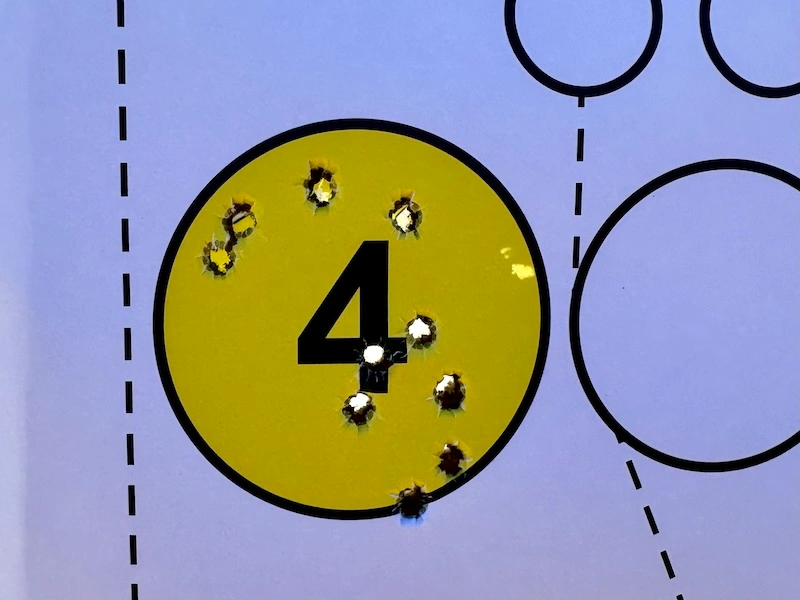
Choose the suppressed 10/22 for high-volume volume of fire; choose the American Rimfire when every single shot needs to count.
SilencerCo Sparrow Review: Best Rimfire Suppressor?
Capping off the system is my trusty Sparrow. I’ve worked with this suppressor for more than a decade, and it is bombproof.
The Sparrow is a clean design, which I like. This classic look looks more like an extension of the barrel than odd ornamentation. And it threads directly onto the muzzle, which adds to its ease of use.
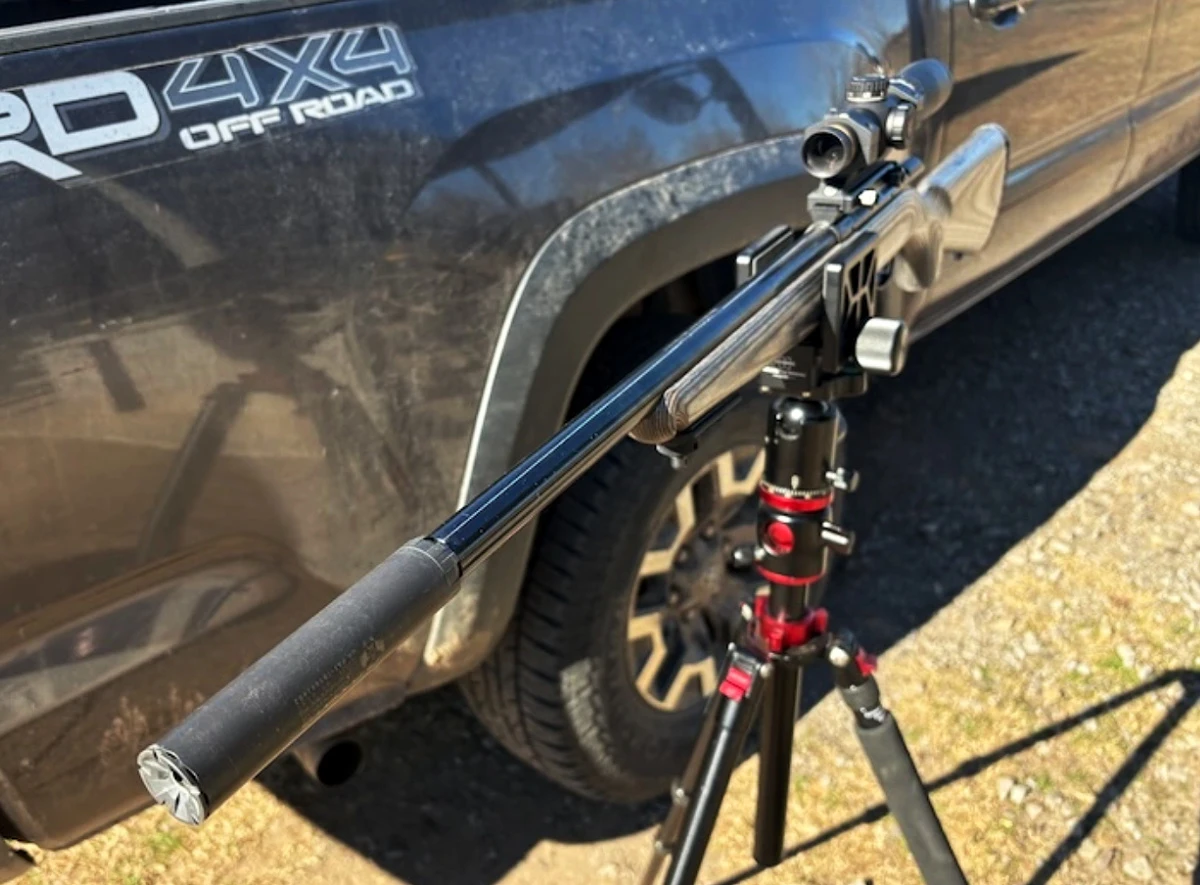
With .22 LR, you need to clean your cans. I typically break the Sparrow down every 2,000 rounds or so. .22 WMR is more forgiving and the round count won’t likely be as high. Also, the pressure inside the suppressor is higher, which tends to shake grunge loose.
The end result here is another gun I’ll never part with. As someone who works in the industry, both reviewing guns and working for manufacturers, this isn’t something I say often. My go-to .22 LR is a Ruger, and now I’ve built a simple .22 WMR that can bridge that gap to the .223. And SilencerCo’s Sparrow takes both guns to an entirely new level.
David Higginbotham
The post Ruger American Rimfire Target .22 WMR: Suppressed with the SilencerCo Sparrow appeared first on SilencerCo.
“]]

