

Over the course of my law enforcement career, I managed major demonstrations, civil unrest incidents, extremist threats and bias-crime investigations. I have spent decades working alongside police executives, intelligence professionals and frontline law enforcement personnel responsible for protecting both constitutional rights and public safety at the same time. That balance is not always easy, but it is fundamental to democratic policing.
Thank you for reading this post, don't forget to follow and signup for notifications!
What concerns many of us today is not lawful protest. Law enforcement understands better than most that people have a constitutional right to assemble, speak, criticize government policy and express even deeply offensive opinions. That is not the issue.
The concern is that in many cities, we are now watching demonstrations increasingly directed not at government institutions or policymakers, but at synagogues, Jewish schools, community centers, mosques, churches and religious events themselves. From a policing and threat-assessment perspective, that distinction matters.
| RELATED: Why law enforcement must play a role in church security
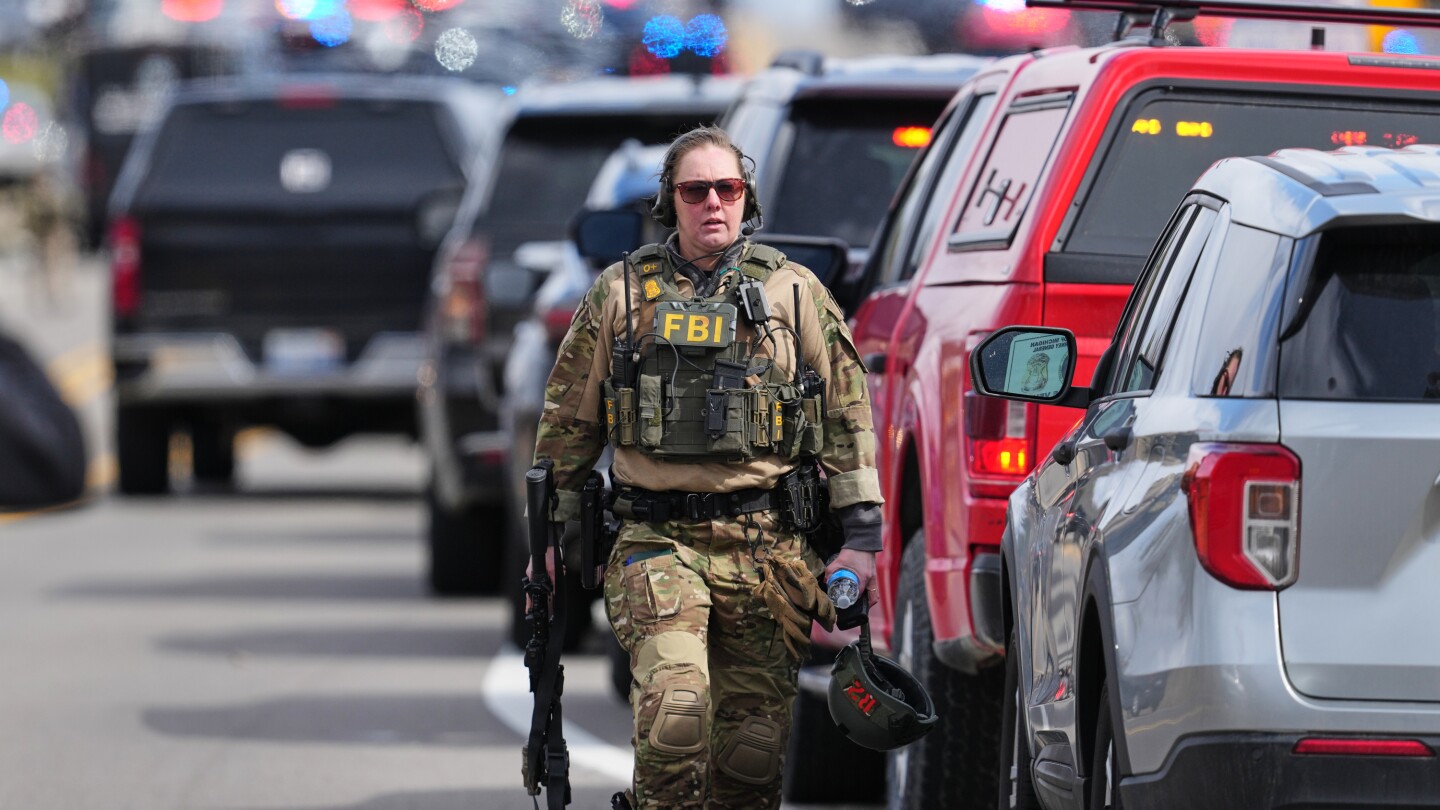
As this article is being written, law enforcement agencies in San Diego are investigating what authorities say was an anti-Muslim attack at the Islamic Center of San Diego that left three men dead, including a security guard praised by police for helping prevent further bloodshed. Police say the two suspects, ages 17 and 18, were later found dead from apparent self-inflicted gunshot wounds after fleeing the scene. Authorities say investigators also uncovered evidence of what Police Chief Scott Wahl described as “generalized hate rhetoric” connected to the suspects.
Regardless of the final motive or facts developed in the investigation, one reality is becoming impossible to ignore: religious institutions increasingly represent the Achilles’ heel of democratic societies. They are open by design. They are built around faith, gathering, community and accessibility — not hardened security. Yet they are now being forced to operate as soft targets in an era of escalating extremism, ideological rage and targeted intimidation.
Protected protest versus targeted intimidation
If a protest is truly about influencing public policy, then logically the focus should be on elected officials, legislative bodies, embassies or diplomatic facilities. Instead, law enforcement is increasingly being deployed to houses of worship, schools and community gathering places where families are simply trying to pray, attend services or participate in community life safely.
That reality should concern every law enforcement professional.
Law enforcement leaders on the ground understand that intimidation does not always begin with physical violence. In fact, behavioral-threat and intelligence professionals are specifically trained to recognize escalation indicators before violence occurs. Creating fear within a targeted population — particularly around religious institutions — is one of those indicators.
That is why many within law enforcement increasingly view some of these incidents through a public safety lens rather than simply a crowd-management lens. This is not about politics. It is not about suppressing speech. It is about recognizing conduct designed to intimidate civilians because of who they are or what faith they practice.
There is a difference between protected protest activity and coordinated efforts meant to create fear, disruption and psychological pressure within a vulnerable community. And candidly, many in law enforcement already know the difference when they see it.
Religious institutions as soft targets
What is frustrating for many in law enforcement is that agencies are often left managing the consequences while political leaders avoid confronting the harder questions. Creating “buffer zones” around houses of worship may help with crowd control in some situations, but barriers alone do not solve intimidation if intimidation itself is the objective. Moving protesters another 25 feet from a synagogue entrance does not eliminate intimidation if intimidation itself is the objective.
Meanwhile, Jewish institutions across North America are spending enormous resources on hardened security, armed protection, surveillance systems, intelligence coordination and emergency preparedness simply to conduct ordinary religious and communal activities. Increasingly, Muslim, Christian, Sikh and Hindu communities are confronting many of the same realities. No democratic society should become comfortable with that.
There is another issue law enforcement should not ignore. From a law enforcement perspective, some of these demonstrations appear increasingly organized across jurisdictions, professionally coordinated and supported through sophisticated messaging and mobilization efforts. Those patterns alone warrant careful intelligence analysis. Agencies should not dismiss the possibility that certain actors may be exploiting these environments to intentionally deepen division, fuel instability or radicalize individuals already vulnerable to extremist messaging.
Experienced law enforcement professionals understand that modern threats rarely emerge overnight. Escalation typically follows a pattern. Intimidation, dehumanization, targeting and normalization often come long before actual violence. Waiting until someone gets hurt before recognizing the seriousness of the environment is not proactive policing. It is reactive failure.
When intimidation becomes a public safety issue
To be clear, law enforcement agencies overall have handled these situations professionally under extraordinarily difficult circumstances. Personnel are balancing constitutional protections, emotionally charged crowds, public pressure, intelligence concerns and rapidly evolving security risks in real time. That is not easy work.
But moving forward, prosecutors, policymakers and public officials need to stop viewing every incident solely through a political lens and start examining whether certain activities cross into criminal intimidation, organized harassment, bias intimidation, conspiracy or civil-rights violations involving interference with religious freedom.
There are also several practical steps that deserve consideration between law enforcement agencies and prosecutors moving forward.
First, agencies should strengthen real-time intelligence sharing between local police, state fusion centers, federal partners and prosecutors when demonstrations target vulnerable religious communities repeatedly or show signs of coordinated escalation.
Second, prosecutors and law enforcement should jointly develop clearer operational thresholds distinguishing lawful protest activity from criminal intimidation, targeted harassment, obstruction, stalking behavior or coordinated efforts designed to interfere with religious access and public safety.
Third, agencies should consider expanded use of behavioral-threat assessment teams in situations involving repeated demonstrations directed at houses of worship or schools, particularly where rhetoric, online activity or crowd behavior suggests escalating radicalization or fixation.
Fourth, investigators should examine whether certain organizers or affiliated groups are coordinating unlawful activity across jurisdictions, including potential conspiracy violations, organized harassment patterns, financing structures or interstate coordination designed to intentionally create fear within targeted communities.
Law enforcement should also consider asking a very simple but important question directly to congregants and community members leaving targeted religious institutions:
Are you afraid to enter your synagogue, mosque, church or temple? Are you fearful for your safety or your family’s safety while attending services? Those answers matter operationally and legally.
Because when the objective or effect of organized activity is to create fear within a civilian population attempting to exercise religious freedom, law enforcement and prosecutors must seriously examine whether the conditions being created begin crossing into terroristic intimidation or the deliberate creation of a terrorizing environment against a protected community.
The reality is that religious communities and law enforcement agencies across North America already maintain extraordinarily strong relationships built on trust, coordination, intelligence sharing and years of partnership protecting vulnerable institutions. In many cases, law enforcement already understands the threat environment clearly.
The larger concern is whether some prosecutors and political leaders are prepared to confront these realities honestly and apply existing laws aggressively when intimidation tactics begin targeting civilians attempting to worship freely and safely.
This should serve as a warning to every democratic society. Today, one faith community may be the target. Tomorrow it could be another. Once intimidation and fear become accepted tactics outside houses of worship, the damage extends far beyond any one group. This is the canary in the coal mine.
When people become afraid to pray freely, gather openly or practice their faith without intimidation, it is not only a threat to one community, but also a direct threat to the core democratic values that define free societies. The right to worship freely, safely and without fear is not negotiable. Once that principle begins to erode, democracy itself begins to erode with it.


