

[[{“value”:”
Thank you for reading this post, don't forget to follow and signup for notifications!
The following content is part of Police1’s Police Leader Playbook, a resource aimed at helping new law enforcement leaders move beyond basic management and supervision skills and become inspirational leaders with integrity and passion. Through a handful of questions presented by Police1, veteran leaders reflect on their early days in leadership roles and offer advice, while newer leaders detail their experiences taking on a new position. Email editor@police1.com to offer your insights for the Police Leader Playbook.
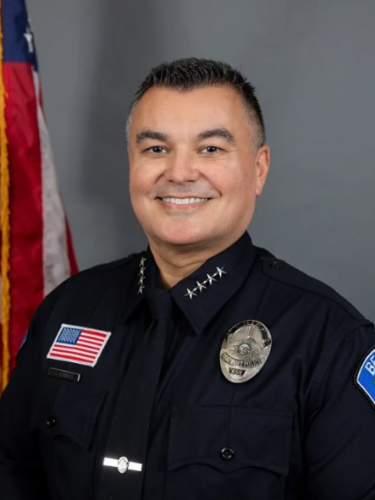
Chief Christopher Ramos serves as the Chief of Police for the Beaumont Police Department in California, where he leads an agency of 95 personnel, including 64 sworn officers, serving approximately 64,000 residents and handling about 60,000 calls for service annually.
A 25-year law enforcement veteran, Chief Ramos has spent more than two decades with the Beaumont Police Department, rising through the ranks after beginning his career as a patrol officer. Over the course of his tenure, he has served in nearly every division within the department and most recently held the rank of captain, overseeing both operations and support services. He has also played a key role in advancing community policing efforts, serving as the department’s first Community Policing Officer and helping establish its Community Policing & Problem Solving (COPPS) Team.
Chief Ramos holds a Master of Science in Law Enforcement and Public Safety Leadership from the University of San Diego and a Bachelor of Science in Business Administration. He is a graduate of the Sherman Block Supervisory Leadership Institute and California POST Command College Program. He serves on the California Police Chiefs Association Board of Director and remains actively engaged in several professional and community-oriented organizations.
What was the moment that set you on the path to becoming a chief?
The moment that truly set me on the path to becoming a chief occurred when I was a sergeant. My chief at the time called me into his office and challenged me to begin preparing for administrative leadership. He encouraged me to think beyond my current role and consider the possibility of one day serving as a chief.
At that point in my career, I had been a sergeant for nearly 10 years and genuinely loved leading a team of great officers. I was deeply committed to my team, and my focus was entirely on supporting them and leading from the front. Advancement wasn’t something I was actively pursuing or considering.
However, my chief saw potential in me that I hadn’t yet recognized in myself. He created an administrative sergeant position and entrusted me with responsibilities that broadened my perspective, including overseeing the department’s budget, managing grants, coordinating department-wide training and handling personnel investigations.
Those experiences opened my eyes to the broader impact leadership can have on an organization. I began to see how strategic decisions shape not only operations, but also culture, service delivery and public trust. That shift in perspective sparked a desire in me to take on a greater role in guiding the direction of the department.
From there, my path progressed naturally from lieutenant to captain and ultimately to chief of police, with each step remaining grounded in the same commitment to serving my people and our community.
What did you prioritize in your first 30 days, six months and first year as chief?
Although I was promoted internally, I recognized that my understanding of the organization was shaped by my previous role as a captain. To lead effectively, I needed to reset my perspective.
In my first 30 days, I made it a priority to meet individually with every employee, 95 in total. It was a demanding commitment alongside my new responsibilities, but to me it was essential. I wanted every member of the department to know they mattered and that their voice would help shape our future.
Those conversations provided invaluable insight. I listened to concerns, ideas and expectations, which allowed me to recalibrate my approach and begin building a roadmap grounded in the needs of our people and the community we serve.
With this roadmap, the focus shifted from listening to action. During the first six months, we began implementing changes that improved operational efficiency, strengthened communication and prioritized employee wellness. This included restructuring key functions to better align with our service demands, leveraging technology to enhance response capabilities and normalizing conversations around mental health. These were not top-down decisions; they were informed directly by what I heard from our employees.
How are you building a culture people want to join — and stay?
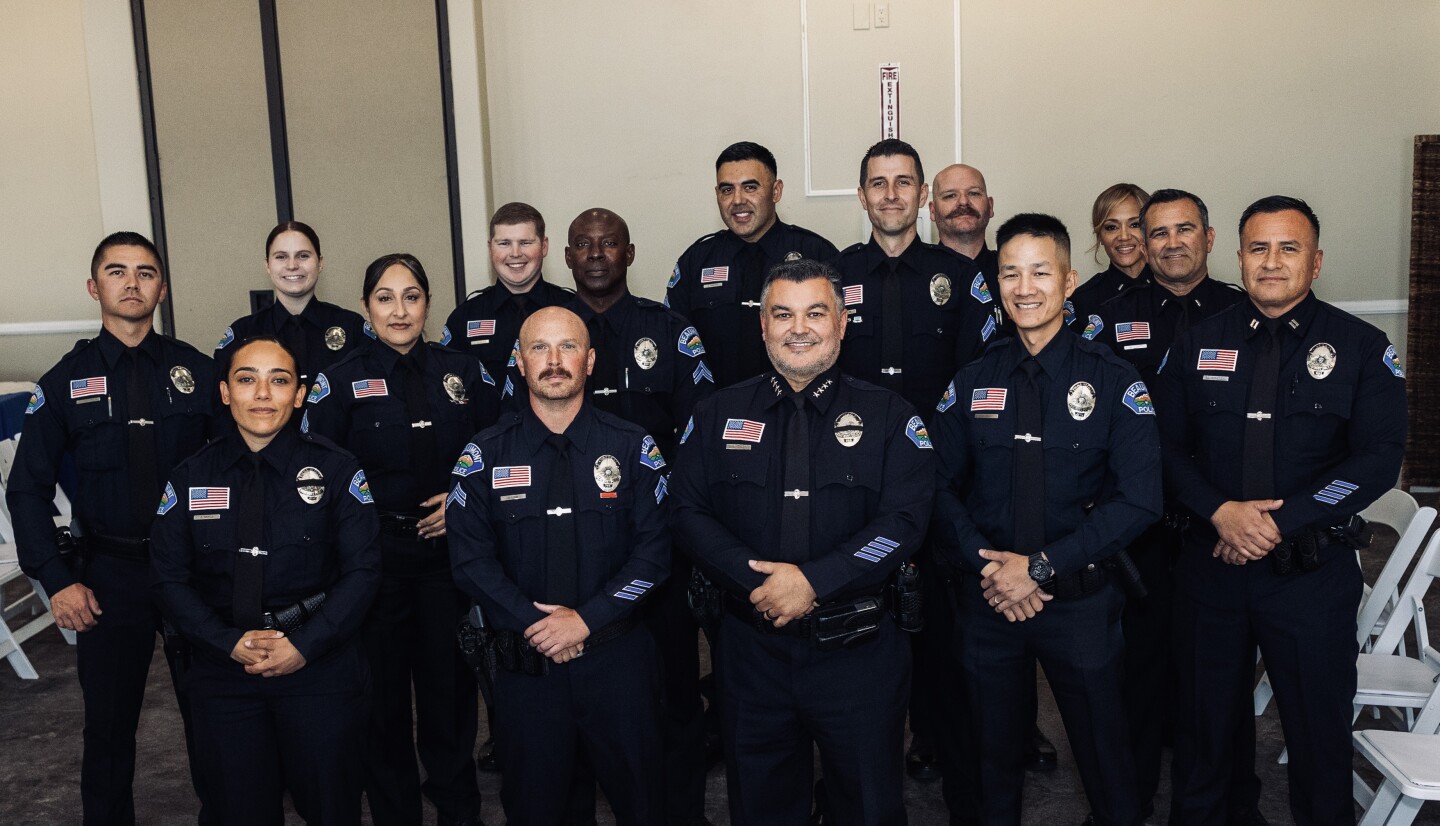
At the heart of my leadership philosophy is a commitment to building a culture where every employee feels seen, valued and appreciated for what they bring to the team. When we recognize individual contributions, we strengthen trust, elevate performance and create an environment where people want to be part of something bigger than themselves.
Creating that culture begins with how we care for our people. We are in a position to avoid staffing shortages because we have an environment people enjoy working in, and it attracts experienced personnel from nearby agencies.
An important focus of my leadership priorities is normalizing self-care. Shortly before I became chief, I experienced a personal loss when my brother died by suicide. That moment fundamentally shaped how I view leadership and reinforced my commitment to ensuring no employee struggles in silence. I continually ask myself: how do we make sure our people never fall through the cracks?
We took a three-part approach.
First, we implemented mandatory annual wellness check-ins with a licensed clinician for every employee. The goal is for employees to leave those sessions lighter than when they arrived, even if they didn’t realize they were carrying that weight. We also provide additional sessions at no cost, and many employees continue after recognizing the benefit.
Second, we leveraged technology to support our people. We implemented AI-driven software that monitors CAD activity to identify high-stress incidents and automatically prompts peer support outreach. This ensures everyone impacted — officers, dispatchers and professional staff — is supported following critical events.
Third, we invested in proactive performance coaching, giving employees tools to build resilience and manage stress before they encounter the most difficult moments in the profession.
How do you approach major decisions as chief?
As chief, I make decisions every day that impact our people, our operations and our community. Early on, I made a conscious decision not to lead in a way where all decisions flow through me. Instead, I see each decision as an opportunity to develop future leaders.
I intentionally involve my team in the decision-making process. I encourage fresh ideas, diverse perspectives and thoughtful dialogue. At the same time, I share the “chief’s lens,” helping my staff understand how decisions can play out operationally, politically and within the community.
As a newer chief, I’m also intentional about continuing my own development. I regularly seek guidance from experienced chiefs to better understand potential challenges and avoid unseen pitfalls.
At the end of the day, every decision comes back to one priority: what best serves our people, our organization and our community.

How do you demonstrate values-based leadership in your daily actions?
Values-based leadership begins with consistency and accountability. I believe the most important way to demonstrate honesty and integrity is to model it, especially when it’s difficult.
I’m human, and so is every member of this organization. That means mistakes will happen. When I make one, I address it directly and take ownership. I don’t minimize it or shift responsibility. If my actions impact others, I acknowledge it and offer a sincere apology. That transparency builds trust.
I approach the mistakes of others in the same way. While discipline is sometimes necessary, the intent is not to punish, but to correct behavior, support growth and ensure we learn from the experience.
Supporting our personnel also means standing with them, both internally and externally. I ensure our employees are treated fairly, that their voices are heard and that they know their leadership is committed to their success and well-being.
At the end of the day, values are not what we say — they are what we consistently demonstrate. My responsibility is to lead in a way that earns trust every day.
One important lesson for new chiefs: there will be employees who do not trust you simply because of the office you hold. Be trustworthy anyway.

What is a leadership book, podcast or seminar you’ve found invaluable?
“Man’s Search for Meaning” by Viktor Frankl, because it reinforces that when people have a clear sense of purpose, they can overcome adversity and achieve more than they thought possible.
How do you stay organized and manage your schedule?
I structure my day intentionally, but keep the first one to two hours each morning free to walk the station, connect with my people over coffee and stay grounded in the organization.
If budget were no issue, what is one investment you would make today?
I would invest in our people by sending every line-level employee to supervisory training and every supervisor to management school to better prepare them for leadership roles.
What is one way leaders can show they care about their people?
By making their people the priority through consistent actions, not just words, and recognizing the unique value each individual brings to the team.
At the end of the day, how do you recharge?
I recharge by ending each day on a positive note, usually by recognizing the hard work of an employee, then going home and being fully present with my family.
THE LEADERSHIP BEAT
“}]]

