

[[{“value”:”
Thank you for reading this post, don't forget to follow and signup for notifications!
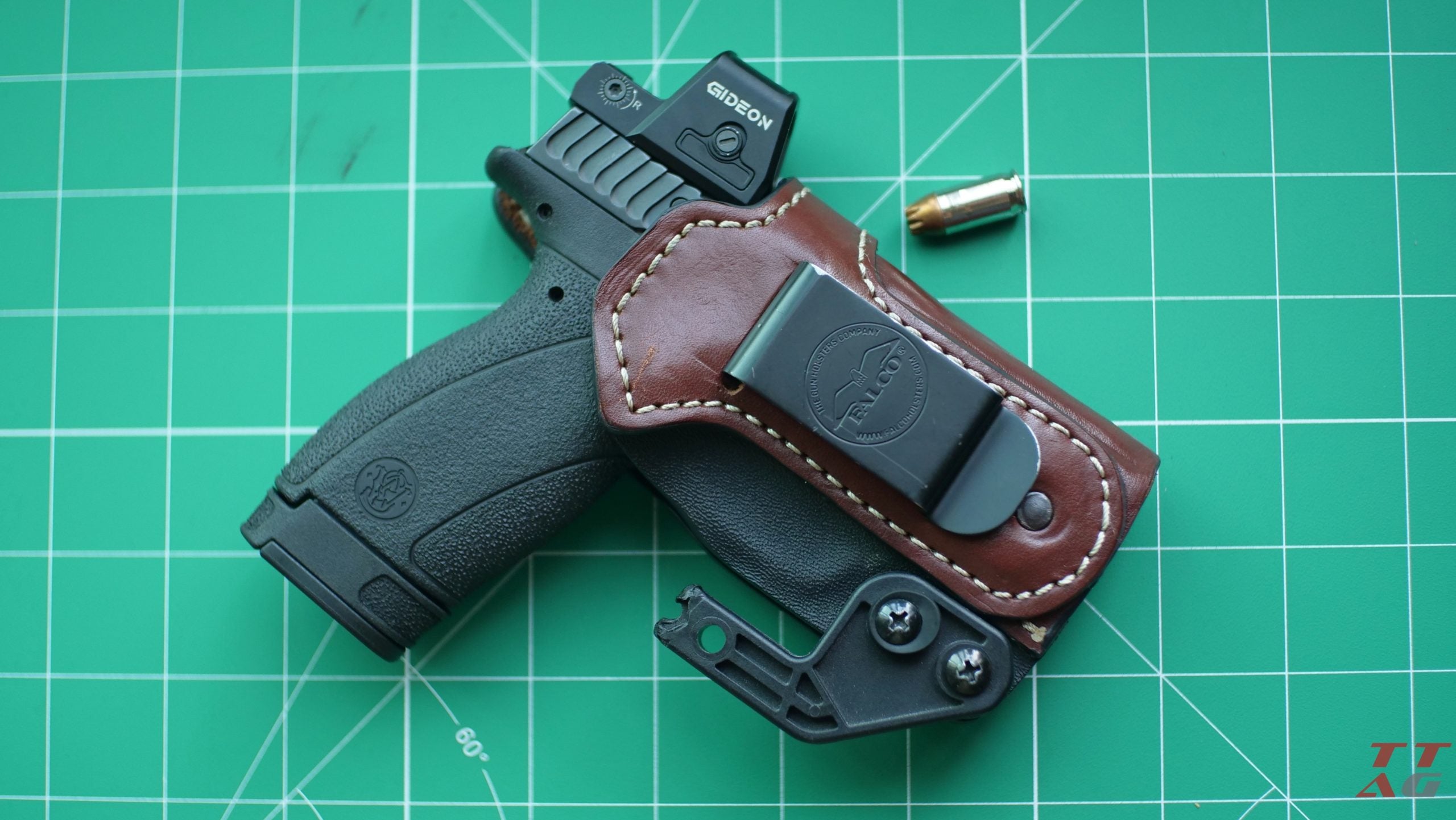
I have been running the standard Smith & Wesson Bodyguard 2.0 as my deep-concealment carry gun for a good stretch now. Out of the last couple of years, it has hands down been my new favorite concealed carry piece in my current rotation. It disappears under a t-shirt better than just about anything else in my collection. When Gideon Optics released the Pebble reflex sight built around this exact pistol, I decided it was time to see if a dot could make the little .380 more than a last-ditch contact distance weapon.
The S&W Bodyguard 2.0

The Bodyguard 2.0 itself needs no long introduction. This tiny little striker-fired pistol won my heart over two years ago at one of Smith & Wesson’s first media events, held at its new Maryville, TN, facility. The pocket-sized pistol can hold ten or twelve rounds, depending on the mag, weighs next to nothing, and has virtually no printing when worn with normal “beach” clothing (shorts/t-shirt/tank top).

I have put well over a thousand rounds through my personal example and a couple of thousand more through other variants and examples at media and range events. One consistent headache across nearly every sample I have tested is that Smith and Wesson somehow drifts the factory irons off target, even at seven or ten yards.
I fixed mine early on with a punch and a steady hand, but the sights still leave you wanting if you plan to shoot the gun for real practice instead of just poking holes at bad-breath range. The Performance Center Carry Comp version I tried is nice, but the better irons on it became irrelevant once I discovered that Gideon was making an optic, so I stuck with the standard model and got to work mounting a Pebble on one of the new foundations of my carry rotation.
Mounting the Pebble

Mounting the Pebble was the first reality check and probably the most difficult part of buying/mounting/owning the Pebble. Gideon includes a dovetail adapter that slides into the rear sight cut on the BG 2.0. On the face of it, this sounds pretty simple.
In practice, Smith and Wesson must have welded the factory rear sight in with magic because it took heat from a torch, a lot of swearing, and serious persuasion to get it out. The adapter itself felt a touch oversized and on the fragile side, and I wound up destroying my first one.

After a quick warranty replacement thanks to Gideon’s customer service department, I handed the slide to a gunsmith friend, who opened the dovetail cut to the smallest possible amount.
A few taps with a brass punch later, the mount seated dead center and the Pebble locked on low and clean. Not exactly plug and play, but once it was done, the optic rode as it belonged there. You could probably do the small amount of filing/sanding on your own at home, but I’d highly recommend you get this done by a professional.
Dot Color Regret

The green 3 MOA dot was my only real regret about adopting the optic. Plenty of shooters with astigmatism swear green cuts distortion better than red. To my eyes, I had the opposite experience.
The starburst was more pronounced, and the constant green backdrop out here in the Pacific Northwest naturally means that green is far less effective at standing out against green foliage or grass. In hindsight, I should have gone with the red version, which would have been smarter for my environment at the very least.

That said, the dot itself is plenty usable for this platform, especially when you’re shooting within 20 yards and at a decent pace. Gideon could have gone bigger, but a 6 MOA version would swallow the already limited window. The bezel already eats a disproportionate amount of real estate compared to other larger red dots, which feels like the unavoidable trade-off when you try to shrink a red dot without sacrificing toughness.
Range Time with the Pebble

Whether you’re going to attempt to do this at home without any shooting or you’re doing it at the range like me, zeroing the Pebble takes patience rather than precision tools. The elevation and windage adjustments lack the clicky, tactile detents you get on larger optics. You turn and guess, then shoot a small group to see where you landed.
I started with the built-in rear backup iron on the optic for a rough zero, then walked it in at fifteen yards. That distance feels like the sweet spot for me as it’s got minimal effect on defensive work distances (7 yards or less), while still letting me reach out to twenty-five yards and beyond when I feel like getting in some more difficult practice with my carry piece.

One thing you’ll notice right away when you actually look through the bebble is that the window is small. There is no way around it. If your grip or presentation is even a hair off, you will spend a second or two hunting for the dot. The solution (at least for the people who’ve trained me and me) is straightforward. Dry fire and draw reps until proper presentation becomes muscle memory.
Once that gets engraved into your head and muscles, the dot should be easy to find, no matter how small the window is. That quick acquisition is precisely why I wanted the optic in the first place. It lets me stretch my training sessions past the usual pocket pistol drills at 3 and 5 yards, so the range time stays interesting instead of turning into the same seven-yard max draw and fire routine on repeat.

Before I pushed the gun for longer strings, I set up a quick zero session with the Re-Nine Safety Target Cones and their cardboard silhouette targets. The cones and silhouetts are sort of a stand-alone target system that you can use alone or in tandem with one another for quick, impromptu range sessions with quick and easy cleanup. They fold flat for the trip to the range, and the cones fold in seconds and hold the silhouettes rock steady without any wobble as long as you put a small log or stone underneath it.
The targets are really handy for taking to the range when you have one or more guns you want to confirm zero on, or when you’re trying to get some accuracy drills in. Each target has ten or so individual bullseyes to shoot at, meaning you get more targets per target!

All the ammunition I tested ran through the BG 2.0/Pebble combo flawlessly. My everyday carry load is the Federal Premium HST 99 grain. It feeds smoothly, and even with the hotter loading, .308 ACP is soft enough for fast follow-ups, and the groups got only tighter with the optic mounted. I also burned through boxes of AAC 100-grain FMJ from Palmetto State Armory.
The most fun I’ve had with this gun so far is shooting a full-size silhouette at one hundred yards. Not something you expect from a micro .380, but the dot made the difference. The biggest win is simply how much more shootable the whole package feels. Short-range practice benefits from the red dot too, but now I can mix in longer “precision” work or even run it through a local match just to see where the wheels come off on a tiny gun.
Some Carry Considerations
Adding an optic to any gun can often change its operating characteristics, so it’s important that you not only test out your carry setup at home, but also test it at the range with the ammo you intend to carry in the gun to make sure it’ll operate without any hiccups. While I did this with my gun and optic combo with about 5 different ammunitions with perfect results, your particular gun, ammo, or optic combo might not work like mine, so you must put in the work yourself to verify that your setup works.

With that being said, the Pebble cleared my daily driver holster without a single hiccup. The Falco Talonguard Hybrid IWB model is still my favorite for this setup. The hybrid Kydex and leather construction locks the gun in place with positive retention, while the fitted sweat guard shrugs off a full day of carry even in damp Oregon weather.
I tweaked the small wing attachment myself for a slightly more comfortable draw, and printing stays minimal under light summer shirts, even with its modified length. The whole combo draws clean and quietly, which matters when the gun lives in your waistband all day.

Durability so far has been exactly what you want from something this small. The Pebble is rated waterproof and shockproof. Motion activation wakes it instantly, and the side load CR1632 battery has shown no signs of early drain after months of carry and range time. Once I do get around to it, changing the battery is easy and hassle-free since you don’t have to remove the optic itself. The low deck height keeps the sight picture natural, and the gun still conceals as it did with irons only. No added bulk, no extra snags.

Gideon Optics is well known for having more budget-minded optics in their inventory, and the Pebbles price perfectly matches and sits at two hundred twenty dollars on the current sale, which feels fair for a boutique optic cut specifically for one pistol. It is not trying to be a do-it-all multi-reticle competition dot, and it does not pretend to be.
The lack of crisp clicks on the adjustments and the tiny window are engineering and price limitations that are acceptable in the end. The adapter could have been more robust out of the box, but overall, none of those issues killed the deal for me, as I have an infinitely more capable carry package now.

At the end of the day, the Gideon Optics Pebble, in my opinion, turns the Bodyguard 2.0 into something way more versatile without giving up any of its concealability or convenience, or accessibility to shooters with grip limitations – this only adds to its capabilities.
The gun, in my opinion, remains the most capable micro compact .308 ACP pistol on the market, and the smallest and most capable .380 ACP in my collection. If you daily carry a Smith & Wesson sleeper .308 carry gun and want to push your skills further, the Gideon Optics Pebble earns a solid recommendation from me.

If you run a Bodyguard 2.0 or have tried the Gideon Optics Pebble on yours, drop a comment below and let me know how it’s working for you. Did the dot color choice bite you as it did me? How’s the holster retention holding up after daily carry? I’m always curious what other folks are seeing with these micro setups.
If you want to check out the gear yourself, the standard Smith & Wesson Bodyguard 2.0 is at smith-wesson.com, the Gideon Optics Pebble is on gideonoptics.com, and my go-to Falco Talonguard Hybrid IWB holster lives at falcoholsters.com. I want to extend a personal thank you to all of these companies for helping get this review set up.

“}]]

