

[[{“value”:”
Thank you for reading this post, don't forget to follow and signup for notifications!
By Doug Bryson
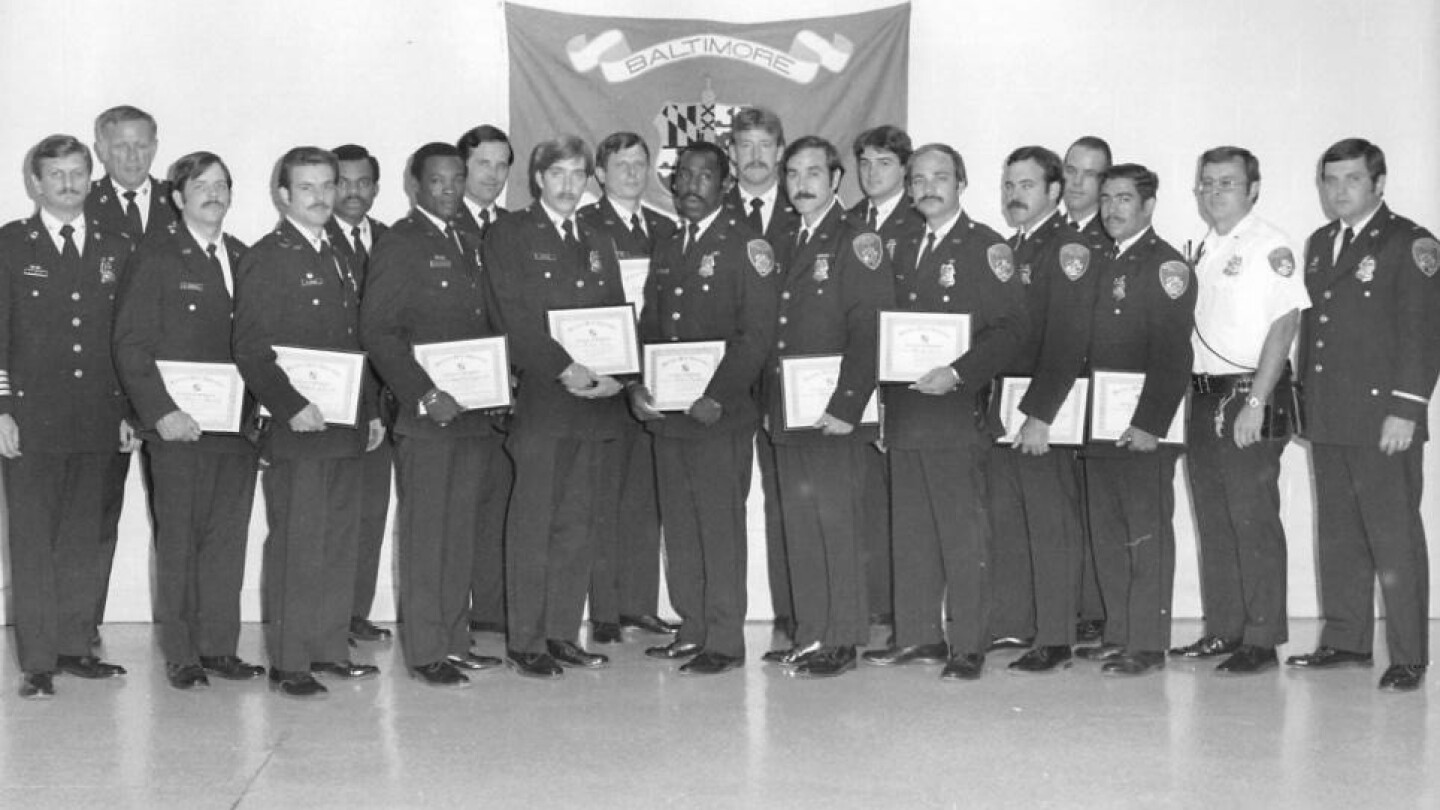
April 16, 1976, Good Friday, was the bloodiest day in Baltimore City Police history. Fifty years on it remains so — a notable feat given the tragic levels of violence that have afflicted that city from the late 1960s through today.
The warning before the violence
John Earl Williams served a short stint in the National Guard, where he received some basic firearms and tactics training. On that Good Friday evening, depressed and angry with his girlfriend who had just dumped him, Williams ingested PCP. He was in possession of over a dozen weapons, including scoped high-powered rifles, shotguns and handguns. Hundreds of rounds of armor-piercing ammunition fueled his arsenal.
About two hours before blood and havoc engulfed the lives of dozens of city cops, Williams telephoned Baltimore Police headquarters, warning that he was going to “kill several people who had hurt him and anyone else who got in his way.” Despite the best efforts of the homicide detective who spoke to Williams, only a general vicinity for the impending mayhem was identified. The area was predominantly in the police department’s Southern District; it butted against the Southwestern District to its west and the Western District to its north.
At 6:58 p.m., Williams broke the glass out of a third-floor window of his West Lombard Street home and indiscriminately discharged a high-powered rifle into the unseasonably hot evening. Firing at nothing or no one in particular, he terrorized his neighbors and triggered an immediate police response. For the next 49 minutes, violence filled the streets. At 7:48 p.m., the police dispatcher broadcast that Williams had surrendered and was in custody.
Much has been written about that day: the failures of police leadership in preparing for and managing the situation; the chaotic response; the communications tumult. All worthy topics for the investigative and journalistic efforts that ensued. And, of course, Williams was relentlessly analyzed and evaluated from afar. The killing of an officer and wounding of five others was treated as a mere backdrop against which all of this assessment, dissection, accusation and counter-accusation played out.
Following is the part that hasn’t been written about beyond the perfunctory initial coverage; the raw and unforgotten experiences of the cops who were actually on the X. It is neither “based” on a true story nor “inspired” by one; it is one.
A routine shift turns volatile
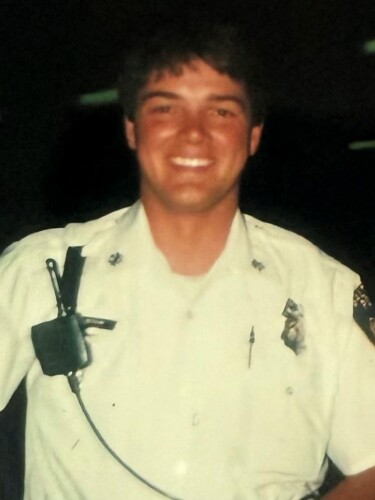
What should have been a mild April day with temperatures in the mid-sixties was a July-like sweat fest. The tee shirts under our ballistic vests, soaked through, were sneeringly uncomfortable. The air conditioning in the one-year-old marked police car served as barely more than a fan; a drop of sweat fell from the end of my nose onto a report I was writing.
Being a Friday, and stinking hot, the calls for service on our four-to-midnight shift would be well into double digits for each unit in the police department’s Western District, always a contender for a top five position as the nation’s most violent — ‘400 North Stricker, see the woman for a domestic assault in progress’; ‘Lexington and Calhoun, man with a gun’; ‘1300 West Baltimore for a fight’; ‘Edmondson and Fremont for a stabbing’; the life of a street cop in a place incomprehensibly dubbed ‘Charm City.’
Western District/Sector One’s patrol area was immediately adjacent to the swath of city across which John Earl Williams threatened to kill. Tactical operations officers and K-9 units were deployed to supplement the Southern District cops. Southern and Southwestern District shift commanders were notified of the imminent threat, as were the Homicide Division supervisor and the Duty Officer, one of the senior-most officers in the department who served as overall police commander for a 24-hour period. There was nothing in the records to indicate the Western District was notified. Whether they had been or not, Williams’ forewarning of death was not passed to the guys on the street from that district, who went about the high-risk tedium of their evening shift serenely unaware of what those patrolling less than 200 yards away were briefed on.
The first shots and Signal 13
Glass was broken angrily from the third-floor window of 1303 West Lombard.
High-powered rifle fire followed.
An off-duty city officer living a block away ran to investigate.
A two-man Tactical unit driving two blocks away heard the initial salvo and moved toward the gunfire.
A second two-man Tac unit was a block away and responded.
A K-9 officer a block away heard gunfire south of his location and pressed ahead.
The car driven by one of the two-man Tac units was struck… and struck again; the rounds piercing the front of the vehicle.
All of the Tactical and K-9 officers abandoned their cars and sought cover.
Two minutes had passed since Williams first broke the glass from his window and fired.
A communications alert tone, designed to get the attention of the most bemused and distracted officers, sounded on our radios. It foretold some level of plight somewhere in the city. It went out to every unit in Baltimore, overriding all other transmissions — [1933 (a Tac unit callsign) taking fire, Unit Block of South Carey; Signal 13; time 1900].
The dispatcher was crisp and serious.
Dozens of units responded to the Signal 13 – ‘officer needs assistance.’
The police helicopter, Foxtrot, stated they were en route; a Tac officer waved them off; probable high-powered rifle fire.
Back on the street, there was still no certainty from where the gunfire was coming.
Officers pinned down
My partner and I blocked South Carey at Baltimore Street with our car, grabbed the Remington 870 and ran toward a few officers stacked on a wall on the northwest corner of Lombard and Carey; searching, listening.
We moved to the northeastern corner of that intersection to get a line of sight on a section of Lombard Street from which the fire could be coming. Three Western District officers, Roland Miller, Jim Brennan and I, positioned ourselves behind a parked van. Two other Western uniforms, Glenn Hauze and Alan Small, along with plainclothes officer Jimmy Halcomb, were behind two cars parked in front of the van.
It was 7:03 PM, five minutes after the first indiscriminate shots were heard; three minutes after the Tac officers’ vehicle was struck.
There was a brief interlude in the shooting.
Then Jim Brennan’s elbow exploded — flesh, blood and bone vaporized, appearing momentarily as a dazzling pink mist. The officer hit the sidewalk hard, first in an awkward sitting position, then onto his back. Pain enveloped his face.
I grabbed Jim by the gun belt with one hand, lifted him from the sidewalk and placed him in the gutter between the face of the curb and the parked van. Adrenaline and subconscious fear proved amazing stimulants.
Where had the shot come from? The sound and the impact virtually coincided — they were close. The deafening snap of the high-velocity round refused to reveal its source as it reverberated through the canyon of brick row houses, an architectural sameness long associated with Baltimore City. A quick look in the direction opposite from which the officer fell — no one on the street; nothing but dozens of row houses with their windows open on the 90-degree evening.
As Brennan was packed behind the van, another ear-splitting crack; Jimmy Halcomb collapsed to the sidewalk 20 feet away from me. He lay utterly motionless, Glenn Hauze curled protectively over his fallen brother, shielding him in death.
Confusion and casualties
I looked at Brennan’s left arm. It was stretched out on the sidewalk — elbow shattered, arm bent at a 45-degree angle in the direction opposite which one’s arm normally bends, blood pumping onto the sidewalk in a soft rhythm. He kept trying to look at his wound as shock set in. The bleeding had to be controlled. I folded his limp arm across his chest and jammed my thumb hard into his armpit, seeking the brachial artery. The flow abated. I adjusted; squeezed harder. He winced, cursed, but the blood flow slowed further.
Spalled concrete floated in a frightening slow motion as another round struck a few feet away; splinters from the sidewalk pierced the left forearm of Roland Miller. Later, he suffered a through-and-through flesh wound just above the elbow of the same arm.
The high-powered rifle, quiet for the moment, was quickly replaced with the thump of a shotgun. Had a city unit located and engaged the sniper? Was there another gunman? Did one gunman have multiple weapons?
Police communications were in chaos: conflicting information over the radio about the source of the gunfire; officers transmitting over one another; speaking into their radios before their mic buttons were depressed; partial information; more confusing than helpful. The ‘city-wide’ channel, used to coordinate operations when cops from different districts and divisions were involved, was tumultuous. Our individual district channel was calmer. Miller notified our district dispatcher of our location — our peril.
Jim Brennan told me he felt something wet running down his left side and back. There was no water in the gutter. His elbow was seeping slightly onto his shirt and ballistic vest — not enough to run down his side. Had I missed something in the quick initial assessment? A secondary survey — nothing.
As the blood of Western District officers spilled across the northeast corner of Lombard and Carey, a group of Southern District officers found their own little hell as they worked their way up an alley attempting to secure the rear of what they had been told was the gunman’s location. Four minutes after the Western District cops were downed, a shotgun barked twice from the rear of a row house. Three Southern District officers, Art Kennell, Neal Splain and Calvin Mencken, were pelted in the face with buckshot. Kennell was hit directly in one eye.
Waiting, suppression and evacuation
The Western District officers were too exposed to move; too far away from cover. No one was coming into or out of our position until this was resolved – not until the shooter or shooters were killed, surrendered, forced out of the house by tear gas or heavy suppression fire employed.
We waited.
Tac officers entered an abandoned house directly across from the shooter’s. The Command Post tried to get gas and counter-sniper teams to that location. Having to navigate around the gunman’s position and confusion about which house the Tac officers were in made this a slow process.
Uncoordinated fire from some police units added to the turmoil.
Alan Small, behind one of the three cars on the northeast corner of Lombard and Carey, tried to leave his position of concealment to assist with the treatment of Jim Brennan. I appreciated his courage and enthusiasm, but he would have been exposed; I told him to get back behind the engine and wheel of the car where he came from and to stay there.
The street lights kicked on. The police shot them out.
Officers clad in dark blue jumpsuits with long guns appeared in the alley, the closest position of cover to where we were pinned down with one dead officer, one grievously wounded, one lightly wounded but fully effective.
Sixteen minutes after Halcomb, the plainclothes officer, was killed and Brennan shot in the elbow, the command post was still uncertain of our situation.
Thirty-four minutes after the first officer was shot and on instruction from the Command Post, a barrage of suppression fire erupted.
Police suppression fire ceased.
Taking advantage of the hiatus from insanity, a Southwestern District officer and an off-duty homicide detective who had responded to the scene sprinted across the street to our position, bearing extra ammunition.
There were keys in the van behind which we had been concealed. The homicide detective and I decided to hoist Brennan into the vehicle and drive him off of the X. We opened the side door to discover a husband and wife crouched on the floor of the vehicle. We pitched Brennan inside and told the owner to drive straight up the street where he’d be met by an ambulance. The van sped away.

Photo courtesy Doug Bryson
Surrender, leadership and aftermath
Thirty-six minutes after his elbow was destroyed, Jim Brennan was moved from the kill zone.
As the dead and wounded were being evacuated from their Carey Street gutter, a telephone rang in the police communications division. John Earl Williams’ PCP-boosted depression and anger had turned to fear; to panic.
Forty-three minutes after the first officer was shot, Williams decided anger at his girlfriend and everyone else who, in his mind, had wronged him wasn’t worth getting killed in the dark solitude of a bullet-riddled west Baltimore row house.
At 7:47:50, police radio announced the suspect was in custody.
We’ve all been limited, endangered and embarrassed by those who lead us while they live in indecision and fear; protecting their next promotion, their next assignment. But the young city cops remembered why they served; their responsibility to the people and, importantly, to each other. They met the moment along with Dominic Giangrasso, the bold homicide detective who helped me put my friend in the van; Joe Key, a smart, assertive, sometimes impertinent rookie sergeant who took over the command post before things degenerated into a total goat rope; and Darryl Duggins, an always impertinent lieutenant beloved and respected by his men who was, as ever, with them as they defied the violence that Good Friday evening.
They are all among the best of us.
There was no administrative leave, no trauma counseling. Those who weren’t dead or in the hospital worked their 4-to-12 shift the next day.
Though many officers were written up for commendation, to include the department’s Medal of Honor, the command staff made a conscious decision to award none. Their rationale — that a future medal ceremony would reinvigorate the scrutiny and criticism of the department and its senior management for their failures. Nothing screams courage and leadership like denial and evasion.
Within a few years, all of the Western District officers from the northeast corner of Carey and Lombard, the X, left the department. Scarred and cynical, certainly; but also in possession of a pride and confidence they could have gained in few other places.
Editor’s note: This account is based on the author’s firsthand recollection of events.
About the author
Doug Bryson was a Baltimore City Police Officer from 1974-1981. He was one of the Western District officers on the X on Good Friday 1976. After resigning from the police department, he spent three years as a Department of State Diplomatic Security Special Agent and 22 years as a Central Intelligence Agency Operations Officer.
“}]]

