

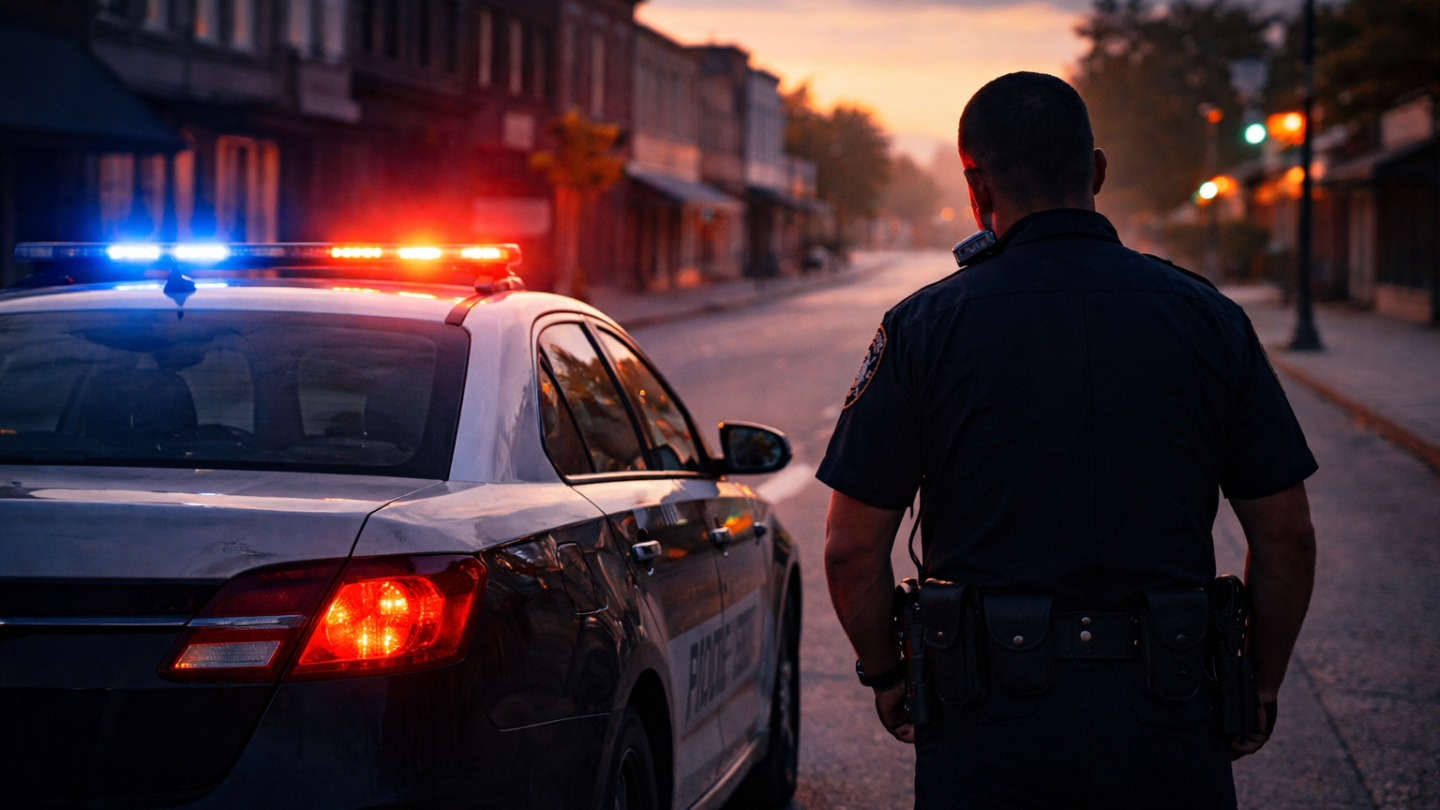
When an entire police department resigns, it’s not just a local story.
Thank you for reading this post, don't forget to follow and signup for notifications!
It’s a sign of a growing strain on small agencies — and for many communities, it’s already happening.
In Weber City, Virginia, a town of about 1,200 people, the entire police force resigned after a town council vote to fire the chief and a sergeant — leaving no officers on duty.
After Police1 shared Chief Joel Shults’ breakdown of why small agencies are disappearing across the country, readers — including current and retired officers, chiefs and community members — weighed in with their own perspectives.
Some echoed familiar concerns around staffing and funding. Others pointed to leadership failures, political pressures and a growing disconnect between police and the communities they serve.
Readers didn’t agree on the cause, but many described the same result: small departments are being squeezed from multiple directions at once.
Here’s what Police1 readers said.
Politics, defunding and anti-police sentiment
Many readers said this goes beyond staffing and pay. In their view, the bigger problem is the political climate around policing.
Several pointed directly to the “defund the police” movement, saying it helped create an environment where officers feel unsupported, scrutinized and less willing to stay in the profession.
“You left out the biggest cause. The national call to defund, get rid of, abolish police, etc.,” one retired police officer wrote. “I’m a retired police officer and not sure if I had it to do over, I would follow the same career path.”
Another reader framed the trend in similar terms, writing, “This is a direct and calculated result of the Defund the Police movement by the Democratic Party.”
Others described what they see as a broader anti-police shift fueled by politics, media coverage and changes in the courts.
“Unfortunately, the media and politicians have created a culture and mindset against police,” one reader wrote. “The culture has changed so much in this country that law and order is almost an afterthought.”
Some readers also said officers are pulling back from proactive policing because they feel they can no longer count on support from prosecutors or the judicial system.
“Officers are reluctant to get involved because ‘woke’ prosecutors are quick to indict officers for doing their job,” one retired officer wrote. “It’s a lot easier to look the other way instead of getting involved.”
Leadership, politics and the tipping point
Beyond national politics, readers also pointed to local leadership as a deciding factor in whether a department holds together or starts to fall apart.
Several said political interference at the city or town level can quickly destabilize even a functional agency.
“As a retired chief of police with 42 years of law enforcement experience … a more serious problem, however, is a lack of leadership,” one reader wrote. “Today in too many places, mayors and other elected officials determine policies and procedures and chiefs are nothing but ‘yes men.’”
That kind of instability, the reader added, can push good officers out the door — especially in smaller departments where a few resignations can put the whole agency on the edge of collapse.
Others pointed to leadership decisions as the kind of flashpoint that can trigger a rapid shutdown, as seen in Weber City.
Recruitment, retention and experience gaps
Staffing challenges were another repeated theme, especially when it comes to small agencies trying to compete with larger departments.
Readers described a familiar cycle: small departments hire officers, give them experience and then lose them to agencies with better pay, more support and greater long-term stability.
“Some marginally qualified applicants will hire on with a small department, gain some experience, and then move on to a larger agency. Turnover is a problem,” one retired chief wrote.
Others suggested the hiring pool may also be narrower because of qualification standards that keep some otherwise interested candidates out.
“Perhaps some of the qualifications are hindering the ability to recruit new officers,” one reader wrote.
Accountability, misconduct and public trust
Not every reader blamed outside forces. Some said policing has created part of this problem itself.
Several responses pointed to excessive force lawsuits, weak training and departments protecting bad officers as reasons public trust has eroded.
“Some of the problems are brought by the police themselves by excessive force lawsuits or other lawsuits because of officers not being trained in the law or the constitution,” one reader wrote.
Another reader put it more bluntly: “Why do we need cameras? Simple, there is no trust anymore. Lives are unjustly ruined every day by bad apples… Blind trust is gone.”
Others criticized overtime practices and agency spending.
“Many police agencies are racking up illegal or unnecessary overtime… When you throw unlimited money to police they will abuse it,” one reader wrote.
Safety, risk and the day-to-day reality of the job
Some readers focused less on politics and more on the reality of doing the job itself.
“The ‘shoot or don’t shoot’ scenario is REAL,” one reader wrote, pointing to the speed and pressure of life-or-death decisions officers face.
Others said the risks of policing no longer match the pay, support or respect the profession receives.
“The model police officers are putting their lives at risk for less than they are paid,” one reader wrote.
What comes next for small agencies?
A few readers offered possible solutions, including more state-level support, centralized training and legal resources, and alternative local models.
“There’s an easy fix for this problem and it starts on the state level,” one reader wrote, suggesting a central center for legal support, training and other law enforcement needs.
Others floated ideas like partnerships with county agencies or private security support.
Still, the larger takeaway from the responses was not optimism. It was frustration — and, for some, resignation.
For many readers, the collapse of small police departments is tied to more than staffing shortages or budget pressure. They see it as part of a broader shift in how policing is viewed, funded and supported.
And whether they blamed politics, leadership, misconduct or all three, many readers described the same outcome: fewer people stepping in, and more departments at risk of stepping away.
Have something you’d like to add to the conversation? Please share below.
Police1 readers respond:
- Many changes in law enforcement throughout the years. Some good to help officers and communities, yet some hindered communities and officers. It takes serious dedication to be in law enforcement in today’s political climate and social issues. I must thank the men and women who do the job daily fairly and with integrity.
- People pushed for defunding police. They want police and law enforcement held to impossible standards to where they can’t do their jobs and are disrespected by the city council and community and then shocked that police quit.
- As a retired Law Enforcement Executive, one thing I did not tolerate was poor political or command leadership. I would not work under someone who made poor decisions that affected myself ot those under my supervision, or those who expected me to compromise my morals and ethics. I feel this is what is happening in Minneapolis. Many don’t trust the Chief, the mayor or the council. If you also look at states like New Mexico, who took away liability protection, these states are constantly struggling to maintain manpower.
- The Law Enforcement Code of Ethics, if adhered to by every sworn officer, including top brass, would eradicate corruption, and police chiefs should be vetted in not selected by mayors or city councils.
- Pay has been a major problem for rural departments in SE Missouri. Just within the last 1-2 years many of the smaller and rural agencies have increased pay to come closer to medium-sized city agencies. The ones that won’t, or can’t, tend to end up taking poorer quality LEO’s with a checkered history or new academy graduates that leave at the first chance they get. In other words a revolving door that benefits nobody. For some of these agencies I have seen what a new chief or sheriff can do once the old (and often toxic) leadership is out. It often comes down to new leadership to create healthy relationships with city councils or county boards and to show them why things like a pay raise and better equipment can benefit existing officers and help attract quality officers and close that revolving door.
- As a small department chief I gave everyone something to take care of that interested them, regardless of any rank. That included state level programs as well. ,Retired in 2017, and my community put on a retirement party. Some still call me chief, some boss. Delivered tools part time to have health insurance and moved on. Last week local judges asked me to kill their coyotes on their property. I did well. Stay busy, stay proficient
- Demand of continued education is constantly putting them not only under stress doing their job. But also placing more and more emphasis on the training hours, losing time with her family, not making enough money because they have to work off-duty jobs.
- I hate that small towns are losing their police departments. Everyone needs to have someone to call when a crime is being committed, but a lot of the times in these small communities the one doing all the crimes were the police. When people started holding the officials accountable, the officials could not handle the heat. I think we should pay good officers more, and get rid of the bad ones. Maybe the state police should police the smaller communities.
- Our leaders dont care about small towns or anywhere. They’re protected, they just as soon let us kill each other. Shameful the men and women who try to protect us don’t get the back or understanding what they have to deal with on a regular basis.
- I have worked for large agencies (10000+ deputies) to small agencies (52 officers). The major area I encountered with a small agency is trying to be like the large agencies. The mindset of ” this is how we’ve always done it” and the unwillingness to change is real. I was asked for my opinion based upon experience and rank, then criticized, with “I’m trying to change this place into my former agency.” I learned to keep my opinion to myself. Small agencies take on too much. Areas that are not law enforcement matters. Command staff are unwilling to say no and not sure when to say yes. Small agencies are very quick to deem you the wrongdoer in a shooting or use of force (Ferguson effect). Vocal minorities of defund the police are loud in small agencies. Command tends to try and appease the vocal minority and not listen to facts. I wanted to go into retirement at the small agency I was hired at. The culture was too much, the appeasement level command would go to, placing me on trial, and internal investigations with criminal complaints sought all leading to being unfounded or acquitted. Simply to appease the defund the police screamers. Too much stress and aggravation. I left the small agency and went back to my previous large agency. When I was re-hired I was asked a lot what was wrong with them. The same questions my attorneys would ask during shooting and use of force internal investigations, “what is wrong with your department?” Well, what is wrong is, small agencies are run by politicians and not law enforcement professionals. It all boiled down to politicians and civilian oversight not knowing what law enforcement does or deals with on a daily basis and making policy decisions that are disastrous to law enforcement and the law enforcement professional.
- It’s woke progressive policy that causes these issues. The constituents vote for it. I think it’s awesome that they get what they voted for. Call the social worker the next time someone is stealing your car.
- I worked in LE for 10 years — several at a rural agency. The problem is universal — cops suck, cop culture is toxic. I treat LEOs the same way I treat convicted felons. I am cautious, careful not to say anything offensive and try to minimize the amount of time around them. I would never get back into LE and to be honest, I’m happy to see departments failing. Evil, psychotic, violent and hateful – that describes policing as a profession. It needs a full reset. Everyone who has been tainted by modern LEO culture should not be allowed to wear a badge, let alone carry a firearm.
- I feel lucky to have finished a long and rewarding career in law enforcement before conditions deteriorated to their current state. My opinion: political correctness and weak leadership, coupled with an outdated organizational structure will continue to unravel departments until public support can be rebuilt from the ground up.
- There’s corruption in every employment system in the world, and I’m not saying that’s alright but these communities will need these law enforcement officers sooner than later. I’m not surprised at all that a state like Colorado put unreasonable demands on law enforcement because that’s a pro-immigrant state that cares more about illegals than Americans, and I feel sorry for the sheep over there listening to the propaganda from the MSM. When all hell breaks loose, I hope the feds let it be. The demands and laws that are made come from well-protected people and maybe they’ll get it first. Citizens want to feel safe and that’s impossible without law enforcement. As soon as a criminal here’s about a department closing, they head that way because they know state officers will not get there fast enough. I worked in law enforcement for years and I saw a small town near me not have the budget to pay officers every pay period but the citizens stepped up and helped. Restaurants feed the officers on or off duty and after a few months they got their budget approved and the officers were saying that they wouldn’t leave that town for anything. Not only do Citizens need officers but officers need good citizens in their corner. I will be keeping up with this community in Virginia just to check on them. I know several retired police officers who may be willing to help them. I’m praying for law enforcement everywhere. This is a sad time in America because of democrats.
- The police departments need a complete overhaul and should use the military as their guide by not allowing politicians to interfere with justice.They should be completely independent of political parties and also separate themselves from religious ideologies as well and let the Law itself stand on its own two feet as it should which will garner the support of the public they have sworn to protect.
- Respectfully, Sir, in the town I come from, it is the cost of pensions and benefits to the town that is a huge problem. It’s a tough nut to crack, tax-wise, when they keep crying about pensions when many of us can barely afford to put 5% of our salaries into our 401Ks. We have a small force in a small town. It’s not like we have the crime rate of, say, Dallas. What are the members of this force doing to deserve such high salaries and superb pensions that most of us aren’t doing every day?
- Using a small police department is a bad idea. If you do not have the financial means to hire at least 16 full-time policeman, it is better to pay the sheriff’s department what it would cost you. There’s no free rides.
- I believe this is intentional. They bash law enforcement, antagonize them daily as the news bashes them as fascists or looks for opportunities to make examples of them. Tying their hands and making their job so difficult that they would rather resign than wait until a split-second decision either costs them their job freedom…or life. Society has made it okay to abuse police and has made the criminal the victim in most cases. My belief is, “defunding police” looks too bad on election days, BUT if they all quit, it doesn’t look like defunding is happening…but it is. Good luck to all law enforcement. I pray for you all every day and hope that one day you can return to doing your jobs. God bless and stay safe.
- Maybe if we stopped funding the criminals that stay at home and suck off the system in an ever growing culture of hand outs, put that money towards funding the police and encourage these folks to get off the couch and get a job, there may be a difference in which way the wind blows.
- It doesn’t really help that democrats in power are vilifying law enforcement and vowing no cooperation and urging citizens to fight.
- My local community turned law enforcement over to the county about 10 years ago. This year the town council re-established the PD because they got a one year grant to pay for a 9 person department. I don’t see this going well in the long term. I have served with a small PD, rural SO, and as a state officer assigned to a rural area. It is critical in these areas that we work together and support each other. Unfortunately, sometimes with new leadership in any agency egos replace judgment and cooperation goes out the door. I also would like to comment on the statement that in a rural area being off duty is not ever entirely true; they nailed it.
Trending


Company News


