


The current hotness for shotgun side saddles is variations of shotgun cards. Soft-good cards made from elastic and nylon that attach to your shotgun with Velcro—or, excuse me, hook and loop. There are lots and lots of side saddle cards out there, and I’ve used them all. I like them; they work, and work well. So, do traditional side saddles, like the Mesa Tactical Sureshell, still have a place?
Thank you for reading this post, don't forget to follow and signup for notifications!
- What I Like About the Mesa Tactical Sureshell
- Run and Gun
- The Sureshell Verdict
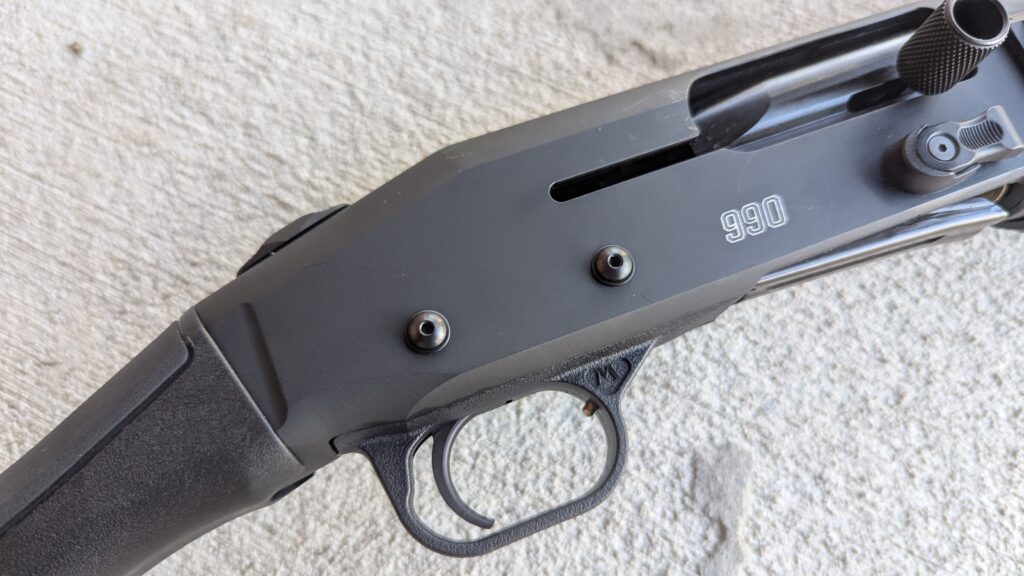
The Mesa Tactical side saddle is a traditional side saddle made of polymer and metal that attaches to the side of your shotgun’s receiver by replacing the trigger pins. Overtightening these bolts can cause receiver pinch, which creates reliability issues.
Advertisement — Continue Reading Below
Mesa Tactical must have seen this issue a time or two since they use Chicago screw,s which tighten against each other to prevent receiver pinch. Anything with a shotgun gets loose. Witness marks are a valuable part of a shotgun’s setup to make sure the screws stay tight.
Threadlocker is our best friend, and the Mesa Tactical side saddle advises using a drop of non-permanent threadlocker. I followed these instructions and outfitted my Mossberg 990 Aftershock with a Mesa Tactical side saddle to see if the non-shotgun card option is still a viable one.
Installation is quick and easy. Tightening the Chicago screws down didn’t take much effort. With a drop of threadlocker and 24 hours to dry, my side saddle was ready to go. One benefit of this design is its slim nature; it’s a four-shot minimalist side saddle.
Advertisement — Continue Reading Below
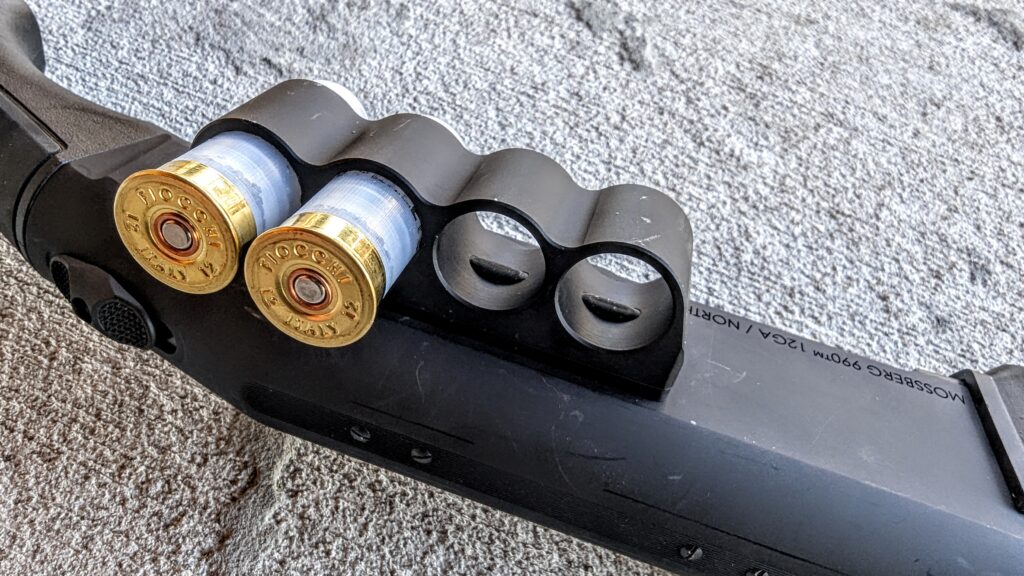
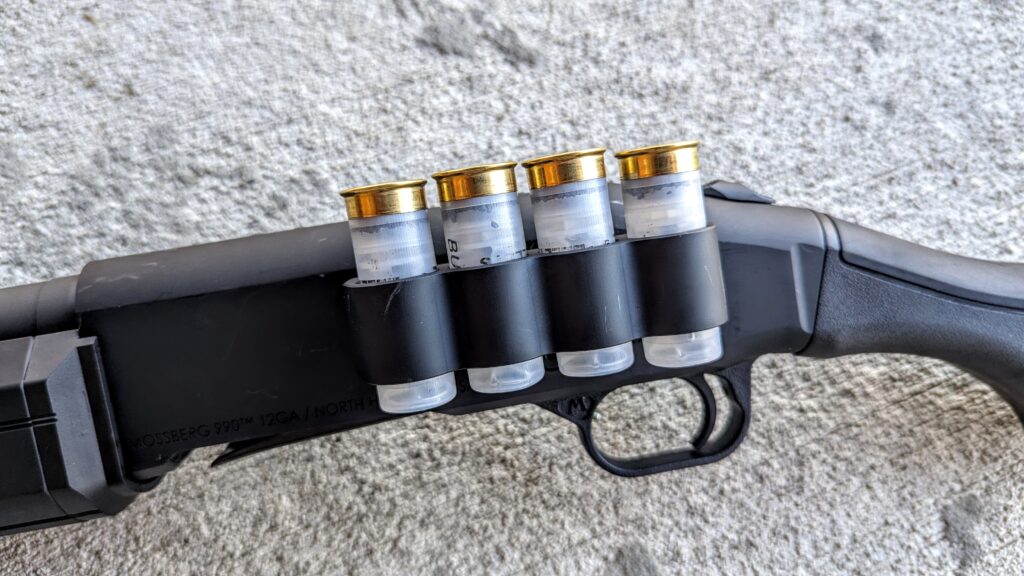
I like the four-shot side saddles to keep things lightweight and well-balanced. Four doesn’t seem like much, but it’s unlikely you’ll run dry with a shotgun in a home defense situation. Even four extra rounds seems to be a little overkill for most uses. On a gun like the Aftershock, four rounds make even more sense to keep the gun lightweight.
Unlike some other side saddles, it can be smaller. It’s trim and slim, with minimal receiver coverage. The Sureshell has four slots and nothing more, no extra material above or below the loops.
Advertisement — Continue Reading Below
I also like the retention system used by the Sureshell. There is a soft rubber tube that runs between the loops and the backplate. This soft rubber material provides an extra layer of soft friction to keep the shells in place and to prevent them from slipping up or down. It requires a hair more effort to free the shells, but not much.
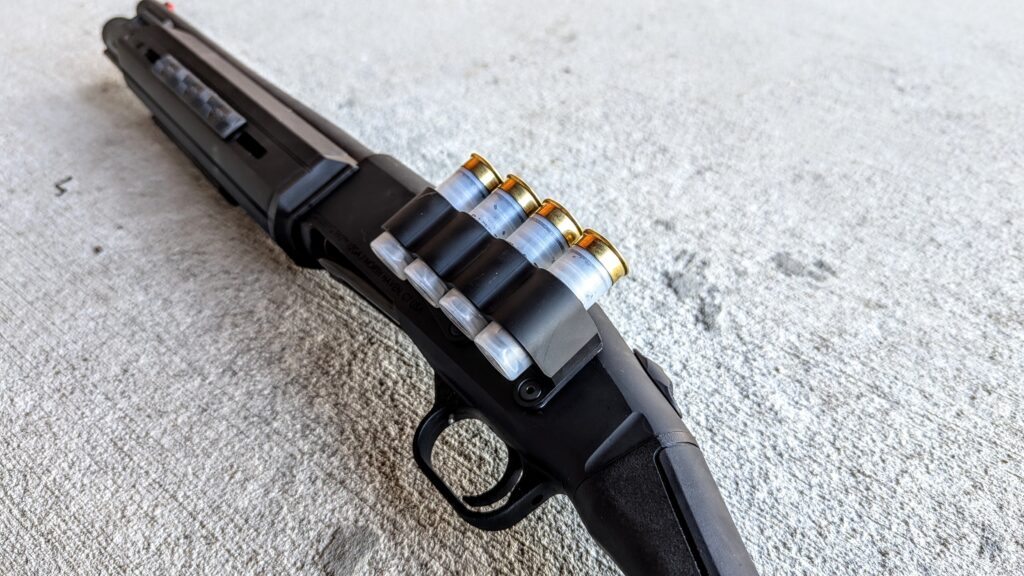
The Sureshell comes with a black tube preinstalled and a spare white tube. The white tube offers a stronger design that adds more retention. You can swap them with ease, and Mesa Tactical will replace the tubing for free should it ever wear out. Mesa says it should last forever—unless you’re an absolute animal. I made that last part up.
Advertisement — Continue Reading Below
With the Sureshell installed on my 990, I started by working with dummy rounds while watching TV. It’s a little dry-fire practice, and it got me used to the Sureshell design and its intricacies. At first—maybe for the first dozen reloads for each loop, the retention was hefty.
It took some force to free the shells, but by the end of my dry-fire session, the retention balanced out more or less. They don’t glide out, but they move smoothly. You can free shells with ease and load one or two without much issue. With heavier live rounds in the loops, I did the “shake and bake” retention test.
Advertisement — Continue Reading Below
I held the gun upside down and shook the hell out of it to see if the shells would move or drop. I switched the orientation to brass-down and repeated the test. The rounds didn’t move. The retention keeps them in place, for now.
Okay, well, it turns out they keep them in place all the time. I suspected that recoil would shake them a little loose, but I was happy to be wrong. Some buckshot and reloads later, the Sureshell held on tight.
Next, I ran a simple drill to mix recoil and movement. I mean “ran” literally. I set up two cones 15 yards apart and ran back and forth. The gun started loaded with five in the tube and one in the pipe, with the Sureshell fully loaded.
Advertisement — Continue Reading Below
I’d run to one cone, fire two, run to the next, and repeat, loading when necessary. All that run and gun didn’t result in any retention issues, and I could load as quickly as my hands allowed.
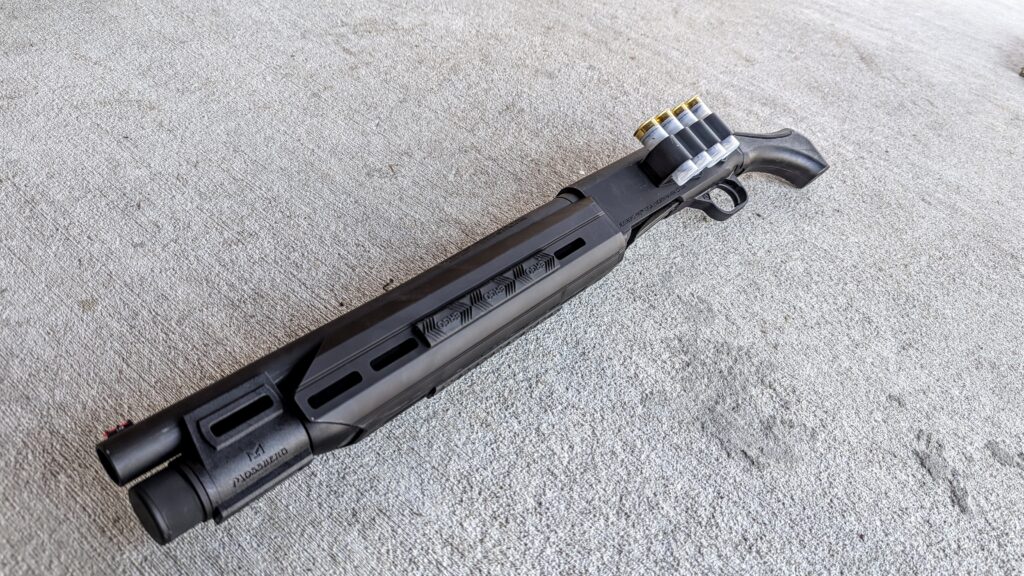
In an era of elastic side saddles, the Sureshell keeps things more traditional. Steps were taken to fix the issues with pins, and I appreciate the low-profile design. It’s not disposable like a shotgun card, which is nice. Additionally, having adjustable retention is quite handy, especially for the “brass-down” crowd.
Advertisement — Continue Reading Below
Check the Sureshell out for a traditional, rock-solid side saddle for the 990, and various other Remingtons, Benellis, and Mossbergs.

