

[[{“value”:”
Thank you for reading this post, don't forget to follow and signup for notifications!
This article is part of the Police1 Leadership Institute, an initiative focused on the challenges facing law enforcement leaders tasked with guiding their agencies through rapid operational and technological change. Throughout this series, Police1 will explore what AI adoption means for police leaders — not just in terms of tools, but in leadership responsibility. That includes evaluating emerging technologies, managing legal and ethical risk, leading organizational change and ensuring innovation strengthens public trust rather than undermines it.
By Captain Katie Cardona
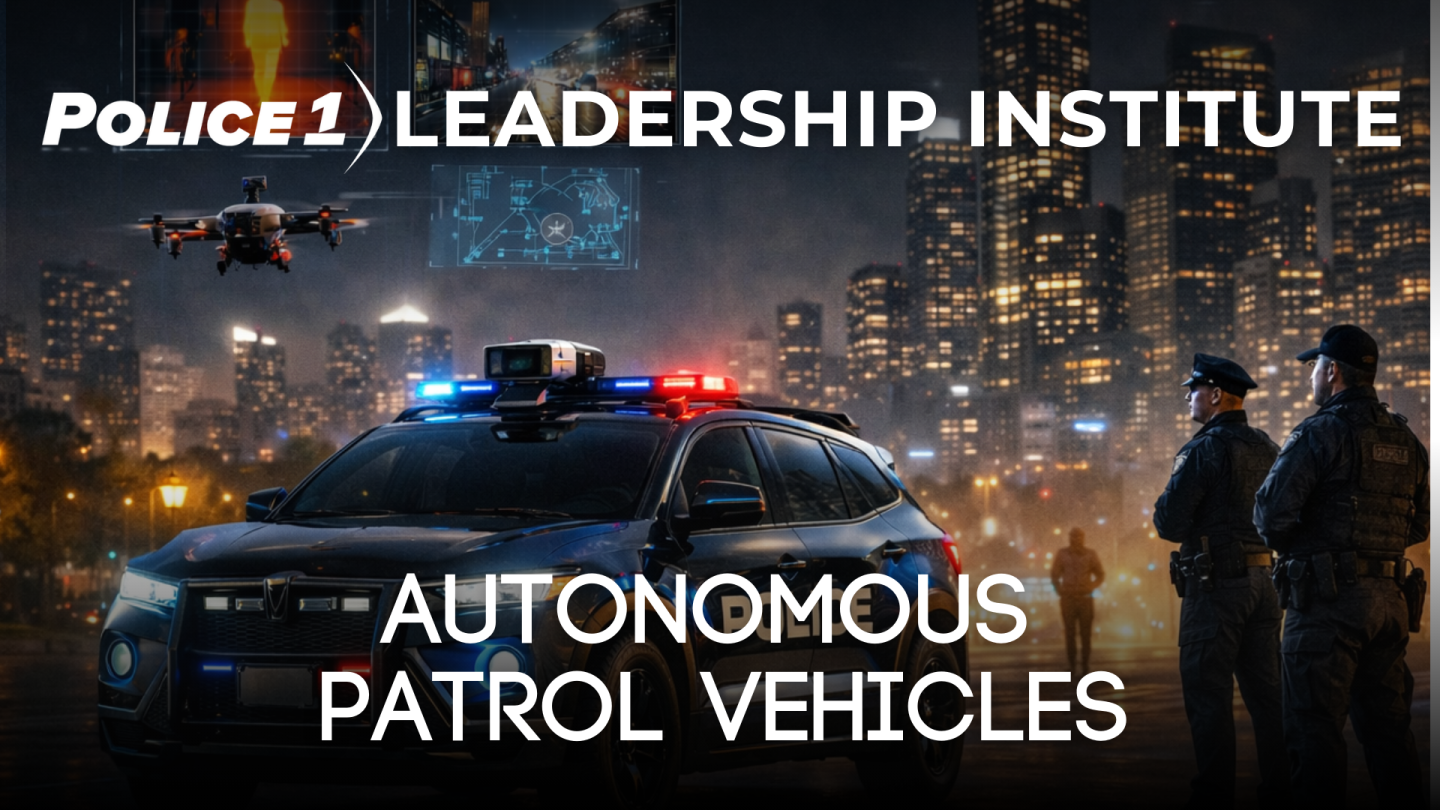
As dawn breaks over the city, a lone autonomous patrol vehicle glides silently through waking streets. The future has arrived in the form of a guardian that never sleeps, never tires and never hesitates. Equipped with 360-degree cameras, drone launch capability and thermal imaging, it collects and transmits data at extraordinary speed, extending the reach of public safety far beyond human limits and offering a glimpse of what the next generation of policing could look like.
The era of autonomous policing is already upon us, yet few are paying close attention. In October 2025, the nation reached a milestone with the deployment of its first autonomous patrol car in Miami-Dade, Florida. [1] According to Sheriff Rosie Cordero-Stutz, the Police Unmanned Ground (PUG) vehicle is designed to patrol high-activity areas, assist during emergencies and maintain a visible law enforcement presence where resources are limited. Sheriff Cordero-Stutz described the innovation as “a game-changer” that allows the agency to engage with the community in new ways. The 12-month pilot aims to evaluate outcomes such as response times, crime deterrence, officer safety and community trust. [2] Insights from this initiative could inform future deployments, offering a foundation for broader adoption and helping to guide the development of autonomous policing nationwide.
| RELATED: Fla. sheriff’s office debuts ‘PUG,’ a self-driving cruiser equipped with drone, LPR technology
For law enforcement leaders, the path forward demands more than adaptation. It calls for a bold, ethical embrace of innovation that anticipates public concerns and strengthens community trust. Policing now stands at a pivotal crossroads, confronting the rapid rise of autonomous technology and the readiness challenges that accompany it. Miami’s experience shows that what was once rare could soon become the new norm. As autonomous patrol vehicles move toward widespread adoption and begin to redefine public safety across America, the question is when, not if, they will be coming to your community. [3]
Autonomous vehicles in the broader transportation landscape
Autonomous vehicle technology is rapidly transforming the transportation sector, generating efficiencies that offer valuable insights for law enforcement adoption. In California, robotaxis, autonomous trucks and mobility services for the elderly and disabled are growing at an unprecedented pace. [4] Driverless taxis now log millions of passenger miles in major cities and safety analyses from the National Highway Traffic Safety Administration indicate that higher levels of automation can significantly reduce crashes by eliminating human error. [5] These developments suggest a transportation landscape that is becoming safer, more efficient and more accessible, reshaping how people and goods move through urban environments.
This trend is reflected in recent usage and deployment data. By May 2025, driverless taxi usage in California reached a record four million passenger miles per month, an eightfold increase in ridership in just one year. [6] Industry leaders such as Waymo, Zoox, Cruise and Tesla have collectively deployed more than 2,000 robotaxis in cities like San Francisco and Los Angeles, with further expansion on the horizon. [7] For law enforcement leaders, this acceleration underscores the need for deliberate strategic planning and the development of operational frameworks that align with both emerging technologies and evolving state requirements. Agencies must anticipate how the continued expansion of autonomous vehicles will affect patrol strategies and community expectations, ensuring readiness before these vehicles become standard on city streets.
Benefits to policing
Police departments across the nation are grappling with increasing service demands, staffing shortages and high operational costs, all while trying to keep pace with rapidly advancing technology. These pressures are driving the adoption of automation, artificial intelligence and data systems that enhance agency performance by taking on tasks that once required constant human oversight. [8, 9]
The introduction of autonomous patrol systems exemplifies this shift. The Miami-Dade Sheriff’s Office Police Unmanned Ground patrol partner has demonstrated the potential benefits of an AI-driven patrol unit equipped with sensors, thermal imaging and drone deployment capability. [10] Acting as a digital patrol partner, PUG provides persistent coverage and supports field intelligence, allowing personnel to focus on high-priority tasks such as complex investigations and meaningful community interactions. By handling routine functions, autonomous vehicles like PUG help agencies maximize impact amid staffing and resource constraints. [11]
The promise of autonomous vehicles in policing is significant. Operating continuously, these systems extend patrol coverage beyond the limits of traditional officer shifts. Real-time intelligence streams directly to command centers, improving situational awareness, supporting data-driven decision-making and enabling faster, more informed responses. The rise of real-time information centers further amplifies these benefits by creating seamless communication between the field and command staff. [12] Autonomous patrol units can serve as mobile extensions of these centers, feeding live video, data and analytics back to centralized hubs. Together, these systems enhance coordination, accelerate response times and strengthen intelligence-led policing strategies.
As autonomous technology becomes more common in civilian transportation, its adoption in policing offers the potential to unlock meaningful operational and community benefits. Integrated into daily operations, autonomous vehicles can enhance the reach, precision and effectiveness of law enforcement by providing consistent and visible coverage while supporting more informed decision-making. [13, 14]
Community engagement, transparency and legal framework
Operating around the clock, autonomous vehicles can provide substantially greater patrol coverage and direct connectivity to the agency, enhancing protection for business districts, schools and neighborhoods. Seeing a high-tech vehicle patrolling overnight, equipped with cameras and drone support, may boost public confidence while also signaling a shift in how agencies approach visibility and deterrence. Given this momentum, agencies must prepare not only their fleets but also their organizational culture for seamless integration.
Beyond their physical presence, autonomous vehicles create new ways for communities to connect with law enforcement. Equipped with touchscreens or QR codes, patrol vehicles could allow residents to report issues, request assistance or access safety information on the spot. They could broadcast public safety announcements or, during community events, serve as mobile information hubs. Data generated by these systems, such as traffic patterns or safety hotspots, could be shared with neighborhood groups, helping residents play a role in shaping policing priorities and building trust. When integrated thoughtfully, autonomous vehicles can position agencies as forward-looking organizations that leverage technology not only for efficiency but also to strengthen relationships with the communities they serve.
Challenges
Despite their potential advantages, the road ahead for police use of autonomous vehicles is not without obstacles. Integration brings cybersecurity risks, ongoing funding demands and added complexity in managing traffic stops and accident investigations. These challenges are compounded by emerging legal requirements. In California, legislation will soon mandate “response lines” for autonomous vehicles, allowing officers to communicate and coordinate with vehicles operating without human drivers. Manufacturers will be required to maintain 24/7 emergency lines and equip vehicles with two-way communication devices. Officers will also be able to issue notices of noncompliance that must be reported to the Department of Motor Vehicles within defined timeframes. [15] These developments highlight the regulatory and operational complexity of incorporating autonomous systems into policing.
It is no surprise, then, that autonomous vehicles are under close public and professional scrutiny. They raise legitimate concerns related to privacy, data security, over-surveillance and public trust. Residents and privacy advocates worry about constant monitoring, potential misuse of recordings and disproportionate attention to certain neighborhoods. While proponents argue that autonomous systems can make communities safer, civil rights groups caution that they “could normalize unprecedented levels of public monitoring without proper safeguards.” [16]
At the same time, agencies must consider how autonomous vehicles could reshape core law enforcement functions. Long-term adoption may alter staffing needs, budgets and workflows, particularly in traffic enforcement. As autonomous vehicles become more prevalent among the general public, the role and necessity of traditional traffic units may shift. Any reduction in traffic enforcement raises questions about revenue shortfalls and potential impacts on recruitment, career pathways and retention for officers who view traffic assignments as foundational experience. The erosion of pretextual vehicle stops could also disrupt policing models that rely on traffic enforcement as a broader crime deterrence strategy. [17]
Recommendations
Successfully integrating autonomous vehicles into policing requires a strategic approach that balances technological innovation with community trust, workforce readiness and responsible governance. Sustained success will likely depend on new funding models, public-private partnerships and deliberate investment in personnel and organizational culture. Ongoing training, collaboration and leadership committed to continuous learning are essential to navigating challenges and maximizing the benefits of integration. [18]
Pilot programs anchored in strong community engagement and transparent evaluation can help agencies demonstrate value and build public confidence. [5] Maintaining open dialogue with residents, sharing performance dashboards and providing accessible public interfaces can further reinforce trust. [19] Guidance also emphasizes the importance of establishing clear legal and policy foundations to ensure compliance with state and federal standards while addressing privacy, surveillance and liability concerns. [20]
Cultivating a change-ready culture is equally important. Agencies are encouraged to promote innovation, ethical standards and cross-functional teamwork, supported by leadership succession planning and adaptable organizational values. [21] Workforce development is central to this effort. Experts in law enforcement modernization recommend training officers in digital literacy, artificial intelligence and technology troubleshooting while recruiting personnel with specialized technical expertise to support efficient and responsible integration. [18]
If adopted thoughtfully, autonomous vehicles could enhance operational efficiency while improving safety for both officers and the public. With streamlined data integration, AI-driven analytics and real-time decision-making, agencies have the opportunity to deliver more effective policing while reinforcing transparency and community trust.
Conclusion
Autonomous vehicles are no longer a distant concept in law enforcement, and police leadership will shape how this transformation unfolds. Their adoption has the potential to alter agency operations, enabling more effective, data-driven decision-making. When implemented with intention, these systems can expand patrol coverage, manage routine tasks and free officers to focus on complex investigations, proactive outreach and other high-priority work that strengthens public trust. Transparent, adaptive and engaged leadership, supported by clear policy, workforce development and community collaboration, will determine whether this technological shift delivers lasting benefits for agencies and the communities they serve.
References
- McLendon BS. Miami launches nation’s first autonomous police SUV. Miami New Times.
- Forney T. “A game-changer:” MDSO debuts fully-autonomous cruiser. WPLG Local 10.
- Growth roadmap for unmanned police car market 2025–2033. Data Insights Market.
- Shu S, Woo BKP. Applications of self-driving vehicles in an aging population. JMIR Formative Research.
- National Highway Traffic Safety Administration. Automated vehicles for safety.
- California’s driverless taxi usage grew 8x in a single year. Visual Capitalist.
- Dilmegani C, Ermut S. 40+ self-driving car statistics. AIMultiple.
- Neitzel L. Staffing shortages are having a negative impact on policing, but technology can help. Police1.
- Fisher C. Navigating the staffing crisis in law enforcement: A strategic call for transformation. Police1.
- Wakefield J. Miami-Dade Sheriff’s Office and Policing Lab launch nation’s first autonomous patrol vehicle pilot. Business Wire.
- Winston C. Autonomous vehicles could improve policing, public safety and much more. Brookings Institution.
- Larkham Z. The quiet rise of real-time crime centers. Wired.
- Technology answers call for greater public safety, crime prevention. PR Newswire.
- Tesla and Waymo under federal scrutiny as new rules and safety probes raise autonomous vehicle concerns. Business Wire.
- California Legislature. Assembly Bill No. 1777 (2023–2024 Reg Sess).
- Mills J. Driverless vehicles are the newest mass surveillance tool of law enforcement. Criminal Legal News.
- Woods JB. Autonomous vehicles and police de-escalation. Northwestern Univ Law Rev Online. 2019;114:74–104.
- Ogg J, McShane L, Patrick E. Empowering law enforcement with essential cyber skills. Oliver Wyman.
- Perkins L, Dupuis N, Rainwater B. Autonomous vehicle pilots across America: Municipal action guide. National League of Cities.
- Bielman V III, Schoeb R. Navigating liability in the age of autonomous vehicles. Wood Smith Henning & Berman LLP.
- Institute for Future Policing. Innovation exchanges: Advancing meaningful improvements in future policing.
This article is based on research conducted as a part of the CA POST Command College. It is a futures study of a particular emerging issue of relevance to law enforcement. Its purpose is not to predict the future; rather, to project a variety of possible scenarios useful for planning and action in anticipation of the emerging landscape facing policing organizations.
About the author

Cory Booth
Captain Katie Cardona serves as a Field Support Bureau Commander for the Vacaville (California) Police Department. Katie began her law enforcement career in 2007, when she was originally hired by the Antioch Police Department. She spent several years as a Gang Investigator and served in the Violent Crimes and Special Victims Units, investigating human trafficking and child abuse, giving her a well-rounded perspective on complex crimes and their impact on victims and the community.
In 2015, Katie joined the Vacaville Police Department. Since that time, she served as a Patrol Officer, Field Training Officer, and Master Police Officer. Katie was promoted to the rank of Sergeant in 2019, where she supervised patrol operations and led the department’s Field Training Program, Hiring and Recruitment Team, Social Media Team, and served as the department’s Public Information Officer. She later went on to supervise the Community Response Unit, leading efforts to address quality of life concerns and issues related to the city’s unhoused population.
In March 2022, Katie was promoted to the rank of Lieutenant, serving as a Patrol Watch Commander while overseeing the Youth Services Section and Community Response Unit. She continued to lead the department’s hiring and recruitment efforts and served as Public Information Officer. In March 2023, she was selected to lead the department’s newly formed Personnel and Training Division, designed to unify all training and personnel functions under a single, streamlined command.
In November 2025, Katie was been promoted to the rank of Captain.
Katie holds a bachelor’s degree in Business Administration from the California State University, Sacramento. She is nearing completion of her Master of Arts in Organizational Leadership from California Coast University. Additionally, she is currently enrolled in the 14-month POST Command College, an executive program preparing law enforcement leaders to address emerging challenges, drive innovation, and shape the future of policing. She cherishes, above all, time spent with her husband, daughter and son.
POLICE1 LEADERSHIP INSTITUTE
The Police1 Leadership Institute is designed for law enforcement leaders responsible for guiding their agencies through rapid change. Each year, the Institute focuses on a defining force shaping modern policing. In 2026, that force is artificial intelligence.
“}]]

