


[[{“value”:”
Thank you for reading this post, don't forget to follow and signup for notifications!
It seems like every action movie features a familiar scene: an assassin threads a suppressor onto their pistol, and the resulting gunshot sounds like a polite cough or a champagne cork popping. The hero dispatches bad guys in crowded spaces, and nobody notices. It’s dramatic. It’s convenient for the plot. It’s also completely divorced from reality.
In the real world, suppressors don’t turn firearms into whisper-quiet instruments of stealth. They’re hearing protection devices that reduce—not eliminate—the explosive report of a gunshot. Understanding what suppressors actually sound like requires examining the science of sound measurement, the limitations of suppressor technology, and the legitimate purposes these devices serve in both civilian and military contexts.
Understanding the Decibel Scale
To appreciate what suppressors actually accomplish, you need to understand how we measure sound intensity. The decibel scale isn’t linear—it’s logarithmic. This means that an increase of 10 decibels represents a sound that’s roughly twice as loud to the human ear. A whisper measures around 30 decibels, and normal conversation sits at about 60 decibels. A lawnmower generates approximately 90 decibels.
An unsuppressed gunshot? That’s where things get serious. A typical centerfire rifle produces between 160-170 decibels at the shooter’s ear. Handguns aren’t much better, ranging from 155 to 165 decibels depending on caliber and barrel length. These levels don’t just cause hearing damage—they cause immediate, permanent injury to the delicate structures in your inner ear. In fact, exposure to sound levels above 140 decibels can cause permanent hearing damage. Every unsuppressed shot above this threshold chips away at your hearing, one microscopic hair cell at a time.
What Suppressors Actually Do
A suppressor typically reduces the report of a firearm by 20 to 35 decibels, depending on the specific design, ammunition used, and host firearm characteristics. Let’s put that in perspective: a suppressed 5.56 rifle that measures 165 decibels unsuppressed might produce 135-140 decibels with a sound suppressor attached. That’s still louder than a chainsaw running at full throttle.
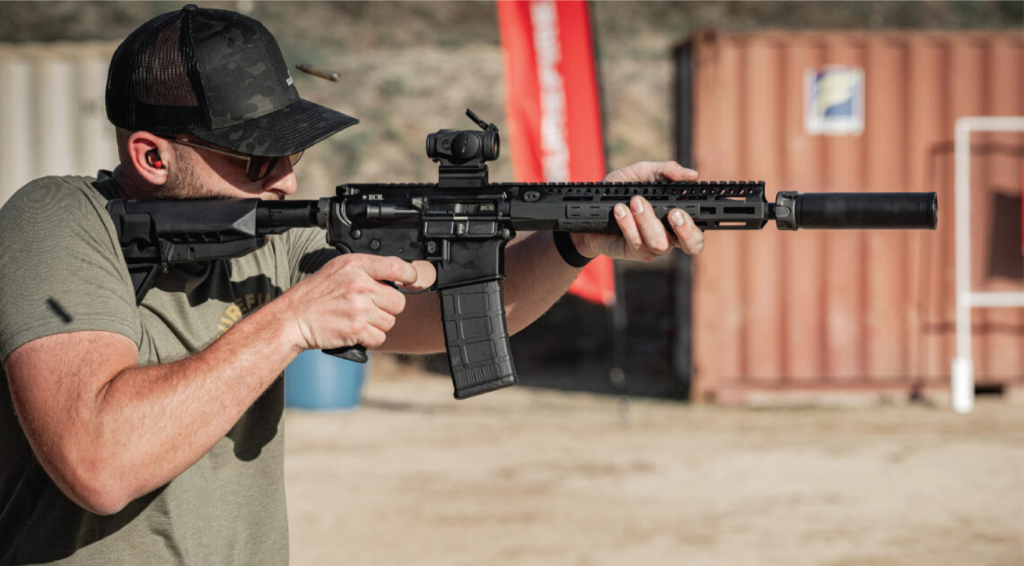
The suppressor works by capturing and gradually releasing the expanding gases generated by a bullet as it travels down the barrel. Inside that cylindrical tube are a series of baffles—precisely engineered internal components that create expansion chambers. These chambers provide the gases space to expand and cool before they exit the muzzle, reducing the intensity of the pressure wave we perceive as the gunshot report.
But here’s the catch: you’re still dealing with a controlled explosion happening inches from your face. The suppressor doesn’t eliminate the sound—it reduces an ear-damaging noise level to something merely very loud rather than instantly damaging. In most cases, you still need hearing protection.
The Hearing Protection Movement
Shooting sports and hunting have traditionally come with an accepted cost: gradual hearing loss. Generations of shooters have developed tinnitus, that constant ringing in the ears that never stops. Many have lost the ability to hear high-frequency sounds, making conversation difficult and diminishing quality of life. Hunters often face a cruel choice in the field—wear hearing protection and miss crucial sounds from approaching game, or go without and accept cumulative hearing damage with every shot.
Suppressors change this equation. While a suppressed rifle might still produce 135 decibels—enough that electronic hearing protection remains advisable for extended shooting sessions—that’s dramatically safer than repeated exposure to 165-decibel reports. More importantly, suppressors reduce the sharp, painful crack of a gunshot to levels where a single shot during a hunting scenario is far less likely to cause permanent damage. They also make firearms more pleasant to shoot, reducing flinch and improving accuracy. New shooters, especially youth, find suppressed firearms less intimidating, making it easier to learn proper fundamentals without developing a reflexive fear of the gun’s muzzle blast.
The shooting industry has gradually recognized this reality. What was once viewed as a specialized accessory for tactical operators is increasingly recognized as basic safety equipment—no different than eye protection or ear muffs, just considerably more effective at the source.
Military Applications and Flash Suppression
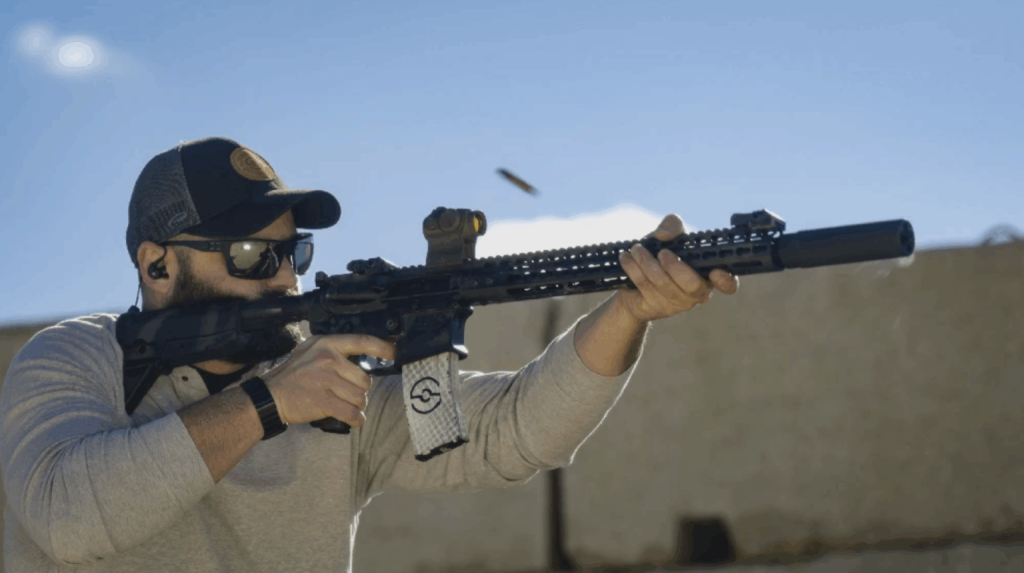
The military’s interest in suppressors extends beyond hearing preservation, though that certainly matters when you’re trying to communicate in a firefight without permanent hearing loss. One of the most tactically significant advantages of suppressors is flash reduction.
When a rifle fires, unburned powder exits the muzzle and ignites in the open air, creating a bright muzzle flash. In daylight, this might not matter much. At night or in low-light conditions, that flash destroys your natural night vision and creates a brilliant beacon announcing your position to anyone watching. Night vision devices amplify available light, thereby increasing muzzle flash to potentially blinding levels. Their own weapon’s muzzle flash can temporarily blind a shooter using night vision without a suppressor.
Suppressors dramatically reduce this flash signature. By controlling gas expansion and allowing more complete powder combustion within the suppressor’s baffles, they minimize the flash visible to both the naked eye and night vision equipment. This allows military units to maintain visual acuity during nighttime operations and reduces their visible signature to opposing forces.
The sound reduction, while less dramatic than Hollywood suggests, still offers tactical advantages. A suppressed weapon makes it harder for enemies to pinpoint the shooter’s exact location through sound alone. More importantly, it allows team members to communicate without shouting over gunfire, thereby maintaining operational effectiveness during engagements.
The Reality of Sound Suppression
So what does a suppressor actually sound like? That depends on multiple variables: the firearm’s caliber, barrel length, ammunition type, and suppressor design all play roles. Subsonic ammunition—rounds that travel slower than the speed of sound—produces the quietest results because you eliminate the supersonic crack of the bullet breaking the sound barrier. A .22 rifle firing subsonic ammunition through a suppressor might produce sound levels comparable to a pellet gun at 115-120 decibels.
Centerfire rifles tell a different story. Even with excellent suppressors, you’re typically looking at 130-140 decibels with standard ammunition. That’s still hearing-safe for brief exposures compared to the unsuppressed alternative, but it’s not silent. You’ll hear a sharp crack, just not the ear-splitting concussive blast of an unsuppressed rifle. Neighbors will still know you’re shooting. Game animals will still hear the shot, but they’re less likely to scatter.
The truth is that suppressors are hearing-protection devices with secondary tactical benefits, not the silent-assassination tools Hollywood portrays. They make shooting safer, more pleasant, and more accessible to new shooters. Understanding what suppressors actually sound like—and what they’re actually for—helps cut through decades of misinformation perpetuated by movies and television. They’re safety equipment, and in a rational world, that’s exactly how we’d treat them.
More Suppressor content on TTAG:
- What Is a Suppressor Piston and How Does It Work?
- Your First Suppressor: A Short(ish) Guide for First-Time Buyers
- SureFire SOCOM Suppressors: Why Delta and DEVGRU Choose Them
- What is First Round Pop and The Best Suppressors For Removing It
“}]]

